
Tetramorium voasary
- Sci. Name
- Tetramorium voasary
- Tribe
- Crematogastrini
- Subfamily
- Myrmicinae
- Author
- Hita Garcia & Fisher, 2012
- Distribution
- Found in 3 countries
Introduction
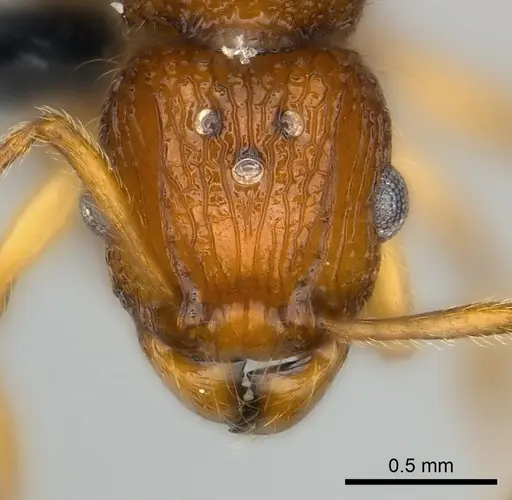
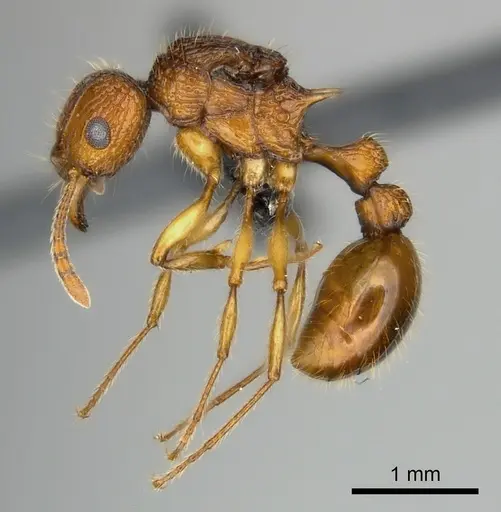
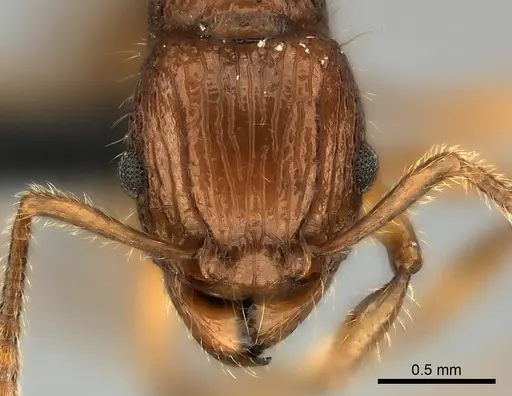
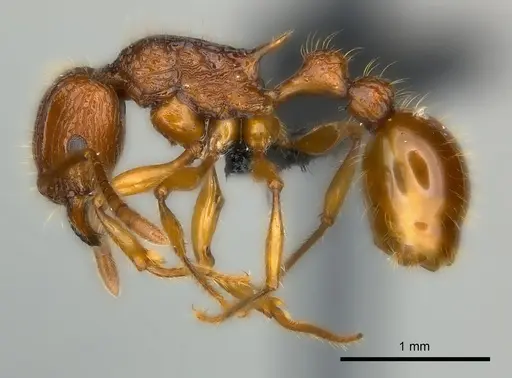
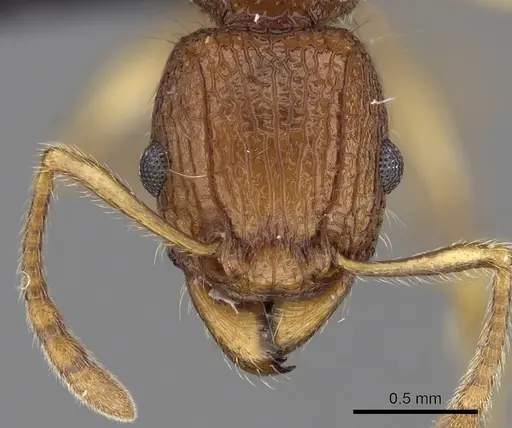
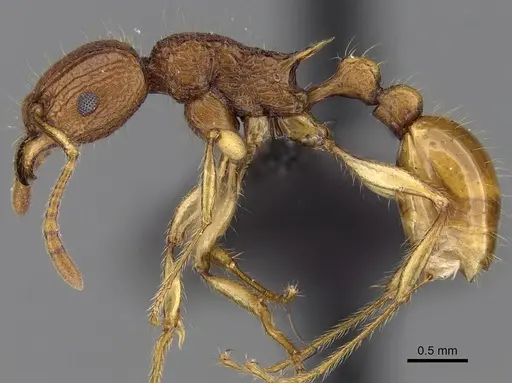
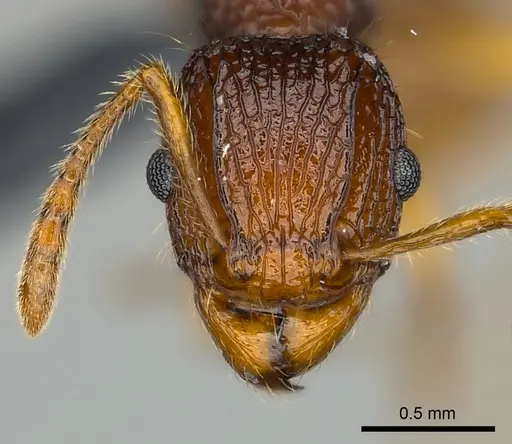
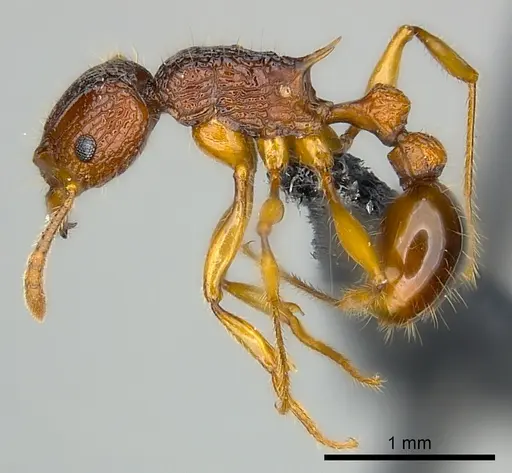
Tetramorium voasary is a small ant native to the rainforests of eastern Madagascar. Workers have a bright orange to light orange-brown body, making them easy to spot . It belongs to the Tetramorium tortuosum species group and stands out from related species by its moderately sized eyes, long propodeal spines, and a rectangular petiolar node with rounded margins . What makes this species unusual for its genus is its arboreal lifestyle – it forages mainly in vegetation rather than on the forest floor. Most Tetramorium are ground-dwellers, but T. voasary has been collected almost exclusively from lower vegetation and tree canopy . That means you'll want to design their enclosure with vertical climbing space in mind.
Quick Summary
- Difficulty: Hard
- Origin & Habitat: Eastern Madagascar, in rainforests and montane rainforests from Befotaka-Midongo in the south to Makirovana in the northeast. The type locality is Montagne d'Anjanaharibe at about 1100m elevation [1][2].
- Colony Type: Unknown – colony structure has not been documented in scientific literature
- Size & Growth:
- Queen: Not documented – queen measurements unavailable [1]
- Worker: Body size not documented, based on related Tetramorium species, workers likely measure around 3-5mm total length [1]
- Colony: Unknown – fewer than 25 specimens have been collected in total across all known localities [1]
- Growth: Unknown
- Development: Unknown – no development data available for this species (Development timeline has not been studied. Related Tetramorium species typically complete egg-to-worker in 4-8 weeks at optimal temperatures.)
- Antkeeping:
- Temperature: Inferred from montane rainforest habitat: aim for roughly 20-24°C, avoid temperatures above 28°C [1].
- Humidity: Keep the nest substrate consistently moist but not waterlogged. Provide good ventilation to prevent mold. Reflecting their rainforest origin, aim for a damp but well-aired environment [1].
- Diapause: Unknown – no data on seasonal behavior. As a tropical rainforest species from Madagascar, diapause may not be required, but a slight cool period during winter months could be beneficial if you want to simulate seasons.
- Nesting: Likely nests in elevated locations (hollow stems, under bark) based on their vegetation-foraging behavior. In captivity, use a Y-tong (AAC), plaster, or soil nest with chambers scaled to their small size. Provide vertical climbing structures in the outworld.
- Behavior: Temperament is not documented, but most Tetramorium species are moderately aggressive when defending their nest. Like other Myrmicinae, T. voasary uses a specialized spatulate stinger to smear venom on enemies rather than piercing them – a defense known as 'smearing'. Their small size (around 3-5mm) means they can squeeze through small gaps, use standard barriers like fluon or oil. Their most notable behavior is arboreal foraging – they search for food in vegetation rather than on the ground.
- Common Issues: no captive care data exists – this is a rarely collected species with no established husbandry guidelines, the species is extremely rare in collections and may be very hard to acquire, arboreal lifestyle means ground-based feeding may not be optimal – consider offering food at elevated positions, humidity and temperature needs are inferred from habitat and may need adjustment based on colony observation, escape prevention is important despite their small size – they can get through very narrow gaps if not properly contained
Origin and Natural Habitat
Tetramorium voasary is endemic to eastern Madagascar, where it lives in rainforests and montane rainforests at elevations around 1100 meters [1]. The species has been recorded from about ten localities spanning from Befotaka-Midongo in the south to Makirovana in the northeast, but these sites are often far apart. Despite being described in 2012,it remains extremely rare in scientific collections – fewer than 25 specimens are known total [1].
The most distinctive part of its ecology is its arboreal lifestyle. Unlike most Tetramorium, which nest and forage on the ground, T. voasary has been collected almost exclusively from lower vegetation and tree canopy. Only a few specimens were found in leaf litter or on the ground [1]. This suggests they nest above ground, possibly in hollow stems, under bark, or in mossy branches. Keep this vertical orientation in mind when setting up their enclosure [2].
Identification and Appearance
Workers are small ants with a bright orange to light orange-brown color that is uniform across the whole body [1]. That orange color makes them stand out from many other Tetramorium species.
Key identification features: moderately sized eyes, long propodeal spines, and a rectangular petiolar node with fairly rounded margins – not the sharp angles seen in related species [1][2]. The petiolar node is a bit taller than long, giving them a slightly stocky look. The postpetiole is usually a little longer than wide or just as wide as long.
This species belongs to the Tetramorium andrei complex within the T. tortuosum group. You can tell it apart from similar species like Tetramorium electrum or Tetramorium elf by its larger eyes, and from Tetramorium ala or Tetramorium andrei by its rounded rather than sharp petiolar node [2].
Feeding and Diet
Feeding behavior hasn't been directly studied for T. voasary, but like related Tetramorium species, they're probably omnivores with a taste for protein. In the wild they likely hunt small insects and collect honeydew or nectar in the canopy.
For captive care, offer a mix of small protein sources – fruit flies, pinhead crickets, mealworms – plus sugar sources like diluted honey or sugar water. Because they naturally forage in vegetation, try putting food at elevated spots in the enclosure rather than only on the ground [1].
Since this species is so rarely kept, expect some trial and error. Start with small live prey and sugary liquids, then watch what your colony goes for. Remove uneaten food after 24-48 hours to stop mold in their humid home.
Temperature and Care
No captive care guidelines exist for Tetramorium voasary, so recommendations have to come from their natural habitat – Madagascar's montane rainforests. The type locality sits at about 1100m elevation, which means they prefer cooler, more moderate temperatures than typical tropical ants.
Shoot for a range of about 20-24°C, don't let it go above 28°C. That's cooler than many tropical species need. If you use a heating cable, place it on top of the nest (not underneath) to avoid drying out the substrate.
Keep the nest substrate consistently moist but not waterlogged, and make sure there's good airflow to stop mold. The combination of moderate temperature and damp – but not wet – conditions will be the key to success [1].
Nesting and Enclosure Setup
Given their arboreal foraging, T. voasary likely nests in elevated spots – hollow stems, under bark, or in moss-covered branches [1]. That's a big difference from most ground-nesting Tetramorium species.
For captive housing, think about a naturalistic setup with vertical elements. A Y-tong (AAC), plaster, or soil nest with chambers sized for small ants works well. Avoid oversized spaces – keep chambers snug. Plaster nests help maintain stable humidity.
Since they forage in vegetation, add climbing structures to their outworld – twigs, cork bark, or mesh – so they can show their natural behavior. Make sure the enclosure is escape-proof, these ants are small and can fit through tiny gaps.
Colony Development and Growth
Nobody has documented colony development for T. voasary. Based on related Tetramorium species from Madagascar, egg-to-worker probably takes 4-8 weeks at good temperatures. The first workers (nanitics) will be smaller than mature ones.
Wild colony size seems small – fewer than 25 specimens have ever been collected across all known sites [1]. That hints that colonies may stay relatively small, but it could just be because their arboreal lifestyle makes them hard to find.
With no captive data, expect a learning curve if you try to keep this species. Start with a queen or a small colony if you can find one. Be patient during founding, and keep a close eye on mold, moisture, and feeding.
Frequently Asked Questions
How long does it take for Tetramorium voasary to develop from egg to worker?
The exact timeline hasn't been studied for this species. Based on related Tetramorium, expect about 4-8 weeks from egg to first worker at around 22-24°C. The first workers will likely be smaller than mature ones [1].
What do Tetramorium voasary ants eat?
Feeding hasn't been documented, but they're probably omnivores like other Tetramorium. Offer small protein sources (fruit flies, pinhead crickets, mealworms) and sugar sources (honey water, sugar water). Because they forage in vegetation, try putting food at elevated spots in the enclosure [1].
Can I keep Tetramorium voasary in a test tube?
Test tubes can work for founding, but their arboreal nature suggests they might do better with vertical space or climbing options. If you use test tubes, make sure humidity is right and consider adding a small cotton ball or twig for them to climb on.
What temperature and humidity do Tetramorium voasary need?
Based on their montane rainforest home, aim for about 20-24°C and keep the nest substrate consistently moist but not waterlogged. Avoid temperatures above 28°C, and provide good ventilation to prevent mold [1].
Are Tetramorium voasary ants good for beginners?
No – this species is not for beginners. No established care guidelines exist, and it's extremely rare in the hobby. Only experienced keepers with a willingness to experiment should try this species.
Do Tetramorium voasary ants sting?
Like other Myrmicinae, they have a functional stinger, but their main defense is to smear venom rather than stab – a specialized spatulate stinger spreads chemicals onto attackers. They may sting if roughly handled, but their venom delivery is different from typical stinging ants.
How big do Tetramorium voasary colonies get?
Colony size is unknown. Fewer than 25 specimens have ever been collected in the wild across all known sites [1]. This could mean colonies stay small, or it might just be that their arboreal habits make them hard to find. Nobody knows for sure.
Do Tetramorium voasary need hibernation or diapause?
Diapause needs are unknown. As a tropical rainforest species from Madagascar, they might not need a true hibernation period. If you want to simulate seasons, a slight cool period (around 16-18°C) during winter months might be helpful, but it's not backed by data.
Where is Tetramorium voasary native to?
This species lives only in eastern Madagascar, in rainforests and montane rainforests from Befotaka-Midongo in the south to Makirovana in the northeast. The type locality is Montagne d'Anjanaharibe at about 1100m elevation [1][2].
When is the nuptial flight season for Tetramorium voasary?
Nuptial flight timing is unknown. This species was only described in 2012 and very few specimens have been collected, so reproductive behavior hasn't been studied. Related tropical Tetramorium usually fly during warm, humid seasons.
Can I keep multiple Tetramorium voasary queens together?
Colony structure (monogyne vs polygyne) is unknown for this species. Without data, it's not recommended to combine unrelated queens. Wait until more information becomes available or ask experienced keepers working with this species.
Why is Tetramorium voasary so rarely kept?
It was only described in 2012 and remains one of the rarest ants in the hobby. Fewer than 25 specimens have ever been collected in the wild, and their arboreal habits make them tough to find. Plus, no care protocols exist, so even experienced keepers face a challenge [1].
Report an Issue
The current care sheet is based fully on literature. See inconsistencies, or something that's incorrect? Please , it will be resolved after review from an admin. Contributing to the blogs tab also helps providing information, to make us be able to further improve the caresheets. Thank you for your support!
References

This caresheet is licensed under CC BY-SA 4.0 .
Community Blogs
CASENT0049240
View on AntWeb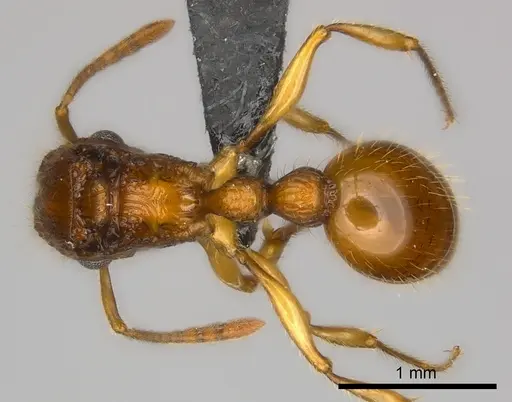
CASENT0123392
View on AntWeb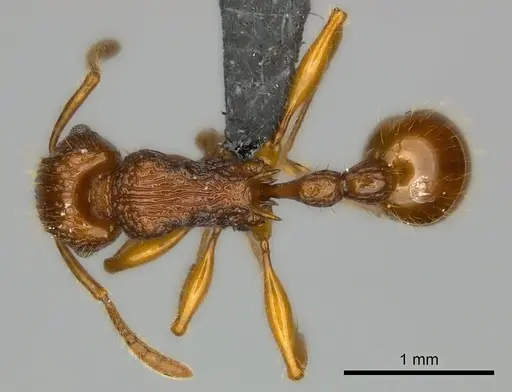
CASENT0247162
View on AntWeb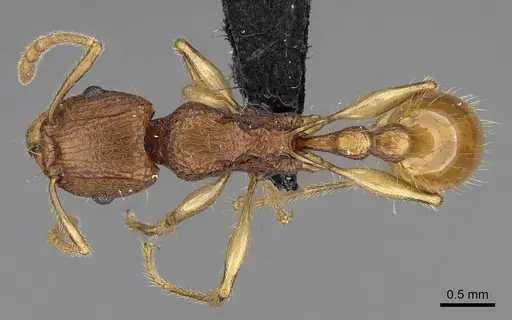
CASENT0488650
View on AntWeb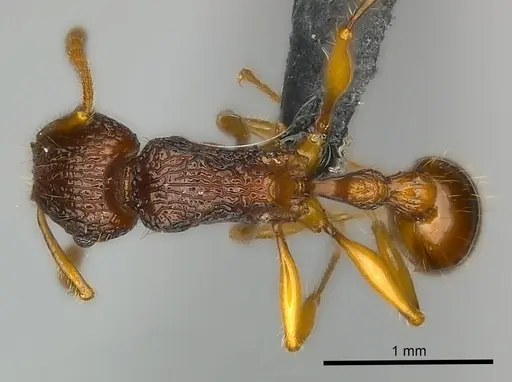
Literature
Loading distribution map...Loading products...