
Vollenhovia nipponica
- Sci. Name
- Vollenhovia nipponica
- Tribe
- Crematogastrini
- Subfamily
- Myrmicinae
- Author
- Kinomura & Yamauchi, 1992
- Distribution
- Found in 1 countries
Introduction
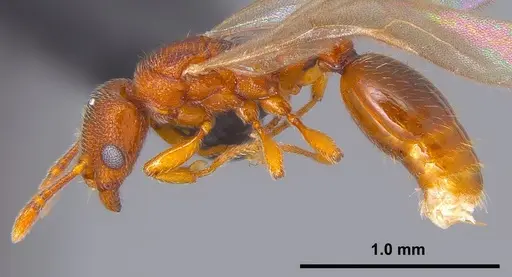
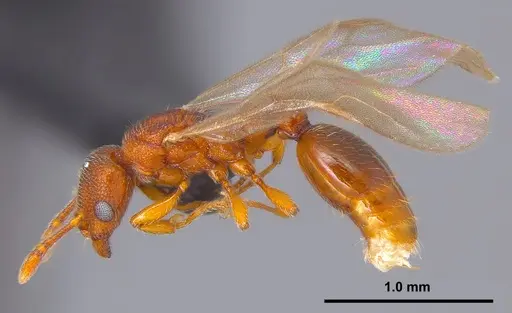
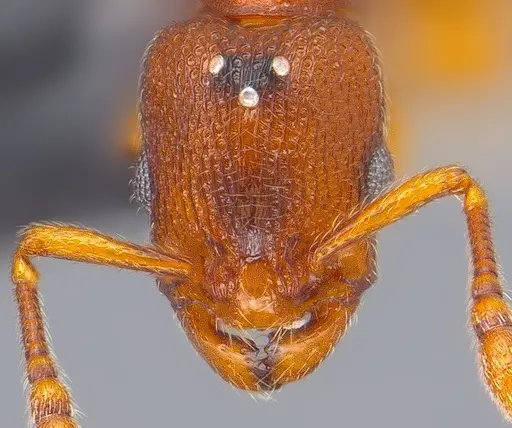
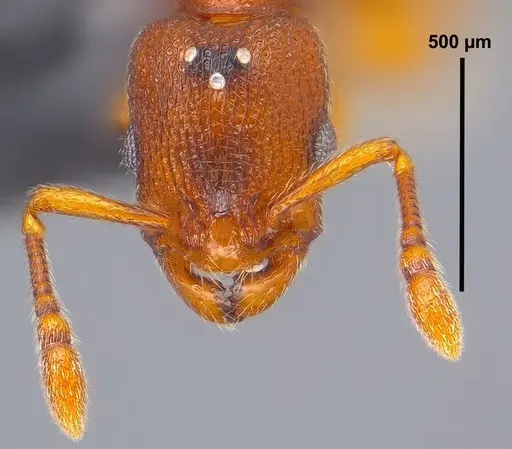
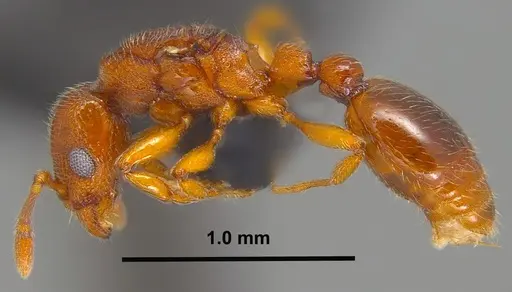
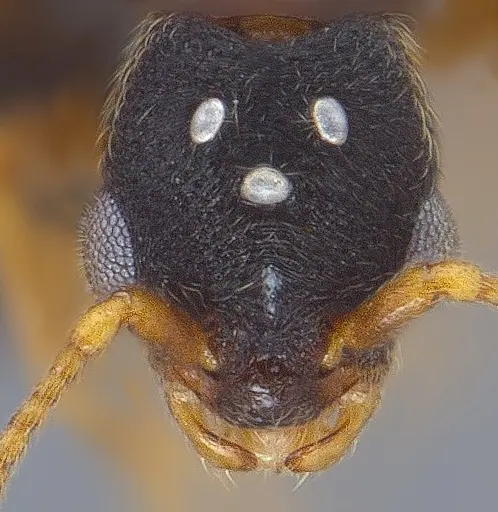
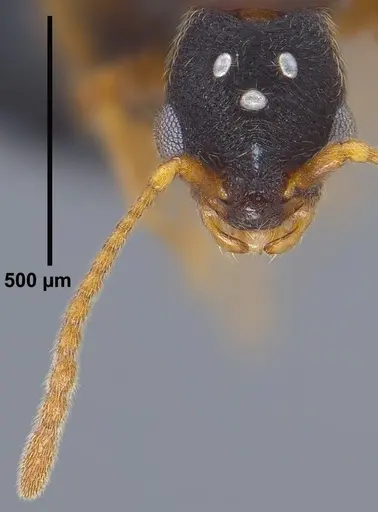
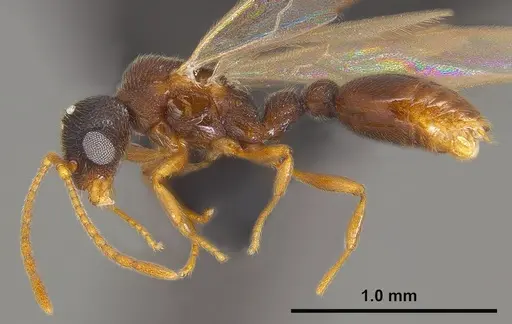
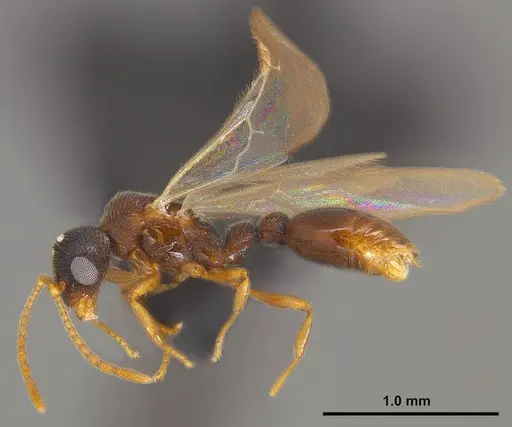
Vollenhovia nipponica is a social parasite that has completely lost its worker caste and survives only inside colonies of its host, Vollenhovia emeryi . Queens are tiny, just 2.2 mm long, making them one of the smallest ants you'll find . The species was first described from Japan and later discovered in South Korea, and it has also been accidentally introduced to Maryland, USA, where it was found living in a V. emeryi colony . Queens are reddish-brown and noticeably smaller than other Vollenhovia species . Unlike typical ants, this species produces no workers at all - only reproductives (queens and males). Everything they need - food, care, and brood rearing - comes entirely from host workers .
Quick Summary
- Difficulty: Expert
- Origin & Habitat: Native to Japan and South Korea, found in deciduous forest and riverbank environments where V. emeryi colonies are located [6][3]. The host species V. emeryi typically nests under rotten branches, tree trunks, and bark in forest ecosystems [2]. One record describes a nest under the bark of a decaying stump in an evergreen broadleaf forest [7].
- Colony Type: Workerless social parasite, no workers exist. Lives permanently within host V. emeryi colonies, using host workers to raise its own reproductives [1]. Multiple V. nipponica queens can coexist in a single host colony [1]. They have two mating strategies: about 27% mate with brother males inside the natal nest in autumn, while the rest undertake nuptial flights in spring after overwintering [1].
- Size & Growth:
- Queen: 2.2 mm [2]
- Worker: N/A, workerless species
- Colony: Colonies consist only of reproductives (queens and males) within host nests. In one study,20 parasitized nests produced a total of 432 new queens [1].
- Growth: N/A, parasitic reproduction depends on host colony resources
- Development: N/A, no worker caste exists (This species produces only reproductives (queens and males), no workers are ever produced)
- Antkeeping:
- Temperature: Temperature should match the natural habitat of the host V. emeryi. A stable range of 20-24°C (room temperature) is a reasonable starting point, but exact requirements are undocumented. Avoid drastic fluctuations.
- Humidity: Keep the host nest substrate (decaying wood, bark) consistently moist but not waterlogged, mimic a forest floor microhabitat [2].
- Diapause: Yes, queens overwinter inside host colonies. Some queens mate in autumn and remain in the nest through winter, while others emerge for spring nuptial flights [1].
- Nesting: Cannot be kept independently. Must be maintained within a living V. emeryi host colony. The host nests in decaying wood, under bark, or in rotten branches, typical for naturalistic setups [2][7].
- Behavior: Completely dependent on host workers. V. nipponica queens cannot feed themselves and rely entirely on trophallaxis (food-sharing) from host workers [1]. Queens may produce brachypterous (short-winged) individuals in addition to normal alate queens, first documented in 2015 [1]. The parasite does not appear to significantly harm the host colony but uses its resources to produce only reproductives. Escape risk is minimal as they cannot survive outside a host colony.
- Common Issues: maintaining a healthy V. emeryi host colony is extremely difficult and requires expert-level antkeeping skills, the parasite cannot survive without live host workers, if the host colony dies, the parasites die with it, obtaining V. emeryi as a host species may be difficult depending on your region, parasitic colonies may be rejected by host workers in some cases, the dynamics are not fully understood, this is not a species you can simply feed and watch grow, it requires managing an entire host colony system, invasive species warning: V. nipponica has been accidentally introduced to North America. Prevent any escape, and never release this species outside its native range.
Understanding Workerless Social Parasites
Vollenhovia nipponica represents one of the most extreme ant lifestyles, it has completely lost the worker caste and cannot survive without a host colony [8][1]. Unlike temporary social parasites that only use host workers for a short time, V. nipponica lives permanently inside V. emeryi nests, relying entirely on host workers for food, grooming, and care of its brood [1]. The parasite queen cannot feed herself, she depends on trophallaxis (food-sharing) from host workers [1]. This means you cannot keep V. nipponica like a normal ant colony, you must maintain a healthy V. emeryi host colony and introduce the parasite into it. The host colony continues functioning, raising both its own brood (if any) and the parasite's reproductives.
The Host Species: Vollenhovia emeryi
To keep V. nipponica, you must first obtain and maintain V. emeryi colonies. V. emeryi is a small ant with small workers that nests in decaying wood, under bark, and in rotten branches in forest environments [2][7]. There are two queen morphs in V. emeryi: the S-morph (short-winged/brachypterous) and L-morph (long-winged/alate). V. nipponica is known to parasitize specifically the S-morph colonies of V. emeryi [3]. The host colony should be kept in naturalistic conditions with appropriate moisture and temperature. V. emeryi colonies can be difficult to locate and collect, they are not common and prefer specific microhabitats in riverbank forests [6]. A single record found a parasitized nest under bark in an evergreen broadleaf forest, far from a river [7].
Introducing the Parasite
Introducing V. nipponica to a V. emeryi colony should be done carefully. Research shows that about 32% of wild V. emeryi colonies already contain V. nipponica parasites [1], suggesting these parasites either invade established colonies or new queens are accepted when they return from nuptial flights. In the laboratory, researchers kept 20 parasitized nests successfully [1]. When introducing a parasite queen to a host colony, watch for aggression, while most introductions may succeed, the dynamics are not fully understood. The parasite queen will need host workers to feed her through trophallaxis. She cannot forage or care for herself in any way.
Reproduction and Nuptial Flights
V. nipponica has a fascinating dual mating strategy. About 27% of new queens mate with their brother males inside the host nest shortly after emerging in autumn, inbreeding within the colony [1]. The remaining queens overwinter and then undertake nuptial flights in spring, presumably mating with males from other colonies [1]. Reproductives are produced from July to October, with hundreds of new queens potentially emerging from a single parasitized nest [1]. Notably, researchers discovered brachypterous (short-winged) queens in 2015, these cannot fly but have the same reproductive potential as normal alate queens [1]. This adds another layer of complexity to their biology.
Why This Species Is Expert-Only
Vollenhovia nipponica is absolutely not suitable for beginners or even intermediate antkeepers. The fundamental challenge: this species cannot exist without a host colony, it has no workers to feed itself, no workers to dig nests, nothing. The parasite is entirely dependent on V. emeryi workers for every aspect of survival [1]. This creates a cascading set of challenges: you must successfully locate and collect V. emeryi colonies (which are not common), maintain them in healthy condition, then successfully introduce the parasite without the host rejecting or killing it. If the host colony declines or dies, your V. nipponica colony dies with it, there is no way to rescue the parasites. Additionally, V. nipponica is considered a rare species and may be difficult to obtain. In some regions, keeping or transporting this species may have legal implications. Note that V. nipponica has been accidentally introduced to North America [4], extreme precautions must be taken to prevent any escape.
Frequently Asked Questions
Can I keep Vollenhovia nipponica in a test tube like other ants?
No. V. nipponica is a workerless social parasite that cannot survive without host V. emeryi workers. It cannot be kept in isolation, you must maintain a living V. emeryi host colony in a naturalistic setup, then introduce the parasite into that colony [1].
Do Vollenhovia nipponica ants have workers?
No. V. nipponica is completely workerless, it produces only reproductives (queens and males). All care, foraging, and brood-raising is done by host V. emeryi workers [1][8].
What do Vollenhovia nipponica eat?
V. nipponica cannot feed itself. The queen receives food exclusively through trophallaxis (food-sharing) from host V. emeryi workers [1]. The host workers forage and bring food back to the nest, then share it with both themselves and the parasite queen.
How long does it take for Vollenhovia nipponica to produce first workers?
Never. This species does not produce workers, it is completely workerless. It only produces new queens and males, which are raised by host workers [1]. There is no 'first worker' milestone for this species.
Are Vollenhovia nipponica good for beginners?
Absolutely not. This species is expert-only. You must successfully maintain a V. emeryi host colony, which is already a significant challenge, then introduce and maintain the parasite within it. If the host dies, the parasites die. This level of complexity is beyond what any beginner should attempt [1][3].
Do Vollenhovia nipponica need hibernation?
Yes. Some queens mate in autumn and remain in the host nest through winter, while others emerge for spring nuptial flights after overwintering [1]. The host V. emeryi colony should be given a cool period simulating winter, which the parasite queens will also experience.
Can I keep multiple Vollenhovia nipponica queens together?
Yes, multiple V. nipponica queens can coexist in a single host colony. Research found up to 26 parasitized nests containing multiple queens and males within V. emeryi colonies [1]. Multiple parasite queens in one host nest appears to be the natural state.
What is the host species for Vollenhovia nipponica?
Vollenhovia emeryi, specifically the S-morph (short-winged/brachypterous queen form) [3]. V. emeryi is a small forest ant that nests in decaying wood and under bark. You must obtain and maintain healthy V. emeryi colonies to keep V. nipponica.
Do Vollenhovia nipponica sting?
They have a modified stinger used for smearing venom (typical of the tribe Crematogastrini), but given their tiny size (2.2 mm) and complete dependence on host workers, stinging is not a concern for keepers.
Report an Issue
The current care sheet is based fully on literature. See inconsistencies, or something that's incorrect? Please , it will be resolved after review from an admin. Contributing to the blogs tab also helps providing information, to make us be able to further improve the caresheets. Thank you for your support!
References

This caresheet is licensed under CC BY-SA 4.0 .
Community Blogs
Literature
Loading distribution map...Loading products...