
Tetramorium andohahela
- Sci. Name
- Tetramorium andohahela
- Tribe
- Crematogastrini
- Subfamily
- Myrmicinae
- Author
- Hita Garcia & Fisher, 2012
- Distribution
- Found in 2 countries
Introduction
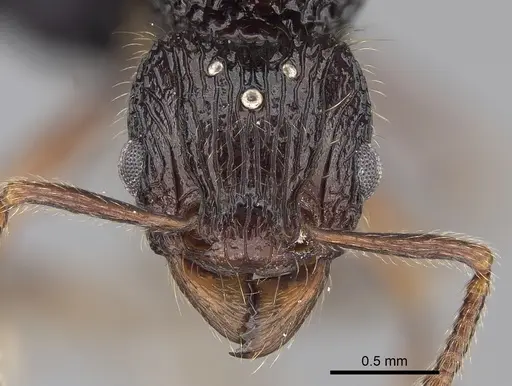
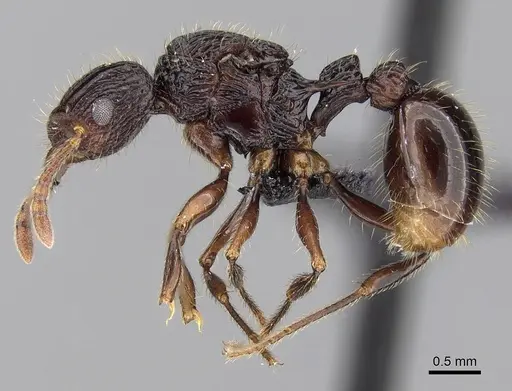
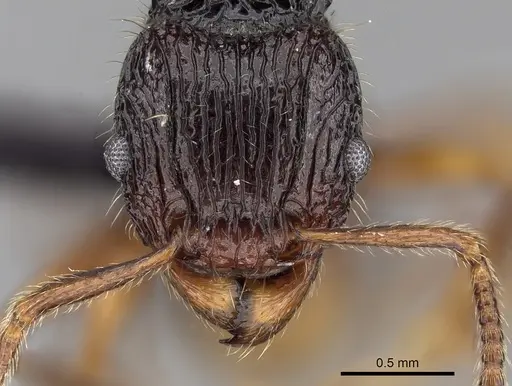
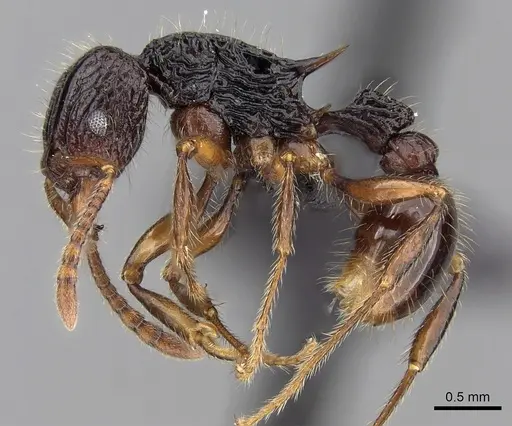
Tetramorium andohahela is a small ant species found only in the rainforests of southeastern Madagascar. Workers have a brown to dark brown body with yellow mandibles, antennae, and legs, making them stand out against the dark leaf litter they live in . Their most striking feature is the petiolar node - the posterodorsal corner sticks out backward, a unique trait not seen in any other Tetramorium on the island . This species was first described in 2012 and lives in montane rainforest between 800 and 1250 meters above sea level . It spends most of its time foraging through leaf litter on the forest floor. Tetramorium andohahela is part of the T. andrei species complex within the bigger T. tortuosum group. Its entire known range is a thin strip of rainforest from Andohahela National Park in the south up to Ranomafana in the north . That makes it one of the most restricted ant species in Madagascar - you won't find it anywhere else.
Quick Summary
- Difficulty: Medium
- Origin & Habitat: Southeastern Madagascar, from Andohahela National Park north to Ranomafana. Only in rainforest and montane rainforest at elevations of 800-1250 meters [1].
- Colony Type: Unconfirmed, typical Tetramorium genus patterns suggest single-queen colonies (monogyne), but no direct studies exist for this species.
- Size & Growth:
- Queen: Unknown, based on other Tetramorium species, queens may be around 5-7 mm, but no data for T. andohahela.
- Worker: Exact total body length not recorded, based on head and mesosoma measurements, estimated at about 3–4 mm (inferred from Tetramorium genus patterns) [1].
- Colony: Unknown in the wild, likely up to several hundred workers based on related species.
- Growth: Moderate (estimated from genus patterns)
- Development: 6-10 weeks estimated at 20-24°C (inferred from other Tetramorium species, not directly studied) (Development time is a rough guess, actual timing for T. andohahela has not been studied.)
- Antkeeping:
- Temperature: Keep at 20-24°C. As a montane rainforest species from 800-1250m elevation, they prefer cooler conditions than lowland tropical ants. Avoid temperatures above 26°C [1].
- Humidity: High humidity is critical. The nest substrate should be consistently moist but not waterlogged. Provide a humidity gradient so the ants can choose their preferred spot. This mimics their natural leaf-litter microhabitat.
- Diapause: Not confirmed – true diapause requirements are unknown. As a tropical montane species, they may benefit from a cooler, drier period of a few months at 15-18°C, but this is speculative.
- Nesting: Start colonies in a test tube with a water reservoir. Once the colony reaches 20-30 workers, move them to a Y-tong (AAC) or plaster nest that holds moisture well. Include leaf litter and small debris in the outworld to mimic their natural foraging environment [1].
- Behavior: Workers are active foragers that search through leaf litter and debris. They are not aggressive but will defend their nest if disturbed. As members of the subfamily Myrmicinae (tribe Crematogastrini), they possess a modified flattened stinger used to smear venom onto enemies rather than piercing – this is generally mild to humans. Their tiny size (around 3 mm) means escape prevention is important: use fine mesh or tight barriers.
- Common Issues: keeping humidity high without causing mold is tricky – poor ventilation leads to fungal problems, while dry air causes colony decline., their small size makes escape prevention critical – standard test tube barriers may need extra sealing., colony growth is slow compared to common beginner species, which may test patience., this species is rarely available in the ant trade because it was only described in 2012 and has a very limited range., montane origin means they may struggle if kept too warm (above 26°C) – consistency matters.
Natural History and Distribution
Tetramorium andohahela is one of the most geographically restricted ant species in Madagascar. It lives only in a narrow band of rainforest and montane rainforest along the southeastern coast, from Andohahela National Park in the south up to Ranomafana in the north [1]. All known populations occur between 800 and 1250 meters above sea level – that's montane habitat, which means cooler temperatures than lowland forests [1]. Workers are almost always collected from sifted leaf litter, confirming that they forage among decaying leaves and rotting wood on the forest floor [1]. This microhabitat stays moist and provides plenty of tiny prey like springtails and mites. The most distinctive feature of this species is its petiolar node: the posterodorsal corner sticks out strongly backward, making it easy to identify under a microscope [1]. The species was formally described in 2012 by Hita Garcia and Fisher as part of a revision of the Tetramorium tortuosum species group [1]. It belongs to the Tetramorium andrei species complex within that group.
Housing and Nest Setup
Start your colony in a standard test tube setup. Fill the tube about one-third full with water, then plug the wet end with a cotton ball – this keeps humidity steady for weeks without needing to refill. Cover the tube with a dark cloth during the founding stage, queens prefer dark, quiet conditions while raising their first brood. Once the colony has around 20-30 workers, you can move them to a permanent formicarium. Y-tong (AAC) or plaster nests work well because they hold moisture while letting you watch the ants. Make sure the nest substrate stays consistently damp but never waterlogged, just like their natural leaf-litter home. In the outworld, add small debris like crushed leaves, tiny stones, or pieces of bark – this gives them a natural foraging surface and places to explore. Keep the outworld humid by misting occasionally or connecting a water reservoir to the nest.
Temperature and Humidity Requirements
Because Tetramorium andohahela comes from cool montane rainforest (800-1250m), it prefers lower temperatures than many tropical ants. Keep the nest at 20-24°C – room temperature around 22°C is ideal. Avoid going above 26°C, as this species is not adapted to hot lowland conditions [1]. Humidity is absolutely critical. These ants live in constantly moist leaf litter, so the nest substrate should feel damp to the touch. But don't let it become waterlogged – provide a gradient: keep one side of the nest moist and let another area dry out slightly. This lets the ants choose their preferred moisture level. In the outworld, occasional misting helps maintain humidity. If you see workers clustering near moisture sources or avoiding dry areas, adjust accordingly. Poor humidity leads to brood death and colony decline.
Feeding and Diet
Like most Tetramorium, Tetramorium andohahela is omnivorous. In captivity, offer small protein sources twice a week: fruit flies, small mealworms, or other tiny insects. Remove any uneaten prey after 24 hours to prevent mold. Sugar sources are also important – a small drop of sugar water or honey water once or twice a week gives them energy. In the wild they probably collect honeydew from sap-sucking insects, so sugary food is a natural part of their diet. Some Tetramorium species also eat seeds, so you can try offering a few tiny seeds occasionally and see if the workers show interest. Always remove uneaten food promptly to keep the setup clean.
Colony Development and Growth
The founding process for Tetramorium andohahela follows typical genus patterns, though it has not been directly observed. Queens likely seal themselves in a small chamber (claustral founding) and live off stored fat reserves while raising their first brood. The first workers (nanitics) are smaller than normal workers. Development from egg to worker probably takes 6-10 weeks at 20-24°C, based on other Tetramorium species. The colony grows moderately – faster than many Ponerine species but not as fast as invasive species like Tapinoma. Colony size in the wild is unknown, but related Tetramorium species often reach several hundred workers. Given their restricted distribution and specialized habitat, colonies might be smaller than those of widespread species. Under good conditions, you can expect moderate growth over the first year, but specific milestones have not been studied.
Frequently Asked Questions
How long does it take for Tetramorium andohahela to produce first workers?
Based on other Tetramorium species, expect about 6-10 weeks from egg to first worker at temperatures around 22°C. This is an estimate, the exact timing for T. andohahela has not been studied.
What temperature do Tetramorium andohahela ants need?
Keep them at 20-24°C. As a montane rainforest species from 800-1250m elevation, they prefer cooler conditions than typical tropical ants. Avoid temperatures above 26°C [1].
Are Tetramorium andohahela ants good for beginners?
This species is rated as medium difficulty. Their high humidity needs and preference for cooler temperatures make them better suited for keepers who already have some experience with maintaining proper humidity levels.
How big do Tetramorium andohahela colonies get?
Colony size is not documented for this species. Based on related Tetramorium species, colonies may reach several hundred workers. Their very limited range in the wild suggests colonies might be smaller than those of widespread species [1].
Do Tetramorium andohahela ants sting?
Tetramorium andohahela has a functional stinger, but like most Myrmicinae, it smears venom rather than piercing. The sting is very mild and not considered dangerous to humans. They will defend their nest if threatened but are not aggressive toward keepers.
What do Tetramorium andohahela ants eat?
They are omnivorous. Offer small insects (fruit flies, small mealworms) as protein twice weekly, and sugar water or honey water as an energy source. They may also accept small seeds.
Can I keep multiple Tetramorium andohahela queens together?
This species is likely monogyne (single queen) based on typical Tetramorium patterns, but this has not been confirmed for T. andohahela. Combining unrelated queens is not recommended as they would probably fight. Only one queen per colony.
Do Tetramorium andohahela need hibernation?
Diapause requirements are not confirmed for this species. As a montane species from a tropical region, they likely do not need true hibernation but may benefit from slightly cooler temperatures (15-18°C) for a few months during what would be their cooler season. This is speculative.
Why is my Tetramorium andohahela colony dying?
Common causes include: temperatures above 26°C (too hot), low humidity causing desiccation, poor ventilation leading to mold, or insufficient protein. Check these parameters and adjust accordingly.
When should I move Tetramorium andohahela from a test tube to a formicarium?
Move them once the colony reaches 20-30 workers and the test tube space becomes cramped. Pre-humidify the new nest before transfer.
Report an Issue
The current care sheet is based fully on literature. See inconsistencies, or something that's incorrect? Please , it will be resolved after review from an admin. Contributing to the blogs tab also helps providing information, to make us be able to further improve the caresheets. Thank you for your support!
References

This caresheet is licensed under CC BY-SA 4.0 .
Community Blogs
CASENT0484416
View on AntWeb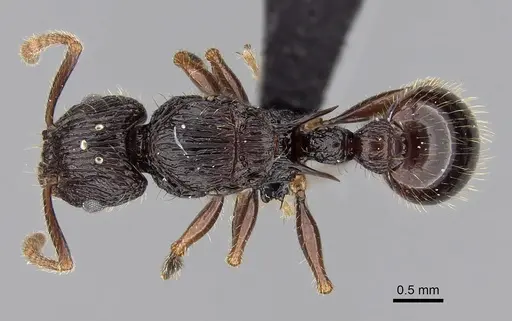
CASENT0484449
View on AntWeb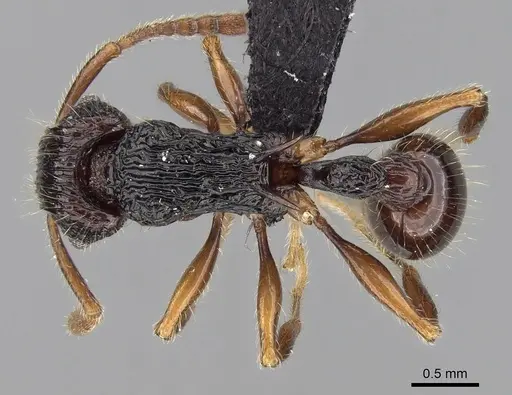
Literature
Loading distribution map...Loading products...