
Temnothorax morea
- Sci. Name
- Temnothorax morea
- Tribe
- Crematogastrini
- Subfamily
- Myrmicinae
- Author
- Csősz <i>et al.</i>, 2018
- Distribution
- Found in 2 countries
Introduction
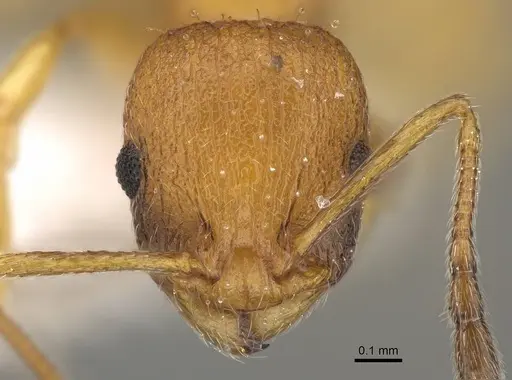
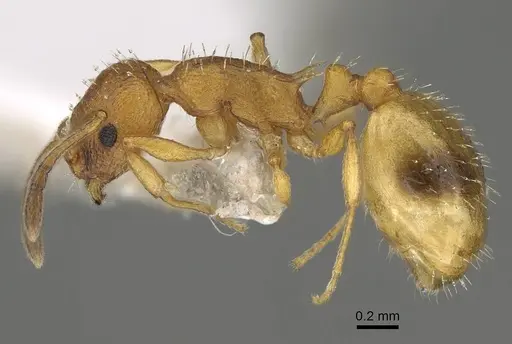
Temnothorax morea is a tiny ant from the eastern Mediterranean, named after the medieval name for the Peloponnese peninsula . Workers are around 2-3 mm (inferred from typical Temnothorax sizes) with an orange to dark orange body and a dark brown to black band across the tip of the gaster. The band has a distinctive V-shaped yellow interruption in the middle, a key feature separating them from related species like Temnothorax interruptus and Temnothorax strymonensis . They have notably long, curved propodeal spines and long antennal scapes that extend past the back of the head . Queens are larger (around 4-5 mm, inferred from genus) with bright orange bodies and variable dark markings on the gaster . This species belongs to the Temnothorax interruptus group and was only scientifically described in 2018 .
Quick Summary
- Difficulty: Easy
- Origin & Habitat: Eastern Mediterranean, southern and western Greece, Croatia along the Adriatic coast, and western Turkey. They live in dry habitats from 110 to 2100 meters elevation, including deciduous oak forests, stream valleys with Platanus trees, phrygana (Mediterranean shrubland) with oak shrubs, and occasionally coniferous forests, olive orchards, and pastures [1][3]. Nests are found under moss or in crevices in limestone rocks [1][4]. They prefer more arid and sunny areas than the closely related Temnothorax strymonensis [1].
- Colony Type: Unknown, likely single-queen colonies (monogyne) based on typical Temnothorax social structure. No documented polygyny or ergatoid replacement reproductives for this species.
- Size & Growth:
- Queen: Unknown, inferred from Temnothorax genus (~4-5 mm)
- Worker: Unknown, inferred from Temnothorax genus (~2-3 mm)
- Colony: Unknown, typical Temnothorax colonies are small, likely up to a few hundred workers
- Growth: Slow to moderate
- Development: 6-10 weeks (estimated based on typical Temnothorax development) (Development depends heavily on temperature, warmer conditions (22-26°C) speed it up, cooler temperatures slow it down significantly. First workers (nanitics) will be smaller than mature workers.)
- Antkeeping:
- Temperature: Warm conditions, roughly 20-28°C. Provide a temperature gradient so the ants can choose their preferred spot. They come from dry, sunny Mediterranean habitats and can handle brief heat, but avoid prolonged temperatures above 30°C or below 15°C [1].
- Humidity: Low to moderate, they prefer dry conditions. Keep the nest substrate mostly dry with one small moist area. Constant wetness can lead to mold issues, as they naturally nest in arid, sunny rock crevices [1][3].
- Diapause: Likely required, as a temperate/Mediterranean species, they benefit from a winter rest period. Reduce temperature to 10-15°C for 8-12 weeks (roughly November-February). Stop feeding during this time and keep the nest slightly moist but not wet.
- Nesting: Y-tong (AAC) nests, plaster nests, or naturalistic setups with flat stones over dry substrate work well. They prefer tight, dark chambers mimicking the rock crevices and spaces under moss they use in nature [1][4]. Avoid large, open spaces, small chambers reduce stress.
- Behavior: Generally peaceful and non-aggressive. Workers are active foragers that search for small prey and honeydew. They have a modified stinger for smearing venom (smear defense) rather than piercing, so they are not a stinging threat. Their tiny size (2-3 mm) means they can slip through very small gaps, excellent escape prevention is essential. They will typically flee rather than fight.
- Common Issues: escape prevention is critical, their tiny size allows them through standard test tube cotton and lid gaps, use fine mesh (at least 0.5mm) and tight-fitting barriers., colonies grow slowly initially, patience is needed, especially during the founding stage., mold problems, they come from dry habitats, so keep the nest dry with only a small humid area, remove uneaten food promptly., overheating, their small body mass makes them sensitive to extreme heat, avoid direct sunlight on the nest., hard to spot, their small size and tendency to hide can make it difficult to monitor colony health, use a magnifying glass or macro lens.
Housing and Nest Setup
Temnothorax morea does well in Y-tong (AAC) nests or plaster formicaria that provide tight, dark chambers, similar to the rock crevices they naturally use [1][4]. The chambers should be small, oversized spaces stress them. A test tube setup works for founding colonies, with the queen and brood in a humidified tube connected to a small outworld. For naturalistic setups, place flat stones or slate over dry substrate to create the sheltered microclimate they prefer. They like having multiple connected chambers close together. The nest should be kept dark or dim, as they are concealment nesters [1][3].
Feeding and Diet
Like most Temnothorax species, Temnothorax morea is an omnivore that accepts both protein and sugar sources. Offer small live prey such as fruit flies, springtails, or tiny crickets. They also take honeydew from aphids (or sugar water/ diluted honey in captivity). A diet of small insects supplemented with occasional sugar water works well. Feed small portions that can be consumed within a day or two, remove uneaten food to prevent mold. During the founding stage, the queen won't eat (claustral founding), but once the first workers emerge, start offering tiny food items.
Temperature and Seasonal Care
Keep the nest between 20-28°C for good brood development and activity. They are a Mediterranean species from dry, sunny habitats [1], they can handle brief temperature fluctuations but do best with a gradient. Use a heating cable on one side of the nest so they can self-regulate. Avoid prolonged temperatures below 15°C or above 30°C. For winter diapause, reduce temperature to 10-15°C for 8-12 weeks (roughly November-February). Stop feeding during this period and keep the nest slightly moist but not wet. Diapause is likely necessary for long-term colony health.
Behavior and Observation
Workers are active, curious foragers that explore their outworld for food. They are not aggressive and use a modified stinger to smear venom (smear defense) rather than sting, they pose no threat to keepers. Their small size makes them excellent observation subjects with a magnifying glass. They leave chemical trails to food sources, so you may see a foraging trail form. They are modest climbers but can scale smooth surfaces, use barriers. They tend to flee or hide when disturbed, which makes behavioral studies peaceful. [1][3]
Colony Founding
Founding behavior in this species is unconfirmed, but based on typical Temnothorax patterns, queens are likely claustral: after mating, the queen seals herself into a small chamber (under a stone, in a rock crevice, or in a provided test tube) and raises her first brood alone without foraging. She lives on her stored fat reserves and metabolic water while tending the eggs, larvae, and pupae. This founding period likely takes 6-10 weeks depending on temperature. The first workers (nanitics) will be smaller than mature workers but will immediately begin foraging. Disturbing the queen during this period can cause her to eat or abandon the brood, so be patient and avoid vibrations or bright light.
Growth and Development
Egg-to-worker development takes an estimated 6-10 weeks at 22-26°C. Cooler temperatures slow things down. The first brood typically produces a few nanitic workers, subsequent broods yield larger workers. Colony growth is slow initially, a newly founded colony may take 6-12 months to reach 30-50 workers. The growth rate increases as the colony matures and can support more brood simultaneously. Maximum colony size is unknown but likely in the hundreds, which is typical for small litter-dwelling Temnothorax species.
Frequently Asked Questions
How long does it take for Temnothorax morea to have first workers?
Expect first workers (nanitics) to emerge in 6-10 weeks after the queen lays eggs, assuming temperatures are maintained at 22-26°C. Cooler temperatures will extend this timeline. The founding queen likely raises the first brood alone (claustral), so be patient and avoid disturbing the nest.
What do Temnothorax morea ants eat?
They are omnivores and accept small live insects (fruit flies, springtails, tiny crickets) as protein and sugar sources like honey water or diluted honey. Feed small portions that can be consumed within a day or two. Remove uneaten food promptly to prevent mold in their dry setup.
Do Temnothorax morea ants sting?
They have a modified stinger but use it to smear venom (smear defense) rather than prick. They are not a stinging risk to keepers, these are tiny, peaceful ants that will flee when threatened. Completely harmless.
Can I keep Temnothorax morea in a test tube?
Yes, test tubes work well for founding colonies. Use a small test tube with a water reservoir sealed with cotton. Ensure the cotton is packed very tightly, their tiny size (2-3 mm) allows them to squeeze through standard cotton. Consider using fine mesh over any air holes.
Do Temnothorax morea ants need hibernation?
Likely yes, as a Mediterranean species, they benefit from a winter diapause period. Reduce temperatures to 10-15°C for 8-12 weeks (roughly November-February). Stop feeding during this period and keep the nest slightly moist but not wet.
Are Temnothorax morea good for beginners?
Yes, they are a good beginner species due to their small colony size, peaceful temperament, and straightforward care needs. However, their tiny size requires extra attention to escape prevention. They are forgiving of slight temperature variations but still need proper feeding and seasonal care.
How big do Temnothorax morea colonies get?
Colony size is unknown, but typical Temnothorax colonies stay small, likely up to a few hundred workers at most. This makes them manageable even in limited space.
When should I move Temnothorax morea to a formicarium?
Wait until the colony has at least 30-50 workers and the test tube is getting crowded or showing condensation issues. For Y-tong or plaster nests, introduce them once they have an established worker population. Moving too early can stress the colony. They prefer tight chambers, so avoid oversized formicaria.
Why are my Temnothorax morea escaping?
Their tiny 2-3 mm size lets them escape through gaps that seem impossibly small. Check all connections, lid seams, and air holes. Use fine mesh (at least 0.5mm) for ventilation and pack test tube cotton tightly. Apply fluon or silicone barriers to lid edges. Escape prevention is the most common challenge with this species.
What temperature do Temnothorax morea need?
Keep them at 20-28°C for optimal activity and brood development. A gentle gradient is ideal. Avoid extended periods below 15°C or above 30°C. They are adapted to warm, dry Mediterranean sun [1].
How do I distinguish Temnothorax morea from similar species?
Temnothorax morea has a dark band on the gaster with a V-shaped yellow interruption in the center, a key feature separating it from Temnothorax interruptus and Temnothorax strymonensis [1]. They also have very long propodeal spines that curve downward and a FL/SL ratio less than 0.45 [2]. These are subtle differences requiring magnification, they were only recently described (2018) because of this.
Report an Issue
The current care sheet is based fully on literature. See inconsistencies, or something that's incorrect? Please , it will be resolved after review from an admin. Contributing to the blogs tab also helps providing information, to make us be able to further improve the caresheets. Thank you for your support!
References

This caresheet is licensed under CC BY-SA 4.0 .
Community Blogs
CASENT0922406
View on AntWeb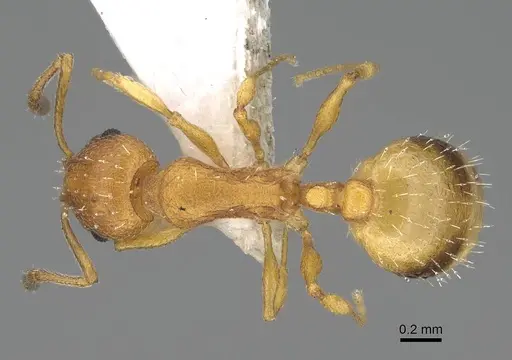
Literature
Loading distribution map...Loading products...