
Temnothorax strymonensis
- Sci. Name
- Temnothorax strymonensis
- Tribe
- Crematogastrini
- Subfamily
- Myrmicinae
- Author
- Csősz <i>et al.</i>, 2018
- Distribution
- Found in 3 countries
Introduction
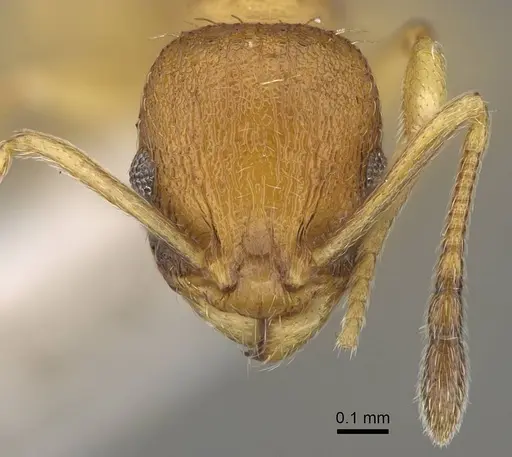
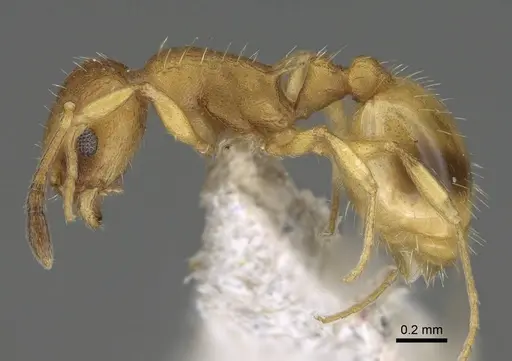
Temnothorax strymonensis is a tiny ant species from the East Mediterranean region, first described in 2018 . Workers have a yellow to dark orange body with a brown to black transverse band on the first gastral tergite (the rear part of the abdomen). This band is usually narrower than one-third of the tergite length and often has a narrow break in the middle . The species belongs to the Temnothorax interruptus group and can be identified by its FL/SL ratio exceeding 0.45,which helps separate it from the similar T. morea . This species occupies a wide range across the East Mediterranean, found in Greece, southern Bulgaria, Croatia along the Adriatic coast, and Turkey . It lives in various habitats from stream valleys with deciduous forests to mountain pastures, nesting primarily in shaded areas under moss or in limestone crevices at altitudes between 10 and 1550 meters . The species name refers to the ancient Strymon River (now Struma) in Bulgaria, which is the type locality .
Quick Summary
- Difficulty: Medium
- Origin & Habitat: East Mediterranean species found in Greece, southern Bulgaria, Croatia, and Turkey. Inhabits stream valleys with deciduous or mixed forests, open oak woodlands, mountain pastures with phrygana and oak shrubs, and occasionally montane conifer forests. Nests in shaded areas under moss or in limestone crevices [1][4].
- Colony Type: Single-queen (monogyne) colonies, inferred from typical patterns in the Temnothorax interruptus group, though not confirmed in research for this species.
- Size & Growth:
- Queen: Size data unavailable, total length not provided in research, inferred from related Temnothorax species (~3-5 mm)
- Worker: Size data unavailable, total length not provided in research, inferred from Temnothorax genus (~2-4 mm)
- Colony: Unknown, no colony size data in research, based on related species, likely up to a few hundred workers
- Growth: Moderate (inferred from genus patterns)
- Development: Unknown, no specific development data for this species (Development time is unstudied, typical Temnothorax species take 6-10 weeks at room temperature, but this is an extrapolation.)
- Antkeeping:
- Temperature: Keep at 20-24°C. This species tolerates a wide range in the wild (10-1550m elevation), so room temperature is suitable. Avoid temperatures above 28°C or below 15°C for extended periods [1].
- Humidity: Provide a humidity gradient: keep the nest substrate consistently moist (but not waterlogged) in one area, with a drier zone for resting. This mimics their natural microhabitat under moss and in limestone crevices [1].
- Diapause: Likely yes, based on its temperate distribution, a winter dormancy of 2-3 months at 5-10°C is recommended, though not confirmed in research. Reduce feeding and keep nest slightly moist during this period.
- Nesting: Prefers tight chambers and narrow passages scaled to their tiny size. Y-tong (AAC) nests or small plaster nests work well. Provide moss or small crevice-like spaces to mimic their natural limestone crevice nesting. Test tubes with cotton can work for founding colonies, but ensure the cotton is packed tightly to prevent escape [1][4].
- Behavior: Generally peaceful and non-aggressive. Workers are small but active foragers. They may use tandem running to recruit nestmates, a common behavior in Temnothorax. Their defense mechanism is 'smearing', they have a modified stinger that wipes venom onto enemies rather than piercing, so they are not known to sting. Escape prevention is critical due to their tiny size, use fine mesh barriers and tight-fitting lids.
- Common Issues: escape prevention is critical, they can squeeze through gaps as small as 1mm, founding behavior is unstudied, do not assume claustral or semi-claustral, observe carefully, test tube setups can flood if water reservoirs are too large for such small colonies, wild-caught colonies may carry parasites that can devastate captive populations
Housing and Nest Setup
Temnothorax strymonensis is a tiny ant, so your housing setup must reflect their small size. Y-tong (AAC) nests with narrow chambers work well because they mimic the tight limestone crevices these ants naturally nest in [1]. Small plaster nests or thin-layer 3D-printed nests are also suitable. For founding colonies, a standard test tube setup works, but ensure the cotton is packed firmly, these tiny ants can easily escape through gaps that larger species would ignore. The nest should have both a moist area (for brood) and a drier area (for workers to rest). A small piece of moss in the outworld adds enrichment and helps maintain humidity. Because they are so small, escape prevention must be excellent, apply Fluon or similar barriers to all edges and use fine mesh for any ventilation holes [4].
Feeding and Diet
Like most Temnothorax species, T. strymonensis is omnivorous with a preference for protein. Offer small live prey such as fruit flies, pinhead crickets, or tiny mealworms. They will also accept sugar sources, a drop of honey water or sugar water can be offered occasionally. In the wild, they forage for small insects and tend aphids for honeydew. Feed founding colonies small amounts every few days, removing any uneaten prey to prevent mold. Once established, offer protein 2-3 times per week and keep a constant sugar source available. Their small size means even tiny prey items are substantial meals.
Temperature and Seasonal Care
This species tolerates a wide temperature range in the wild (found from 10-1550m elevation), so captive colonies do well at room temperature, ideally 20-24°C [1]. Avoid temperatures above 28°C or below 15°C for extended periods. Based on its temperate distribution, a winter dormancy period of 2-3 months at 5-10°C is recommended (inferred from genus patterns). During this time, reduce feeding significantly and keep the nest slightly moist but not wet. Do not feed during deep dormancy. The cooling period helps trigger proper reproductive cycles and keeps colonies healthy long-term.
Colony Founding
The founding method for Temnothorax strymonensis is unconfirmed in research. Many Temnothorax species are claustral (queens seal themselves in and raise the first brood using stored reserves), but this has not been directly observed for this species. If you obtain a queen, provide a test tube setup with a cotton water reservoir and keep it in the dark. Expect the founding process to be slow, check only infrequently to avoid disturbance. Once the first workers emerge, begin offering tiny food items near the nest entrance.
Behavior and Observation
These ants are peaceful and not aggressive toward keepers. Workers are active and can be observed foraging in the outworld. Like other Temnothorax, they may use tandem running, where one worker leads another to a food source, as a recruitment method. Their defense mechanism is 'smearing': they have a modified stinger that wipes venom onto enemies rather than piercing, so they pose no danger to humans (based on subfamily Myrmicinae, tribe Crematogastrini). Their small size and dark coloration with the distinctive abdominal band make them visually distinctive. Watch for the characteristic dark transverse band on the first gastral tergite, this is one of the key identification features of this species [1][2].
Growth and Development
Colony growth is expected to be moderate, based on related Temnothorax species. No specific growth data is available for T. strymonensis. After the founding stage, subsequent broods likely develop faster as the queen focuses on egg production. A well-established colony may reach several hundred workers over 1-2 years, but this is an estimate. Growth rate depends on temperature and feeding. Mature colonies may produce alates (reproductives) annually if conditions are favorable, though this has not been documented in captivity.
Frequently Asked Questions
How long does it take for Temnothorax strymonensis to produce first workers?
This is unknown for this species. For many Temnothorax species, egg to worker takes about 6-10 weeks at room temperature, but no specific data exists for T. strymonensis. Be patient and check only sparingly.
What do Temnothorax strymonensis ants eat?
They are omnivorous with a protein preference. Offer small live prey like fruit flies, tiny crickets, or small mealworms. They also accept sugar sources like honey water or sugar water. In the wild, they forage for small insects and collect honeydew from aphids.
Do Temnothorax strymonensis ants sting?
No, they do not sting. Their defense mechanism is smearing, they wipe venom onto enemies using a modified stinger. They are completely harmless to keepers.
What temperature is best for Temnothorax strymonensis?
Keep them at 20-24°C. This species naturally occurs across a wide elevation range (10-1550m), so they tolerate some variation. Avoid temperatures above 28°C or below 15°C for extended periods [1].
Do Temnothorax strymonensis need hibernation?
Likely yes, based on its temperate distribution, a winter dormancy of 2-3 months at 5-10°C is recommended, though not confirmed in research. Reduce feeding and keep the nest slightly moist during this period.
How big do Temnothorax strymonensis colonies get?
Colony size is unknown, no data is available from research. Based on related Temnothorax species, colonies likely reach several hundred workers under good conditions.
Can I keep multiple Temnothorax strymonensis queens together?
This is unstudied. Most Temnothorax in the interruptus group are monogyne (single-queen), but this has not been confirmed for T. strymonensis. Do not attempt to combine queens unless you are sure about their social structure.
What is the best nest type for Temnothorax strymonensis?
Y-tong (AAC) nests with narrow chambers or small plaster nests work best. Their tiny size requires tight chambers scaled to their body. Test tubes work for founding colonies but ensure tight cotton packing. Provide both moist and dry areas in the nest [1][4].
Why are my Temnothorax strymonensis escaping?
Their tiny size means they can squeeze through gaps that larger ants cannot. Use excellent escape prevention: apply Fluon or similar barriers to all edges, use fine mesh for ventilation, and ensure all lids fit tightly. Check for gaps as small as 1mm.
Is Temnothorax strymonensis good for beginners?
This species is rated as medium difficulty. While not the hardest ant to keep, their tiny size and specific escape prevention needs make them better suited for keepers who already have some experience with small ant species. Also, the founding method is unconfirmed, so patience is required.
Report an Issue
The current care sheet is based fully on literature. See inconsistencies, or something that's incorrect? Please , it will be resolved after review from an admin. Contributing to the blogs tab also helps providing information, to make us be able to further improve the caresheets. Thank you for your support!
References

This caresheet is licensed under CC BY-SA 4.0 .
Community Blogs
CASENT0922407
View on AntWeb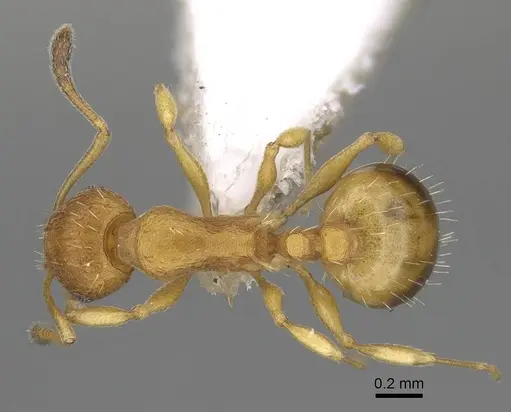
Literature
Loading distribution map...Loading products...