
Temnothorax algerianus
- Sci. Name
- Temnothorax algerianus
- Tribe
- Crematogastrini
- Subfamily
- Myrmicinae
- Author
- Cagniant, 1968
- Distribution
- Found in 2 countries
Introduction
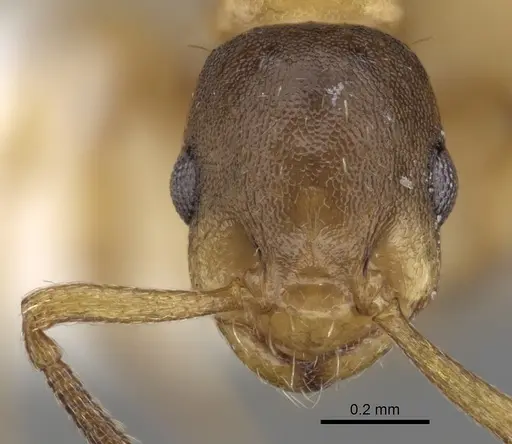
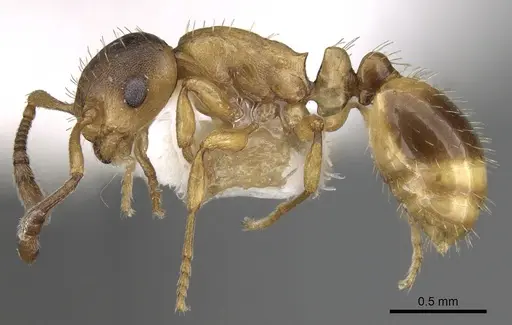
Temnothorax algerianus is a small, parasitic ant from North Africa (Morocco and Algeria), with recent records in southern Spain . It is an obligate slave-maker (dulosis) that cannot survive without a host colony, most commonly Temnothorax spinosus. Queens invade host nests, kill the host queen, and are accepted by host workers as replacement reproductives . Workers have distinctive short petiolar hairs that help separate them from similar species like Temnothorax kraussei and Temnothorax ravouxi . Body size is not reported in the literature.
Quick Summary
- Difficulty: Expert
- Origin & Habitat: Mediterranean and North African regions: Morocco, Algeria, and southern Spain. Inhabits dry, rocky habitats with sparse vegetation where host species nest [1][2].
- Colony Type: Polygynous (multiple queens) in most populations, though monogynous and functionally monogynous colonies also occur. Queens exhibit agonistic behavior that influences whether young queens stay or leave to found new colonies [3][2].
- Size & Growth:
- Queen: Size data unavailable
- Worker: Size data unavailable
- Colony: Unknown, parasitic species typically maintain smaller colonies than their hosts [3]
- Growth: Moderate, depends on host colony success
- Development: Unknown, tied to host species development (Development is likely similar to host Temnothorax spinosus, but specific data are lacking.)
- Antkeeping:
- Temperature: Mediterranean species, keep warm and stable, around 20-25°C. A slight gradient helps thermoregulation. Avoid temperatures below 15°C except during hibernation [2].
- Humidity: Dry climate, keep the nest substrate mostly dry or slightly moist. Provide a water source (test tube or water feeder) but allow the nest to dry out between refills. Do not keep wet [2].
- Diapause: Yes, queens may disperse in fall, winter, or spring at low temperatures, suggesting a need for seasonal cool-down. Provide a winter rest period at 10-15°C for 2-3 months [2].
- Nesting: Requires a host colony. Best kept in a mixed-colony setup with chambers for both parasite and host. Use Y-tong (AAC) or plaster nests with tight spaces (these ants are very small). Avoid acrylic nests [2].
- Behavior: Active slave-maker, workers conduct raids on neighboring host nests to steal brood [2]. Queens show agonistic behavior in polygynous groups, which can lead to some queens leaving the nest. Workers are small and quick, so escape risk is moderate, use fine mesh and seal gaps [2].
- Common Issues: Host dependency is the primary challenge, without a healthy host colony, the parasite colony will die [3]., Colony establishment often fails if the parasite queen is rejected by host workers after killing the host queen [2]., Overpopulation of parasites can exhaust host workers, maintain a balanced ratio by avoiding overfeeding or excessive growth., Small size means escapes through standard barriers are possible, use fine mesh (under 1mm) and check connections regularly [2]., Finding and maintaining a suitable host species (e.g. Temnothorax spinosus) is difficult and may require specialized sources [1].
Understanding the Parasitic Lifestyle
Temnothorax algerianus is an obligate social parasite, it cannot survive without a host colony. This makes it fundamentally different from most ant species kept in captivity. The queen must invade an established colony of a host species (typically Temnothorax spinosus) and kill the host queen through strangulation [1]. Once the host queen is dead, the parasite queen is accepted by the host workers as their new reproductive, effectively taking over the colony [2]. The host workers continue their normal duties (foraging, brood care, nest maintenance) while the parasite queen lays eggs. Worker ants of Temnothorax algerianus then conduct slave raids on neighboring host colonies, stealing pupae that emerge as additional host workers [2]. This relationship is permanent, the parasite colony cannot survive without its host. You must maintain both species for success.
Housing and Colony Setup
Keeping Temnothorax algerianus requires a dual-colony setup, you need both the parasite and a healthy host colony. The simplest approach is to obtain an already-established mixed colony containing both species. If starting from scratch, you would need to introduce a mated parasite queen to a host colony, which is challenging and often fails. For housing, use a Y-tong (AAC) or plaster formicarium that allows you to observe both the parasite and host sections. Connect multiple outworlds if you want to simulate slave-raiding behavior. Temperature should be maintained at 20-25°C with a slight gradient. Humidity should be low to moderate, keep the nest mostly dry with a water source always available. The nest should have chambers sized appropriately for these tiny ants, tight spaces help them feel secure. Avoid acrylic nests [2].
Feeding and Nutrition
Feed both the parasite and host workers together. The host workers will forage for food and feed the entire colony, including the parasite individuals. Offer standard ant foods: sugar water or honey for energy, and protein sources like fruit flies, small crickets, or mealworms. Since host workers do the foraging, ensure food is accessible in the outworld. Feed every 2-3 days, removing uneaten food to prevent mold. Fresh water should always be available. The parasite workers will also feed directly when they encounter food in the outworld. Monitor feeding activity, active foraging indicates a healthy mixed colony [2].
Reproduction and Nuptial Flights
Reproduction in Temnothorax algerianus is unique among ants. Young queens mate inside the mother nest rather than during nuptial flights [2]. After mating, they have two options: remain in the mother colony as additional reproductive queens, or leave to found new colonies by invading other host nests. This departure happens over an unusually protracted period, fall, winter, or spring, at comparatively low temperatures [2]. In polygynous colonies, agonistic behavior between parasite queens has been observed and may determine which queens stay and which leave [2]. If you have a healthy established colony, you may eventually see new reproductives (both males and gynes) develop inside the nest.
Seasonal Care and Overwintering
Temnothorax algerianus experiences seasonal changes in activity. The mention of queen dispersal in fall, winter, and spring suggests they have a period of reduced activity during winter [2]. Provide a cool overwintering period of 10-15°C for 2-3 months during winter. During this time, reduce feeding frequency and allow the colony to slow down. Do not feed during hibernation. Ensure some moisture remains available, do not let the nest dry out completely. In spring, gradually increase temperature back to normal keeping temperatures. Watch for increased activity as the colony emerges from dormancy. This seasonal cycle helps maintain colony health and may trigger reproduction in established colonies [2].
Common Problems and Solutions
The biggest challenge with Temnothorax algerianus is their obligate parasitic lifestyle. If the host colony dies or is rejected, the parasite colony will also die, they cannot survive independently [3]. Host rejection of the parasite queen is a common failure point during colony establishment. Another issue is colony collapse when parasites outnumber hosts, the host workers cannot sustain the parasite population. To prevent this, maintain a balanced ratio and avoid disturbing the colony excessively. Escape is a moderate risk due to their small size, check all connections and use appropriate barriers (fine mesh). Finally, finding a proper host species can be difficult and expensive, as Temnothorax spinosus or similar hosts may not be readily available. Start with an established mixed colony if possible rather than attempting introduction [2].
Frequently Asked Questions
Can I keep Temnothorax algerianus without a host colony?
No. Temnothorax algerianus is an obligate social parasite, it cannot survive without a host colony of another Temnothorax species. The queen must invade and take over a host colony, and the host workers are essential for colony function. You must keep both species to succeed [3][1].
What do Temnothorax algerianus eat?
They eat standard ant foods, sugar water or honey for energy, and small insects like fruit flies or pinhead crickets for protein. The host workers forage and feed the entire mixed colony, but parasite workers will also feed directly when they encounter food [2].
How do I start a colony of Temnothorax algerianus?
The easiest way is to obtain an already-established mixed colony containing both the parasite and host species. Attempting to introduce a parasite queen to a host colony rarely succeeds. Once you have a mixed colony, maintain both species with proper temperature (20-25°C), low humidity, and feeding [2].
Do Temnothorax algerianus need hibernation?
Yes, they benefit from a winter rest period. Queens disperse from mother colonies in fall, winter, and spring at low temperatures, suggesting natural dormancy [2]. Provide 2-3 months at 10-15°C during winter.
Are Temnothorax algerianus good for beginners?
No. This is an expert-level species due to their obligate parasitic lifestyle. You must maintain both the parasite and a healthy host colony, balance their populations, and ensure the host accepts the parasite queen. This complexity makes them unsuitable for beginners [3].
How big do Temnothorax algerianus colonies get?
Colony size is unknown and likely limited by host colony resources. Parasitic species typically have smaller colonies than their hosts, expect a few dozen to a few hundred individuals total (both parasite and host) [3].
Can I keep multiple Temnothorax algerianus queens together?
Yes, polygynous colonies with multiple reproductive queens are common in this species [3][2]. However, agonistic behavior between queens has been observed, which may lead to some queens leaving the colony to found new ones [2].
What temperature do Temnothorax algerianus need?
Keep them at 20-25°C. This Mediterranean species prefers warm, stable conditions. A slight temperature gradient allows the colony to regulate its own temperature. Avoid temperatures below 15°C except during hibernation [2].
Do Temnothorax algerianus conduct slave raids?
Yes, worker Temnothorax algerianus actively raid neighboring host colonies to steal brood [2]. The stolen pupae emerge as host workers that serve the parasite colony. This behavior is called dulosis or slave-making.
What is the host species for Temnothorax algerianus?
The primary host is Temnothorax spinosus. Other documented hosts include Temnothorax racovitzai, Temnothorax unifasciatus, Temnothorax curtulus, Temnothorax gentilis, Temnothorax monjauzei, and Temnothorax tebessae [1]. In captivity, Temnothorax spinosus is the most reliable host.
Why is my Temnothorax algerianus colony dying?
The most likely cause is host colony failure. Without a healthy host colony, the parasite cannot survive. Other causes include host rejection of the parasite queen, parasite population exceeding host resources, or improper temperature/humidity. Review all care parameters and ensure the host colony is thriving [3][2].
Report an Issue
The current care sheet is based fully on literature. See inconsistencies, or something that's incorrect? Please , it will be resolved after review from an admin. Contributing to the blogs tab also helps providing information, to make us be able to further improve the caresheets. Thank you for your support!
References

This caresheet is licensed under CC BY-SA 4.0 .
Community Blogs
CASENT0281810
View on AntWeb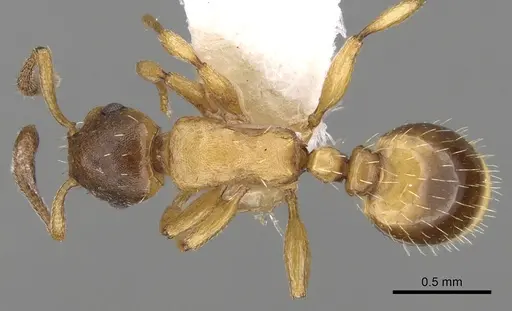
Literature
Loading distribution map...Loading products...