
Temnothorax monjauzei
- Sci. Name
- Temnothorax monjauzei
- Tribe
- Crematogastrini
- Subfamily
- Myrmicinae
- Author
- Cagniant, 1968
- Distribution
- Found in 1 countries
Introduction
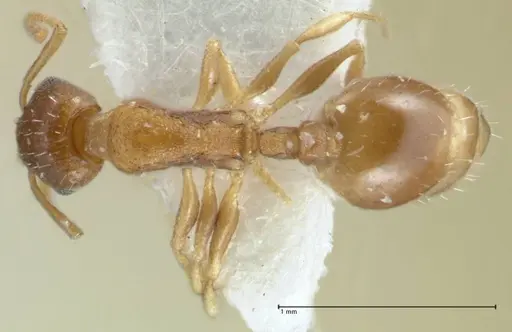
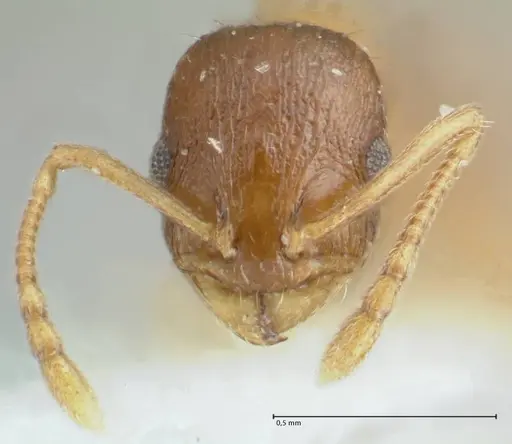
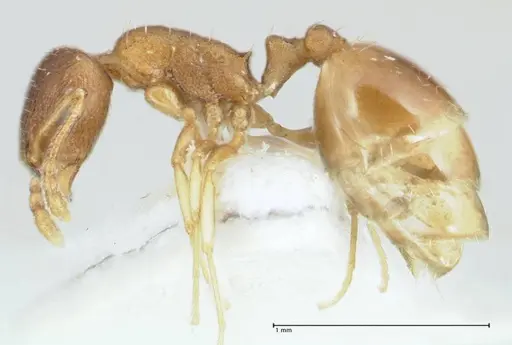
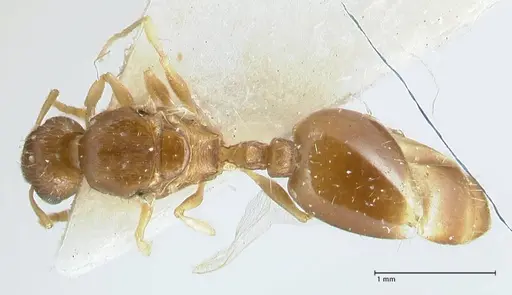
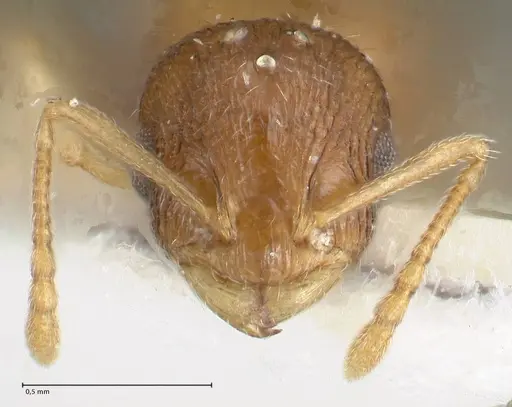
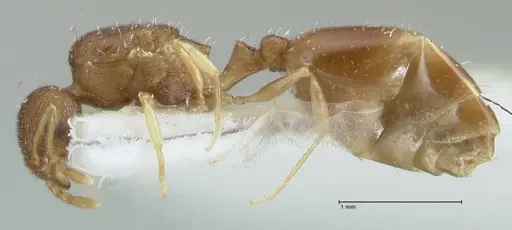
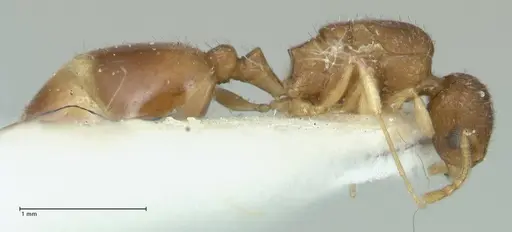
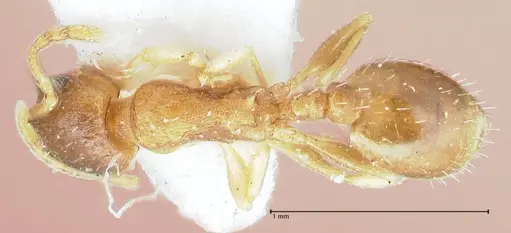
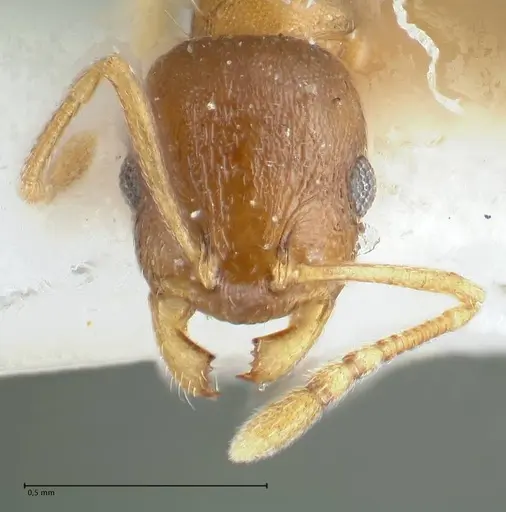
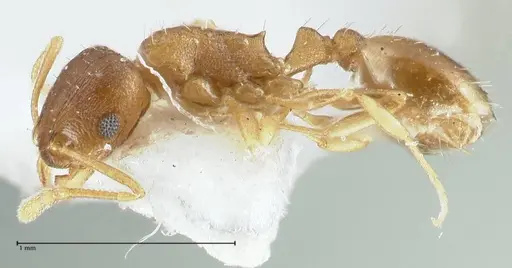
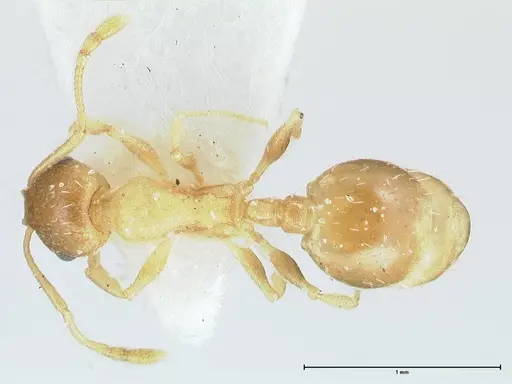
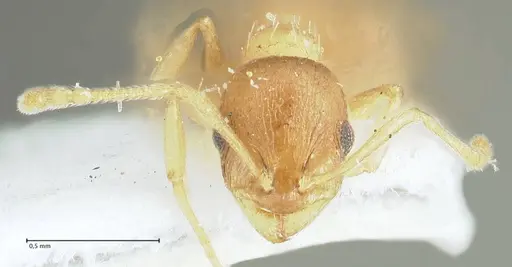
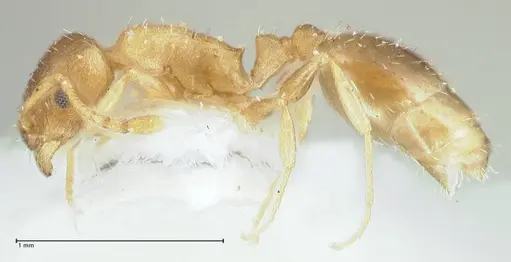
Temnothorax monjauzei is a very small ant found only in Algeria, North Africa . Workers are tiny, roughly 2-4 mm (inferred from the genus), and queens are a bit larger, though no exact measurements are published. They are part of the tebessae species group, a cluster of closely related ants across the Mediterranean . The ants are pale to medium brown with a slender, narrow-waisted body typical of Temnothorax. In the wild, they nest in small cavities under stones or in rotting wood in Algerian forests . This species is a morning swarmer, meaning nuptial flights happen early in the day . Their biology is not well documented, so most care advice is based on other Temnothorax species.
Quick Summary
- Difficulty: Easy
- Origin & Habitat: Algeria in North Africa, forest habitats in the Palaearctic region [1]. They likely live in mild, moderately humid conditions under stones or in small wood cavities.
- Colony Type: Unconfirmed, likely monogyne (single queen) based on typical Temnothorax patterns, but no specific data for this species.
- Size & Growth:
- Queen: ~5-7 mm, inferred from typical Temnothorax queen sizes (no direct measurements available)
- Worker: ~2-4 mm, inferred from typical Temnothorax worker sizes (no direct measurements available)
- Colony: Unknown, estimated up to a few hundred workers based on related species
- Growth: Moderate, typical for Temnothorax
- Development: Unknown, no specific data, inferred 6-10 weeks at room temperature based on related species (Development time is an estimate, actual timing may vary.)
- Antkeeping:
- Temperature: Room temperature, roughly 20-24°C, is likely suitable. No specific data, adjust based on colony behavior.
- Humidity: Moderate, keep the nest substrate slightly moist but not wet. No specific requirements known.
- Diapause: Unknown, Mediterranean Temnothorax often benefit from a 2-3 month cool rest (10-15°C), but this is not confirmed for T. monjauzei.
- Nesting: Small, tight cavities, Y-tong (AAC) nests with narrow chambers, test tubes, or naturalistic setups with flat stones and rotting wood.
- Behavior: Peaceful and timid, workers prefer to flee rather than fight. They have a modified stinger that smears venom (subfamily trait), but it is not painful to humans [4]. Extremely small size makes escape prevention critical, use fine mesh and tight seals.
- Common Issues: escape is very likely due to tiny size, use ventilation screens finer than 0.5mm and seal all gaps., slow colony growth may test patience, avoid overfeeding or excessive disturbance., overly wet nests can drown brood or cause mold, keep substrate damp, not soaked., protein deficiency stops brood development, offer small prey (fruit flies, pinhead crickets) regularly., incorrect diapause may cause colony decline, if you provide a cool rest, ensure it matches natural timing (winter).
Housing and Nest Setup
Because Temnothorax monjauzei is so small, it needs a nest with very narrow chambers. A test tube setup, one-third water, cotton plug, queen inside, works perfectly for founding. For larger colonies, use Y‑tong (AAC) nests with chambers no more than 3-4 mm high, or a naturalistic setup with flat stones and rotting wood placed in a shallow outworld. Tight, dark spaces make the colony feel secure. Avoid acrylic nests, they are hard to seal and too open for this tiny ant [1].
Feeding and Diet
These ants are omnivorous but need plenty of protein for brood development. Offer small live prey such as fruit flies, pinhead crickets, or aphids twice a week. They also accept honey or sugar water, but protein is the priority. Remove uneaten food after 24 hours to prevent mold. Always have a clean water source, a small test‑tube waterer or damp cotton ball works well [1].
Temperature and Seasonal Care
Keep the colony at room temperature (20-24°C). Heating is usually not needed. In winter, many Mediterranean Temnothorax benefit from a cool rest period of 2-3 months at 10-15°C. Since this has not been confirmed for T. monjauzei, you can try it or keep them active year-round. If you choose to rest them, move the colony gradually to a cooler spot like an unheated basement [1].
Colony Development and Growth
The founding method is unknown for this species. Most Temnothorax are claustral (the queen seals herself in and raises the first brood without foraging), but this is not confirmed. A newly mated queen should be placed in a dark, undisturbed test tube. First workers, called nanitics, emerge after several weeks, but exact timing is unknown. Growth is slow at first, then picks up. Mature colonies may reach a few hundred workers after 2-3 years. Avoid checking on the queen for the first month to reduce stress [1].
Behavior and Temperament
This ant is remarkably peaceful. Workers are timid and prefer to hide or run away rather than fight. They have a modified stinger that smears venom, but it is harmless to humans. Foragers search alone for small insects and honeydew. Because of their tiny size, they can escape through almost any gap, use fluon barriers on outworld walls and ensure all ventilation holes have metal or nylon mesh finer than 0.5 mm [4].
Frequently Asked Questions
How long does it take for Temnothorax monjauzei to raise first workers?
This is not known for this species. Based on related Temnothorax, first workers may appear in 6-10 weeks at room temperature, but expect variation [1].
Can I keep multiple Temnothorax monjauzei queens together?
Unlikely. Most Temnothorax are monogyne (single queen). There is no evidence that T. monjauzei accepts multiple queens. Keep each queen separate to be safe [1].
Do Temnothorax monjauzei ants sting?
No. They have a modified stinger that smears venom, but it cannot pierce human skin. At worst, a worker might give a tiny pinch. They are harmless [1].
What size colony does Temnothorax monjauzei reach?
Unknown precisely. Based on the genus, colonies likely stay under a few hundred workers. They are a small-colony species, not a massive producer [1].
Do Temnothorax monjauzei need hibernation?
Not confirmed. Many Mediterranean Temnothorax benefit from a 2-3 month cool rest at 10-15°C, but it may not be essential. You can try it or keep them warm year-round [1].
What do Temnothorax monjauzei eat?
Small live prey (fruit flies, pinhead crickets) offered twice a week, plus occasional honey or sugar water. Protein is critical for brood, skimping on it will stop growth [1].
Are Temnothorax monjauzei good for beginners?
Yes, because they are peaceful, don't sting, and tolerate room temperature. The only challenges are their tiny size (easy to lose) and slow growth. If you can seal the setup well, they are an excellent starter ant [1].
When should I move my colony to a formicarium?
Wait until the colony has at least 20-30 workers. Connect the test tube to the new nest and let the ants move on their own. Forcing a move can cause stress and brood abandonment [1].
Why are my Temnothorax monjauzei dying?
Possible reasons: too much moisture (drowning), disturbance during founding, lack of protein, or escape. Check that the test tube is not flooding, that the queen was left alone, and that live prey is being offered. Diapause issues can also cause die-offs [1].
Report an Issue
The current care sheet is based fully on literature. See inconsistencies, or something that's incorrect? Please , it will be resolved after review from an admin. Contributing to the blogs tab also helps providing information, to make us be able to further improve the caresheets. Thank you for your support!
References

This caresheet is licensed under CC BY-SA 4.0 .
Community Blogs
Literature
Loading distribution map...Loading products...