
Rogeria curvipubens
- Sci. Name
- Rogeria curvipubens
- Tribe
- Solenopsidini
- Subfamily
- Myrmicinae
- Author
- Emery, 1894
- Distribution
- Found in 21 countries
Introduction
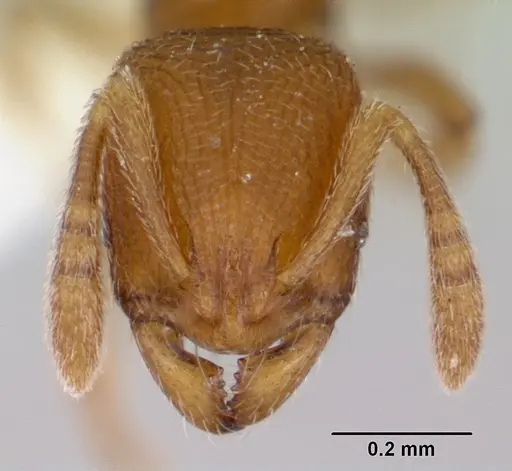
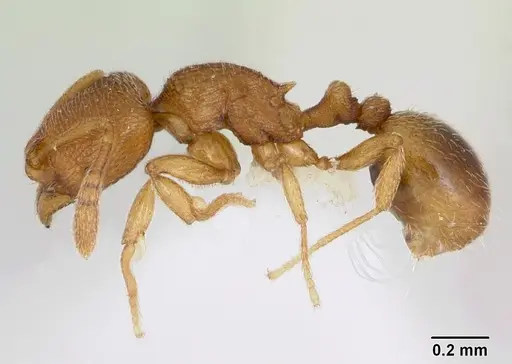
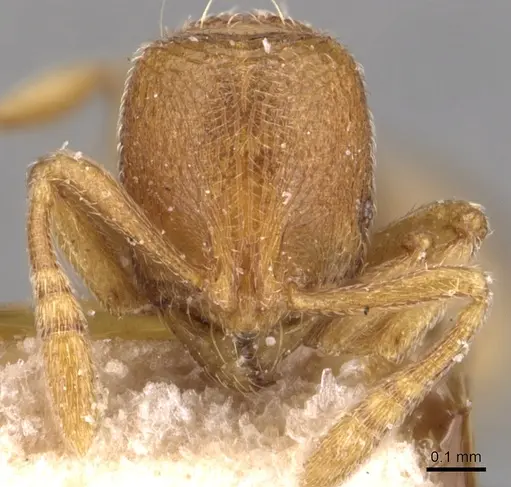
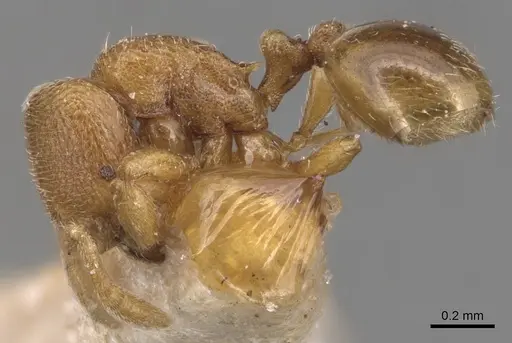
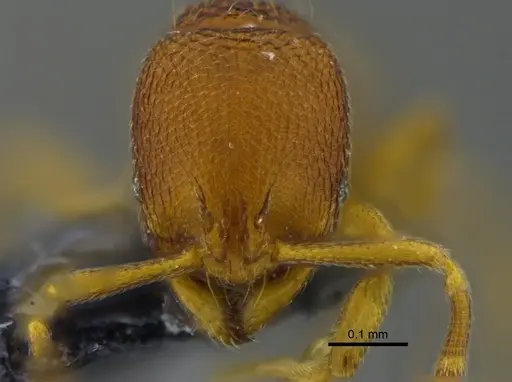
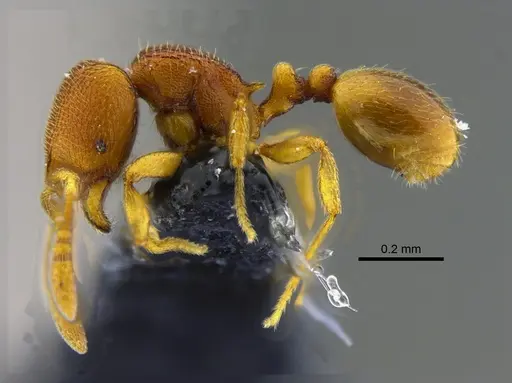
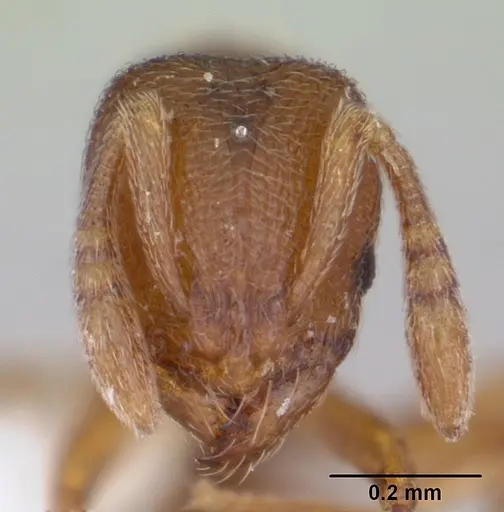
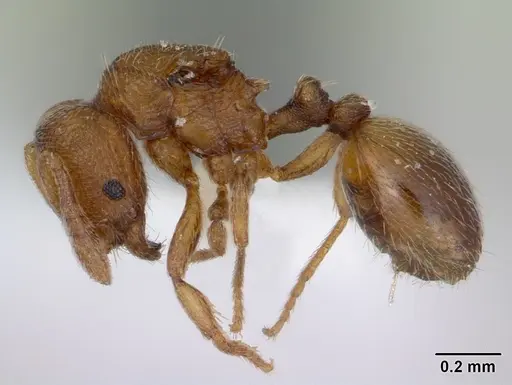
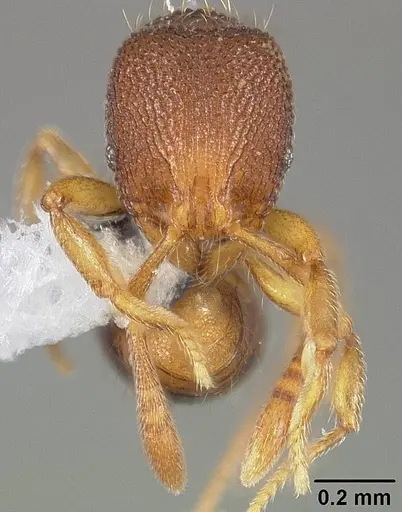
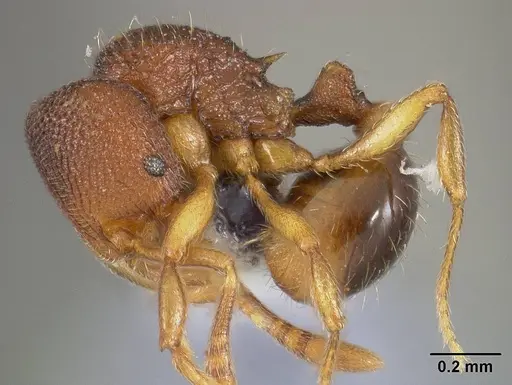
Rogeria curvipubens is a tiny ant species native to the Caribbean islands and northern South America, ranging from Mexico to Brazil . Workers measure just 1.9–2.3 mm, making them one of the smaller ant species you will encounter . Queens are slightly larger at 2.3–2.6 mm . They have a distinctive appearance with smooth, shiny sides of the head and a strongly vaulted postpetiolar node. Their body color ranges from yellow to golden or light brown, with lighter appendages. These ants live in leaf litter and soil in tropical rainforests, secondary growth forests, and dry tropical forests, always below 500 m elevation . Collection records also come from rubber plantations in China, where they are considered an exotic species . This species became a cryptic introduction in the Galápagos Islands, where it lives in the humid and transition zones on several inhabited islands . In its native range, it is a shy, non‑aggressive leaf‑litter dweller. Its sting apparatus is weak with spatulate (spoon‑shaped) lancets . Males have never been collected, so the reproductive cycle is poorly understood .
Quick Summary
- Difficulty: Expert
- Origin & Habitat: Native to the Caribbean islands and northern South America, from Mexico to Brazil. Found in tropical rain forest, secondary growth forest, and dry tropical forest below 500 m elevation [1] [4]. Also occurs in rubber plantations in China as an exotic species [5]. Introduced to the Galápagos Islands [8] [6].
- Colony Type: Colony structure is unconfirmed. Males have not been collected [3].
- Size & Growth:
- Queen: 2.3–2.6 mm [3]
- Worker: 1.9–2.3 mm [3], some early records report 1.3–1.75 mm [9]
- Colony: Unknown – likely small colonies, typical of small leaf‑litter ants
- Growth: Unknown – likely moderate
- Development: Estimated 6–8 weeks at tropical temperatures (25–28 °C) based on typical Myrmicinae development (Direct development data unavailable, estimated from related genera in Solenopsidini tribe)
- Antkeeping:
- Temperature: Keep at 24–28 °C. This is a tropical species that thrives in warm, humid conditions [6]. Room temperature within this range works well, or use a heating cable on one side of the nest to create a gentle gradient.
- Humidity: High humidity required – these ants live in leaf litter in tropical forests. Keep the nest substrate consistently moist but not waterlogged. Aim for 70–80 % relative humidity with good ventilation to prevent mold.
- Diapause: No – being a tropical species, they do not require hibernation. Keep them warm year‑round [6].
- Nesting: Natural nesting occurs in leaf litter and soil. In captivity, a naturalistic setup with moist substrate (coco fiber, soil mix) works well. Y‑tong nests with tight chambers also work since they are small ants. Avoid dry conditions.
- Behavior: These are docile, non‑aggressive ants that prefer to stay hidden in leaf litter. They are not territorial or defensive, and their sting is weak [3]. Workers are active foragers in the leaf‑litter layer. Because of their tiny size, escape prevention is critical – they can squeeze through standard test tube cotton. Use fine mesh barriers and tight‑fitting lids. They are slow‑moving and not particularly bold.
- Common Issues: tiny size means escapes are likely without fine mesh barriers (at most 0.5 mm openings)., dry conditions quickly lead to colony loss – they need constant moisture., wild‑caught colonies may have parasites or be displaced by invasive species like Wasmannia auropunctata [6]., this species is introduced in the Galápagos Islands and elsewhere, extreme caution is required to prevent any escape. It is NOT recommended to keep this species outside its native range., slow colony growth can frustrate beginners expecting fast results., mold problems develop if ventilation is inadequate or substrate stays too wet.
Housing and Setup
Rogeria curvipubens is a tiny leaf‑litter ant that needs a setup scaled to its small size. A naturalistic terrarium‑style formicarium works best – use a mixture of coco fiber and soil as substrate, kept consistently moist. The ants will nest in the substrate and forage in the upper layers. Because they are only about 2 mm long, standard test tube setups can work but require careful escape prevention – use cotton with tight‑fitting plugs or fine mesh. A small Y‑tong nest with chambers sized appropriately for tiny ants also works well. Whatever setup you choose, maintain high humidity and provide a moisture gradient so ants can find their preferred spot. Avoid any nesting material that dries out quickly [1] [8].
Feeding and Diet
Little is known about the specific diet of Rogeria curvipubens. In the wild, they forage in leaf litter and likely consume small arthropods (e.g., mites, springtails) and sweet substances like honeydew. In captivity, offer small protein sources such as fruit flies, pinhead crickets, or tiny mealworms. Sugar water or honey can be offered occasionally, though acceptance varies. Feed small amounts two to three times per week and remove uneaten food promptly to prevent mold. Given their tiny size, prey items should be appropriately scaled – springtails or fruit fly pupae are ideal.
Temperature and Seasonal Care
These are tropical ants that need warm, stable temperatures year‑round. Keep the nest area at 24–28 °C – this matches their natural habitat in Caribbean and South American lowland forests [6]. Unlike temperate species, they do not require hibernation or cooling periods. A heating cable placed on one side of the nest can create a temperature gradient, allowing ants to regulate their position. Avoid temperature drops below 20 °C or sudden fluctuations. Room temperature in most homes is acceptable if kept in the warm end of their range.
Behavior and Temperament
Rogeria curvipubens is a docile, secretive species that spends most of its time hidden in leaf litter or substrate. Workers are slow‑moving and not aggressive. Their sting apparatus is described as weak with spatulate (spoon‑shaped) lancets, meaning they are not a stinging threat to humans [3]. Colonies are likely small and non‑territorial. The main behavioral concern for keepers is their tiny size – they are expert escape artists and can squeeze through gaps that seem impossible. Always use fine mesh on any opening and check for gaps in your setup regularly.
Colony Growth and Development
Little is known about the specific development timeline of Rogeria curvipubens. Based on typical Myrmicinae patterns and their small size, expect 6–8 weeks from egg to worker at optimal temperatures (25–28 °C). Queens measure 2.3–2.6 mm, workers 1.9–2.3 mm [3]. Colonies are likely small – probably under a few hundred workers at maturity. Growth will be slower than larger ant species, so patience is required. The first workers (nanitics) will be smaller than mature workers. Males have never been collected, suggesting reproduction may be seasonal or that alates are rarely produced [3].
Frequently Asked Questions
How long does it take for Rogeria curvipubens to produce first workers?
Based on typical Myrmicinae development, expect 6–8 weeks from egg to first worker at optimal temperatures (25–28 °C). This is an estimate since specific development data for this species has not been documented.
What size colony do Rogeria curvipubens colonies reach?
Colony size is not well documented, but based on typical genus patterns for small leaf‑litter ants, colonies likely reach a few hundred workers at most. They are not large colony formers.
Can I keep multiple queens together?
The colony structure of this species has not been documented. It is unknown whether they are single‑queen or multi‑queen colonies. Until more is known, keep one queen per setup.
Are Rogeria curvipubens good for beginners?
They are expert difficulty – not recommended for beginners. The main challenges are their tiny size (escape prevention is critical), high humidity requirements, slow growth, and the fact that they are an introduced species in the Galápagos Islands and other areas, requiring extreme caution to avoid release.
Do Rogeria curvipubens need hibernation?
No – they are a tropical species from the Caribbean and northern South America. Keep them warm year‑round at 24–28 °C with no cooling period [6].
What do Rogeria curvipubens eat?
They likely accept small insects (fruit flies, springtails) and probably honeydew or sugar sources. Offer small protein prey two to three times weekly and sugar water or honey occasionally. Remove uneaten food to prevent mold.
Why are my Rogeria curvipubens escaping?
At only 1.9–2.3 mm, they are tiny enough to squeeze through standard barriers. Use fine mesh (at least 0.5 mm holes or tighter), check all lid seals, and consider coating rim edges with fluon. Cotton plugs in test tubes should be packed tightly.
Where is Rogeria curvipubens native to?
They are native to the Caribbean islands and northern South America, from Mexico to Brazil, including Cuba, Dominican Republic, Colombia, Guyana, and other countries [2] [1]. They have been introduced to the Galápagos Islands.
How do I set up a nest for Rogeria curvipubens?
Use a naturalistic setup with moist coco fiber or soil mix, or a small Y‑tong nest with appropriately sized chambers. Keep substrate consistently moist but not waterlogged, provide good ventilation, and maintain high humidity. A moisture gradient lets ants choose their preferred conditions.
Report an Issue
The current care sheet is based fully on literature. See inconsistencies, or something that's incorrect? Please , it will be resolved after review from an admin. Contributing to the blogs tab also helps providing information, to make us be able to further improve the caresheets. Thank you for your support!
References

This caresheet is licensed under CC BY-SA 4.0 .
Community Blogs
CASENT0173282
View on AntWeb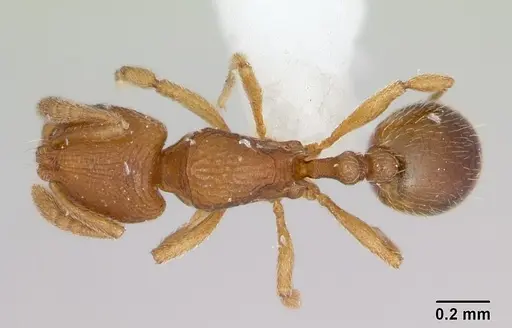
CASENT0904780
View on AntWeb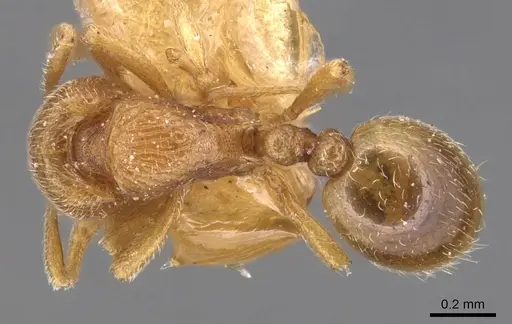
CBUMAGENT41961
View on AntWeb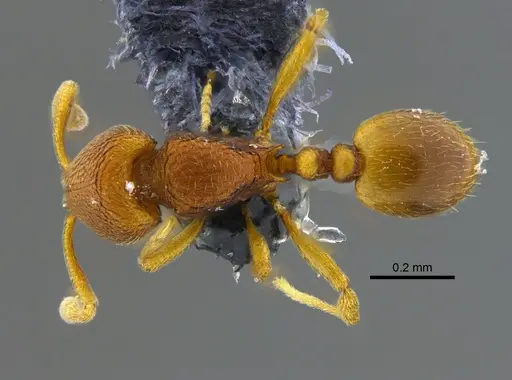
ICCDRS0002607
View on AntWeb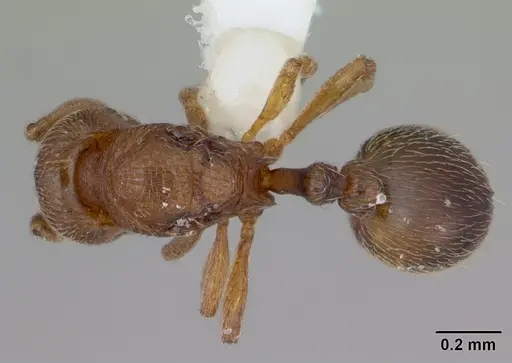
USNMENT00446371
View on AntWeb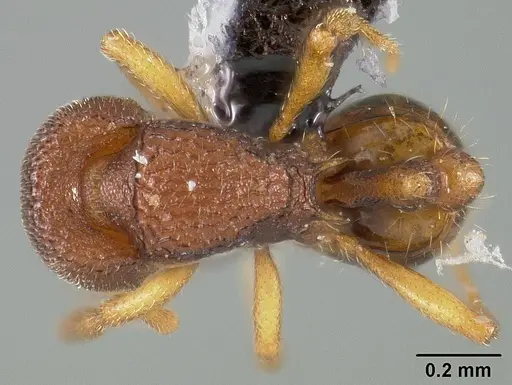
Literature
Loading distribution map...Loading products...