
Pseudomyrmex spiculus
- Sci. Name
- Pseudomyrmex spiculus
- Tribe
- Pseudomyrmecini
- Subfamily
- Pseudomyrmecinae
- Author
- Ward, 1989
- Distribution
- Found in 7 countries
Introduction
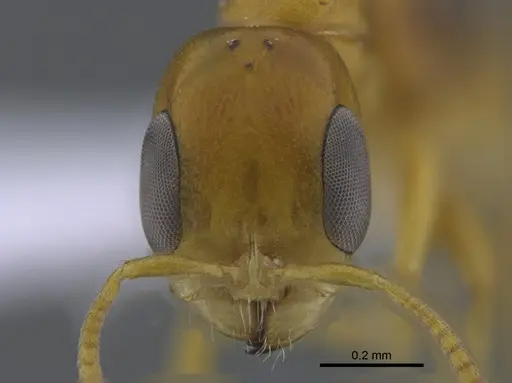
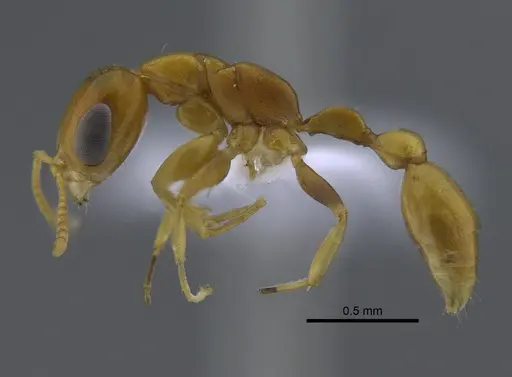
Pseudomyrmex spiculus is a small, slender ant from the P. subtilissimus group . It is recognized by its relatively large size for the group, broad head, and slender petiole . Workers have a head width of about 0.6mm , but total length is not documented and is estimated at 3-4mm based on related species. The body is grey-brown, with paler luteous-brown on the mandibles, antennae, pronotum, and petiole . This neotropical ant ranges from Mexico through Central America into South America, including Brazil, Colombia, Costa Rica, Ecuador, French Guiana, Guyana, Panama, Peru, and Suriname . These ants are generalist twig-nesters, making their homes in hollow twigs and small cavities in vegetation . They are rarely encountered and are most often collected as single foraging individuals on low vegetation or in tree-falls . P. spiculus inhabits rain forest, forest edge, littoral forest, and mangrove habitats . Workers have been observed foraging on the trunk and foliage of strangler fig trees, occasionally alongside the similar species Pseudomyrmex tenuissimus .
Quick Summary
- Difficulty: Medium
- Origin & Habitat: Neotropical rain forests and forest edges from Mexico to Brazil. Found in rain forest, rain forest edge, littoral forest, and mangrove habitats [2].
- Colony Type: Likely monogyne, but social structure is unconfirmed. Based on genus patterns, colonies probably have a single queen. Colony size appears small to moderate, typical for twig-nesting ants.
- Size & Growth:
- Queen: Unknown. No documented measurements. Inferred from genus: approximately 6-8mm total length.
- Worker: Total length not documented. Head width 0.61-0.66mm [3][2]. Body size estimated from genus: approximately 3-4mm (inferred).
- Colony: Unknown. Appears to form small colonies, typical for twig-nesting ants.
- Growth: Moderate (inferred from related species).
- Development: 6-10 weeks estimated based on related Pseudomyrmex species (no species-specific data). (Development time is not directly documented for this species, estimates are based on genus data for tropical twig-nesters.)
- Antkeeping:
- Temperature: Keep at 24-28°C, typical of tropical rain forest environments. Avoid drops below 22°C. Provide a gentle thermal gradient.
- Humidity: Maintain the nest substrate consistently moist but not waterlogged. Good ventilation is crucial to prevent mold. Avoid relying on exact percentage readings.
- Diapause: No. As a tropical species, they do not require hibernation. Keep warm conditions year-round.
- Nesting: Generalist twig-nesting ant [4]. Provide hollow twigs, bamboo sections, or Y-tong nests with narrow chambers. Include vertical foraging space with branches or mesh for climbing. The nest should be dark and well-ventilated. Do not use acrylic nests.
- Behavior: They have a functional sting and will defend their nest if disturbed (subfamily characteristic). When foraging, they are not aggressive toward humans, but handle with care. Workers are active, arboreal foragers. Due to their small size (body length ~3-4mm), use fine mesh barriers to prevent escapes. They accept sugar water and small prey.
- Common Issues: small size: escapes likely without fine mesh barriers., rare in the hobby: limited captive breeding success documented., sensitive to habitat disturbance: wild-caught colonies may struggle in captivity., requires arboreal foraging space: standard horizontal nests may not suit their natural behavior., tropical species: cannot tolerate cool temperatures or drafts.
Natural History and Distribution
Pseudomyrmex spiculus is a neotropical species with a broad distribution from Mexico through Central America into South America [2]. It has been recorded in Brazil, Colombia, Costa Rica, Ecuador, French Guiana, Guyana, Mexico, Panama, Peru, and Suriname [2]. The species is part of the P. subtilissimus group, which is monophyletic [1].
This ant is considered rare and is typically found only in forest fragments or pristine forest environments [5]. Most collections are from single individuals foraging on low vegetation or tree-falls, rather than from established nests [2]. In Costa Rica, workers have been observed foraging on the trunk and associated vegetation of strangler fig trees (Ficus oerstediana) in an old pasture [2]. It has been collected sympatrically with Pseudomyrmex tenuissimus [2].
Habitat includes rain forest, rain forest edge, littoral forest, and mangrove areas [2]. This dependence on forested habitats explains why they are rarely encountered in disturbed or agricultural landscapes. In coffee agroecosystems, it is a rare twig-nesting species and colonizes artificial nests only in certain areas [6].
Nesting Behavior and Housing
As a generalist twig-nesting ant, Pseudomyrmex spiculus naturally inhabits hollow twigs, small branches, and cavities in vegetation [4]. This is a key consideration for captive housing.
For captivity, Y-tong nests with narrow chambers or plaster nests work well. You can also provide natural hollow twigs or bamboo sections as nesting options. Because the workers are arboreal, include vertical or diagonal foraging space where they can climb on 'vegetation', mirrors their natural behavior of foraging on tree trunks and foliage. Keep the nest material slightly moist but not waterlogged. Good ventilation is essential to prevent mold. The nest should be dark or dimly lit.
Feeding and Diet
Pseudomyrmex spiculus is a generalist forager. In the wild it likely feeds on nectar, honeydew, and small insects. Workers have been observed foraging on tree trunks and vegetation searching for these food sources [2].
In captivity, offer a varied diet including sugar water or honey as an energy source. For protein, provide small live prey such as fruit flies, pinhead crickets, or small mealworms. Prey size should be appropriately small. Offer food every 2-3 days, removing uneaten prey after 24 hours to prevent mold. Always ensure fresh water is available. Observe worker activity, if they are actively foraging and food disappears quickly, you can increase frequency.
Temperature and Climate Requirements
As a neotropical species, Pseudomyrmex spiculus requires warm, stable temperatures. Based on its habitat, maintain the nest at 24-28°C. Avoid drops below 22°C. They do not require hibernation, keep warm conditions year-round. Use a heating cable or mat on one side of the enclosure to create a gentle thermal gradient, allowing workers to self-regulate. Avoid placing the colony near air conditioning vents or drafty windows. Stable warmth is more important than exact temperature precision.
Behavior and Colony Dynamics
Pseudomyrmex spiculus workers are active, agile foragers that travel along vegetation and tree trunks in search of food [2]. They belong to a subfamily known for having a functional sting, and they will defend their nest if disturbed. When foraging, they are not aggressive toward humans, but it is best to handle them with care.
Colony size is unknown but appears to be small to moderate, typical for twig-nesting ants. The species is considered rare both in the wild and in ant culture. This rarity means that any captive colonies are valuable and should be protected from stress or disturbance. Workers are slender and well-adapted for moving through vegetation. Their small size (body length roughly 3-4mm) means they can squeeze through tiny gaps, use fine mesh for all ventilation openings and closures.
Frequently Asked Questions
How long does it take for Pseudomyrmex spiculus to raise their first workers?
The exact development time is not documented for this species. Based on related Pseudomyrmex species, expect about 6-10 weeks from egg to first worker at optimal temperatures (24-28°C). Be patient, tropical species often develop faster than temperate ants, but individual colonies may vary.
What is the best nest type for Pseudomyrmex spiculus?
These are twig-nesting ants, so they do best in nests that mimic hollow twigs. Y-tong nests with narrow chambers, plaster nests, or natural twigs/bamboo sections all work well. The key is providing appropriately sized chambers for their small size and including vertical foraging space where they can climb on 'vegetation'. Avoid acrylic nests.
Do Pseudomyrmex spiculus ants sting?
Yes, they have a functional sting and will use it if the nest is threatened. However, they are generally not aggressive during foraging and stings are not medically significant. Handle with care when maintaining the nest.
Are Pseudomyrmex spiculus good for beginners?
This species is rated as Medium difficulty. While not the most challenging ant to keep, they are rare in the hobby and require specific conditions (warm temperatures, arboreal foraging space, small prey). They are better suited for keepers with some experience who can provide consistent tropical conditions.
Do Pseudomyrmex spiculus need hibernation?
No, they do not require hibernation. As a neotropical species from tropical forests, they need warm conditions year-round. Maintain temperatures between 24-28°C throughout the year without any cooling period.
How big do Pseudomyrmex spiculus colonies get?
Colony size is not well documented. Based on their twig-nesting lifestyle and rarity, colonies are likely small to moderate, a few tens to perhaps a few hundred workers at most. No exact figures are available.
What do Pseudomyrmex spiculus eat?
They are generalist foragers that accept sugar sources (honey, sugar water) and small protein prey (fruit flies, small insects). In the wild, they forage for nectar, honeydew, and small insects on tree trunks and vegetation. Offer a varied diet in captivity.
Can I keep multiple Pseudomyrmex spiculus queens together?
Based on typical Pseudomyrmex patterns, they are likely monogyne (single-queen colonies). Keeping multiple queens together is not recommended as it could lead to fighting. Start with a single founding queen for best results.
Why are my Pseudomyrmex spiculus dying?
Common causes include: temperatures below 22°C (they are tropical and cold-sensitive), conditions too dry, mold from poor ventilation, stress from disturbance, or inappropriate prey size. Ensure warm, stable conditions, moderate humidity with good airflow, and offer small prey. Wild-caught colonies may also struggle from collection stress or parasites.
When should I move Pseudomyrmex spiculus to a formicarium?
Wait until the colony has a stable population of workers before moving to a larger setup. Twig-nesting ants can be maintained in smaller setups longer than ground-nesting species. A formicarium with vertical climbing space and small chambers is ideal when the colony outgrows its initial nest.
Report an Issue
The current care sheet is based fully on literature. See inconsistencies, or something that's incorrect? Please , it will be resolved after review from an admin. Contributing to the blogs tab also helps providing information, to make us be able to further improve the caresheets. Thank you for your support!
References

This caresheet is licensed under CC BY-SA 4.0 .
Community Blogs
CBUMAGENT41736
View on AntWeb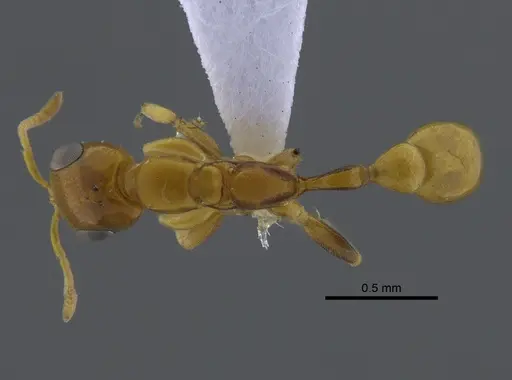
Literature
Loading distribution map...Loading products...