
Proceratium panamense
- Sci. Name
- Proceratium panamense
- Tribe
- Proceratiini
- Subfamily
- Proceratiinae
- Author
- de Andrade, 2003
- Distribution
- Found in 1 countries
Introduction
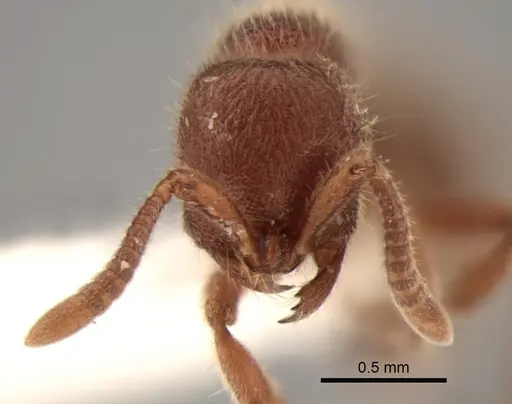
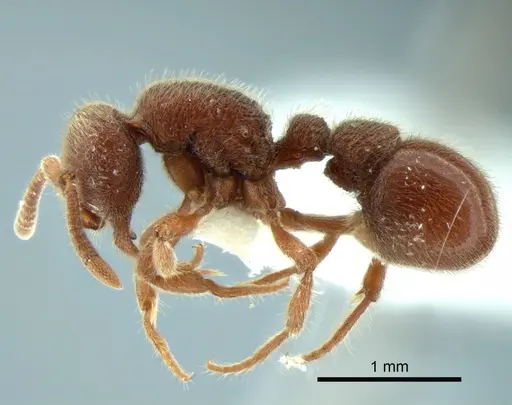
Proceratium panamense is a ground-dwelling ant species found in Costa Rica, Panama, and possibly Venezuela . Workers measure 3.80-4.77 mm in total length, with a dark ferrugineous to brown coloration . Queens are about 4.57 mm, and males about 5.30 mm . This species belongs to the Micrommatum Clade and resembles Proceratium micrommatum but is larger . Nothing is known about the biology of this species - colony structure, founding behavior, diet, and seasonal patterns are undocumented . They are collected from forest floor habitats .
Quick Summary
- Difficulty: Expert
- Origin & Habitat: Costa Rica, Panama, and possibly Venezuela, in forest floor habitats [1][4].
- Colony Type: Unknown, no data on queen number or social structure [3].
- Size & Growth:
- Antkeeping:
- Temperature: Unknown, no specific data. Based on Central American distribution, likely moderate temperatures, but requirements are unconfirmed [3].
- Humidity: Unknown, as ground-dwelling ants, they may require moist conditions, but no data exists [3].
- Diapause: Unknown, no data on overwintering [3].
- Nesting: Ground-dwelling in nature, likely nesting in soil or under stones [4]. In captivity, use moist substrate or Y-tong/plaster nests with escape prevention.
- Behavior: Behavior is undocumented. Based on genus patterns, Proceratium ants are slow-moving predators, but this is speculative [3].
- Common Issues: biology completely unknown, so care guidelines are speculative and colony failure is likely., no data on diet, temperature, or humidity tolerances, risking incorrect conditions., founding behavior unconfirmed, making colony establishment difficult., extremely rare in hobby, with no established husbandry practices to reference.
Species Overview and Identification
Proceratium panamense is a distinctive ant species native to Neotropical forests. Workers measure 3.80-4.77 mm in total length, making them relatively large within the genus [1][3]. They have a dark ferrugineous to brown coloration with lighter antennae and legs. The head is longer than broad, and the propodeum features rounded lobes. This species belongs to the Micrommatum Clade and closely resembles Proceratium micrommatum, but can be identified by its larger minimum size (workers TL ≥ 3.80 mm versus TL
Current State of Knowledge
Little is known about Proceratium panamense. The scientific literature explicitly states that nothing is known about the biology of this species [3]. No observations exist on colony structure, founding behavior, diet preferences, development timeline, seasonal patterns, or any aspect of their natural history.
What we have is purely morphological description, the physical characteristics of workers, queens, and males have been documented, but no behavioral or ecological studies have been published. This makes creating a meaningful caresheet extremely challenging. Any advice given must be considered highly speculative and based on what we know about related Proceratium species rather than specific data for P. panamense.
This species is not recommended for anyone except the most advanced antkeepers who are prepared to experiment and document their findings. There are no established husbandry practices to follow.
Inferred Care Guidelines (Highly Speculative)
Since direct data is unavailable, care recommendations must be inferred from what is known about the genus Proceratium and this species' habitat. As ground-dwelling Neotropical ants from Costa Rica and Panama, they likely prefer warm, humid conditions similar to other Central American Proceratium species [3].
Temperature: Unknown, no specific data. Start around 22-26°C and observe colony behavior, but this is speculative [3].
Humidity: Unknown, as forest floor inhabitants, they likely need high humidity, but no data exists. Keep the nest substrate consistently moist but not waterlogged [3].
Nesting: A naturalistic setup with moist soil or a Y-tong/plaster nest would be appropriate. The chambers should be appropriately sized for their 4mm worker size [4].
Diet: Unknown, based on genus patterns, they are likely predatory on small arthropods, but no direct observations exist. Offer small live prey like springtails and observe acceptance [3].
These are educated guesses only, actual requirements may differ significantly.
Challenges and Risks
Keeping Proceratium panamense carries significant risks due to the complete absence of established care knowledge. You are essentially pioneering husbandry for this species with no roadmap to follow. The chances of colony failure are extremely high due to our ignorance of their actual requirements.
There is no information on what foods they will accept, what temperatures they can tolerate, what humidity levels they need, or how to successfully found a colony. You may accidentally kill the colony through conditions that seem reasonable but are actually unsuitable.
Additionally, this species is extremely rare in the antkeeping hobby. Finding a colony to purchase may be nearly impossible, and wild-collected colonies may have parasites or other health issues that we cannot anticipate.
If you do attempt to keep this species, document everything meticulously. Your observations could become the foundation for future husbandry guidelines, but only if you are prepared for the likelihood of failure. [3]
Frequently Asked Questions
How do I care for Proceratium panamense ants?
Unfortunately, no established care guidelines exist for this species. Their biology is completely undocumented in scientific literature [3]. Any care advice would be pure speculation based on related species. This species is not recommended for anyone except expert antkeepers willing to experiment extensively.
What do Proceratium panamense ants eat?
Unknown, no data exists on diet [3]. Based on genus patterns, they are likely predatory on small arthropods and may accept honeydew, but no direct observations exist for this species. Start with small live prey like springtails and observe acceptance.
How long does it take for Proceratium panamense to develop from egg to worker?
Unknown, no development data exists for this species [3]. Related Proceratium species typically take several months, but specific timelines have not been documented for P. panamense.
Are Proceratium panamense ants good for beginners?
No. This species is absolutely not suitable for beginners. Their biology is completely unknown, there are no established care guidelines, and the likelihood of colony failure is extremely high. This is an expert-only species.
Do Proceratium panamense ants sting?
Proceratium ants have a developed sting, but given their moderate size (3.80-4.77 mm), the sting is likely too small to penetrate human skin [3]. However, no specific observations exist for this species regarding sting potency or behavior.
What is the colony structure of Proceratium panamense?
Unknown, whether they are single-queen (monogyne) or multi-queen (polygyne) colonies has not been documented [3]. The colony structure of this species remains completely unstudied.
What temperature should I keep Proceratium panamense at?
No specific data exists [3]. Based on their Central American distribution, they likely prefer moderate warmth around 22-26°C, but this is speculative. Start in this range and adjust based on observed colony behavior.
Do Proceratium panamense ants need hibernation or diapause?
Unknown [3]. Given their Costa Rican and Panamanian distribution, they may not require a true diapause, but seasonal activity reductions are possible. No observations exist on their seasonal biology.
Where can I get Proceratium panamense ants?
This species is extremely rare in the antkeeping hobby. They have rarely been collected even in scientific surveys [1]. Finding a colony for sale would be exceptionally difficult.
How big do Proceratium panamense colonies get?
Unknown, no colony size data exists [3]. Related Proceratium species typically form small colonies, but maximum size for P. panamense has not been documented.
Report an Issue
The current care sheet is based fully on literature. See inconsistencies, or something that's incorrect? Please , it will be resolved after review from an admin. Contributing to the blogs tab also helps providing information, to make us be able to further improve the caresheets. Thank you for your support!
References

This caresheet is licensed under CC BY-SA 4.0 .
Community Blogs
CASENT0882108
View on AntWeb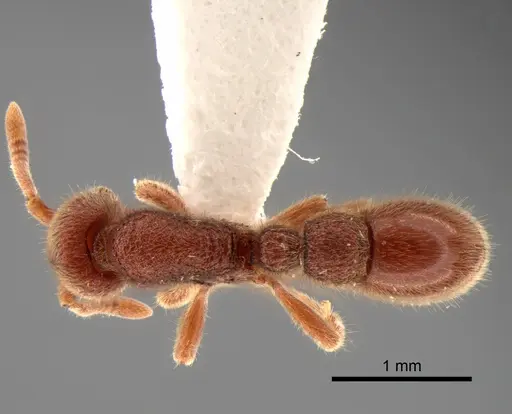
Literature
Loading distribution map...Loading products...