
Polyrhachis regesa
- Sci. Name
- Polyrhachis regesa
- Subgenus
- Myrma
- Tribe
- Camponotini
- Subfamily
- Formicinae
- Author
- Bolton, 1973
- Distribution
- Found in 1 countries
Introduction
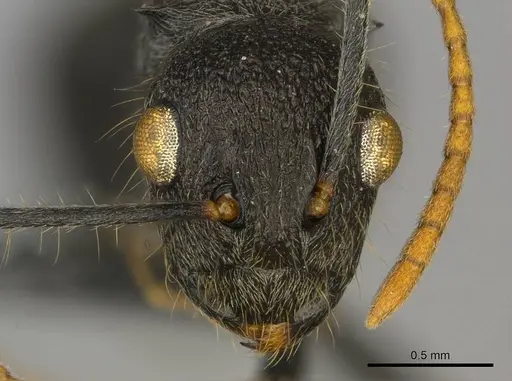
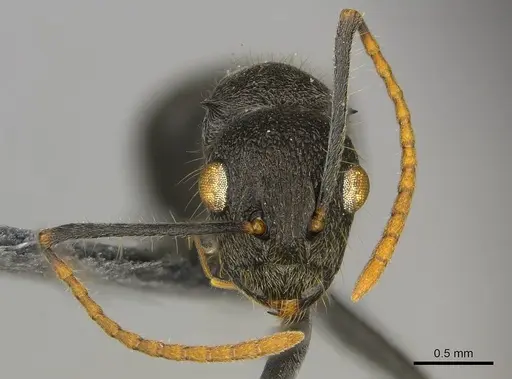
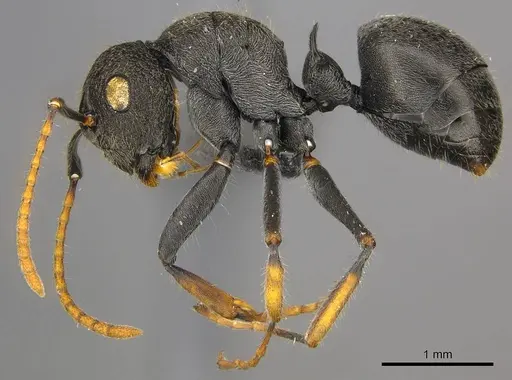
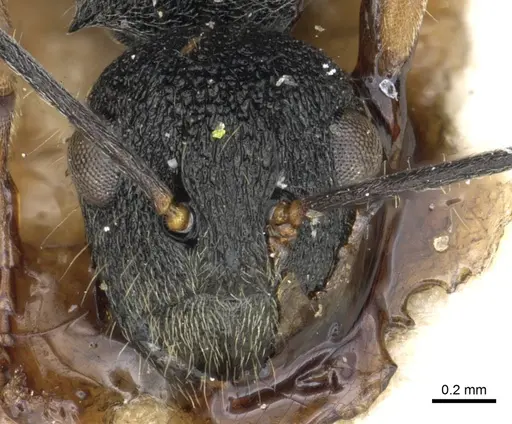
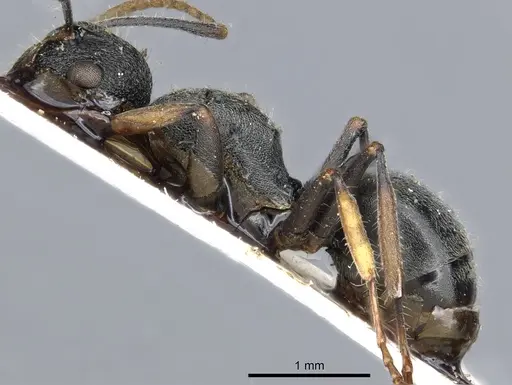
Polyrhachis regesa is a small Afrotropical ant with workers measuring 4.4-4.8mm in total length . Workers are black with a slightly shinier gaster, covered in erect white hairs, and have brown antennae and legs. The species is identified by propodeal tubercles and a spined petiole with dorsal and lateral spines . It belongs to the revoili species-group within the Myrma subgenus and is related to Polyrhachis otleti and Polyrhachis khepra . This ant is found in Ghana and the Republic of Congo (Niari Region), collected from primary forest using fogging samples .
Quick Summary
- Difficulty: Hard
- Origin & Habitat: Afrotropical region, Ghana and Republic of Congo (Niari Region). Collected from primary forest [2][1].
- Colony Type: Unconfirmed, colony structure has not been documented for this species
- Size & Growth:
- Queen: Size data unavailable
- Worker: 4.4-4.8mm [1]
- Colony: Unknown, no colony size data available
- Growth: Unknown
- Development: Unconfirmed, estimated 6-10 weeks based on typical Formicinae development patterns (Development timeline is not directly documented. Estimates are based on genus-level patterns for small tropical ants.)
- Antkeeping:
- Temperature: Likely 24-28°C based on primary forest habitat in central Africa. Provide a warm gradient if possible.
- Humidity: Keep substrate consistently moist but not waterlogged, reflecting primary forest conditions.
- Diapause: No, tropical species from Congo and Ghana does not require hibernation
- Nesting: No specific nesting data available. Provide humid, shaded areas using plaster or soil nests with good moisture retention.
- Behavior: Behavior is unstudied. As a Formicinae member, they spray formic acid for defense rather than sting. Their small size suggests moderate escape risk, use standard barriers like Fluon.
- Common Issues: limited species-specific care information makes proper husbandry challenging., tropical humidity requirements may be difficult to maintain consistently., wild-caught colonies may have parasites or diseases not yet documented., small size may require fine mesh barriers for containment., primary forest habitat needs stable conditions, avoid temperature and humidity fluctuations.
Identification and Morphology
Polyrhachis regesa workers measure 4.4-4.8mm in total length. They are black with a shinier gaster, covered in erect white hairs that are longer on the tibiae and scapes. The propodeum has minute tubercles, and the petiole has dorsal and lateral spines. This species belongs to the revoili species-group and can be distinguished from Polyrhachis otleti by propodeal tubercles instead of ridges [1].
Distribution and Habitat
Polyrhachis regesa is known from Ghana and the Republic of Congo (Niari Region) [2][1]. Congo specimens were collected from primary forest using fogging, indicating a humid tropical forest environment. Ghana specimens were collected using pyrethrum knock-down, suggesting surface activity. No specific microhabitat details are documented.
Housing and Nesting
Provide a humid environment with stable temperatures around 24-28°C. Use plaster or soil nests with moisture retention, and include both humid and slightly drier areas for self-regulation. Ensure tight connections between nest and outworld to prevent escapes, and maintain adequate ventilation to avoid mold.
Feeding and Diet
No specific dietary data is documented. Offer sugar sources like honey water and small protein prey such as fruit flies or micro crickets. Adjust offerings based on colony acceptance.
Temperature and Seasonal Care
Based on collection from tropical primary forest, maintain warm temperatures of 24-28°C with a gentle heat gradient. Avoid fluctuations and drafts. Humidity should be high, reflecting forest floor conditions. [2]
Behavior and Defense
Specific behaviors are unstudied. As a Formicinae, they defend by spraying formic acid. Their small size suggests moderate escape risk, use Fluon barriers as a precaution. [1]
Frequently Asked Questions
How big do Polyrhachis regesa ants get?
Workers measure 4.4-4.8mm in total length [1]. Queen size is not described.
Where does Polyrhachis regesa come from?
This species is found in Ghana and the Republic of Congo (Niari Region) [2][1].
What temperature do Polyrhachis regesa ants need?
Based on their tropical forest habitat, they likely prefer warm conditions around 24-28°C.
How long does it take for Polyrhachis regesa to develop from egg to worker?
The specific timeline is unconfirmed. Based on typical Formicinae patterns, estimate 6-10 weeks at warm temperatures.
What do Polyrhachis regesa ants eat?
Specific data is not documented. They likely accept sugar sources and small protein prey like fruit flies.
Is Polyrhachis regesa good for beginners?
This species is not recommended for beginners due to limited care information. Consider better-documented species.
Does Polyrhachis regesa need hibernation?
No, as a tropical species, it does not require hibernation.
What type of colony does Polyrhachis regesa form?
Colony structure is unconfirmed, no data on queen number or founding behavior exists.
How do I identify Polyrhachis regesa?
Workers are small (4.4-4.8mm), black with white hairs, propodeal tubercles, and spined petiole [1].
Report an Issue
The current care sheet is based fully on literature. See inconsistencies, or something that's incorrect? Please , it will be resolved after review from an admin. Contributing to the blogs tab also helps providing information, to make us be able to further improve the caresheets. Thank you for your support!
References

This caresheet is licensed under CC BY-SA 4.0 .
Community Blogs
CASENT0250034
View on AntWeb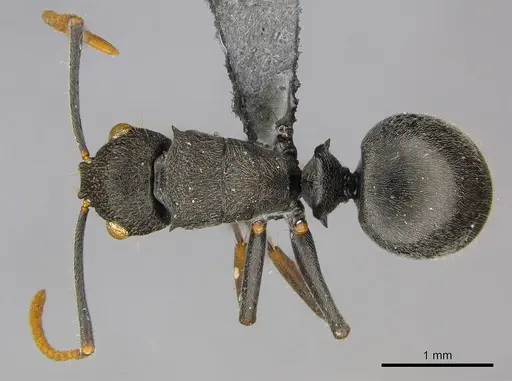
CASENT0903464
View on AntWeb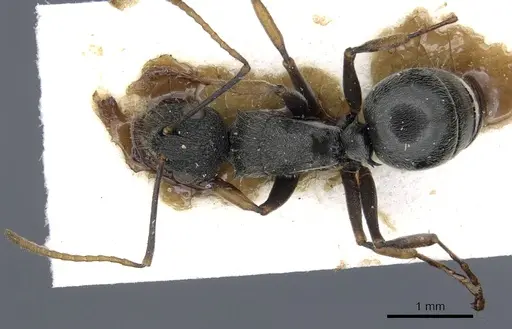
Literature
Loading distribution map...Loading products...