
Polyrhachis gerstaeckeri
- Sci. Name
- Polyrhachis gerstaeckeri
- Subgenus
- Myrma
- Tribe
- Camponotini
- Subfamily
- Formicinae
- Author
- Forel, 1886
- Distribution
- Found in 3 countries
Introduction
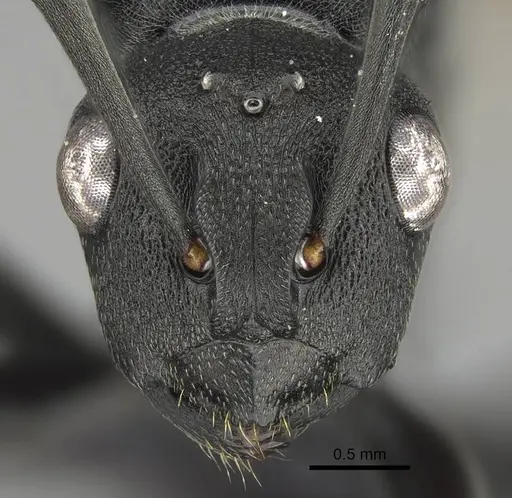
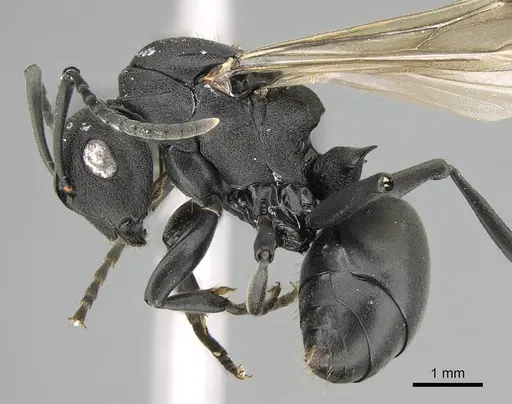
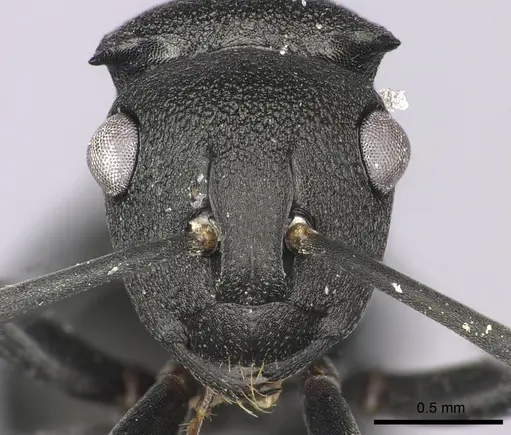
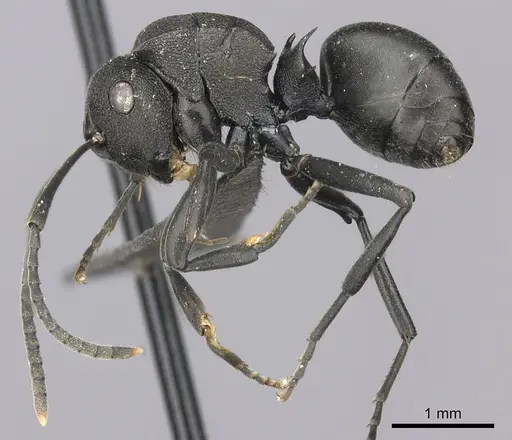
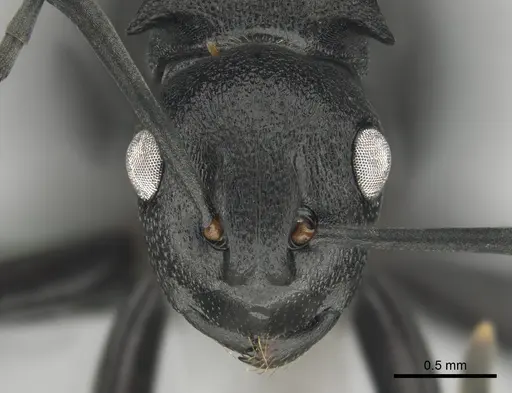
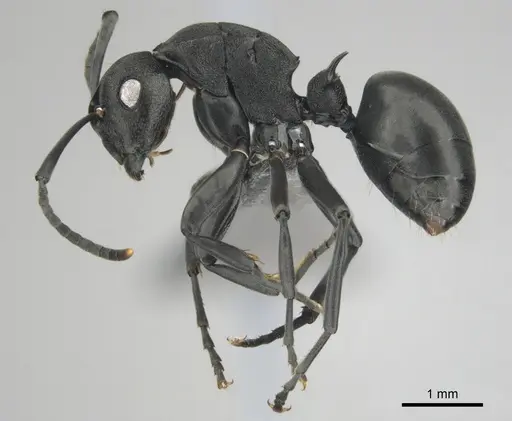
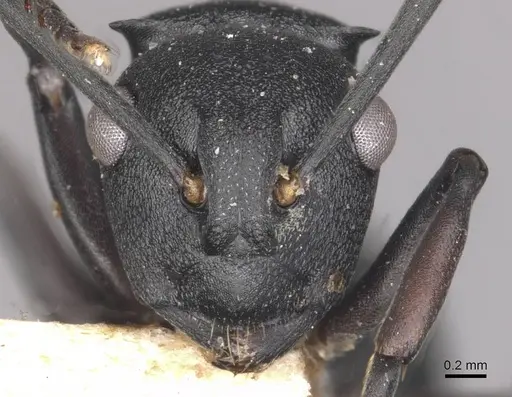
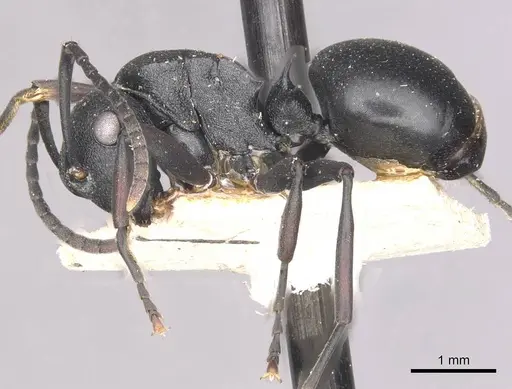
Polyrhachis gerstaeckeri is a small, entirely black ant from East Africa. Workers have a head length of about 1.5 mm, making them one of the smaller Polyrhachis species . It belongs to the viscosa-group, identified by a thin arched ridge between the propodeal dorsum and declivity, and a petiole with four spines (the middle pair longer) . The body has fine sculpturing with subtle lengthwise wrinkles on the head and upper body . This species was only recently separated from the similar Polyrhachis cubaensis in 2016,so very little is known about its biology or captive care . Like all members of the subfamily Formicinae, it cannot sting – instead it bites and sprays formic acid into the wound.
Quick Summary
- Difficulty: Unknown – likely Hard (very limited data, not recommended for beginners)
- Origin & Habitat: East Africa (Kenya, Tanzania, Rwanda) – found in savannah habitats, often on Acacia trees [1][2][3]
- Colony Type: Unconfirmed – most Polyrhachis species are single-queen, so likely monogyne
- Size & Growth:
- Queen: Undescribed – no queen measurements available
- Worker: Size data unavailable – only head length measurements exist (~1.5 mm head length) [1]
- Colony: Unknown – no wild colony data exists
- Growth: Unknown – estimated moderate based on related Polyrhachis species
- Development: Unknown – estimated 6 – 8 weeks at warm temperatures (based on other small Polyrhachis) (No direct development data for this species. Estimate is speculative.)
- Antkeeping:
- Temperature: No specific data – based on East African savannah habitat, keep warm and stable (roughly 24 – 28 °C) [4]
- Humidity: Moderate – they come from dry savannah woodlands, so avoid constant wetness. Provide a humidity gradient with a moist area and a dry area [4]
- Diapause: No – seasonal variation is minimal in East Africa. Keep temperatures steady year-round.
- Nesting: Likely arboreal or semi‑arboreal. Provide vertical space, bark pieces, or twigs. Use Y‑tong (AAC) or plaster nests with narrow chambers. Never use acrylic nests [4]
- Behavior: Workers are not aggressive but can spray formic acid if threatened. They are moderate foragers. Because they are small, use fine mesh (even 0.5 mm) on the outworld to prevent escapes. Provide climbing structures.
- Common Issues: almost no biological data exists – care is entirely inferred from genus patterns, queen has never been described – catching a mated queen is extremely difficult, founding behavior unknown – you may need to experiment with different setups, workers are small – high escape risk without very fine ventilation mesh, colony size and growth rate are complete unknowns – hard to judge progress
Identification and Appearance
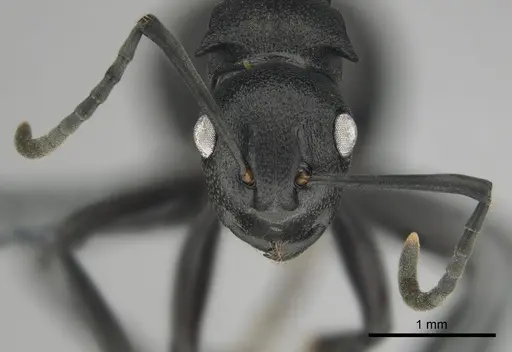
Workers are entirely black and small – only the head length has been measured (~1.5 mm) but total body size is unknown [1]. They are part of the viscosa-group, recognized by: a thin arched ridge between the propodeal dorsum and declivity, a petiole with four spines (the middle pair longer), and all upper body segments distinctly wider than long when viewed from above [1]. The body has fine punctures and faint lengthwise wrinkles on the head and thorax. This species differs from the similar Polyrhachis wilmsi by having a narrower frons, no standing hairs on the head, and a weaker propodeal ridge [4]. No standing hairs are present on the body except on the clypeal margin [1].
Distribution and Habitat
This ant occurs in East Africa: coastal Kenya, Tanzania (including Zanzibar), and was recently recorded in Rwanda [1][3]. Specimens have been collected from Acacia trees in Tanzanian savannah, suggesting an arboreal or semi‑arboreal lifestyle [2]. The habitat is warm and seasonally dry. In captivity, provide good ventilation, a temperature gradient, and avoid high humidity that could cause mold.
Nest Preferences
No specific nest data exists for this species, but most Polyrhachis nest in vegetation, under bark, or in hollow twigs [4]. To mimic this, provide vertical space with bark pieces, small branches, or a naturalistic setup. Use a Y‑tong (AAC) or plaster nest with narrow chambers – never acrylic, which can cause condensation and mold. Because they come from dry savannah, include a dry area in the nest so the colony can choose its preferred humidity.
Feeding and Diet
Polyrhachis species are omnivorous, feeding on honeydew, nectar, and small insects [4]. Offer a constant supply of sugar water or diluted honey, and provide protein (small crickets, fruit flies, or mealworm pieces) once or twice a week. Since workers are small, cut food into tiny portions. Remove leftovers after 24 hours to prevent mold or mites.
Temperature and Care
Keep the colony warm and stable, around 24–28 °C, to match East African savannah conditions [4]. Use a heating cable on one side of the nest to create a gradient. Place the heating element on top (not under) to avoid drying out the substrate too quickly. Humidity should be moderate – aim for a nest that is slightly moist in one area and dry in another. Avoid constant wetness.
Behavior and Temperament
As a Formicinae, Polyrhachis gerstaeckeri cannot sting. It defends itself by biting and spraying formic acid from the tip of the abdomen. Workers are not particularly aggressive, but they will defend the nest if disturbed. They are moderate foragers and likely explore vertical surfaces. Use very fine mesh (≤0.5 mm) on the outworld because workers are small. Provide climbing structures (twigs, branches, or a textured wall) to encourage natural activity.
Frequently Asked Questions
How long does it take for Polyrhachis gerstaeckeri to develop from egg to worker?
No studies have measured development time. Based on related small Polyrhachis species, you can expect roughly 6 – 8 weeks at warm temperatures (~26 °C), but this is a guess.
What do Polyrhachis gerstaeckeri ants eat?
Specific dietary data is lacking. In common with other Polyrhachis, they likely eat honeydew, nectar, and small arthropods. Offer sugar water or honey as a constant energy source, and provide small protein items (fruit flies, pinhead crickets) weekly.
What temperature do Polyrhachis gerstaeckeri ants need?
Maintain a warm environment similar to their East African savannah home – about 24 – 28 °C with a thermal gradient [4].
Are Polyrhachis gerstaeckeri ants good for beginners?
No – very little is known about their biology or captive care. Beginners should start with well‑documented, easy species. Even experienced keepers may struggle with this ant.
How big do Polyrhachis gerstaeckeri colonies get?
Colony size is unknown – no wild colonies have been studied. Guessing from the small worker size, a mature colony might hold a few hundred workers, but that's speculation.
Can I keep multiple Polyrhachis gerstaeckeri queens together?
Colony structure is unconfirmed. Most Polyrhachis are single‑queen (monogyne). Do not combine unrelated queens unless you observe cooperative founding, which is unlikely.
What type of nest is best for Polyrhachis gerstaeckeri?
As likely arboreal ants, they benefit from vertical climbing space. Use a Y‑tong (AAC) or plaster nest with narrow chambers. Provide bark pieces or hollow twigs inside the outworld. Never use acrylic nests.
Do Polyrhachis gerstaeckeri ants need hibernation?
No – their East African habitat experiences minimal seasonal temperature swings. Keep them active all year at stable temperatures.
Why is so little known about Polyrhachis gerstaeckeri care?
The species was only revived from synonymy with Polyrhachis cubaensis in 2016 [1]. Before that, all records were lumped with another species. Almost no biological research has been done, and it is rarely kept in captivity.
Report an Issue
The current care sheet is based fully on literature. See inconsistencies, or something that's incorrect? Please , it will be resolved after review from an admin. Contributing to the blogs tab also helps providing information, to make us be able to further improve the caresheets. Thank you for your support!
References

This caresheet is licensed under CC BY-SA 4.0 .
Community Blogs
CASENT0098028
View on AntWeb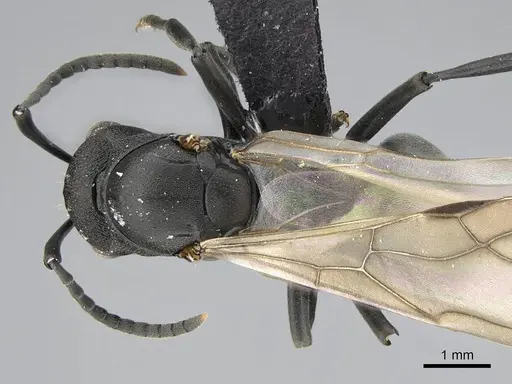
CASENT0235679
View on AntWeb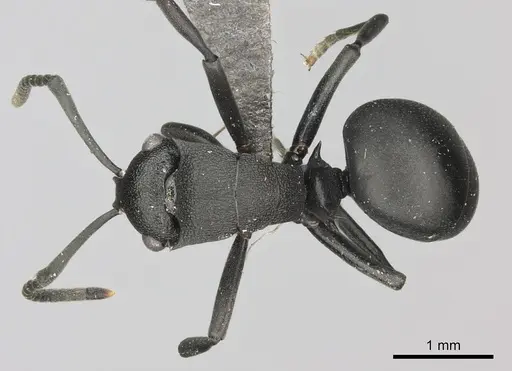
CASENT0815791
View on AntWeb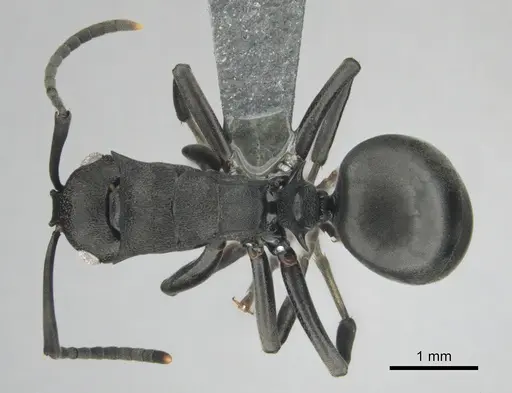
CASENT0910945
View on AntWeb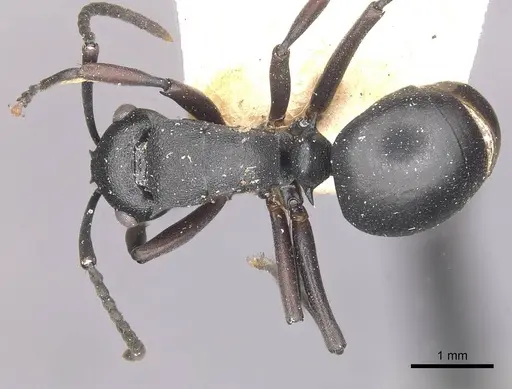
Literature
Loading distribution map...Loading products...