
Polyrhachis cubaensis
- Sci. Name
- Polyrhachis cubaensis
- Subgenus
- Myrma
- Tribe
- Camponotini
- Subfamily
- Formicinae
- Author
- Mayr, 1862
- Distribution
- Found in 2 countries
Introduction
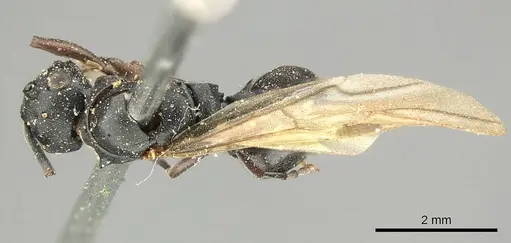
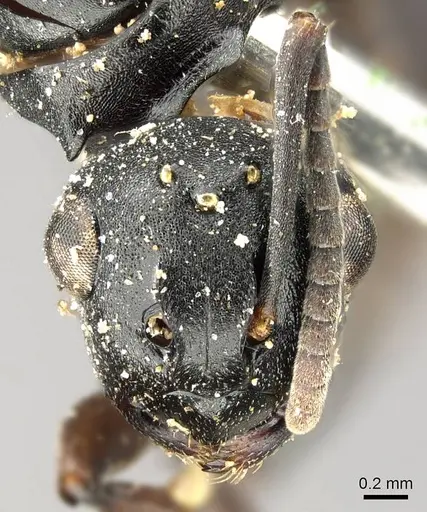
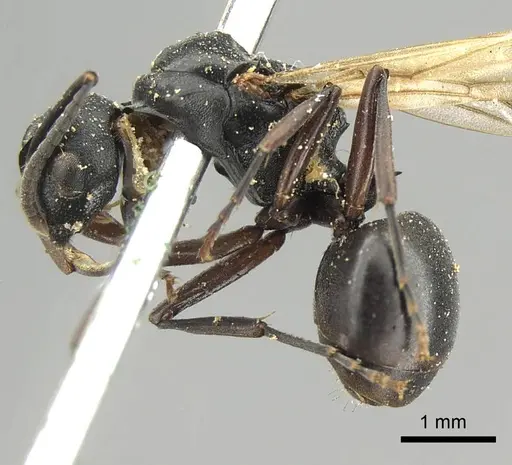
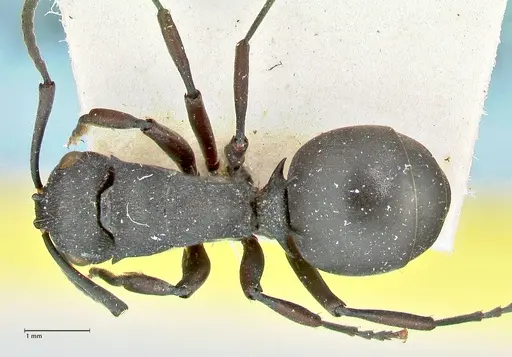
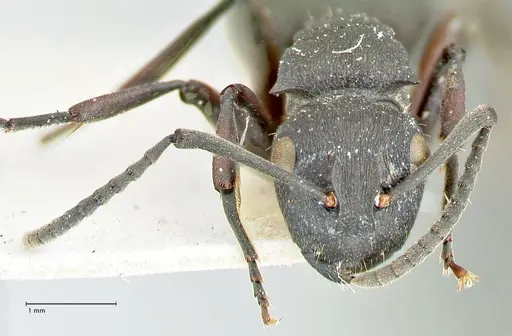
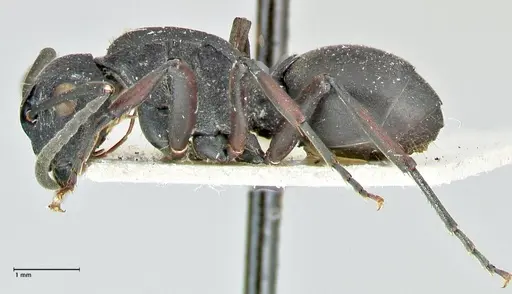
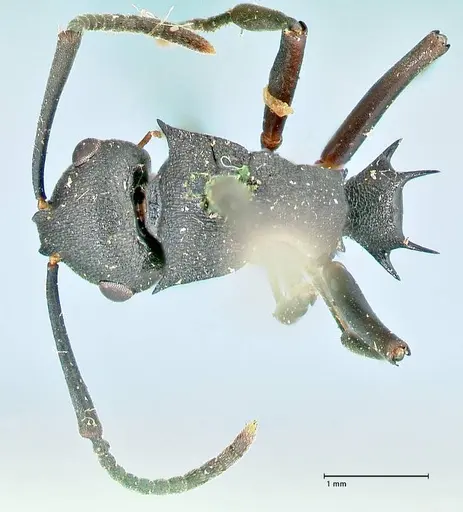
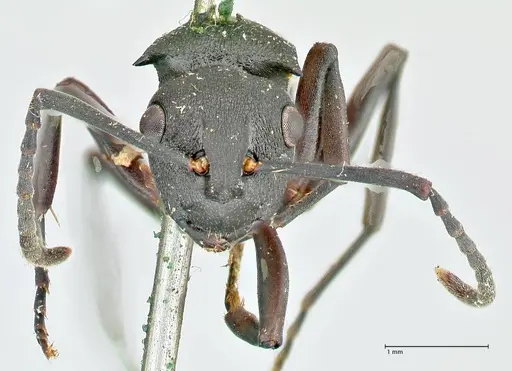
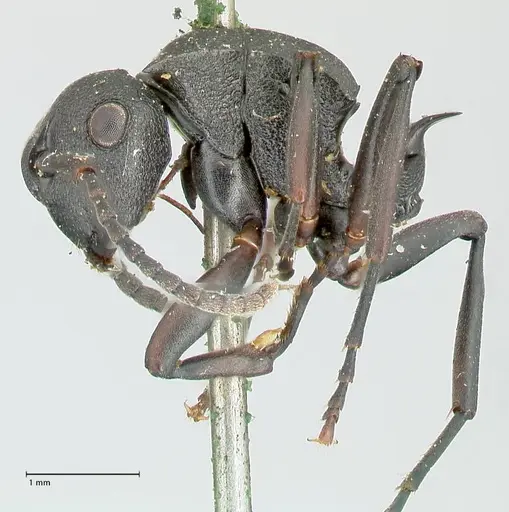
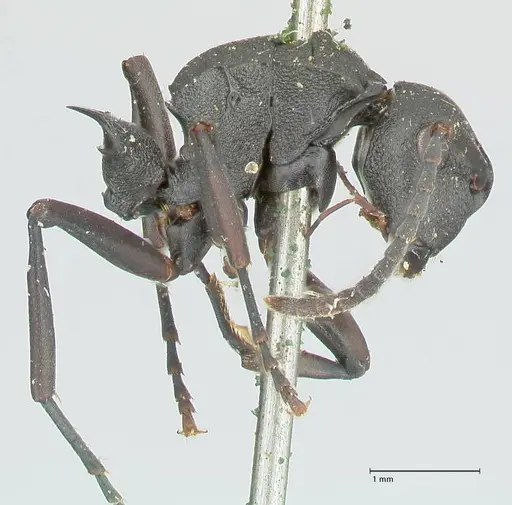
Polyrhachis cubaensis is a medium-sized African ant in the subgenus Myrma and the viscosa species-group. Workers measure 6.4-7.5 mm in total length , have a black body with dark brown legs, and are recognized by spines on the pronotum, propodeum, and petiole. This species is found in eastern and southern Africa, including Kenya, Mozambique, South Africa, Sudan, and Tanzania . It was originally mislabeled from Cuba but corrected to South Africa . P. cubaensis nests in hollow plant stems and galls, lining them with silk webbing . This lignicolous habit means they need wood-based nests in captivity. The genus Polyrhachis is generally docile compared to other ants .
Quick Summary
- Difficulty: Medium
- Origin & Habitat: Eastern and southern Africa in savannah woodland and forest edge habitats, nesting in hollow stems and galls [2][3].
- Colony Type: Colony structure is not well documented. Based on typical Polyrhachis patterns, they likely form single-queen colonies, but this is unconfirmed for this species.
- Size & Growth:
- Queen: Size data unavailable, no total length measurements found in research. Inferred from Polyrhachis genus patterns as approximately 9-11 mm.
- Worker: 6.4-7.5 mm [1]
- Colony: Unknown from available research, likely reaches several hundred workers based on genus patterns
- Growth: Moderate, inferred from genus patterns
- Development: Estimated 8-12 weeks at optimal temperature based on related Polyrhachis species development patterns (Development time is inferred from genus-level data since species-specific measurements are unavailable.)
- Antkeeping:
- Temperature: Keep at 24-28°C. Based on their savannah habitat, they prefer warm conditions. Use a heating cable on one side to create a gradient [3].
- Humidity: Keep nest substrate consistently moist but not waterlogged, with a humidity gradient. Their natural habitat experiences seasonal variation, so they tolerate drier conditions [3].
- Diapause: Unknown, no specific data on diapause for this species. Based on genus patterns, a mild winter rest period may be beneficial if activity reduces.
- Nesting: Lignicolous species that nest in wood. Use Y-tong, wooden formicaria, or test tube setups with wood elements. Provide twigs or hollow decorations for nesting sites [3].
- Behavior: Generally docile and non-aggressive. Workers are active foragers but not prone to biting. They lack a functional sting and spray formic acid as a defense mechanism (subfamily Formicinae trait). Escape risk is moderate due to their size, use barriers like Fluon on container rims. They are primarily arboreal, foraging in trees and shrubs [3].
- Common Issues: wood-nesting requirements mean standard soil formicaria may not be ideal, provide appropriate nesting options., escape prevention is important despite moderate size, they can fit through small gaps., slow growth may frustrate beginners expecting rapid colony development., limited availability in the antkeeping hobby means established colonies may be difficult to obtain.
Housing and Nest Preferences
Polyrhachis cubaensis is a lignicolous species that nests in wood and plant stems. In captivity, use Y-tong nests, wooden formicaria, or test tube setups with wood elements. Provide enclosed spaces that mimic hollow stems, such as twigs or cork bark. They may line nests with silk webbing [3]. Avoid fully soil-based formicaria unless wood structures are included.
Feeding and Diet
Feed P. cubaensis small insects like fruit flies or mealworms 2-3 times per week, and provide sugar water or honey water continuously. Remove uneaten prey after 24-48 hours to prevent mold.
Temperature and Seasonal Care
Maintain nest temperatures between 24-28°C for optimal brood development. Use a heating cable on one side to create a gradient. If activity reduces in winter, consider a mild rest period at 15-18°C for 2-3 months, though this is not required in stable environments.
Behavior and Handling
Workers are docile and active foragers. They spray formic acid as a defense but rarely bite keepers. Use barriers like Fluon to prevent escapes, as they can fit through small gaps. They are arboreal and climb well.
Frequently Asked Questions
What kind of nest is best for Polyrhachis cubaensis?
Y-tong nests, wooden formicaria, or test tube setups with wood elements work best. They are lignicolous, so provide enclosed spaces that mimic hollow plant stems [3].
How long does it take for Polyrhachis cubaensis to produce first workers?
Based on related Polyrhachis species, expect 8-12 weeks from egg to first worker at optimal temperature (24-28°C). Development is slower than smaller ant genera.
What do Polyrhachis cubaensis eat?
They are omnivorous, preferring small insects and arthropods. Feed small crickets, fruit flies, or mealworms, and offer sugar water or honey water.
Are Polyrhachis cubaensis good for beginners?
They are moderate difficulty due to specific nesting requirements, but their docile nature makes them manageable for intermediate keepers.
Do Polyrhachis cubaensis need hibernation?
No specific data exists. Based on genus patterns, a mild winter rest period may be beneficial if activity reduces, but it is not required in temperature-controlled environments.
How big do Polyrhachis cubaensis colonies get?
Exact size is unknown from research. Based on genus patterns, colonies likely reach several hundred workers.
Can I keep multiple Polyrhachis cubaensis queens together?
This has not been documented. Based on typical Polyrhachis behavior, single-queen colonies are most common. Do not combine unrelated foundress queens.
Why is my Polyrhachis cubaensis colony not growing?
Check that temperatures are warm enough (24-28°C), protein feeding is regular, and humidity is appropriate. Slow growth is normal for this genus, be patient.
Do Polyrhachis cubaensis use silk in their nests?
Yes, they line their nest chambers with silk, a trait shared with other viscosa-group species [3].
Report an Issue
The current care sheet is based fully on literature. See inconsistencies, or something that's incorrect? Please , it will be resolved after review from an admin. Contributing to the blogs tab also helps providing information, to make us be able to further improve the caresheets. Thank you for your support!
References

This caresheet is licensed under CC BY-SA 4.0 .
Community Blogs
Literature
Loading distribution map...Loading products...