
Polyrhachis denticulata
- Sci. Name
- Polyrhachis denticulata
- Subgenus
- Hagiomyrma
- Tribe
- Camponotini
- Subfamily
- Formicinae
- Author
- Karavaiev, 1927
- Distribution
- Found in 2 countries
Introduction
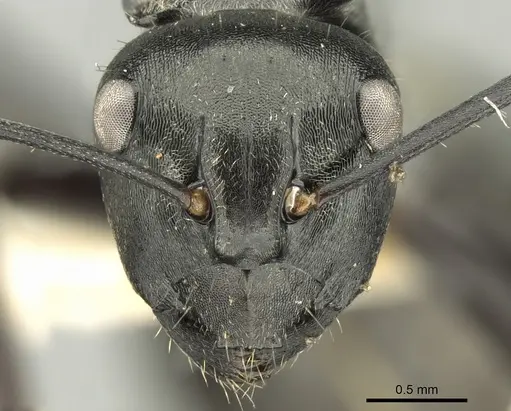
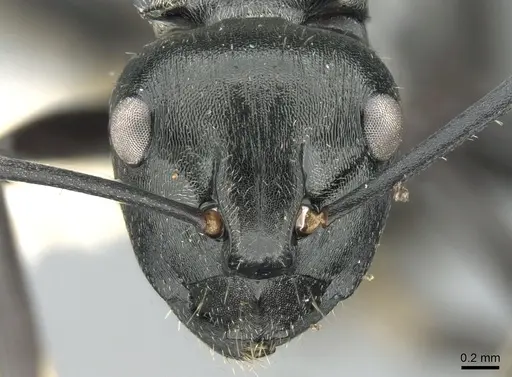
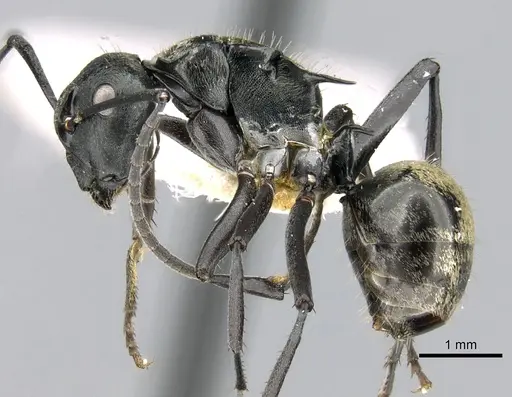
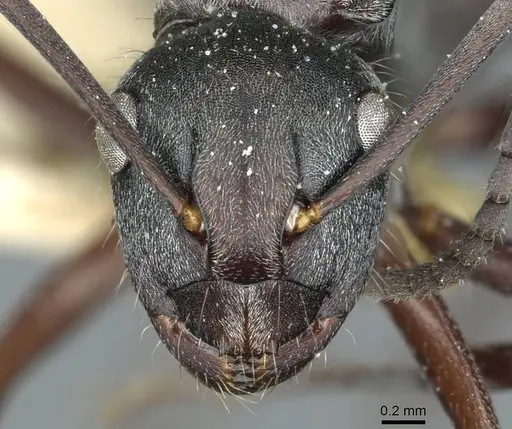
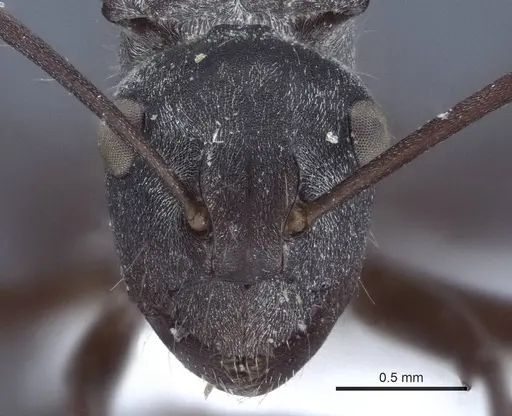
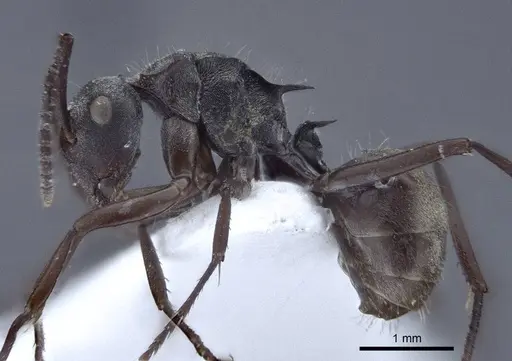
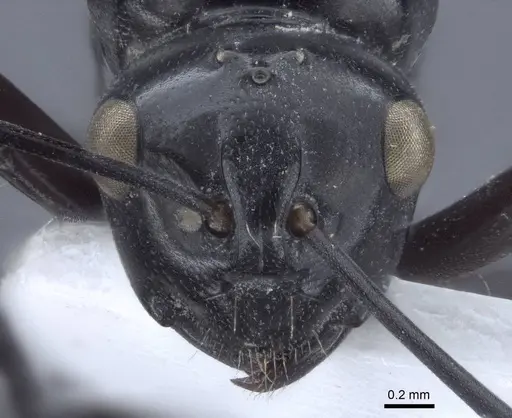
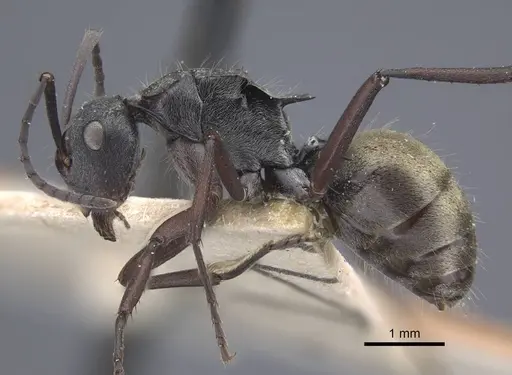
Polyrhachis denticulata is a medium-sized ant in the Hagiomyrma subgenus of the genus Polyrhachis. Workers measure 6.0 to 7.4 mm in total length, and queens reach 7.1 to 7.4 mm . The species has a dark reddish-brown to nearly black head and mesosoma, with lighter reddish-brown appendages and gaster. You can identify them by the spines on their propodeum and petiole, plus a toothed (denticulate) edge on the front of their head (clypeus). This ant belongs to the penelope species-group and was once confused with Polyrhachis penelope. They live in Indonesia, Papua New Guinea, and the Torres Strait islands, usually in undisturbed forests . They nest underground, often inside old rotting tree stumps, and build carton nests . Pupae develop inside protective cocoons .
Quick Summary
- Difficulty: Medium
- Origin & Habitat: Tropical forests in Indonesia, Papua New Guinea, and the Torres Strait islands. They nest underground, typically inside old rotting tree stumps [3][1][2].
- Colony Type: Colony structure is unconfirmed. We do not know if they form single-queen (monogyne) or multi-queen (polygyne) colonies.
- Size & Growth:
- Queen: ~7.1-7.4 mm [1]
- Worker: ~6.0-7.4 mm [1]
- Colony: Unknown, no colony size data available
- Growth: Unknown, no development data available
- Development: Unconfirmed, no direct development data available for this species (Based on typical Polyrhachis patterns, expect development of several months, but this is an estimate only.)
- Antkeeping:
- Temperature: Keep warm and stable, roughly low-to-mid 20s°C to low 30s°C. Provide a gentle temperature gradient so you can adjust conditions as the colony grows.
- Humidity: Keep the nest substrate consistently moist but not waterlogged. Provide a humidity gradient with mostly moist chambers and one drier area to prevent mold.
- Diapause: Unlikely, as a tropical species from Indonesia and Papua New Guinea, they probably do not require winter diapause.
- Nesting: Ground-nesting species that prefers subterranean locations inside rotting wood. In captivity, a naturalistic setup with deep soil substrate works best. You can also use Y-tong (AAC) nests with soil chambers. Add pieces of decaying wood or cork to mimic their natural stumps [3][1].
- Behavior: Polyrhachis ants are generally docile and not highly aggressive. They forage on the ground surface. Workers are moderate-sized, so standard mesh barriers will prevent escapes. They lack a functional sting and rely on biting and spraying formic acid from an acidopore for defense [4].
- Common Issues: Limited biological data makes care requirements uncertain, much is inferred from related species., Colony founding may be challenging given lack of data on queen behavior., Wild-caught colonies may carry parasites or diseases that are difficult to treat without species-specific knowledge., Tropical humidity requirements may lead to mold issues if ventilation is inadequate., Unknown colony growth rate means you must adjust care based on observation rather than established guidelines.
Natural History and Distribution
Polyrhachis denticulata lives across the Australasian and Indomalayan regions. You can find them in Indonesia (especially Ambon Island), Papua New Guinea, and the Torres Strait islands [1][2]. The species was first described by Karavaiev in 1927 using specimens from Ambon Island. It belongs to the penelope species-group within the Hagiomyrma subgenus. Historically, researchers confused this ant with Polyrhachis penelope. Specimens collected at Ralum in the Bismarck Archipelago were originally labeled as P. penelope by Forel in 1901 before scientists realized they were a distinct species [1]. Males and immature stages were reportedly collected by F. Dahl at Ralum, but those specimens appear to be lost from modern collections [5].
Nesting Preferences
This is a ground-nesting species that prefers to build nests underground. In the wild, colonies typically nest inside old rotting tree stumps [3][6]. They construct carton nests, which is a mixture of chewed wood fibers and ant secretions that creates a reinforced, papery structure. This nesting style is typical for the Hagiomyrma subgenus. For captive care, a deep soil substrate works best. You can add pieces of decaying wood or cork to mimic their natural stumps. Y-tong (AAC) formicariums with soil chambers also work well, as long as you keep the substrate appropriately moist [3]. The presence of pupal cocoons shows they raise their brood in a standard ant manner, with protected pupal development [3].
Appearance and Identification
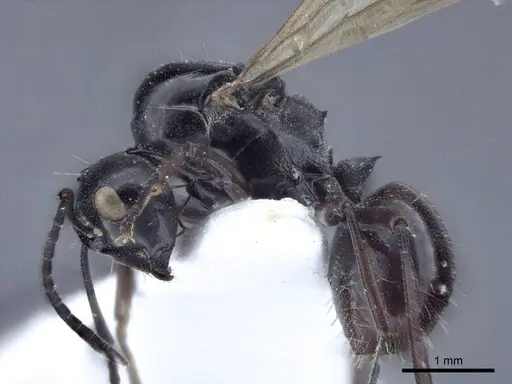
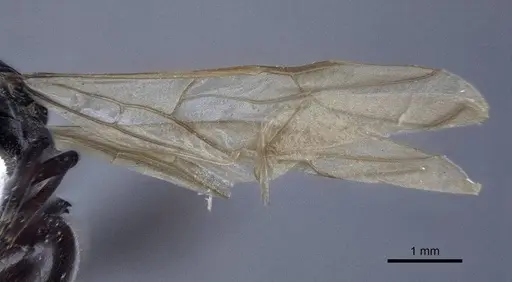
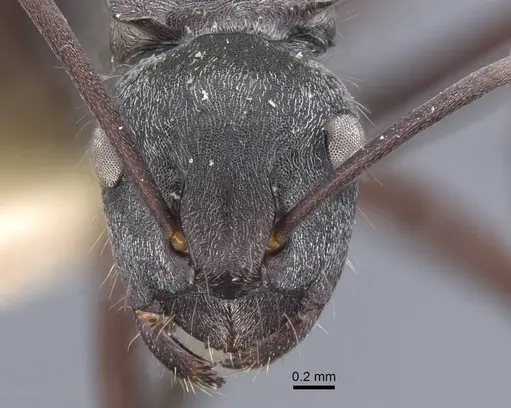
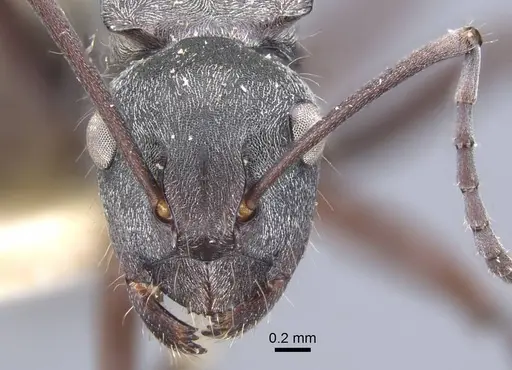
Workers of Polyrhachis denticulata measure 6.0 to 7.4 mm in total length [1]. They have a distinctive look with spines on their propodeum (the section behind the thorax) and their petiole (the narrow waist segment). The front edge of their head (clypeus) has a toothed pattern, which gives the species its name. The head and thorax are usually dark reddish-brown to nearly black, while the mandibles, clypeus, legs, and gaster are a lighter medium reddish-brown. Older museum specimens tend to be lighter in color, while recently collected specimens are darker. Queens are larger at 7.1 to 7.4 mm and share similar coloration and body shape. They differ mainly in having a thorax built for flight and sexual characteristics [1].
Care Considerations
Since biological data for this species is limited, care recommendations rely on related Polyrhachis species and known habitat conditions. Keep your nest area warm, roughly low-to-mid 20s°C to low 30s°C. Provide a temperature gradient so workers can move between warmer and cooler zones to self-regulate. Maintain moderate to high humidity by keeping the nest substrate consistently moist but not waterlogged. Use a naturalistic setup with moist soil, and ensure good ventilation to stop mold from building up. Feed a varied diet including sugar sources like honey or sugar water, and protein sources like small insects. Standard mesh barriers will prevent escapes for ants of this size [3][1][2].
Challenges and Uncertainties
Polyrhachis denticulata is a poorly studied species with major gaps in our biological knowledge. Unlike common hobby ants, we lack documented information on colony structure, founding behavior, development timelines, and specific dietary needs. This makes keeping this species harder than well-documented species, since you cannot rely on established care protocols. If you attempt to keep this species, be ready to experiment with care conditions and track your observations carefully. Starting with a small colony rather than a single queen may improve your chances, since the founding stage is highly uncertain. Always source colonies ethically and avoid wild collection when possible.
Frequently Asked Questions
How long does it take for Polyrhachis denticulata to produce first workers?
The development timeline is unconfirmed for this species. Based on typical Polyrhachis patterns, expect several months from egg to worker, but this is only an estimate. The exact duration will depend on temperature and other conditions [3].
What do Polyrhachis denticulata ants eat?
Specific dietary preferences are not documented. Based on related Polyrhachis species, they likely accept sugar sources like honey or sugar water, and protein from small insects like mealworms or crickets. Offer a varied diet and watch what they accept [3].
Is Polyrhachis denticulata good for beginners?
This species is not recommended for beginners due to the limited biological data available. Unlike well-studied species, there are no established care guidelines, making successful colony founding and maintenance more challenging. Consider starting with more common, better-documented species first [1].
What temperature and humidity do Polyrhachis denticulata need?
Based on their tropical distribution in Indonesia and Papua New Guinea, keep temperatures around 24-28°C with a gentle gradient. Humidity should be moderate to high. These ants come from forest environments and prefer moist substrate conditions [1][2].
Can I keep multiple Polyrhachis denticulata queens together?
Colony structure is unconfirmed for this species. There is no data on whether they are single-queen or multi-queen. Combining unrelated queens is not recommended without understanding their natural colony structure [1].
What type of nest is best for Polyrhachis denticulata?
This is a ground-nesting species that naturally nests in subterranean locations inside rotting tree stumps. In captivity, a naturalistic setup with deep moist soil and pieces of decaying wood or cork works well. Y-tong (AAC) nests with soil chambers are also suitable [3][6].
Do Polyrhachis denticulata need hibernation?
Hibernation is unlikely required. As a tropical species from Indonesia and Papua New Guinea, they do not experience cold winters. A slight temperature reduction during cooler months may be beneficial but is not necessary for colony health [1].
How big do Polyrhachis denticulata colonies get?
Maximum colony size is unknown. No documented colony size data exists for this species. Based on related Polyrhachis species, colonies likely reach several hundred to a few thousand workers over time [3].
Where is Polyrhachis denticulata found in the wild?
This species is native to the Australasian and Indomalayan regions, specifically found in Indonesia (Ambon Island), Papua New Guinea, and the Torres Strait islands. They inhabit undisturbed forest environments [1][2].
Report an Issue
The current care sheet is based fully on literature. See inconsistencies, or something that's incorrect? Please , it will be resolved after review from an admin. Contributing to the blogs tab also helps providing information, to make us be able to further improve the caresheets. Thank you for your support!
References

This caresheet is licensed under CC BY-SA 4.0 .
Community Blogs
CASENT0906591
View on AntWeb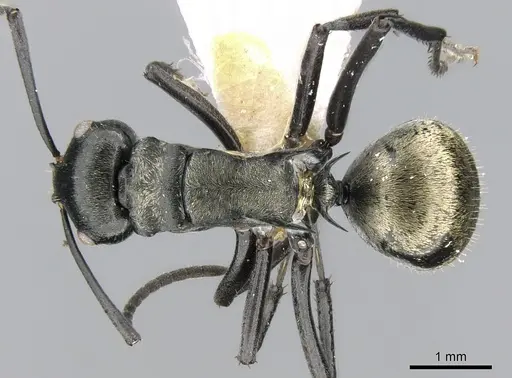
CASENT0912111
View on AntWeb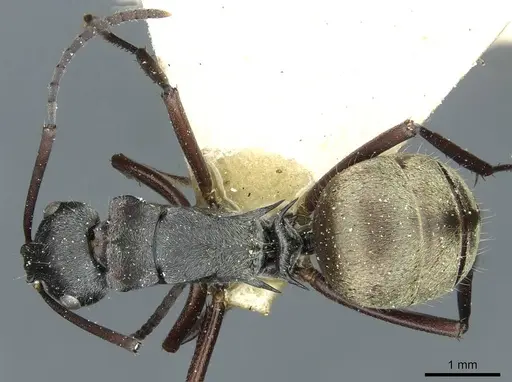
CASENT0916759
View on AntWeb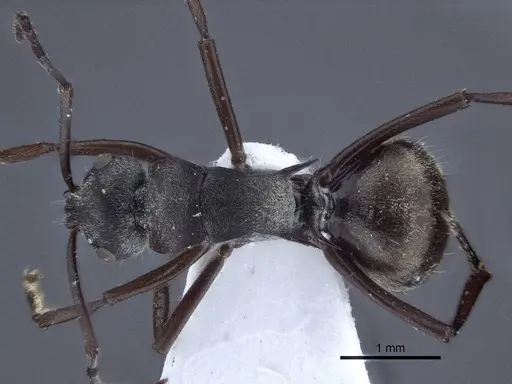
CASENT0916760
View on AntWeb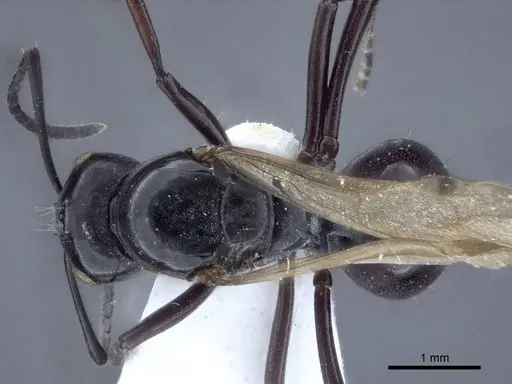
CASENT0917180
View on AntWeb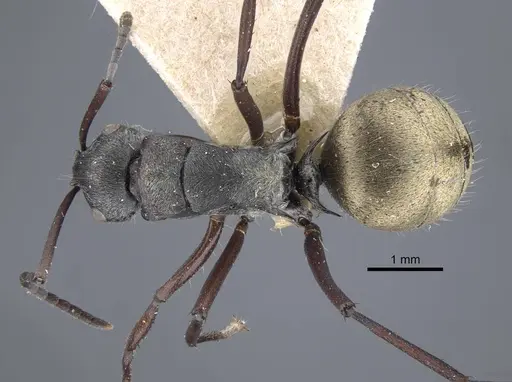
Literature
Loading distribution map...Loading products...