
Polyrhachis penelope
- Sci. Name
- Polyrhachis penelope
- Subgenus
- Hagiomyrma
- Tribe
- Camponotini
- Subfamily
- Formicinae
- Author
- Forel, 1895
- Distribution
- Found in 1 countries
Introduction
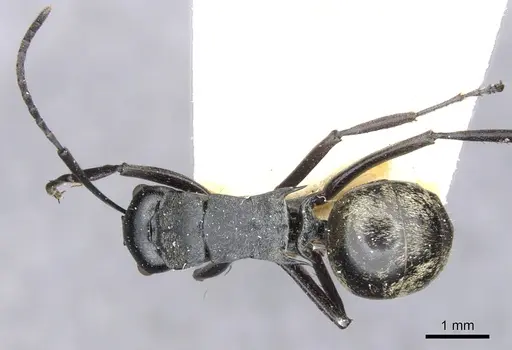
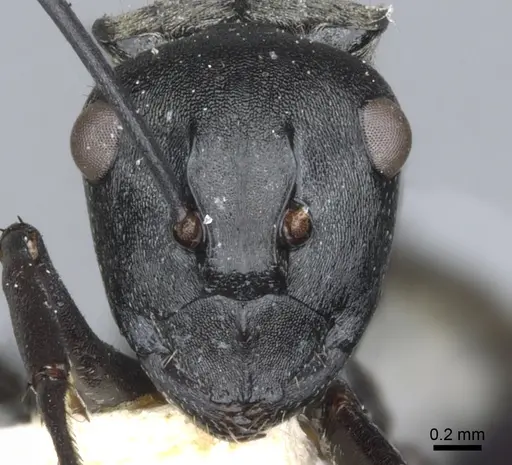
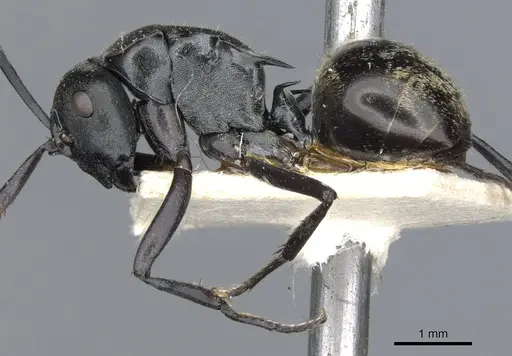
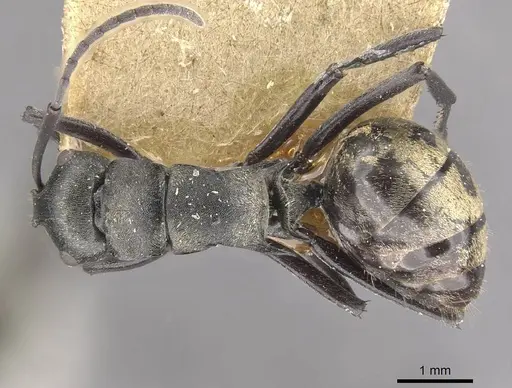
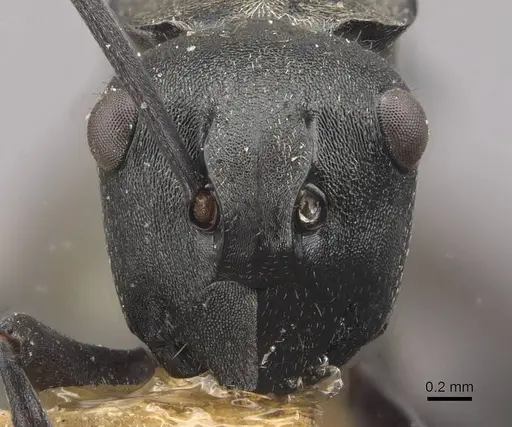
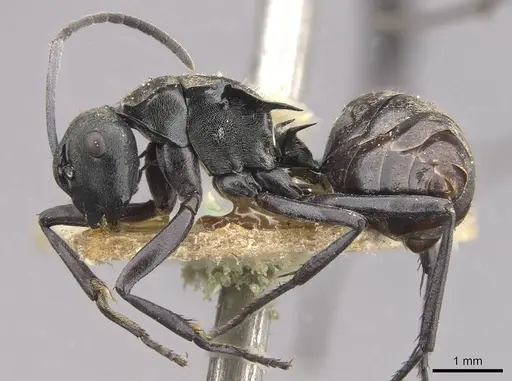
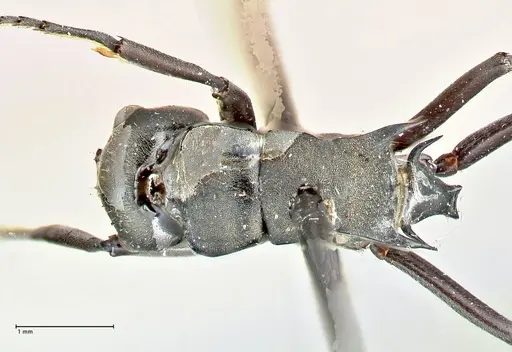
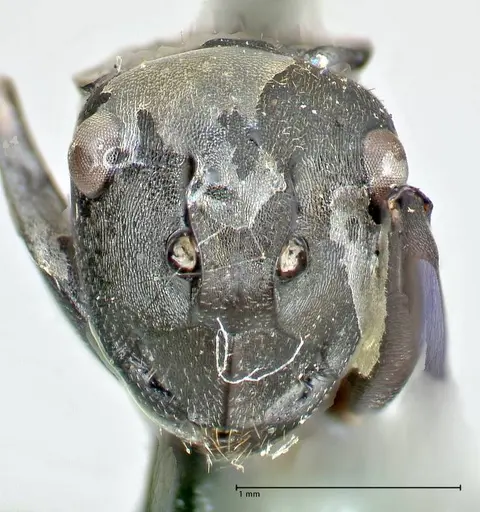
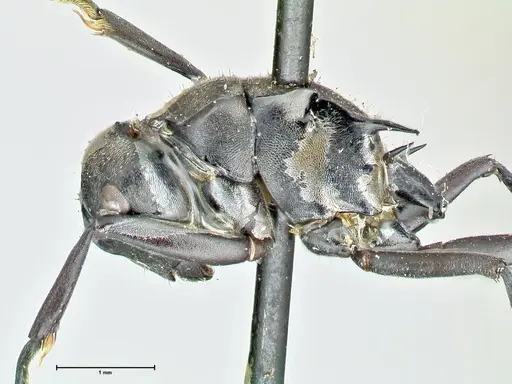
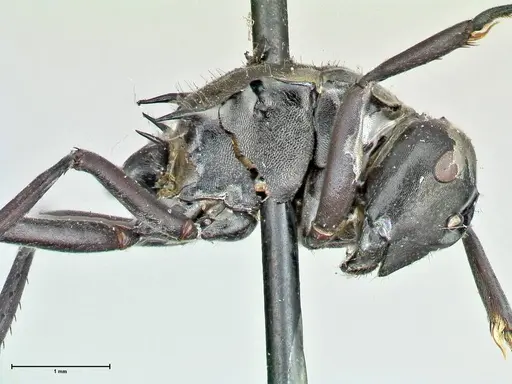
Polyrhachis penelope is a ground-nesting ant species from Queensland, Australia, with workers measuring 6.50-7.61 mm in total length and queens about 8.52 mm . They are black with reddish-brown mandibular teeth and have prominent spines on the mesosoma and petiole . The species is found along the Queensland coast from Rockhampton to Cairns, and also in New Guinea and New Britain . One notable aspect is their nesting behavior: they primarily nest in the ground, with one documented nest in a rotten tree stump .
Quick Summary
- Difficulty: Medium
- Origin & Habitat: Queensland, Australia, with distribution from Rockhampton to Cairns, and also in New Guinea and New Britain. Inhabits open eucalypt forests and woodlands, nesting in the ground [1][2][3].
- Colony Type: Unconfirmed, no specific data on queen number or social structure.
- Size & Growth:
- Queen: ~8.52 mm [1]
- Worker: 6.50-7.61 mm [1]
- Colony: Unknown, no published data on colony size
- Growth: Moderate, inferred from typical Polyrhachis patterns
- Development: Estimated 6-10 weeks at optimal temperatures, based on genus-level patterns (Development time depends on temperature, direct data unavailable for this species)
- Antkeeping:
- Temperature: Keep between 22-26°C with a gentle gradient, as they are from subtropical areas
- Humidity: Provide a humidity gradient, mostly dry nest chamber with one small moist area, as they are ground-nesting in open forests
- Diapause: Yes, provide a cool period of 2-3 months during winter at 15-18°C, based on geographic range
- Nesting: Ground-nesting species, accept test tubes for founding and Y-tong or plaster nests for established colonies [1]
- Behavior: Workers are generally calm and non-aggressive. As Formicinae, they can spray formic acid as a defense mechanism. Escape risk is moderate due to their size, standard barriers work well.
- Common Issues: ground-nesting behavior requires deeper nest chambers than arboreal species., this species is uncommon in its native range, making queen acquisition challenging [3]., diapause management is important for temperate species to maintain colony health., limited research means care is based on genus-level inference rather than species-specific data.
Nest Preferences and Setup
Polyrhachis penelope is a ground-nesting species that naturally establishes nests in soil, often beneath rocks or in rotting wood [1]. In captivity, use a test tube setup for colony founding, a standard test tube with a water reservoir secured with cotton. Once the colony has several workers, transition to a Y-tong or plaster nest with appropriate chambers for their moderate size. Provide a foraging area that allows typical foraging behavior.
Feeding and Diet
As a Formicinae species, Polyrhachis penelope is likely omnivorous. Offer small insects like fruit flies or mealworms as protein sources 2-3 times per week, and keep sugar water or honey water available constantly. Remove uneaten prey after 24-48 hours to prevent mold.
Temperature and Seasonal Care
Maintain nest temperatures around 22-26°C for optimal brood development, based on their subtropical distribution. During winter, provide a diapause period at 15-18°C for 2-3 months to match their natural cycle.
Behavior and Handling
Workers are calm and moderately active. They possess an acidopore and can spray formic acid when threatened, but this is rarely a concern for keepers. Escape prevention is straightforward with standard barriers due to their size.
Colony Establishment
Start with a freshly mated queen in a test tube setup. Do not disturb her during the founding period, which may last several weeks. Once workers emerge, connect to a foraging area. Wait until the colony is actively foraging before moving to a permanent nest.
Frequently Asked Questions
How long does it take for Polyrhachis penelope queens to raise their first workers?
Based on typical Formicinae development, estimated 6-10 weeks from egg to worker at optimal temperatures (22-26°C). The exact timeline depends on temperature and other factors.
What temperature do Polyrhachis penelope ants need?
Keep them at 22-26°C for optimal development, with a gradient to allow self-regulation.
Can I keep multiple Polyrhachis penelope queens together?
This is not recommended, as colony structure is unconfirmed and Polyrhachis species are typically single-queen. Combining queens may lead to fighting.
Do Polyrhachis penelope ants need hibernation?
Yes, provide a cool period of 2-3 months during winter at 15-18°C, based on their geographic range. Reduce feeding during this time.
What do Polyrhachis penelope ants eat?
They are omnivorous. Offer small insects as protein sources and sugar water constantly. Remove uneaten food to prevent mold.
How big do Polyrhachis penelope colonies get?
Exact colony size data is not available. Based on worker size, colonies may reach several hundred workers over time, but this is estimated.
Are Polyrhachis penelope ants good for beginners?
This species is rated as medium difficulty. It is less commonly kept, so guidance may be limited, but care requirements are straightforward if a queen is obtained.
When should I move my Polyrhachis penelope colony to a formicarium?
Wait until the colony has several workers and is actively foraging. Transition gradually by connecting the test tube to the nest.
Where is Polyrhachis penelope found in the wild?
This species is native to Queensland, Australia, with distribution from Rockhampton to Cairns, and also in New Guinea and New Britain. It inhabits open eucalypt forests and nests in the ground [1][2][3].
Report an Issue
The current care sheet is based fully on literature. See inconsistencies, or something that's incorrect? Please , it will be resolved after review from an admin. Contributing to the blogs tab also helps providing information, to make us be able to further improve the caresheets. Thank you for your support!
References

This caresheet is licensed under CC BY-SA 4.0 .
Community Blogs
Literature
Loading distribution map...Loading products...