
Pheidole mahaboensis
- Sci. Name
- Pheidole mahaboensis
- Tribe
- Attini
- Subfamily
- Myrmicinae
- Author
- Salata & Fisher, 2020
- Distribution
- Found in 1 countries
Introduction
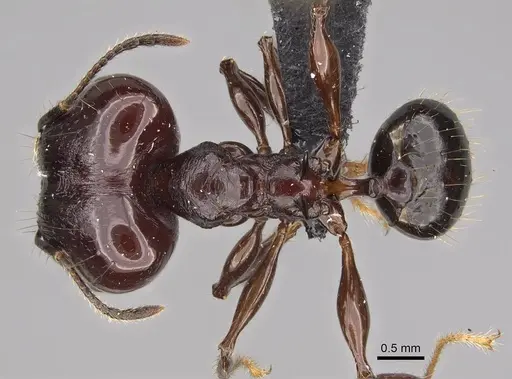
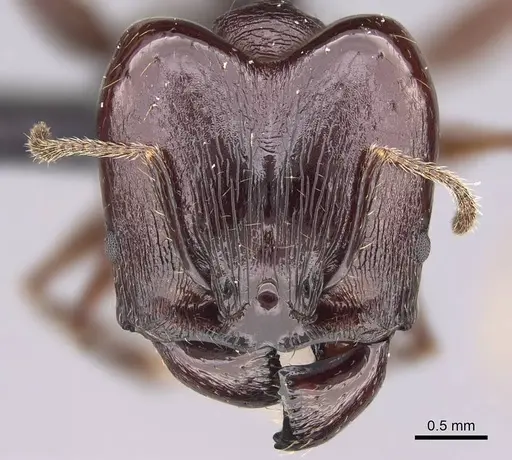
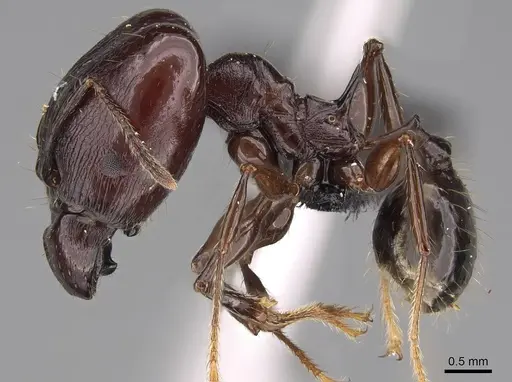
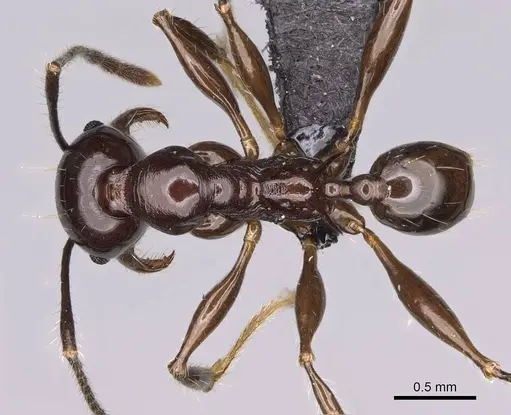
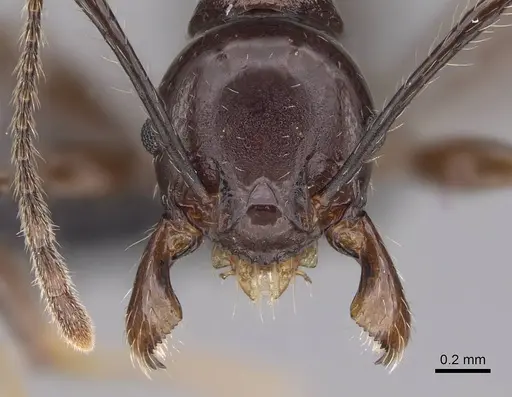
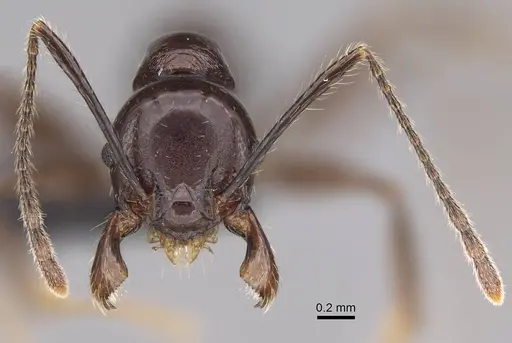
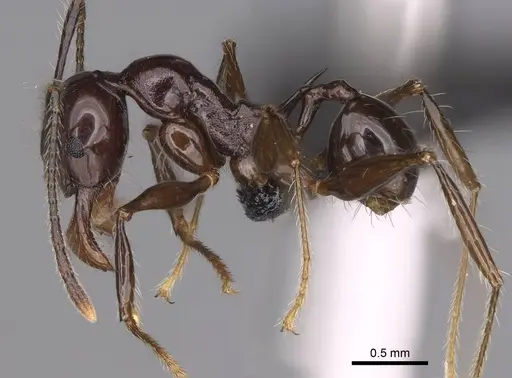
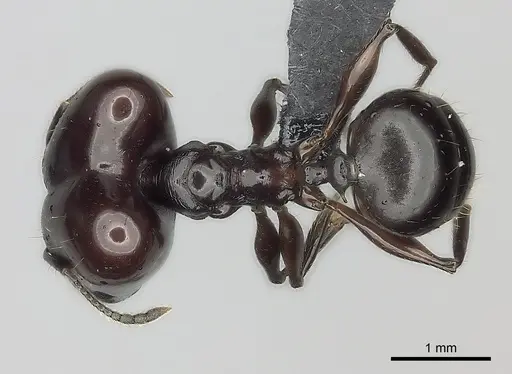
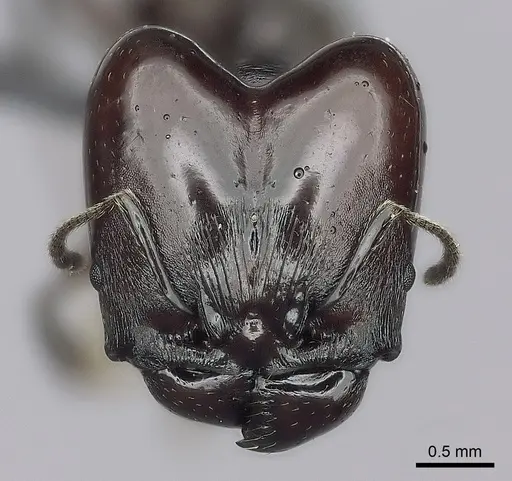
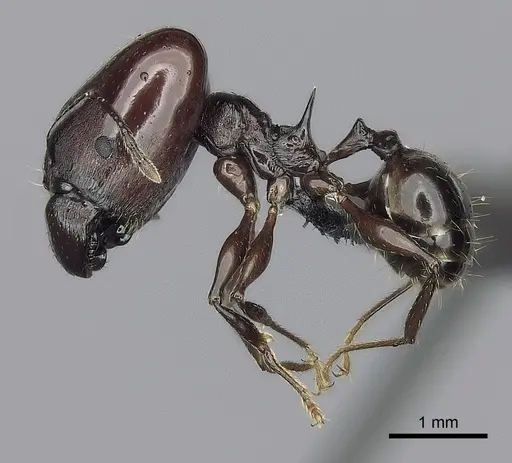
Pheidole mahaboensis is a large ant species from Madagascar, described in 2020 . It has a trapezoid head that widens posteriorly, very long propodeal spines, and is reddish-brown to dark brown . The species is found in rainforest habitats at elevations from 20 to 1275 meters, nesting in rotten logs and tree stumps . It is most similar to Pheidole longispinosa and Pheidole praegrandis . This species is notable for its very long propodeal spines, characteristic of the longispinosa group .
Quick Summary
- Difficulty: Medium
- Origin & Habitat: Native to Madagascar, found in rainforest and open areas near streams at elevations of 20-1275 meters, nesting in rotten logs and tree stumps [1].
- Colony Type: Colony structure is unconfirmed. No specific data on queen number or social structure for this species.
- Size & Growth:
- Queen: Size data unavailable
- Worker: Size data unavailable, but inferred from Pheidole genus to be small, with majors larger than minors.
- Colony: Unknown
- Growth: Unknown
- Development: Unknown, no direct measurements. Based on typical Pheidole patterns, estimate 6-8 weeks at optimal temperature. (This is a newly described species with no published development data.)
- Antkeeping:
- Temperature: Keep at warm temperatures, roughly 24-28°C, with a gradient. Based on tropical habitat [1].
- Humidity: Maintain moderate humidity, with nest substrate consistently moist but not waterlogged. Based on rainforest habitat [1].
- Diapause: Unlikely required, as this is a tropical species [1].
- Nesting: Provide nests that mimic rotten logs, such as Y-tong or plaster nests with moisture. Based on natural nesting behavior [1].
- Behavior: Behavior is not specifically documented, but based on Pheidole genus patterns, they are active foragers with majors involved in defense. They can sting but are not highly aggressive. Escape risk is moderate due to size.
- Common Issues: newly described species means limited care information, some trial and error may be needed., humidity management is critical, too dry causes brood loss, too wet risks flooding., tropical species may be sensitive to temperature drops below 20°C., no published data on acceptable sugar sources, some Pheidole accept honey, others prefer seeds., wild-caught colonies may carry parasites that are poorly understood in captivity.
Natural History and Origin
Pheidole mahaboensis comes from the island of Madagascar, specifically the Fianarantsoa region. It was formally described in 2020 by Sebastian Salata and Brian Fisher as part of a comprehensive revision of Madagascar's Pheidole species [1]. In the wild, these ants nest in rotting logs and tree stumps in rainforest environments, though one specimen was collected in an open area near a stream [1]. Their elevation range spans from 20 meters up to 1275 meters, indicating some adaptability to different altitudes within Madagascar's humid tropical climate [1].
Identification and Physical Characteristics
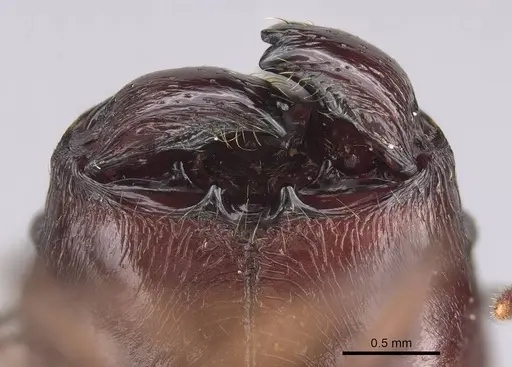
Pheidole mahaboensis can be identified by its trapezoid head that widens posteriorly, very long propodeal spines, and reddish-brown to dark brown coloration [1]. It has a metanotal groove and sparse pilosity on the head sides [1]. The species is similar to Pheidole longispinosa and Pheidole praegrandis but can be distinguished by these features [1].
Housing and Nesting
In captivity, provide conditions that mimic their natural rotten log habitat. Y-tong nests or plaster nests with water reservoirs work well, the key is maintaining consistent moisture without flooding. Naturalistic setups with damp rotting wood are ideal but can be difficult to source. A humidity range of 60-80% is appropriate, with the nest substrate feeling damp to the touch [1]. Since this is a newly described species with no captive husbandry history, be prepared to adjust conditions based on colony behavior.
Feeding and Diet
The specific diet of Pheidole mahaboensis is not documented. Based on Pheidole genus patterns, they are omnivorous and may accept seeds, protein sources like insects, and sugar sources like honey water. Offer a varied diet and observe colony preferences. Remove uneaten food to prevent mold.
Temperature and Seasonal Care
As a tropical Madagascar species from rainforest habitats, keep these ants warm. A temperature range of 24-28°C is appropriate as a starting point [1]. Provide a temperature gradient so the colony can self-regulate. Room temperature may be acceptable if your home stays in this range. Unlike temperate species, diapause is unlikely to be required [1]. However, avoid temperatures below 20°C or sudden temperature swings, as this tropical species may be sensitive to cold.
Colony Development Expectations
Since this is a newly described species (2020), no published data exists on colony development timelines [1]. Based on typical Pheidole patterns from related species, expect 6-8 weeks from egg to first worker at optimal temperature. Queen size is also undocumented. Growth rate is unknown but likely moderate. Given the limited available information, keeping detailed notes on your colony's development will be valuable for the antkeeping community.
Frequently Asked Questions
How long does it take for Pheidole mahaboensis to produce first workers?
The exact timeline is unknown as this is a newly described species with no published development data. Based on typical Pheidole patterns, expect approximately 6-8 weeks from egg to first worker at optimal temperature (around 24-28°C).
What size queen does Pheidole mahaboensis have?
Queen measurements have not been documented in the scientific literature. Size data is unavailable for this species.
Do Pheidole mahaboensis ants need hibernation or diapause?
Unlikely. As a tropical species from Madagascar, they probably do not require a diapause period. Maintain year-round warm temperatures (24-28°C) rather than cycling through cool periods.
What do Pheidole mahaboensis eat?
Specific diet data is unavailable, but Pheidole species are typically omnivorous. Offer a varied diet including small seeds, protein sources (mealworms, crickets), and sugar sources (honey water). Some Pheidole accept sugar readily, others don't, offer occasionally but focus on seeds and protein.
How big do Pheidole mahaboensis colonies get?
Colony size data has not been published. Pheidole colonies can range from hundreds to thousands of workers in related species. Expect moderate to large colony sizes over time.
What temperature should I keep Pheidole mahaboensis at?
Start with 24-28°C. Madagascar is tropical, so this species likely prefers warm conditions. Provide a temperature gradient so the ants can choose their preferred zone. Avoid temperatures below 20°C [1].
What humidity level do Pheidole mahaboensis need?
Maintain moderate humidity, with nest substrate consistently moist but not waterlogged. Their natural habitat in rainforest and near streams indicates preference for damp conditions [1].
What type of nest should I use for Pheidole mahaboensis?
Y-tong nests or plaster nests with water reservoirs work well. The key is maintaining consistent moisture similar to their natural rotten log habitat [1]. Naturalistic setups with damp wood are also appropriate.
Are Pheidole mahaboensis good for beginners?
This species is rated as Medium difficulty. While not the most challenging species, the lack of published care information means some trial and error may be required. Experienced antkeepers will have an advantage when establishing care parameters.
Can I keep multiple queens together?
Colony structure is unconfirmed for this species. Most Pheidole are monogyne (single queen), but combining unrelated foundresses is not recommended unless you have specific evidence they can found colonies pleometrotically. Wait for a single claustral queen to establish before adding others.
Where is Pheidole mahaboensis found in the wild?
This species is endemic to Madagascar, specifically the Fianarantsoa region in the southeastern part of the island. It lives in rainforest habitats at elevations between 20-1275 meters and nests in rotten logs and tree stumps [1].
Report an Issue
The current care sheet is based fully on literature. See inconsistencies, or something that's incorrect? Please , it will be resolved after review from an admin. Contributing to the blogs tab also helps providing information, to make us be able to further improve the caresheets. Thank you for your support!
References

This caresheet is licensed under CC BY-SA 4.0 .
Community Blogs
Literature
Loading distribution map...Loading products...