
Ooceraea quadridentata
- Sci. Name
- Ooceraea quadridentata
- Subfamily
- Dorylinae
- Author
- Yamada <i>et al.</i>, 2018
- Distribution
- Found in 1 countries
Introduction
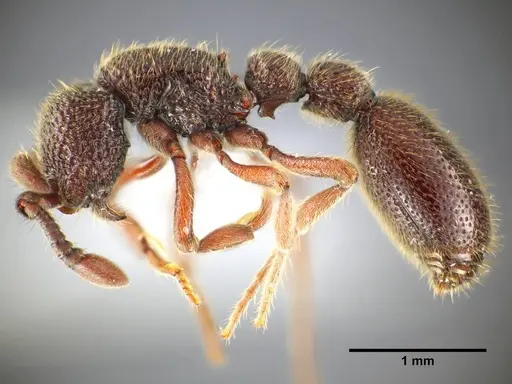
Ooceraea quadridentata is a doryline ant from Vietnam's Central Highlands. Workers have a dark reddish-brown body with paler antennae and legs, and are identified by two pairs of denticles on the propodeum . They lack compound eyes and ocelli, relying on chemical and tactile senses . This species was described in 2018 and is known from limited locations in Vietnam and Thailand .
Quick Summary
- Difficulty: Expert
- Origin & Habitat: Nam Kar Nature Reserve, Dak Lak Province, Vietnam at approximately 545m elevation, in highly disturbed bamboo-mixed evergreen forest patches near forest edges, nesting inside partly rotten tree stumps [1]. Also recorded in northeastern and eastern Thailand [3].
- Colony Type: Colony structure is unconfirmed. The only collected fragment had 16 workers with no queens, males, or immatures observed [1]. Ergatoid queens are known in related species, but not documented here [4].
- Size & Growth:
- Queen: Size data unavailable, no total length measurements documented [1]
- Worker: Size data unavailable, no total length measurements documented [1]
- Colony: Unknown, a wild fragment contained 16 workers [1]
- Growth: Unknown
- Development: Unconfirmed, no direct observations exist (No data on founding, brood development, or growth timeline)
- Antkeeping:
- Temperature: Based on tropical habitat, keep warm around 22-28°C [1]
- Humidity: Keep nest substrate consistently moist but not waterlogged, mimicking rotten wood conditions [1]
- Diapause: No, tropical species do not require hibernation, inferred from geographic range
- Nesting: Natural nesting in rotten stumps, in captivity, use naturalistic setups with rotting wood or humidified plaster nests [1]
- Behavior: No specific behavioral studies exist. As doryline ants, they may be predatory. Workers are blind and rely on chemical trails [1]. Escape risk is moderate due to small size. Temperament is unknown but likely not aggressive toward humans.
- Common Issues: this species is extremely rare in the hobby with no established captive breeding lines, obtaining a colony may be impossible., no information exists on what foods this species accepts in captivity., blind workers may have difficulty locating food in open foraging areas., no data on founding behavior means successful colony establishment is uncertain., tropical species may be sensitive to temperature drops, keep warm year-round.
Identification and Distinguishing Features
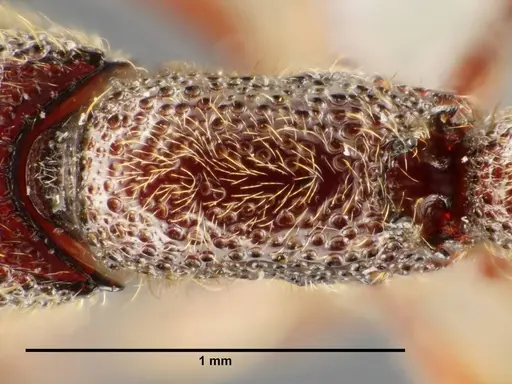
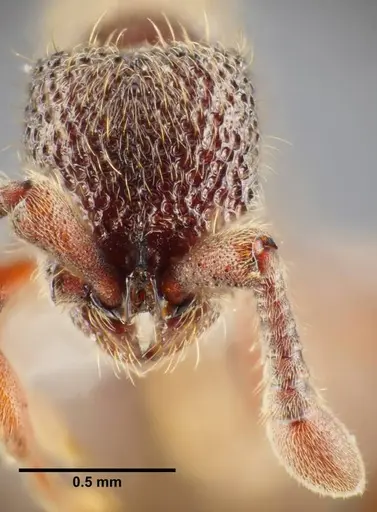
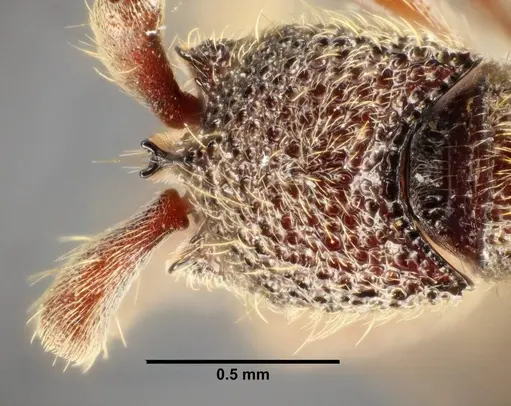
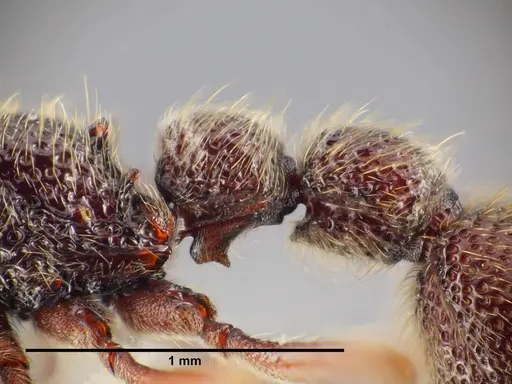
Ooceraea quadridentata can be identified by the propodeum, which has two pairs of denticles, one larger triangular pair and one smaller digitiform pair [1][2]. Workers have 11-segmented antennae and lack compound eyes and ocelli [1]. The body is dark reddish-brown with paler antennae and legs, and the head has a foveolate-reticulate sculpture [1].
Natural History and Habitat
This species is known from Southeast Asia, including Vietnam's Central Highlands and parts of Thailand [1][3]. It inhabits disturbed forest patches near forest edges, nesting inside partly rotten tree stumps on the forest floor [1]. Thai specimens were found in rotten logs in plantation and dry evergreen forests [3].
Related Species and Phylogeny
Ooceraea quadridentata is part of a recently described group of Ooceraea species from Southeast Asia. It is closely related to the queenless clonal raider ant Ooceraea biroi, but does not share its clonal reproduction [4]. Other related species include O. hainingensis from China, which has ergatoid queens [4].
Challenges for Antkeepers
This species is rare in both science and the hobby, described only in 2018 with few known locations [1]. No captive breeding lines exist, and care requirements are largely unknown. Blind workers may require specialized setups, and success is uncertain for all but the most experienced keepers.
Frequently Asked Questions
Can I keep Ooceraea quadridentata as a pet ant?
This species is not recommended for antkeepers. It was described in 2018 and remains rare in the hobby, with no established captive colonies and little known about care requirements [1].
What do Ooceraea quadridentata ants eat?
Unknown, no feeding observations have been documented in scientific literature.
How big do Ooceraea quadridentata colonies get?
Unknown. The only collected fragment had 16 workers, but maximum colony size is not documented [1].
Do Ooceraea quadridentata ants have queens?
Unconfirmed. The type collection had no queens, but ergatoid queens are known in related species [1][4].
Why do Ooceraea quadridentata workers have no eyes?
Workers lack compound eyes and ocelli entirely, an adaptation to their cryptic forest-floor lifestyle [1].
What is the ideal temperature for Ooceraea quadridentata?
No specific data exists, but based on tropical habitat, keep around 22-28°C [1].
How do I set up a nest for Ooceraea quadridentata?
In the wild, they nest in rotten stumps [1]. In captivity, use naturalistic setups with rotting wood or humidified plaster nests, keeping substrate moist.
Are Ooceraea quadridentata ants aggressive?
No specific studies exist, but as doryline ants, they are not known to be aggressive toward humans.
Does Ooceraea quadridentata need hibernation?
No, as a tropical species, it does not require hibernation.
Where can I get Ooceraea quadridentata ants?
This species is essentially unavailable to antkeepers, with no known captive breeding programs and wild collection being impractical [1].
Report an Issue
The current care sheet is based fully on literature. See inconsistencies, or something that's incorrect? Please , it will be resolved after review from an admin. Contributing to the blogs tab also helps providing information, to make us be able to further improve the caresheets. Thank you for your support!
References

This caresheet is licensed under CC BY-SA 4.0 .
Community Blogs
ANTWEB1041156
View on AntWeb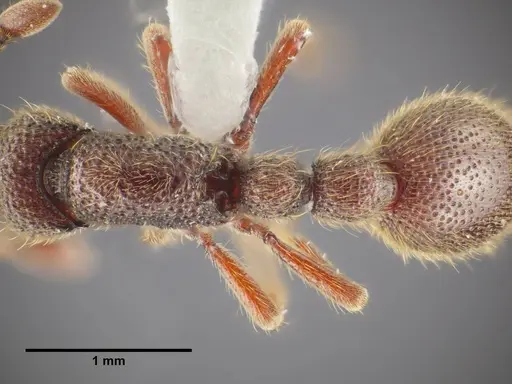
ANTWEB1041157
View on AntWeb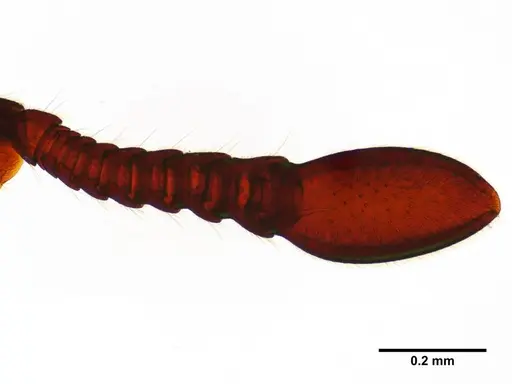
Literature
Loading distribution map...Loading products...