
Iridomyrmex spodipilus
- Sci. Name
- Iridomyrmex spodipilus
- Tribe
- Leptomyrmecini
- Subfamily
- Dolichoderinae
- Author
- Shattuck, 1993
- Distribution
- Found in 1 countries
Introduction
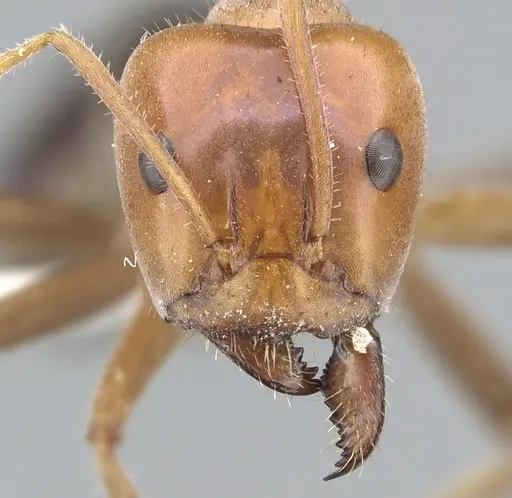
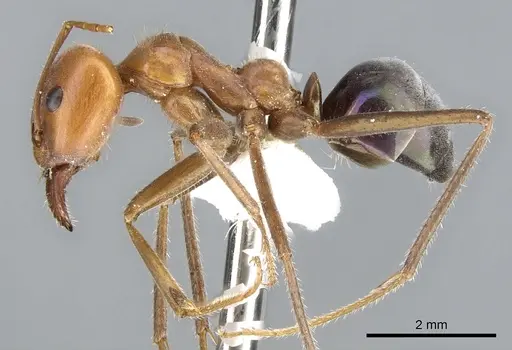
Iridomyrmex spodipilus is a medium-sized ant native to Australia, belonging to the Dolichoderinae subfamily. Workers are approximately 2-4mm in length - inferred from the Iridomyrmex genus range . They have a distinctive reddish head and mesosoma with pale blue, greenish, or yellow iridescence, while the gaster is black with bluish-green iridescence. Their body is covered in pale, ashy brown erect setae, giving them a somewhat bristly appearance. This species is the only southern member of the I. sanguineus species complex and strongly resembles a very large Iridomyrmex discors, sharing pale erect setae on body parts. Iridescence is weak to absent but can appear pink to purple when present. Two distinct populations exist: South Australian workers are lighter colored, while eastern workers from Queensland and New South Wales are darker with the head lighter than the mesosoma .
Quick Summary
- Difficulty: Unknown, no captive care data available
- Origin & Habitat: Australia, specifically South Australia, Queensland, and New South Wales. Specimens have been collected in low shrub and grassland habitats at Fowlers Gap, NSW [1][2].
- Colony Type: Colony structure is unconfirmed. This species has not been studied for queen number or colony organization.
- Size & Growth:
- Queen: Unconfirmed, queen measurements not available in literature
- Worker: Approximately 2-4mm, inferred from Iridomyrmex genus range [1]
- Colony: Unknown, no colony size data available
- Growth: Unknown, no development data available
- Development: Unconfirmed, no development data available for this species (Development timeline has not been studied.)
- Antkeeping:
- Temperature: Inferred: Based on Australian grassland habitat, likely prefers warm conditions around 22-28°C. Provide a temperature gradient allowing workers to self-regulate.
- Humidity: Inferred: Grassland and low shrub habitat suggests moderate humidity needs. Ensure nest substrate doesn't dry out completely but avoid waterlogging.
- Diapause: Unknown, no seasonal data available for this species. Australian ants may have reduced activity during cooler months but true hibernation requirements are unconfirmed.
- Nesting: Inferred: Natural specimens collected in low shrub and grassland suggest they nest in soil or under ground cover. In captivity, standard formicariums with soil or plaster nests would likely be appropriate.
- Behavior: Behavior is unconfirmed. Iridomyrmex ants are generally active foragers. This species lacks a functional sting, like other Dolichoderinae, it defends by secreting defensive chemical compounds from a slit-like opening at the tip of the abdomen. Their small to medium size means escape prevention should be taken seriously.
- Common Issues: no captive care data exists for this species, colony structure unknown, keepers cannot confirm whether single or multiple queens are normal, development timeline unconfirmed, distribution limited to Australia, export and import restrictions may apply, two disjunct populations suggest possible regional care variations
Appearance and Identification
Iridomyrmex spodipilus workers are medium-sized ants approximately 2-4mm in length [1]. Their most distinctive feature is the reddish coloration of the head and mesosoma combined with pale blue, greenish, or yellow iridescence. The gaster is black with bluish-green iridescence, while the legs are light brown [1]. Their body is covered in numerous pale, ashy brown erect setae that are short and bristly, you'll notice these especially on the pronotum, mesonotum, and propodeum where there are typically 12 or more of these setae [1]. Under magnification, the long anteromedian clypeal prominence and higher scape index help separate them from similar species like Iridomyrmex discors [1]. This species is the only southern member of the I. sanguineus complex, and populations from South Australia are lighter colored than those from Queensland and New South Wales [1].
Natural Habitat and Distribution
Iridomyrmex spodipilus is endemic to Australia, with two disjunct populations. One population exists in South Australia, while another is found in Queensland and New South Wales [1]. Specimens from Fowlers Gap in New South Wales were collected in low shrub and grassland habitats [1]. This suggests they prefer open, scrubby areas rather than dense forest. The two populations show slight differences: South Australian workers are lighter overall with consistent head and mesosoma coloration, while eastern workers are darker with the head lighter than the mesosoma, and are slightly smaller on average [1]. These differences are considered intraspecific variation rather than separate species [1].
Housing and Nesting
Since no captive care data exists for this species, housing recommendations must be inferred from habitat and related species. Based on their collection in grassland and low shrub habitats, they likely nest in soil or under ground debris in the wild. For captivity, a standard formicarium with soil or plaster nests would be appropriate. Provide a water tube or moisture source to maintain substrate humidity. Since their exact humidity needs are unknown, start with moderate levels and observe colony behavior. Ensure the outworld has access to protein and sugar foods. Escape prevention should be taken seriously, these ants can fit through small gaps.
Feeding and Diet
Iridomyrmex ants are typically omnivorous, foraging for nectar, honeydew, and small insects. No specific dietary studies exist for spodipilus, but related species in the genus readily accept sugar water, honey, or nectar, along with protein sources like small insects. In captivity, offer a mix of sugar water or honey constantly, and provide protein regularly. Start with small amounts and observe what the colony accepts. Remove uneaten protein after 24-48 hours to prevent mold.
Temperature and Seasonal Care
Temperature requirements are not documented for this species. Based on their Australian grassland habitat in temperate to subtropical regions, they likely tolerate a range of temperatures. Start around 22-28°C and provide a temperature gradient so workers can choose their optimal zone. Seasonal care is unknown, Australian ants may reduce activity during cooler months but true hibernation has not been documented for this species. If your colony shows reduced activity in winter, lower temperatures slightly rather than attempting full hibernation.
Colony Establishment and Growth
No data exists on colony founding or growth for Iridomyrmex spodipilus. If you obtain a founding queen, provide a small test tube setup with water and keep her in a dark, quiet location at around 24-26°C. Do not disturb her for 4-6 weeks, then check for the first workers. Growth rate is unknown. Colonies may grow slowly at first, then accelerate once the first workers are established.
Frequently Asked Questions
How long does it take for Iridomyrmex spodipilus to develop from egg to worker?
This is unconfirmed, no development data exists for this species.
What do Iridomyrmex spodipilus ants eat?
No specific dietary studies exist for this species. Based on related Iridomyrmex ants, they likely accept sugar sources and protein. Offer both and observe what they accept.
What temperature should I keep Iridomyrmex spodipilus at?
Temperature requirements are unconfirmed. Based on their Australian grassland habitat, start around 22-28°C and provide a gradient.
Are Iridomyrmex spodipilus good for beginners?
No, this species has no established captive care protocols and is not commonly available. There is no information on colony structure, development, or specific care requirements. It is not recommended for beginners.
How big do Iridomyrmex spodipilus colonies get?
Colony size is unknown, no colony size data has been published for this species.
Can I keep multiple queens together in Iridomyrmex spodipilus?
Colony structure is unconfirmed, we do not know whether they are single-queen or multi-queen species. Combining unrelated queens is not recommended without data on their behavior.
Where is Iridomyrmex spodipilus found?
This species is endemic to Australia, with populations in South Australia and the Queensland/New South Wales region [1].
What does Iridomyrmex spodipilus look like?
Workers are approximately 2-4mm with a reddish head and mesosoma featuring pale blue, greenish, or yellow iridescence. The gaster is black with bluish-green iridescence. Their body is covered in pale, bristly setae [1].
Do Iridomyrmex spodipilus need hibernation?
Diapause requirements are unknown. No seasonal studies exist for this species.
Report an Issue
The current care sheet is based fully on literature. See inconsistencies, or something that's incorrect? Please , it will be resolved after review from an admin. Contributing to the blogs tab also helps providing information, to make us be able to further improve the caresheets. Thank you for your support!
References

This caresheet is licensed under CC BY-SA 4.0 .
Community Blogs
CASENT0903078
View on AntWeb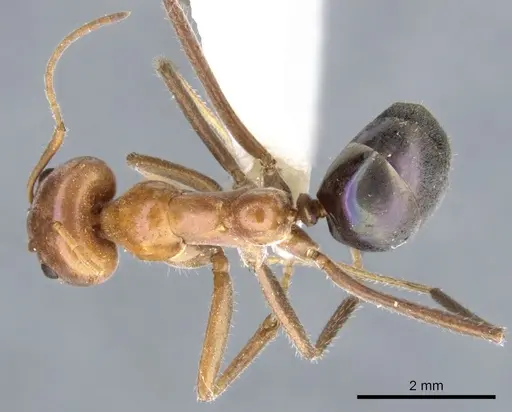
Literature
Loading distribution map...Loading products...