
Anochetus tua
- Sci. Name
- Anochetus tua
- Tribe
- Ponerini
- Subfamily
- Ponerinae
- Author
- Brown, 1978
- Distribution
- Found in 1 countries
Introduction
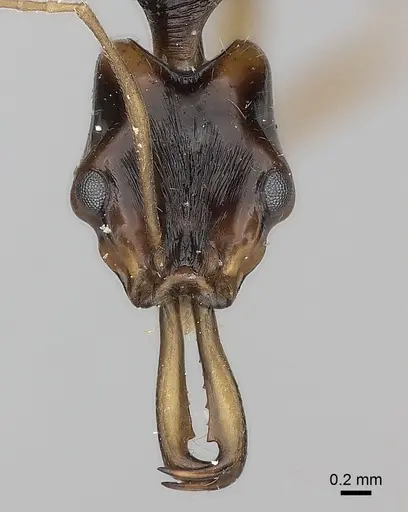
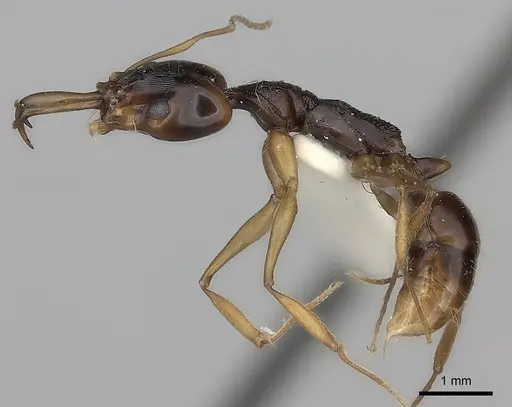
Anochetus tua is a moderately large trap-jaw ant from the mountains of Southeast Asia. Workers reach 7.6-8.2 mm in total length and appear dark reddish-brown to nearly black, with lighter reddish corners on the head and yellowish mandibles, antennae, and legs . They inhabit wet hill forests at elevations around 1300 meters in Malaysia and Borneo, making them a montane tropical species . These ants belong to the risii species group, characterized by long, spring-loaded mandibles armed with sharp denticles along the inner edges . Unlike their close relatives such as Anochetus risii, Anochetus tua shows much darker coloration and coarser body sculpture across the head and thorax . The species name comes from the Malay word for "elder" or "darker, " referencing both their relatively large size for the genus and their deep, dark coloration .
Quick Summary
- Difficulty: Expert
- Origin & Habitat: Hill forests of Malaysia (Peninsula and Sabah), Singapore, and Borneo at approximately 1300m elevation [1][2][3]
- Colony Type: Unknown, only worker specimens have been scientifically documented, queens remain undescribed [1]
- Size & Growth:
- Antkeeping:
- Temperature: 20-24°C, keep cool to mimic montane hill forest conditions at 1300m elevation, avoid temperatures above 26°C [1]
- Humidity: High humidity required, keep nest substrate consistently moist but not waterlogged to simulate hill forest conditions [1]
- Diapause: Not required, tropical species, but a cooler winter rest period at 18-20°C for 6-8 weeks may benefit colonies from montane origins
- Nesting: Naturalistic setups with flat stones or rotting wood, Y-tong or plaster nests with tight-fitting chambers, excellent ventilation while maintaining humidity
- Behavior: Predatory trap-jaw hunters that likely forage alone, workers use their spring-loaded mandibles to strike prey. They possess a sting as their primary defense mechanism (Ponerinae default). Moderate aggression levels. At 8mm they are less prone to escaping than tiny species, but secure lids are still essential.
- Common Issues: impossible to found legally from wild queens since queens remain scientifically undescribed and unconfirmed in collections., overheating from treating them like lowland tropical ants, they need cooler montane temperatures around 20-24°C., dehydration if kept in dry conditions, hill forest species require consistently moist substrate., failure to accept non-living prey, trap-jaw ants often require small live insects to trigger hunting behavior., difficulty sourcing colonies since only workers are documented and the species is rarely available in the hobby.
Identification and Appearance
Anochetus tua workers are immediately recognizable by their dark coloration among the risii group. While relatives like Anochetus risii show lighter reddish-brown tones, Anochetus tua appears dark reddish-brown to piceous black, with only the head corners, mandibles, antennae, and legs showing lighter yellowish to ferruginous coloring [1]. Workers measure 7.6-8.2 mm in total length, making them moderately large for the genus [1]. The head features extensive frontal striation across the central vertex, and the pronotum shows complete sculpturing with fine rugulosity in U or V-like patterns [1][2]. The petiolar node is thick and narrowly rounded at the apex, not pointed [1]. Most distinctive are the long trap-jaw mandibles bearing sharp denticles along the inner margins, these spring-loaded weapons are characteristic of the genus and used to strike prey [1].
Natural Habitat and Distribution
This species inhabits wet hill forests at approximately 1300 meters elevation, specifically recorded from Fraser's Hill in Pahang, Malaysia [1]. The type specimens were collected from hill forest habitat, indicating a preference for montane tropical conditions cooler than lowland rainforests [1]. Their distribution spans the Indomalaya region including Peninsular Malaysia, Sabah (Borneo), and Singapore [1][2][3]. The elevation suggests these ants experience temperatures roughly 5-10°C cooler than lowland tropical areas, typically ranging 15-25°C naturally. Hill forests provide high humidity, shaded conditions, and abundant leaf litter and rotting wood for nesting [1].
Trap-Jaw Hunting and Feeding
Like all Anochetus species, Anochetus tua possesses trap-jaw mandibles, these are spring-loaded weapons that snap shut with incredible speed when triggered by sensory hairs on the inner jaw surfaces. Workers likely hunt small soil arthropods such as springtails, termites, and small insect larvae. In captivity, offer small live prey such as fruit flies, springtails, or tiny crickets. Prey should be small enough for the workers to handle with their 8mm body size. Some keepers report success with freshly killed insects, but live prey often triggers the natural hunting response better. Provide a constant source of sugar water or honey water in a feeding dish, though protein will be the primary dietary focus for these predators. [1]
Housing and Environmental Needs
Create a naturalistic setup that mimics hill forest floor conditions. Use a substrate mix of coco fiber and rotting wood pieces, or place flat stones over a moist soil layer to create humid hiding spots under the stones [1]. Y-tong nests or plaster nests work if kept moist, but ensure chambers are sized appropriately for 8mm ants, not too spacious. Maintain high humidity by keeping the nest substrate damp to the touch, but provide some slightly drier areas so workers can choose their preferred microclimate. Use excellent ventilation to prevent mold while retaining moisture, stagnant air kills montane species quickly. A heating cable set to low temperatures (20-22°C) on one side of the nest creates a gentle gradient, but avoid overheating, these are not typical hot-climate tropical ants.
Colony Founding and Growth Challenges
Founding Anochetus tua colonies presents a unique challenge: queens of this species remain undescribed in scientific literature [1]. No reproductive females have been collected and documented, meaning founding behavior is completely unconfirmed. Without confirmed queens available to the hobby, current keepers must rely on wild-caught worker colonies or wait for nuptial flights to be documented. Colony size data is unavailable for this species. Colonies probably remain small based on patterns seen in related trap-jaw ants, but exact numbers are unknown.
Temperature and Seasonal Care
Do not keep Anochetus tua at standard tropical temperatures of 28-30°C. Their 1300m elevation origin means they prefer cooler conditions around 20-24°C [1]. Temperatures above 26°C may stress the colony, while brief drops to 18°C are likely tolerated and may even be beneficial. As a tropical species, they do not require true hibernation, but a winter cooling period to 18-20°C for 6-8 weeks can simulate the cooler montane dry season and may trigger more natural brood cycling. Monitor worker activity, if they cluster away from heat sources or appear lethargic at 24°C, reduce temperatures further. Maintain stable conditions, montane forests have less temperature fluctuation than open lowland areas.
Frequently Asked Questions
Can I keep Anochetus tua in a test tube?
Test tubes are not ideal for Anochetus tua. These are montane hill forest ants that need humid, well-ventilated conditions with substrate to burrow. A test tube setup lacks the humidity gradient and nesting options they prefer. Use a naturalistic setup with soil and stones or a well-ventilated Y-tong nest instead.
How long until Anochetus tua get their first workers?
The egg-to-worker timeline for Anochetus tua is unknown since queens have never been documented in scientific collections. Development data for this species is unstudied.
What do Anochetus tua eat?
Anochetus tua are predatory trap-jaw ants. Feed them small live insects such as fruit flies, springtails, or tiny crickets. They use their spring-loaded mandibles to strike prey. Offer sugar water or honey water as a carbohydrate source, but emphasize protein for these hunters.
Are Anochetus tua good for beginners?
No, Anochetus tua are expert-level ants. They require specific montane temperature conditions (cooler than typical tropical ants), high humidity with excellent ventilation, and specialized live prey. Additionally, queens remain scientifically undescribed, making founding impossible currently. Only attempt if you have experience with sensitive montane species.
Do Anochetus tua need hibernation?
True hibernation is not required as they are tropical, but a cooling period to 18-20°C for 6-8 weeks during winter months can simulate their natural montane dry season and may improve colony health. Avoid keeping them constantly at temperatures above 24°C.
How big do Anochetus tua colonies get?
Maximum colony size is unknown. No data exists on colony size for this species. They are not supercolonial and likely grow slowly compared to common beginner species like Lasius or Formica.
Can I keep multiple Anochetus tua queens together?
This is unknown and not recommended. Since queens have never been documented for this species, their colony structure (whether single-queen or multi-queen) remains unconfirmed. Attempting to combine multiple queens risks fighting and colony failure.
Why are my Anochetus tua dying?
Common causes include overheating (they need 20-24°C, not typical tropical heat), dehydration (maintain moist substrate), or starvation from inappropriate prey (they need small live insects). Poor ventilation causing mold is also a risk in humid setups. Ensure your setup mimics hill forest conditions, not lowland jungle.
Where can I buy Anochetus tua?
Anochetus tua is extremely rare in the antkeeping hobby. They are occasionally available through specialized dealers in Southeast Asia or from collectors in Malaysia and Singapore. However, ensure any purchase follows local wildlife laws, as they are native to specific montane regions.
Report an Issue
The current care sheet is based fully on literature. See inconsistencies, or something that's incorrect? Please , it will be resolved after review from an admin. Contributing to the blogs tab also helps providing information, to make us be able to further improve the caresheets. Thank you for your support!
References

This caresheet is licensed under CC BY-SA 4.0 .
Community Blogs
CASENT0217514
View on AntWeb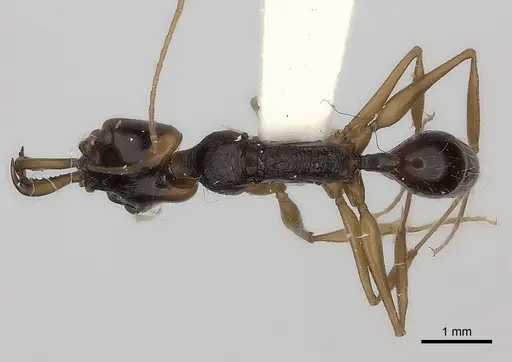
Literature
Loading distribution map...Loading products...