
Anochetus risii
- Sci. Name
- Anochetus risii
- Tribe
- Ponerini
- Subfamily
- Ponerinae
- Author
- Forel, 1900
- Distribution
- Found in 4 countries
Introduction
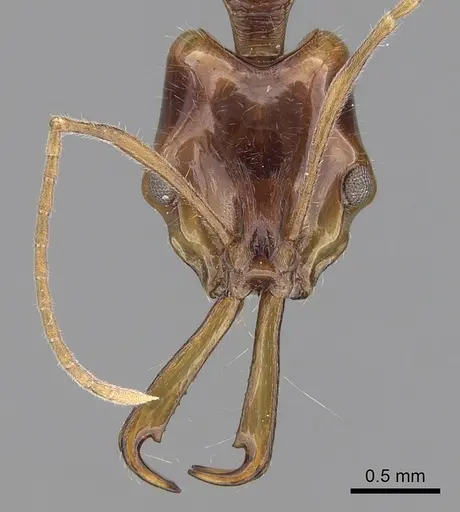
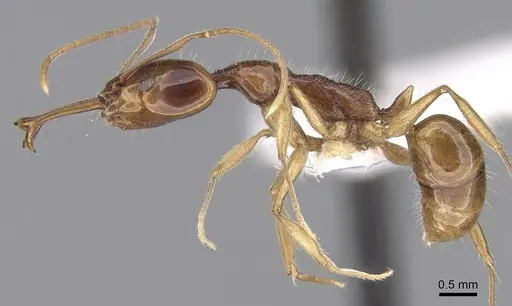
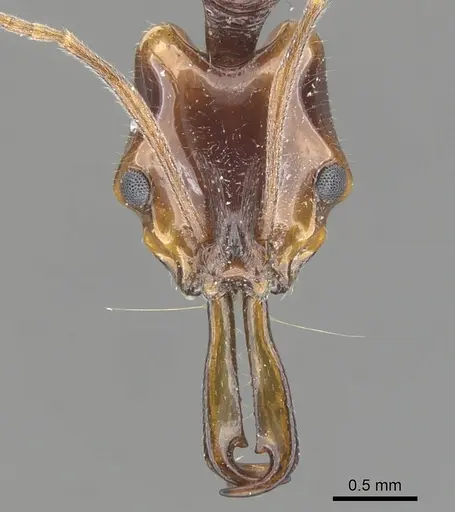
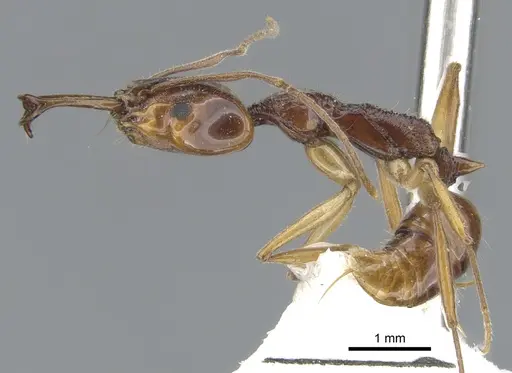
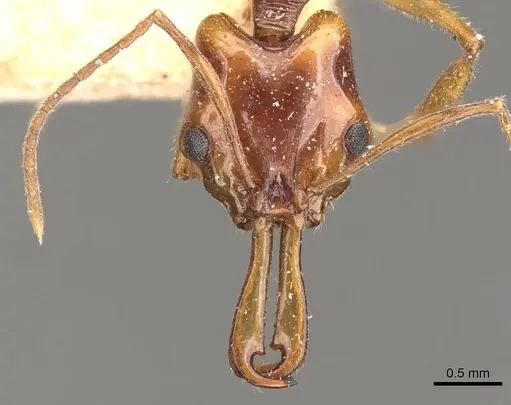
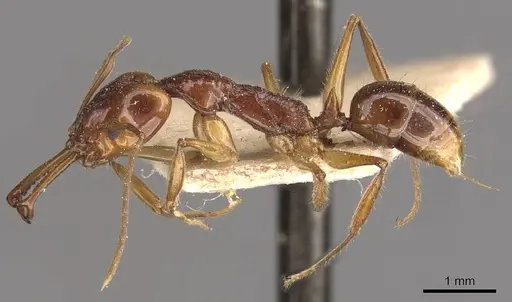
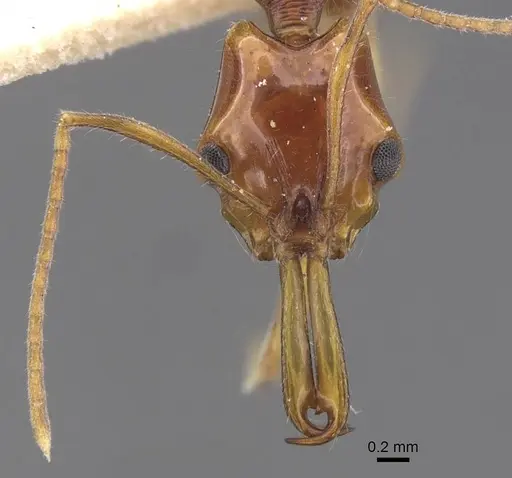
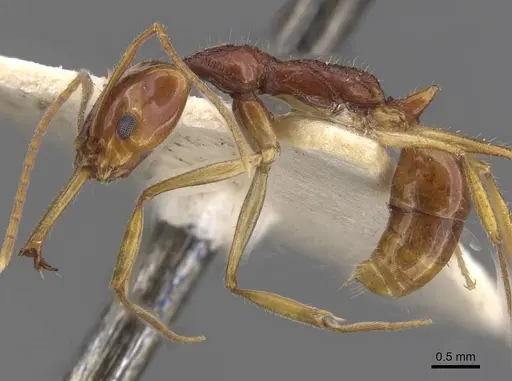
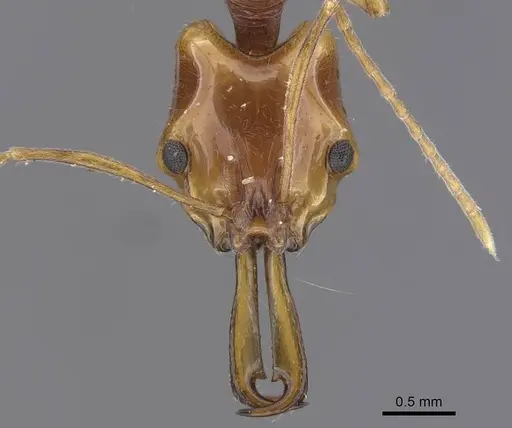
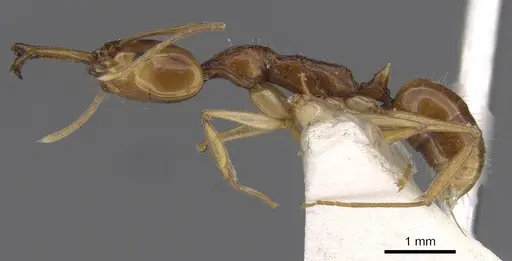
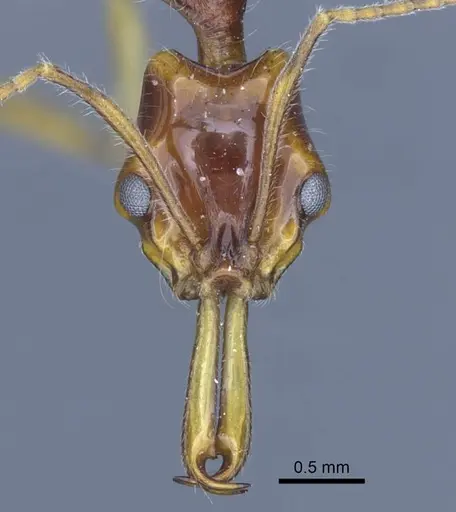
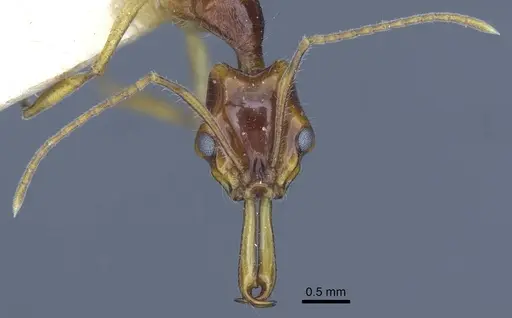
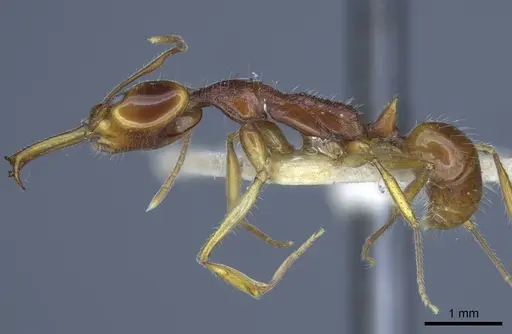
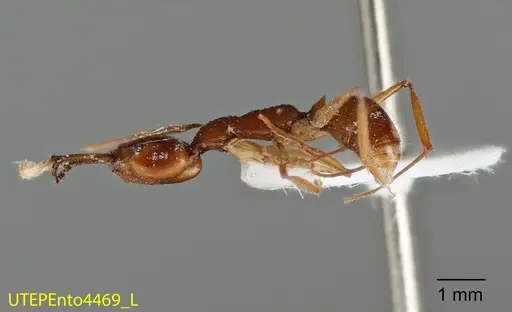
Anochetus risii is a trap-jaw ant found across Southeast Asia. Workers measure 5.12-5.34 mm with blackish-brown bodies and yellowish-brown legs and antennae . They inhabit leaf litter and rotting wood in tropical and subtropical forests from China and Taiwan through Vietnam to Indonesia . These ants are specialist termite hunters. Research on Taiwanese populations shows they actively hunt termites in rotting logs, using their trap-jaw mandibles to strike from about 1.4 mm away to avoid the termite's defensive snaps . This specialized predatory behavior makes them challenging captives.
Quick Summary
- Difficulty: Hard
- Origin & Habitat: Southeast Asia including China (Hong Kong, Hainan), Taiwan, Vietnam, and Indonesia [1][2]. Found in leaf litter, rotting wood, and under stones in tropical to subtropical forests [2][3].
- Colony Type: Colony structure is unconfirmed. Based on typical Anochetus patterns, likely single-queen colonies.
- Size & Growth:
- Queen: Size data unavailable, queen measurements not provided in available research.
- Worker: 5.12-5.34 mm total length [1].
- Colony: Colony size data unavailable, maximum worker count not documented in scientific literature.
- Growth: Growth rate is unconfirmed.
- Development: Timeline is unconfirmed. Based on related Ponerinae, approximately 8-12 weeks at 25°C may be expected. (Development timeline is estimated from genus patterns, actual development for this species is unconfirmed.)
- Antkeeping:
- Temperature: Keep warm, around 24-28°C. Use a heating cable on one side of the nest to create a gradient.
- Humidity: High humidity required. Keep nest substrate damp like leaf litter, moist to the touch but not waterlogged.
- Diapause: Diapause requirement is unconfirmed. Tropical populations likely do not require winter dormancy.
- Nesting: Naturalistic setups with leaf litter and rotting wood, or humid plaster or Y-tong nests with small chambers.
- Behavior: Specialist predators that hunt termites using trap-jaw strikes [4]. Can sting (typical for Ponerinae). Moderate escape risk, at over 5 mm they can squeeze through small gaps.
- Common Issues: specialized termite diet is difficult to maintain in captivity, they may not accept standard feeder insects., small colony size means slow growth, patience required as worker counts remain low., high humidity requirements can lead to mold if ventilation is inadequate., founding behavior is unconfirmed, queens may require prey during founding, increasing risk of starvation or stress.
Nest Preferences
In nature, Anochetus risii lives in leaf litter and rotting wood [2][3]. They are often collected in leaf litter samples and found under stones or in decaying logs [2][4]. For captive housing, recreate these damp, forest-floor conditions. A naturalistic setup with leaf litter, pieces of rotting wood, and a soil mix works well. Alternatively, use a Y-tong or plaster nest with small chambers and keep it humid. The substrate should feel damp but not soggy, think forest floor after rain. Provide some ventilation to prevent mold growth while maintaining moisture.
Feeding and Diet
These are specialist termite predators. Studies on Taiwanese populations show they specifically hunt termites in rotting logs, attacking from approximately 1.4 mm away to avoid the termite's defensive mandible snaps [4]. They successfully attacked termites in 34% of encounters in field observations [4]. In captivity, this specialization creates challenges. You will likely need to provide live termites, or experiment with very small soft-bodied alternatives like springtails or fruit flies. They may not accept sugar water or standard feeder insects like mealworms. Watch that prey items are small enough for their 5 mm workers.
Temperature and Care
Coming from tropical and subtropical regions including Taiwan, Vietnam, and Indonesia, these ants need warmth [1]. Keep them around 24-28°C. If your room is cooler, place a heating cable on top of one side of the nest (not underneath, to avoid flooding the chambers with condensation). They likely do not need a winter diapause given their tropical distribution. Maintain high humidity by regularly misting the nest area when the substrate surface begins to dry.
Colony Founding
Founding behavior is unconfirmed in scientific literature for this species. If you have a queen, provide a small founding chamber with an attached foraging area or feed her directly by placing tiny prey items in her chamber. Minimize disturbance during this vulnerable period.
Behavior and Temperament
Anochetus risii belongs to the trap-jaw ant group, using their elongated mandibles to strike prey rapidly [5]. They are active hunters rather than scavengers. Like other Ponerinae, they possess stings and can use them if threatened, though their small size means the effect is mild. Workers are approximately 5 mm long [1], so while not tiny, they can still escape through gaps in poorly sealed setups. Use fine mesh or Fluon barriers on outworlds.
Growth and Development
Colony growth is likely slow with small final worker counts, typical for Anochetus species. The egg-to-worker timeline is unconfirmed, based on related Ponerinae, expect roughly 8-12 weeks at 25°C. First workers (nanitics) may be smaller than subsequent workers.
Frequently Asked Questions
Can I keep Anochetus risii in a test tube?
Yes, but with modifications. Because founding behavior is unconfirmed, you should attach a small outworld to the test tube or offer food directly in the tube. Keep the cotton damp for humidity.
What do Anochetus risii eat?
They are specialist termite predators in the wild [4]. In captivity, you may need to provide live termites or experiment with very small alternatives like springtails or fruit flies. They may not accept standard ant foods like honey or mealworms.
How long until first workers for Anochetus risii?
The exact timeline is unknown. Based on similar trap-jaw ants, expect approximately 8-12 weeks at 25°C.
Do Anochetus risii need hibernation?
Diapause requirement is unconfirmed. They come from tropical and subtropical regions where temperatures remain warm year-round.
Are Anochetus risii dangerous?
They can sting like other Ponerinae, but at 5 mm their sting is not dangerous to humans, similar to a minor bee sting or less.
Can I keep multiple Anochetus risii queens together?
Not recommended. Combining unrelated queens of this species has not been documented and would likely result in fighting.
Why are my Anochetus risii dying?
Common causes include inability to accept non-termite prey, starvation during founding, dehydration, or excessive disturbance. Ensure high humidity and appropriate food.
How big do Anochetus risii colonies get?
Colony size data is unavailable in scientific literature. Based on patterns in the genus Anochetus, colonies likely remain small.
Are Anochetus risii good for beginners?
No. They are hard to keep due to their specialized diet requirements and unknown founding behavior.
Do Anochetus risii sting?
Yes, they possess stings typical of the subfamily Ponerinae, though their small size limits the severity.
Report an Issue
The current care sheet is based fully on literature. See inconsistencies, or something that's incorrect? Please , it will be resolved after review from an admin. Contributing to the blogs tab also helps providing information, to make us be able to further improve the caresheets. Thank you for your support!
References

This caresheet is licensed under CC BY-SA 4.0 .
Community Blogs
CASENT0281886
View on AntWeb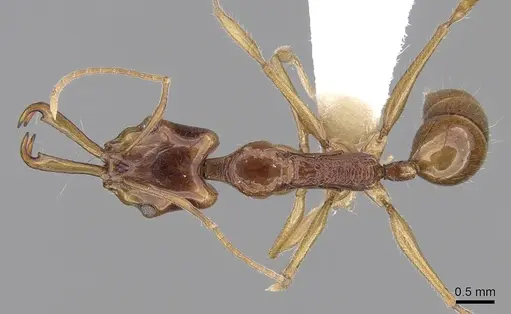
CASENT0902440
View on AntWeb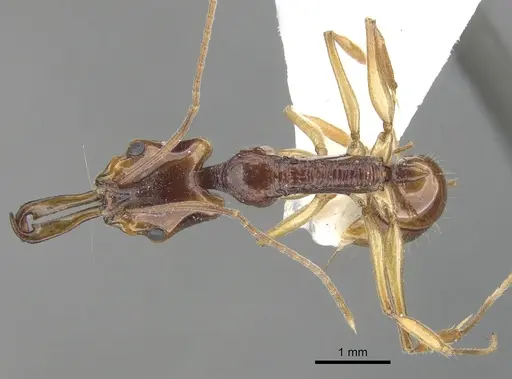
CASENT0907411
View on AntWeb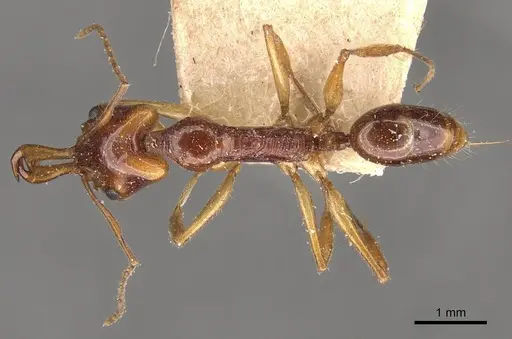
CASENT0915166
View on AntWeb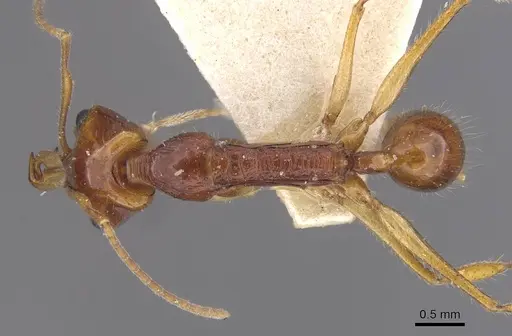
CASENT0915167
View on AntWeb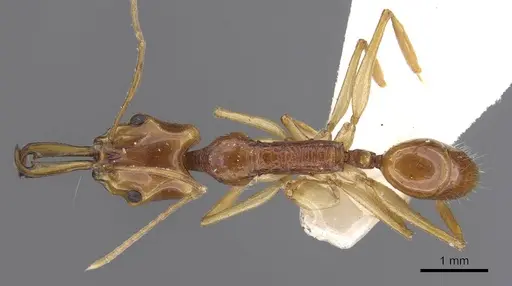
CASENT0916847
View on AntWeb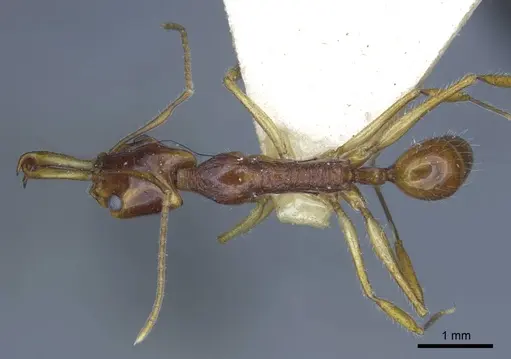
UTEPENTO4469
View on AntWeb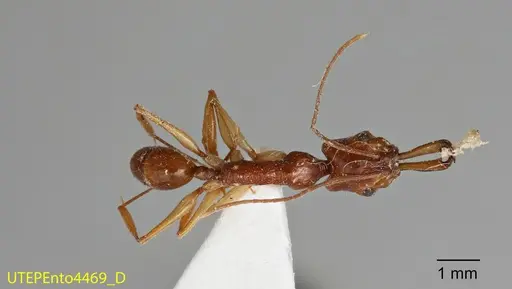
Literature
Loading distribution map...Loading products...