
Aenictus cornutus
- Sci. Name
- Aenictus cornutus
- Subfamily
- Dorylinae
- Author
- Forel, 1900
- Distribution
- Found in 1 countries
Introduction
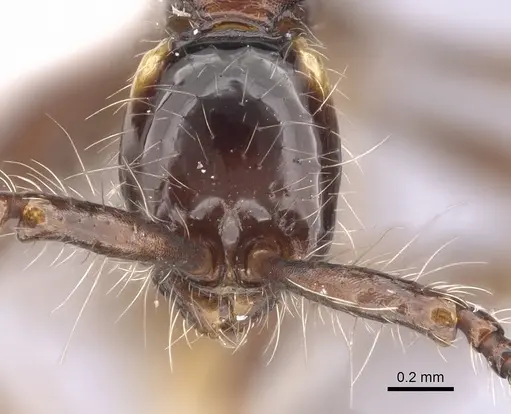
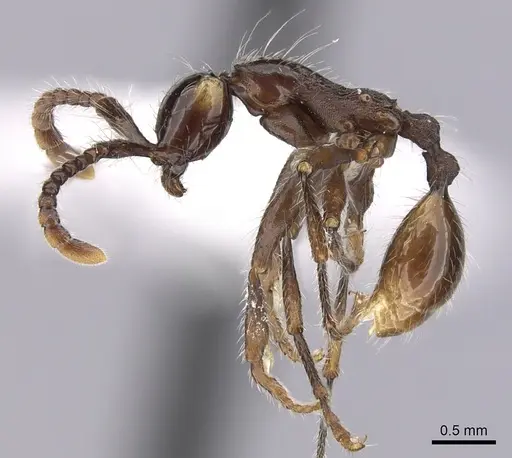
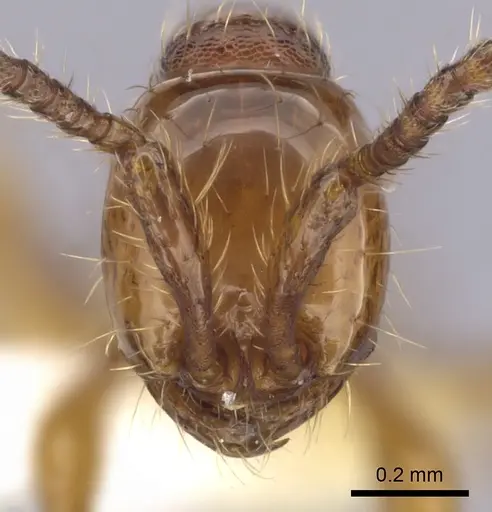
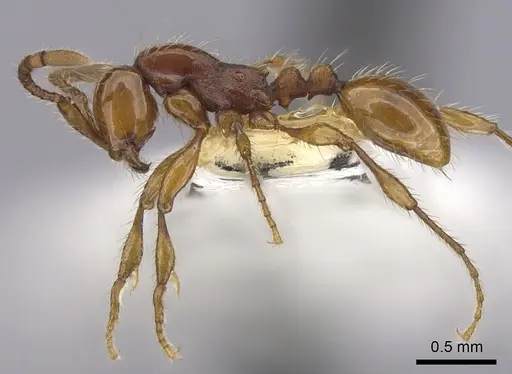
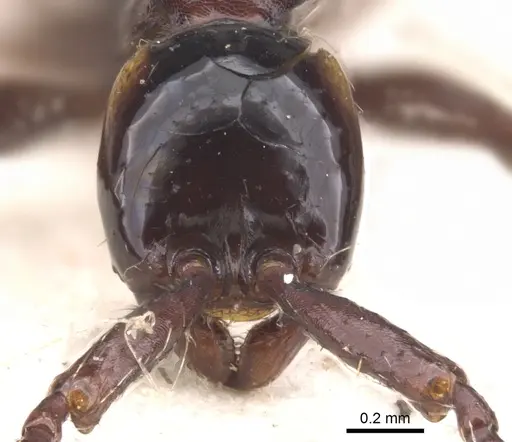
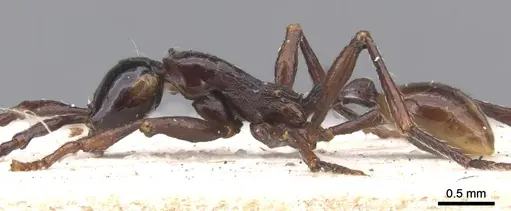
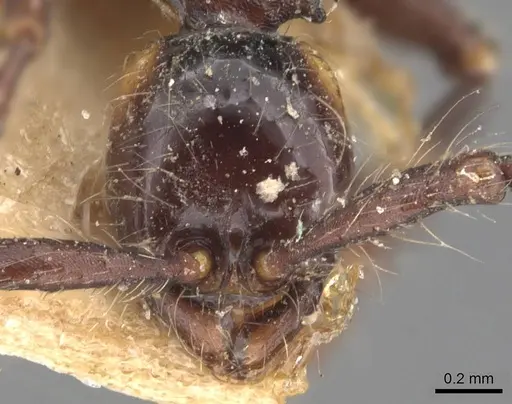
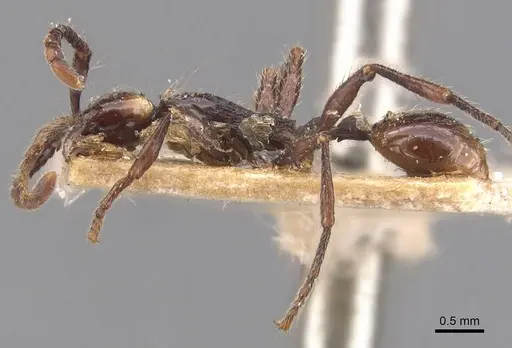
Aenictus cornutus is a small army ant found in the lowland rainforests of Southeast Asia. Workers measure approximately 4.0-4.5 mm in total length and are easily recognized by the large horn-like projections on their pronotum - a feature unique to this species within the Aenictus currax group . They are distributed across Borneo, Sumatra, the Malay Peninsula, and Thailand . These ants are specialist predators that hunt and consume other ant species, particularly from the genera Polyrhachis and Technomyrmex . Only the worker caste is known to science - no queens have ever been documented . This makes captive keeping essentially impossible since colonies cannot reproduce.
Quick Summary
- Difficulty: Expert
- Origin & Habitat: Lowland rainforests of Malaysia (Borneo, Malay Peninsula), Indonesia (Sumatra), and Thailand [1][2].
- Colony Type: Worker-only species, only workers are known, no queen caste has ever been documented [4]. Colonies likely reproduce by fission in the wild but this cannot occur in captivity.
- Size & Growth:
- Queen: No queens known in this species [4].
- Worker: 4.0-4.45 mm total length [1].
- Colony: Unknown, army ant colonies typically contain thousands of workers.
- Growth: None in captivity, without a queen, the colony cannot produce new workers and will only decline as existing workers age and die.
- Development: Not applicable, no queens are known and colonies cannot reproduce in captivity [4]. (Colonies collected from the wild will gradually shrink as workers age and die.)
- Antkeeping:
- Temperature: 24-28°C, warm tropical conditions matching their lowland rainforest habitat [1][3].
- Humidity: High humidity required, keep substrate damp but not waterlogged to mimic rainforest floor conditions [1].
- Diapause: No, tropical species that remains active year-round [1].
- Nesting: Nomadic lifestyle, they do not stay in one nest long. Requires a large naturalistic setup with soil, leaf litter, and multiple temporary shelter sites rather than a traditional formicarium [3].
- Behavior: Highly active, aggressive ant predators that hunt in groups. They are constantly on the move and will attempt to escape through any gap due to their small size [3][1].
- Common Issues: colony is temporary and will die out without a queen to replace aging workers., requires constant supply of other ant colonies as food, cannot survive on sugar water or standard feeder insects., nomadic behavior makes them difficult to house, they need space to roam and will not stay in a single nest chamber., extreme escape risk due to 4mm worker size, requires very fine mesh and perfect seals., wild-caught colonies often carry parasites or mites that can speed up colony decline.
Why These Ants Are Nearly Impossible to Keep
Aenictus cornutus represents one of the hardest possible ant-keeping challenges. First, they have no queen caste, science has never found a queen of this species, only workers [4]. This means you cannot start a colony from a single queen, and any colony you collect is already doomed to die out as workers age. Second, they are true army ants with a nomadic lifestyle. In nature, they constantly move their entire colony to new hunting grounds [3]. They do not settle into a single nest chamber like typical ant species. Third, they are specialist predators of other ants. They will not accept honey, sugar water, or mealworms. They need living ant colonies to raid [3][1]. Combined, these traits make long-term captive keeping practically impossible for hobbyists.
The Horned Hunters
These ants are instantly recognizable by the large horn-like projections on their pronotum (the front part of the thorax) [1][2]. No other Aenictus species has these horns, it is a unique character within the species group. Workers are slender, dark reddish-brown, and about 4mm long [1]. They forage on the ground surface (epigeic) and conduct raids on other ant colonies [3]. Research in Malaysian rainforests found they specifically target ants like Polyrhachis, Technomyrmex, Crematogaster, and Pheidole [3]. During emigrations, they move in columns and can share trails with other ant species without conflict, though they themselves may be picked off by predators like Odontoponera transversa [3].
Housing Requirements
If you attempt to keep Aenictus cornutus, forget standard test tubes or acrylic nests. These ants need a large, naturalistic terrarium with several inches of soil and leaf litter. Provide multiple hiding spots, flat stones, rotting wood pieces, or artificial shelters, because they will abandon each one regularly as they move. The enclosure must be absolutely escape-proof. At 4mm long, workers can squeeze through the tiniest gaps in mesh or around lid seals [1]. You will need fine stainless steel mesh (less than 1mm holes) and barrier products like Fluon applied to the upper walls. Maintain high humidity by keeping the substrate damp, but ensure some ventilation to prevent mold.
Feeding Challenges
This is where most attempts fail. Aenictus cornutus eats other ants, almost exclusively [3][1]. They do not visit sugar sources. In captivity, you would need to provide living ant colonies of appropriate size (small species like Temnothorax, Brachymyrmex, or young Lasius colonies) constantly. This is ethically questionable, logistically difficult, and expensive. The ants hunt by raiding, they swarm into enemy nests and carry out brood and workers. Without this specific prey, the colony will starve within days. There is no substitute food that has been documented to work.
Collection and Ethics
Since queens are unknown, the only way to obtain these ants is to collect a wild colony fragment. This involves digging up a bivouac (temporary nest) in a Malaysian or Indonesian rainforest. However, removing army ants from their ecosystem disrupts local food webs, they are top invertebrate predators that control other ant populations [3]. Additionally, wild colonies often carry parasitic mites or internal parasites that will eventually kill the workers in captivity. Given that the colony will die out regardless (no queen), the ethical cost of removing them from the wild outweighs any educational benefit.
Frequently Asked Questions
Can I keep Aenictus cornutus in a test tube?
No. These ants are nomadic army ants that require large spaces with soil and multiple shelter sites. They will not stay in a test tube and need room to roam and hunt [3].
Do Aenictus cornutus have a queen?
No queens have ever been found for this species. Only workers are known to science [4].
What do Aenictus cornutus eat?
They are specialist predators of other ants. They hunt species like Polyrhachis, Technomyrmex, Crematogaster, and Pheidole [3][1]. They do not accept sugar water or typical feeder insects.
How long do Aenictus cornutus colonies live in captivity?
Only as long as the collected workers survive. Without a queen to lay eggs, the colony cannot produce new workers and will die out when the last worker dies, typically within weeks or months depending on their age when collected [4].
Are Aenictus cornutus good for beginners?
Absolutely not. They are expert-level ants that are nearly impossible to maintain long-term due to their specialized diet, nomadic behavior, and lack of a reproductive queen [4][3].
Why do Aenictus cornutus have horns?
The horn-like projections on their thorax are unique to this species within the Aenictus currax group [1][2]. Their exact function is unknown, but they may serve for defense or muscle attachment.
Can I breed Aenictus cornutus in captivity?
No. Since no queens are known, there is no way to breed these ants. Colonies in the wild likely reproduce by splitting (fission), but this cannot be replicated in captivity to create new colonies [4].
Are Aenictus cornutus dangerous?
They are small ants (4mm) and not dangerous to humans, though like all army ants they can bite. Their danger is to other ants, they are efficient predators that will attack other ant colonies [3][1].
Do Aenictus cornutus need hibernation?
No. They come from tropical lowland rainforests and remain active year-round. They do not require a winter rest period [1].
Where can I buy Aenictus cornutus?
You generally cannot buy them. They are not commercially available because they cannot be bred in captivity. Any specimens would have to be collected from the wild in Southeast Asia, which is not recommended [4].
Report an Issue
The current care sheet is based fully on literature. See inconsistencies, or something that's incorrect? Please , it will be resolved after review from an admin. Contributing to the blogs tab also helps providing information, to make us be able to further improve the caresheets. Thank you for your support!
References

This caresheet is licensed under CC BY-SA 4.0 .
Community Blogs
CASENT0249267
View on AntWeb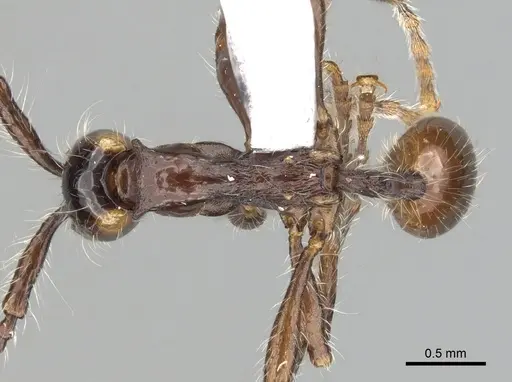
CASENT0249269
View on AntWeb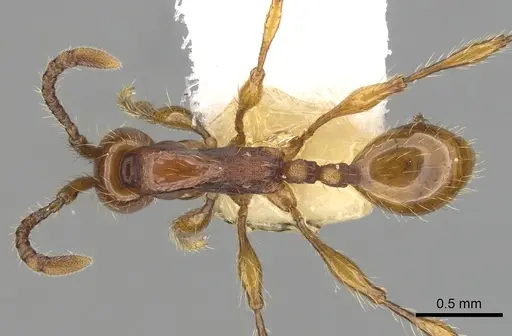
CASENT0902682
View on AntWeb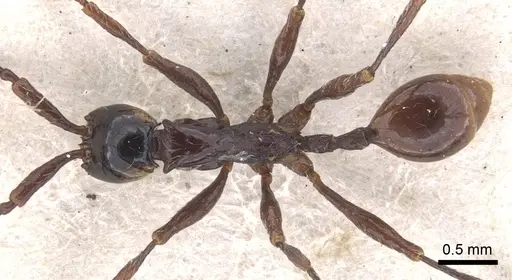
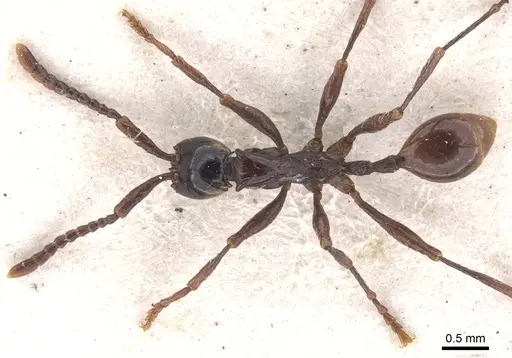
CASENT0905997
View on AntWeb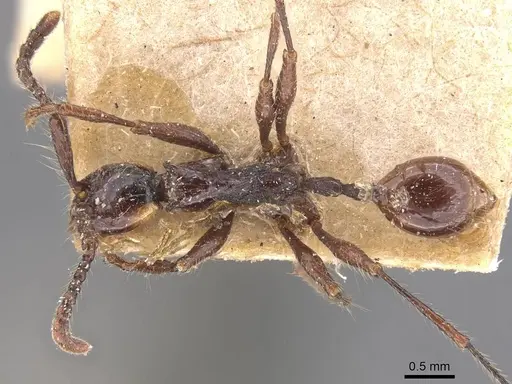
Literature
Loading distribution map...Loading products...