
Aenictus currax
- Sci. Name
- Aenictus currax
- Subfamily
- Dorylinae
- Author
- Emery, 1900
- Distribution
- Found in 1 countries
Introduction
Aenictus currax is a true army ant from the lowland rainforests of Papua New Guinea. These ants form massive colonies of at least 100,000 workers that live and move together as a single unit . Unlike ants that stay in permanent nests, they are nomadic, researchers found one colony packed around the base of a palm tree and climbing 1 meter up the trunk, living completely above ground . They are specialized predators that raid other ant colonies, carrying back dead workers and males of Crematogaster ants to eat . Despite being army ants, they are surprisingly gentle, when disturbed, they scatter quickly and rarely attempt to sting .
Quick Summary
- Difficulty: Expert
- Origin & Habitat: Papua New Guinea, virgin lowland rainforest [1][2]
- Colony Type: Single-queen colonies observed in the wild [1]
- Size & Growth:
- Antkeeping:
- Temperature: Warm and stable, approximately 24-28°C, inferred from tropical rainforest habitat [1]
- Humidity: High humidity required, similar to damp rainforest floor conditions [1]
- Diapause: No, tropical species do not hibernate [1]
- Nesting: Naturally form temporary above-ground clusters, standard formicaria are unsuitable due to nomadic behavior [1]
- Behavior: Nomadic army ants that forage in groups, not aggressive toward humans, specialized predators of other ants [1]
- Common Issues: colony size reaches at least 100,000 workers, requiring enormous space and food resources., nomadic behavior means they constantly move and do not accept permanent nest chambers., require continuous supply of live ant prey, not standard sugars or insects., escape prevention is nearly impossible with such large worker numbers., no documented cases of successful long-term captive maintenance exist.
Natural History and Nomadic Behavior
Wilson's 1964 observation describes a colony in the nomadic phase, workers packed densely around a palm tree base, extending 1 meter up the trunk, with the queen and brood in the center [1]. The queen's abdomen was not enlarged, and the brood consisted mostly of mature larvae [1]. This matches typical army ant behavior where colonies move frequently, forming temporary living clusters rather than permanent nests. For keepers, this means standard nest setups will not work, these ants need space to move and will not stay in one place.
Feeding and Diet
These are obligate predators of other ants. Wilson observed workers carrying dead adult workers and males of Crematogaster species, indicating they had raided another colony [1][2]. They do not appear to forage for sugars or typical insect prey like crickets or mealworms. This specialized diet makes captive keeping extremely difficult, as you would need to maintain colonies of other ant species specifically as food.
Housing Challenges
With at least 100,000 workers, a mature colony requires massive space, far beyond any standard formicarium [1][2]. Their nomadic nature means they will not stay in a test tube or nest box, they will constantly attempt to move. In nature, they climb trees and spread across the forest floor. Captive housing would require a huge, sealed environment with vertical surfaces and constant monitoring to prevent escape.
Colony Structure
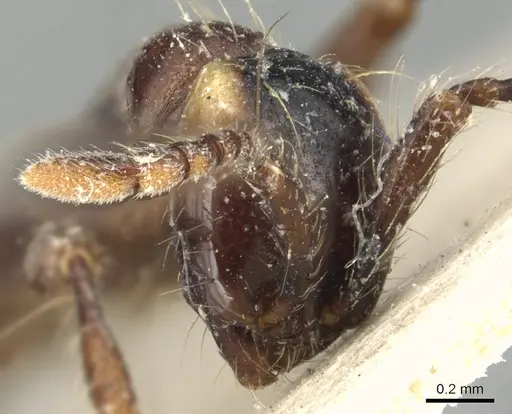
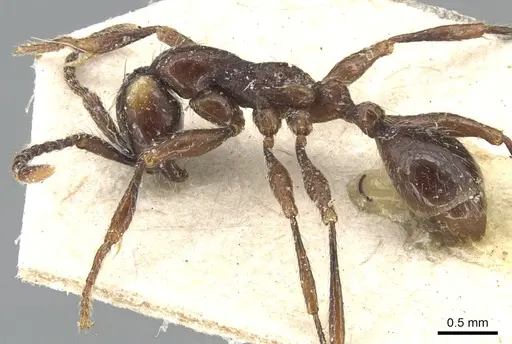
Colonies contain a single queen with a massive worker force [1]. The queen has a head width of 2.05 mm [1]. Workers measure 4.15 mm in total length [2]. The colony observed by Wilson was in the nomadic phase with mostly mature larvae, suggesting synchronized brood development typical of army ants [1].
Frequently Asked Questions
Can I keep Aenictus currax in a test tube?
No. These ants form colonies of at least 100,000 workers and are nomadic, meaning they constantly move and will not stay in a small enclosure [1][2].
How long until Aenictus currax gets its first workers?
Founding behavior is unconfirmed for this species. No research data exists on colony founding or development timeline.
Can I keep multiple Aenictus currax queens together?
Only single-queen colonies have been observed in the wild. Multiple queens are not recommended based on current observations [1].
What do Aenictus currax eat?
They are specialized predators of other ants, particularly Crematogaster species. They raid colonies and carry back dead workers and males [1][2].
Do Aenictus currax need hibernation?
No, they are tropical ants from Papua New Guinea and do not require diapause [1].
Are Aenictus currax good for beginners?
No. They are extremely difficult to keep due to their massive colony size, nomadic behavior, and specialized diet requirements [1][2].
Why are my Aenictus currax dying?
If you have obtained these ants, they are likely dying because they require enormous space, constant access to live ant prey, and specific humidity and temperature conditions that are nearly impossible to maintain in captivity [1][2].
Report an Issue
The current care sheet is based fully on literature. See inconsistencies, or something that's incorrect? Please , it will be resolved after review from an admin. Contributing to the blogs tab also helps providing information, to make us be able to further improve the caresheets. Thank you for your support!
References

This caresheet is licensed under CC BY-SA 4.0 .
Community Blogs
CASENT0903748
View on AntWeb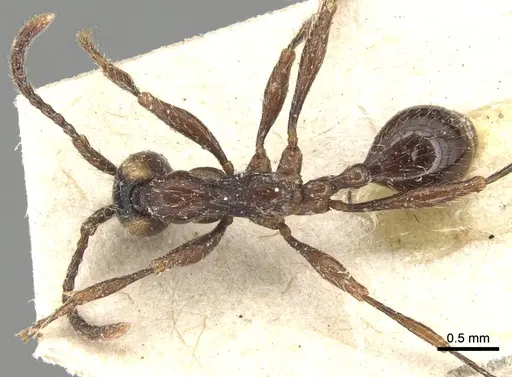
Literature
Loading distribution map...Loading products...