
Recurvidris browni
- Wetenschappelijke naam
- Recurvidris browni
- Tribus
- Crematogastrini
- Subfamilie
- Myrmicinae
- Auteur
- Bolton, 1992
- Verspreiding
- Gevonden in 3 landen
Introductie
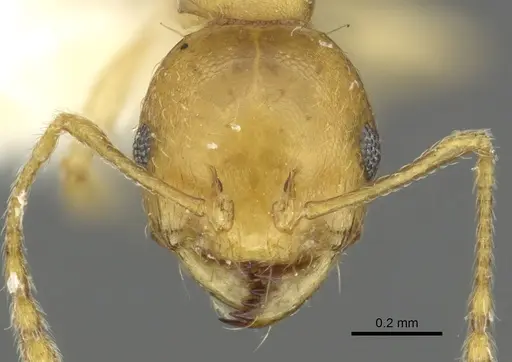
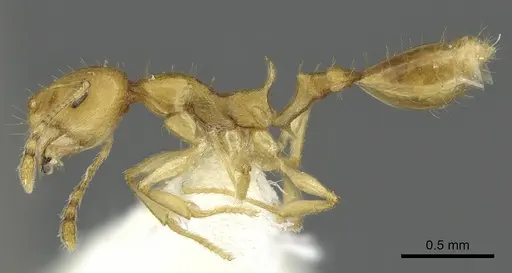
Recurvidris browni is a tiny yellow ant species native to the rainforests of Sundaland in Southeast Asia. Workers measure just 2.5-2.6 mm in total length, making them one of the smaller ants you’ll find . They belong to the genus Recurvidris, named for the distinctive recurved propodeal spines - curved backward spikes on the rear segment. First described in 1992,this species has been recorded across Borneo (Sarawak and Kalimantan), Peninsular Malaysia, and southern Thailand . These ants live in lowland rainforest leaf litter. One colony from Thailand was collected by sifting through leaf litter in primary evergreen rainforest . Stable isotope data suggests they are predators or scavengers, hunting tiny invertebrates in the litter layer . They are rarely kept in captivity, so almost everything about their care is experimental.
Quick Summary
- Difficulty: Hard
- Origin & Habitat: Native to Sundaland: Borneo (Sarawak, Kalimantan), Peninsular Malaysia, and southern Thailand. Found in lowland rainforest leaf litter at elevations below 1000 m [1][2].
- Colony Type: Unconfirmed, no data on queen number or colony structure in the wild.
- Size & Growth:
- Queen: Undescribed, no queen measurements available in scientific literature
- Worker: 2.50-2.60 mm total length [1]
- Colony: Unknown, no colony size data available
- Growth: Unknown, no development studies exist for this species
- Development: Unknown, no direct observations have been published. For similar small Myrmicinae a guess would be 4-8 weeks at tropical temperatures, but this is speculative. (No published data on egg-to-worker development. Related Recurvidris species haven’t been studied either.)
- Antkeeping:
- Temperature: Inferred, keep at 24-28 °C based on tropical rainforest origin. Room temperature (22-25 °C) may work but avoid drops below 20 °C [1][2].
- Humidity: High (inferred), they come from rainforest leaf litter where the environment stays damp year‑round. Keep the substrate moist but not waterlogged, and provide good ventilation to prevent mold [1].
- Diapause: No, this is a tropical species from consistently warm, humid environments. No winter dormancy is expected or documented [1][2].
- Nesting: Inferred, a naturalistic setup suits them best. They nest in leaf litter and soil, so a shallow container with moist coco‑peat or soil mix, plus hiding spots like cork bark or dead leaves, works well. Y‑tong nests with very small chambers may also be possible, but avoid acrylic nests.
- Behavior: These are tiny, cryptic ants that stay hidden in the substrate. Workers forage individually or in small groups rather than forming obvious trails. They are not aggressive toward humans, their main defense is hiding, and like other Crematogastrini they have a modified stinger that smears venom rather than piercing skin. Escape prevention is critical: workers are under 3 mm and can squeeze through standard test‑tube openings. Expect slow, methodical movements, not rapid colony expansion.
- Common Issues: very small size makes escape likely without fine-mesh barriers, no published care guides means every setup is experimental, tropical humidity needs may cause mold in poorly ventilated setups, slow colony growth may lead to overfeeding or unnecessary disturbance, wild‑caught colonies may carry parasites that are hard to treat
Housing and Nest Setup
Given their tiny size and leaf‑litter lifestyle, a naturalistic setup works best. Use a shallow container with a thin layer (1-2 cm) of moist coco‑peat, peat moss, or a soil mix. Add pieces of cork bark, dead leaves, or small stones to provide hiding spots and foraging surfaces. The setup should mimic the forest floor layer where they naturally live [1]. Because they are so small (under 3 mm), standard test‑tube setups may allow escapes, use containers with tight‑fitting lids or fine‑mesh coverings. A small formicarium with very narrow chambers could work, but make sure the chambers are sized for ants this tiny. Some keepers report success with miniature setups originally designed for very small pest ants like Wasmannia auropunctata (but never release any escapes).
Feeding and Diet
Based on their trophic position (elevated δ15N values indicating a predatory or scavenging lifestyle), these ants likely hunt small invertebrates in the leaf litter [3][4]. Offer tiny live prey such as springtails, fruit flies, micro‑crickets, or other small arthropods. They may also accept protein gels or crushed insects. Sugar sources like honey water or sugar water might be taken, but are not their primary food. Feed small amounts of protein two or three times per week and remove any uneaten prey after 24 hours to prevent mold. Because the workers are so small, even a fruit fly is a substantial meal, adjust prey size accordingly.
Temperature and Humidity
As a tropical lowland rainforest species, Recurvidris browni needs warm, humid conditions. Keep temperatures in the 24-28 °C range. Room temperature (22-25 °C) is probably acceptable, but if your room runs cool you may need a small heating mat. Avoid extended periods below 20 °C [1][2]. Humidity should be high, aim for 70-85 %. Keep the substrate consistently moist but not waterlogged. Mist the setup regularly and ensure good ventilation to prevent mold. A shallow water dish can help maintain humidity. These conditions match their natural habitat in Southeast Asian rainforests, where temperature and humidity stay high all year.
Colony Establishment
Recurvidris browni is practically unknown in captivity, so there are no established protocols. If you obtain a colony, expect a slow start. Queens (if you ever find one) would probably be claustral like most Myrmicinae, sealing themselves in to raise the first workers, but this is only an inference, not a fact [1]. Wild colonies have been found by sifting leaf litter, so expect these ants to be cryptic and not very active on the surface. Colony growth will likely be slow. Be patient and do not disturb the colony frequently during the founding stage.
Behavior and Temperament
These are cryptic, non‑aggressive ants that spend most of their time hidden in the substrate [1]. Workers are tiny and probably forage alone or in small groups rather than forming large trails. They have a modified stinger that smears venom, but they are far too small to cause any meaningful discomfort to humans, their main defense is hiding. Because of their tiny size, escape prevention is absolutely critical: they can squeeze through gaps that look impossible. Use fine mesh and seal all openings. Expect more activity at night or when the colony is well‑established. These are not showy display ants, you will need to look carefully to see them.
Frequently Asked Questions
How long does it take for Recurvidris browni to produce first workers?
Unknown, no development data exists. For similar small Myrmicinae, a rough guess is 4-8 weeks from egg to worker at around 26 °C, but that is just an estimate.
Can I keep Recurvidris browni in a test tube?
You can try, but their tiny size (under 3 mm) makes escape likely through the standard opening. Use a test tube with a very tight cotton plug, or better yet a small container with fine mesh over any ventilation holes. A naturalistic setup with a thin layer of substrate probably works better for these leaf‑litter ants [1].
Do Recurvidris browni sting?
They have a modified stinger used to smear venom, not to pierce skin. At their size, any venom contact would be negligible to humans. They are not considered dangerous.
What do Recurvidris browni eat?
Based on stable‑isotope data, they are predators or scavengers that hunt tiny invertebrates in the leaf litter [3][4]. Offer small live prey like springtails, fruit flies, or chopped insects. Sugar water may be accepted but is not their main food.
Are Recurvidris browni good for beginners?
No, this is not a beginner species. They are rarely kept, have no established care guides, and their tiny size makes them prone to escaping. Their cryptic habits also make them hard to observe. Start with better‑documented species like Lasius, Tetramorium, or Crematogaster.
Do Recurvidris browni need hibernation?
No, they come from tropical Southeast Asian rainforests and do not require winter cooling. Keep them warm year‑round at 24-28 °C [1][2].
How big do Recurvidris browni colonies get?
Unknown, no colony size data has been published. Based on their small size and cryptic lifestyle, colonies are probably modest (tens to a few hundred workers) rather than large.
Why are my Recurvidris browni escaping?
Their extremely small size (under 3 mm) allows them to slip through gaps you would think are sealed. Use excellent escape prevention: fine mesh, tight lids, and barrier gel around any openings. Check all seams and gaps regularly [1].
Can I keep multiple queens together?
Unknown, colony structure has not been documented for this species. Do not try combining unrelated queens until more is known.
Where is Recurvidris browni found in the wild?
They live in lowland rainforests across Sundaland: Borneo (Sarawak and Kalimantan), Peninsular Malaysia, and southern Thailand. They occur in leaf litter on the forest floor of primary evergreen rainforest [1][2].
Report an Issue
The current care sheet is based fully on literature. See inconsistencies, or something that's incorrect? Please , it will be resolved after review from an admin. Contributing to the blogs tab also helps providing information, to make us be able to further improve the caresheets. Thank you for your support!
References

Dit verzorgingsblad is gelicentieerd onder CC BY-SA 4.0 .
Community-blogs
CASENT0178521
Bekijk op AntWeb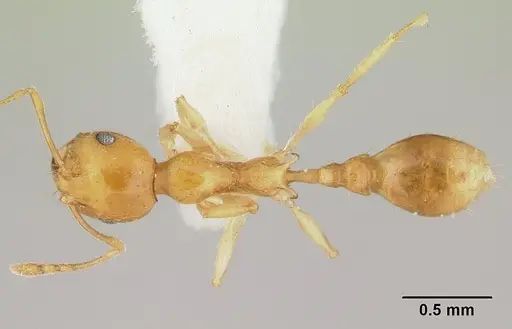
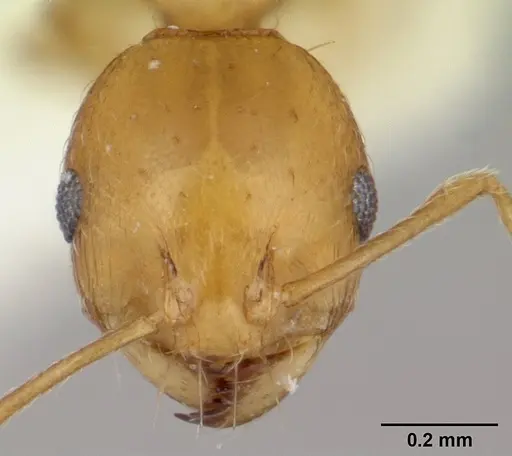
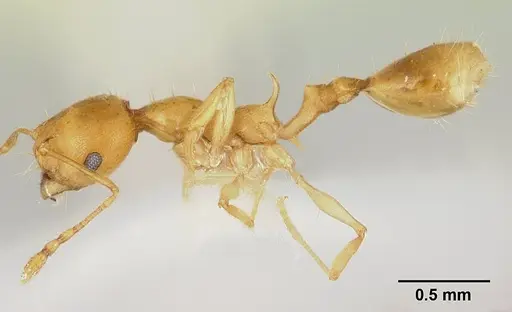
CASENT0902054
Bekijk op AntWeb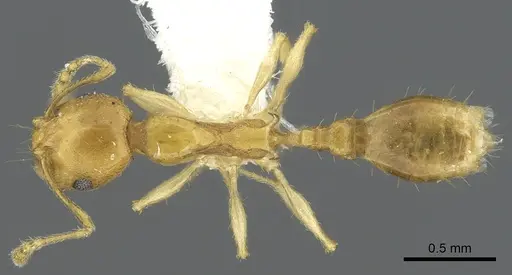
CASENT0914656
Bekijk op AntWeb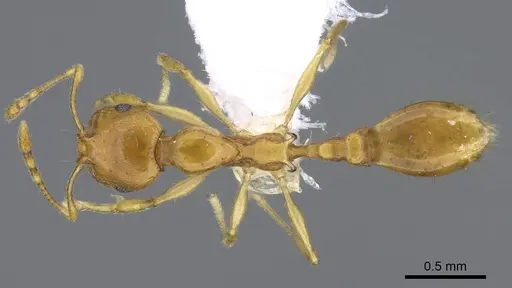
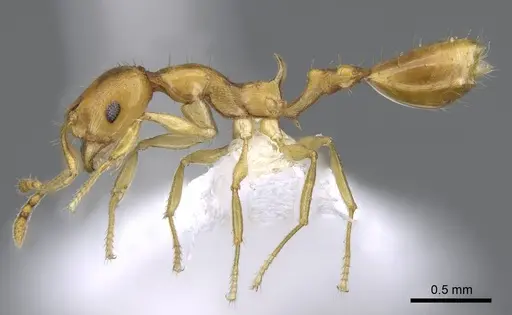
CASENT0923554
Bekijk op AntWeb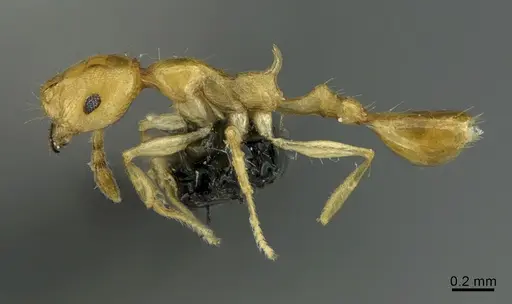
Literatuur
Verspreidingskaart laden...Producten laden...