
Tetramorium ghindanum
- Sci. Name
- Tetramorium ghindanum
- Tribe
- Crematogastrini
- Subfamily
- Myrmicinae
- Author
- Forel, 1910
- Distribution
- Found in 0 countries
Introduction
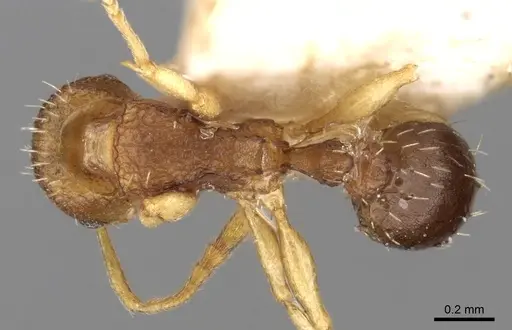
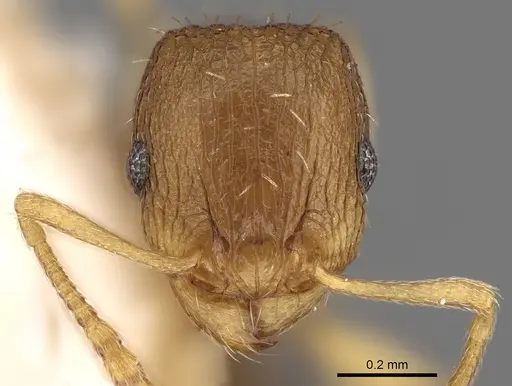
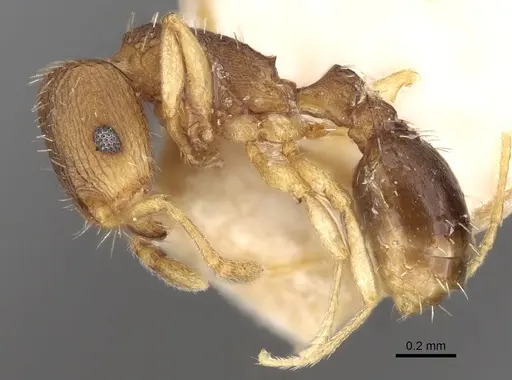
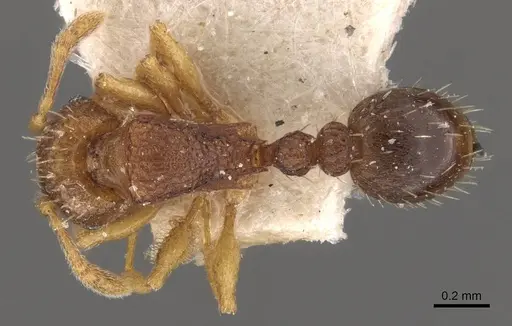
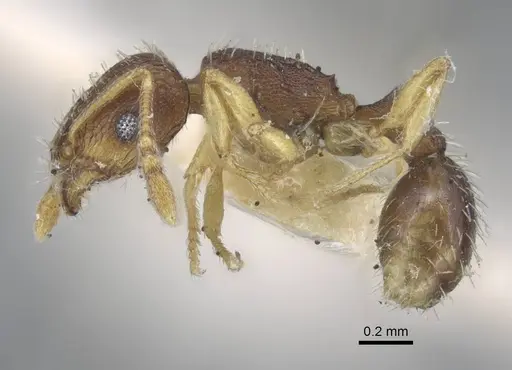
Tetramorium ghindanum is a tiny yellowish-brown ant measuring just 2.2-2.3mm in total length . It belongs to the Tetramorium simillimum species group and is found only in the Horn of Africa - specifically Ethiopia, Eritrea, and Sudan . Workers have strong sculpture on the basal half of the first gastral tergite, small eyes, and two stout hairs projecting from each side of the head behind the eyes . This species remains one of the most poorly documented ants - literally nothing is known about its biology, colony structure, or captive care requirements . All information comes from museum specimens collected in the early 1900s. This makes it an expert-level species for antkeepers comfortable with experimental care approaches.
Quick Summary
- Difficulty: Expert
- Origin & Habitat: Native to the Afrotropical region, specifically Ethiopia, Eritrea, and Sudan. The type locality is Ghinda, Ethiopia, collected in 1906 [1]. The habitat is not documented, but the region features semi-arid to savanna landscapes.
- Colony Type: Unconfirmed, no colony samples have been studied. Based on related Tetramorium species, likely monogyne (single queen) but this is speculative.
- Size & Growth:
- Queen: Unknown, queens have not been described or measured [1]
- Worker: 2.2-2.3mm total length [1]
- Colony: Unknown, no colony size data exists
- Growth: Unknown
- Development: Unknown, no development data exists. Based on similar small Tetramorium species, estimate 6-8 weeks at optimal temperature, but this is a rough guess. (Development timeline is entirely unconfirmed.)
- Antkeeping:
- Temperature: Based on its Afrotropical origin (Ethiopia, Eritrea, Sudan), likely prefers warm conditions. Related Tetramorium species do well at 22-26°C. Start in this range and observe colony activity.
- Humidity: Likely prefers moderate to dry conditions given the semi-arid nature of its native range. Keep the nest substrate lightly moist with some dry areas available.
- Diapause: Unknown, no research exists on seasonal behavior. The Horn of Africa has minimal winter, so diapause may not be required. Monitor colony for activity changes.
- Nesting: Natural nesting is undocumented. Related Tetramorium typically nest in soil under stones or rotting wood. A test tube or Y-tong nest with fine chambers suits their tiny size.
- Behavior: Behavior is completely unstudied. Based on genus patterns, they are likely ground-nesting and may form small to moderate colonies. Their defense mechanism involves smearing venom rather than stinging, typical of the Crematogastrini tribe. Their small size (2.2mm) means escape prevention must be excellent, they can squeeze through tiny gaps.
- Common Issues: no biological data exists, all care is experimental, escape prevention is critical due to tiny 2.2mm size, colony may fail if conditions don't match unknown natural requirements, no guidance available for feeding, founding, or overwintering, risk of misidentification due to similarity with related species
Why This Species Is Expert-Only
Tetramorium ghindanum is not for beginners. The scientific community knows almost nothing about it, no one has documented its colony structure, founding behavior, diet preferences, or temperature requirements in over a century of study [1]. The only known specimens are a few workers collected in Ethiopia in 1906,described by Bolton in 1980,and a few records from Eritrea and Sudan [1][2]. Every aspect of captive care must be inferred from related species, and you should expect experimental results. If you want a rewarding experience, choose a species with documented care requirements.
Appearance and Identification
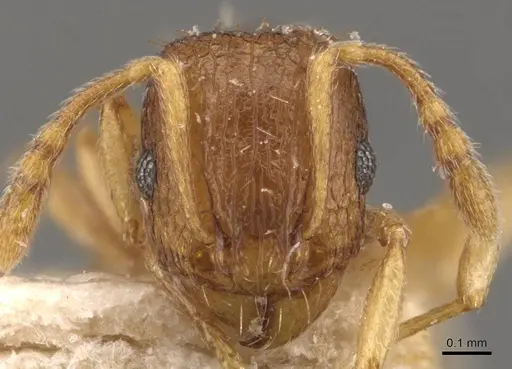
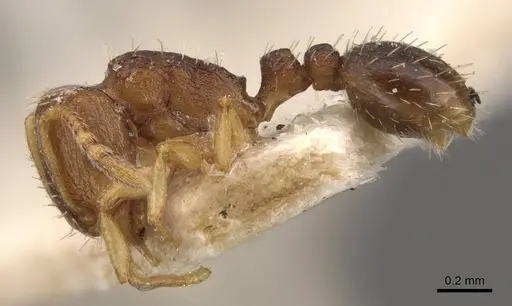
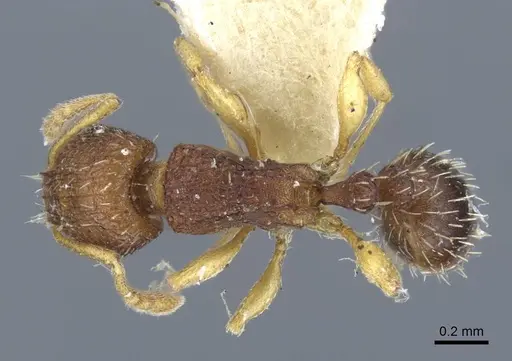
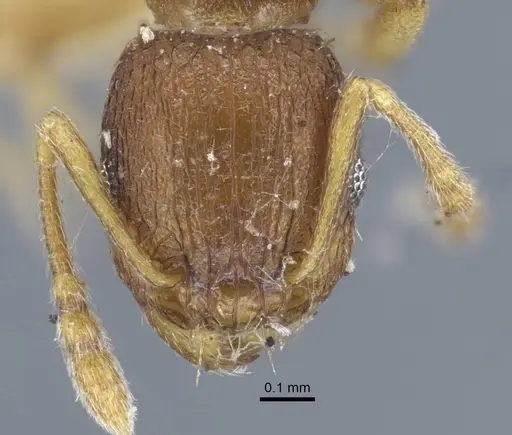
Workers are tiny at just 2.2-2.3mm total length, among the smaller ant species [1]. They are yellowish-brown with distinctive strong sculpture on the basal half of the first gastral tergite (back of the abdomen) [1]. The head has fine longitudinal grooves and dense granular ground sculpture. Each side of the head behind the eyes has two freely projecting stout hairs, a key feature that separates it from its close relative Tetramorium nefassitense, which lacks these hairs [1]. The eyes are relatively small, about 0.24 times the head width. The propodeum (section between thorax and abdomen) has a pair of short triangular teeth.
Housing Recommendations
Given their tiny 2.2mm size, use a test tube setup for founding colonies or a Y-tong (AAC) nest with narrow chambers scaled to their size. Escape prevention is critical, these ants can squeeze through tiny gaps. Use tight-fitting lids and fine mesh barriers on outworld connections. A small outworld works well. Keep the nest dark or dimly lit, as most Tetramorium prefer darker nesting sites.
Temperature and Feeding
Since this species comes from Ethiopia, Eritrea, and Sudan, a warm tropical to semi-arid region, aim for 22-26°C. Related Tetramorium thrive in this range. Offer small protein sources like fruit flies, pinhead crickets, or other tiny arthropods. Sugar water or honey should be accepted based on genus patterns, though unconfirmed for this species. Start with small prey and adjust based on acceptance.
What We Don't Know
Honesty requires listing everything unknown: colony type, founding behavior, exact temperature and humidity preferences, diet acceptance, nuptial flight timing, colony size limits, development time, overwintering, and natural predators. Every piece of care advice here is an educated guess based on related Tetramorium, not documented science. Keep detailed notes, you may contribute the first biological data for this species. [1]
Frequently Asked Questions
How do I care for Tetramorium ghindanum ants?
Care is entirely experimental since nothing is known about this species' biology. Based on related Tetramorium, provide a test tube or Y-tong nest, keep temperatures around 22-26°C, and offer small protein prey and sugar sources. Their tiny 2.2mm size means excellent escape prevention is essential.
What do Tetramorium ghindanum ants eat?
Diet is unconfirmed for this species. Based on genus patterns, they likely accept small insects and sugar water. Offer tiny prey like fruit flies, springtails, or small mealworm pieces, along with occasional honey or sugar water. Remove uneaten food to prevent mold.
How big do Tetramorium ghindanum colonies get?
Colony size is unknown, no colonies have been studied. Based on their tiny 2.2mm worker size and related species, colonies likely reach a few hundred workers at most, not the thousands seen in larger Tetramorium species.
Do Tetramorium ghindanum ants sting?
Tetramorium belongs to Myrmicinae, which have functional stingers. However, this species belongs to the tribe Crematogastrini, which uses a modified stinger to smear venom onto attackers rather than piercing. Their tiny size means the sting is minimal even if attempted.
Can beginners keep Tetramorium ghindanum?
No, this is an expert-only species. Literally nothing is documented about its biology in over 100 years of study. All care is experimental inference from related species. Choose a better-documented species if you're new to antkeeping.
What is the ideal temperature for Tetramorium ghindanum?
Temperature is unconfirmed but likely 22-26°C based on the species' Afrotropical origin (Ethiopia, Eritrea, Sudan). Related Tetramorium do well in this range. Monitor colony activity to fine-tune.
How long does it take for Tetramorium ghindanum to develop from egg to worker?
Development time is completely unstudied for this species. Based on similar small Tetramorium species, estimate 6-8 weeks at optimal temperature, but this is a rough guess with no direct evidence.
Where is Tetramorium ghindanum found in the wild?
This species is known only from the Horn of Africa, specifically Ethiopia (type locality Ghinda), Eritrea, and Sudan. No ecological or habitat details are documented.
Does Tetramorium ghindanum need hibernation?
Diapause requirements are unknown. The Horn of Africa has minimal winter, so hibernation may not be necessary. Monitor your colony for seasonal activity changes, if they remain active year-round at room temperature, no diapause is likely needed.
Report an Issue
The current care sheet is based fully on literature. See inconsistencies, or something that's incorrect? Please , it will be resolved after review from an admin. Contributing to the blogs tab also helps providing information, to make us be able to further improve the caresheets. Thank you for your support!
References

This caresheet is licensed under CC BY-SA 4.0 .
Community Blogs
Literature
Loading distribution map...Loading products...