
Strumigenys rufobrunea
- Sci. Name
- Strumigenys rufobrunea
- Tribe
- Attini
- Subfamily
- Myrmicinae
- Author
- Santschi, 1914
- Distribution
- Found in 3 countries
Introduction
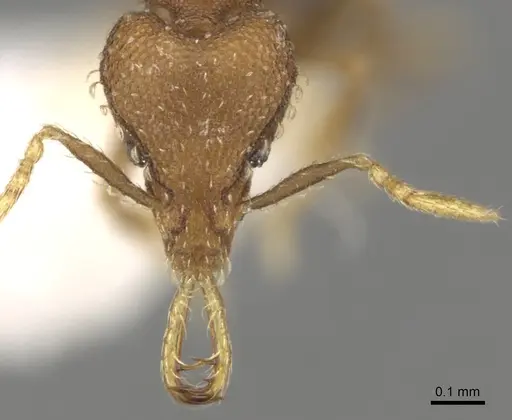
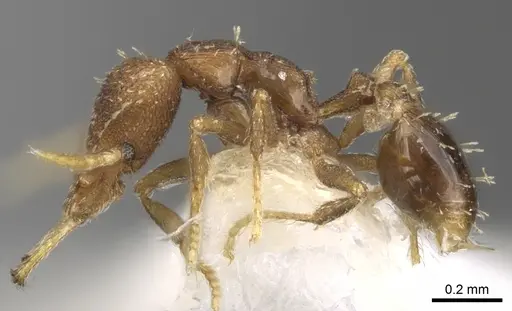
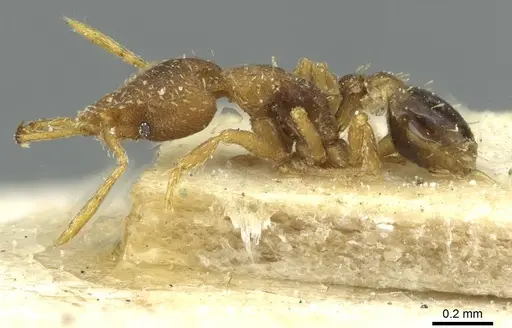
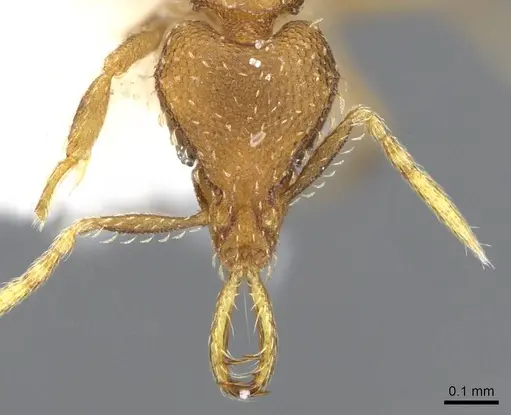
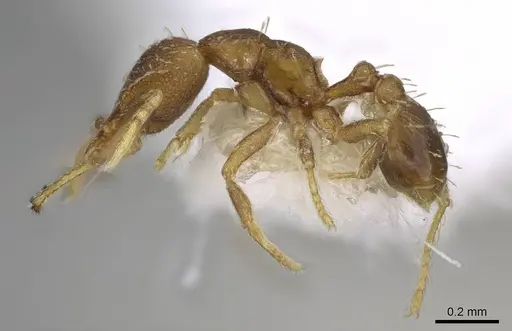
Strumigenys rufobrunea is a tiny ant from West Africa. Workers are just 1.8-2.0 mm long . They are brown, with the head and thorax medium brown and the gaster darker, though some individuals are uniformly dark . Their range includes Guinea, Ghana, Ivory Coast, Nigeria, Benin, Cameroon, Democratic Republic of Congo, and Togo . They live in rainforests, gallery forests, and shaded savannah, nesting in leaf litter and soil . What makes them interesting is their hunting style: they are specialized predators that slowly stalk small prey, unlike the fast trap-jaw ants .
Quick Summary
- Difficulty: Hard
- Origin & Habitat: West Africa (Guinea, Ghana, Ivory Coast, Nigeria, Benin, Cameroon, Democratic Republic of Congo, Togo). Found in rainforest, gallery forest, and tree-shaded savannah. This is a leaf-litter species that nests in the ground, often in mango orchards [1]. Recorded in Nigeria [3].
- Colony Type: Colony structure is unconfirmed for this species. The closely related Strumigenys rogeri forms single-queen colonies, but it is not clear if Strumigenys rufobrunea follows the same pattern.
- Size & Growth:
- Queen: Queen size data is unavailable. No total length measurements exist in literature.
- Worker: 1.8-2.0 mm total length [1].
- Colony: Colony size in the wild is unknown. Based on related Strumigenys species, colonies are likely small, probably under 100 workers.
- Growth: Likely slow, as typical for dacetine ants, but unconfirmed.
- Development: Unconfirmed, estimated 6-10 weeks based on related species, but no direct data exists. (No direct development data exists for this species.)
- Antkeeping:
- Temperature: Keep at 24-28°C, they come from tropical West Africa. Provide a gentle temperature gradient. Avoid temperatures below 22°C as this may harm the colony.
- Humidity: High humidity is essential. Keep the nest substrate consistently moist but not waterlogged, as they are leaf-litter ants from rainforest. A layer of leaf litter helps retain moisture.
- Diapause: No diapause required. Being a tropical species, maintain warm temperatures year-round.
- Nesting: Ground-nesting leaf-litter species. A naturalistic setup with moist substrate and leaf litter works well. Y-tong or plaster nests with narrow chambers are suitable. Avoid large open spaces.
- Behavior: Workers forage alone, hunting small prey in leaf litter [2]. They are not aggressive and will flee when disturbed. Their tiny size (2 mm) means even small gaps in the enclosure allow escapes, use fine mesh and tight seals.
- Common Issues: escape prevention is critical, their tiny 2 mm size means they can slip through the smallest gaps, requiring fine mesh barriers and tight-fitting lids, specialized diet makes them difficult, they require live small prey (springtails, micro-arthropods) and may not accept sugar or dead food, slow growth tests keeper patience, dacetine ants develop slowly and colonies remain small, humidity must be maintained, being leaf-litter species, they quickly decline in dry conditions, wild-caught colonies may have parasites that kill them in captivity
Housing and Nest Setup
Strumigenys rufobrunea requires a setup that recreates their natural leaf-litter habitat. A naturalistic terrarium with moist substrate works well, use a mixture of soil and leaf litter to provide both nesting material and hunting grounds. Alternatively, a Y-tong (AAC) or plaster nest with narrow chambers scaled to their tiny size can work, but ensure the chambers are tight enough that they feel secure. The key is maintaining high humidity while avoiding flooding. Place a water reservoir connected to the nest via cotton to provide moisture without drowning the colony. Because they are so small, even minor gaps in their enclosure can lead to escapes, inspect all connections and use fine mesh on any ventilation holes.
Feeding and Diet
This is the most challenging aspect of keeping Strumigenys rufobrunea. They are specialized predators that hunt small arthropods in nature, and in captivity they need live prey [2]. Their primary food should be live springtails, these tiny insects are the ideal size and nutritional profile. Other micro-arthropods like minute soil mites, tiny booklice, and small fruit fly larvae may be accepted. Do not rely on sugar water, honey, or dead commercial insect prey, these ants are unlikely to accept them. Offer small live prey every 2-3 days, removing any uneaten prey after 24 hours to prevent mold.
Temperature and Humidity
Maintain temperatures in the 24-28°C range, these are tropical ants from West Africa and need consistent warmth. A small heating cable on one side of the nest creates a temperature gradient. Avoid temperatures below 22°C as this can slow activity and potentially harm the colony. Humidity is equally critical, aim for high humidity in the nest area, keeping the substrate consistently damp but never waterlogged. Mist the outworld occasionally but focus on maintaining moisture in the nest itself. Poor humidity leads to colony decline faster than incorrect temperature. A layer of leaf litter in the setup helps retain moisture naturally.
Behavior and Colony Life
Strumigenys rufobrunea workers forage alone, hunting small prey in the leaf litter layer [2]. They use a patient, stalking approach rather than the explosive strikes of trap-jaw ants. Colonies remain small, expect under 100 workers even in established colonies. Workers are not aggressive and will flee rather than attack when disturbed. The colony will likely establish a single nest site in the substrate or nest chamber, with foragers venturing out to hunt. Because they are so small and secretive, observing them requires patience and careful observation of the nest entrance.
Acquiring and Starting a Colony
This species is not commonly available in the antkeeping hobby. If you obtain a colony, it will likely be through a specialized supplier or rare import. If you catch a queen during nuptial flights (timing is unknown for this species), you would need to house her in a small test tube setup with moist cotton. Given that founding behavior is unconfirmed [4], assume she may need to forage during founding (semi-claustral) and provide small live prey once she lays eggs. However, without documented founding behavior, this is an educated guess. The safest approach is to obtain an established colony with workers, as the specialized diet makes founding colonies extremely difficult.
Frequently Asked Questions
Can I keep Strumigenys rufobrunea in a test tube?
A test tube can work for a founding queen or very small colony, but these ants need more space and a naturalistic setup to thrive long-term. A small terrarium with moist substrate and leaf litter is better. If using a test tube, ensure it has a water reservoir and the chamber is kept humid.
What do Strumigenys rufobrunea ants eat?
They eat live small prey, primarily springtails and other micro-arthropods [2]. They are specialized predators and unlikely to accept sugar, honey, or dead commercial insects. This makes them challenging to keep compared to common ant species.
How long does it take for Strumigenys rufobrunea to produce first workers?
The exact development timeline is unconfirmed for this species. Based on related dacetine ants, expect 6-10 weeks from egg to worker at optimal temperature (24-28°C). Growth is slow and colonies remain small.
Are Strumigenys rufobrunea good for beginners?
No, this is a difficult species to keep. Their specialized diet of live small prey, tiny size requiring excellent escape prevention, and high humidity needs make them unsuitable for beginners. They are best kept by experienced antkeepers who can provide the specific conditions they require.
Do Strumigenys rufobrunea need hibernation?
No, being a tropical West African species, they do not require diapause or winter cooling. Maintain warm temperatures (24-28°C) year-round. Temperatures below 22°C can be harmful.
How big do Strumigenys rufobrunea colonies get?
Colony size is unknown but likely remains small, probably under 100 workers even in mature colonies. This is typical for dacetine ants, which maintain small colonies rather than the massive populations of species like Formica or Solenopsis.
Why are my Strumigenys rufobrunea dying?
Common causes include: low humidity (they need damp conditions), incorrect temperature (too cold), lack of live prey (they will starve without springtails), and escapes due to their tiny size. Check all enclosure seals and ensure humidity is consistently high.
When should I move them to a formicarium?
Given their small size and preference for naturalistic setups, a formicarium may not be ideal. If you do move them, wait until the colony has at least 20-30 workers and is actively foraging. A small Y-tong or plaster nest with very tight chambers works better than large open spaces.
Can I keep multiple queens together?
Colony structure is unconfirmed for this species. The closely related Strumigenys rogeri is single-queen, but we don't have data for rufobrunea. Do not combine unrelated queens, this has not been documented and queens would likely fight.
Report an Issue
The current care sheet is based fully on literature. See inconsistencies, or something that's incorrect? Please , it will be resolved after review from an admin. Contributing to the blogs tab also helps providing information, to make us be able to further improve the caresheets. Thank you for your support!
References

This caresheet is licensed under CC BY-SA 4.0 .
Community Blogs
CASENT0280725
View on AntWeb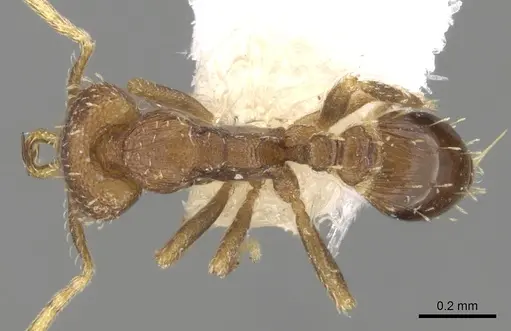
CASENT0402148
View on AntWeb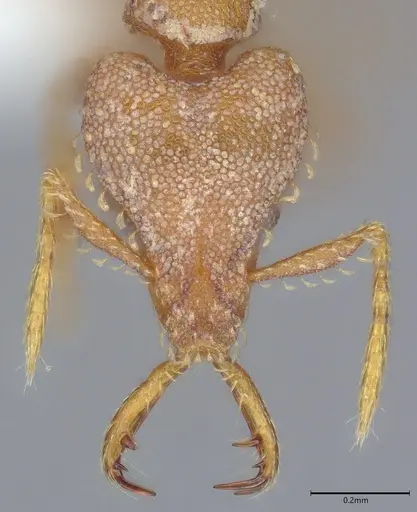
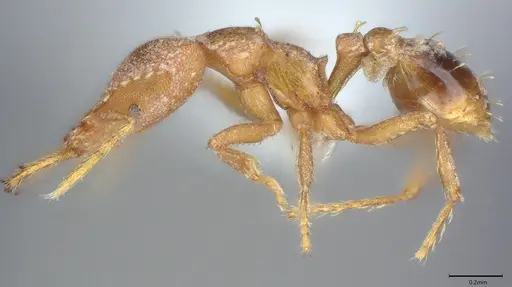
CASENT0426010
View on AntWeb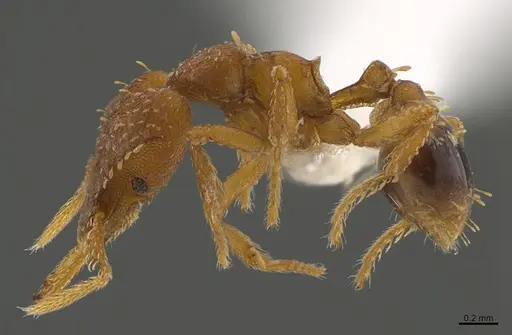
CASENT0912863
View on AntWeb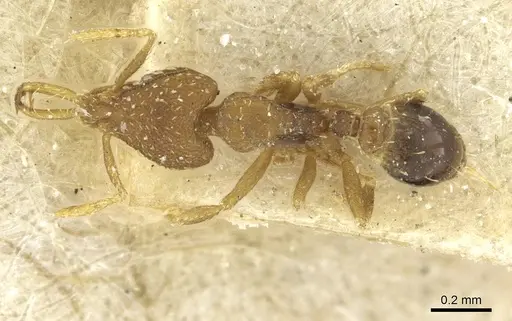
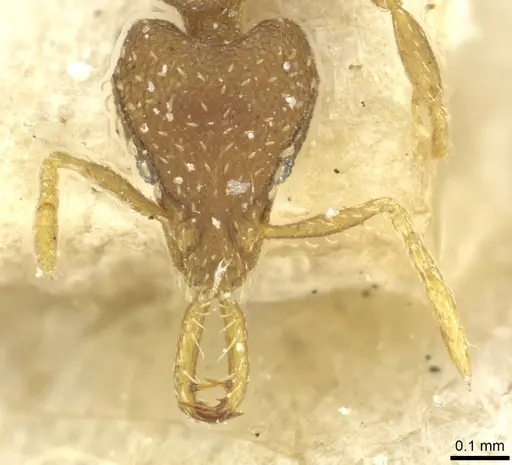
CASENT0914775
View on AntWeb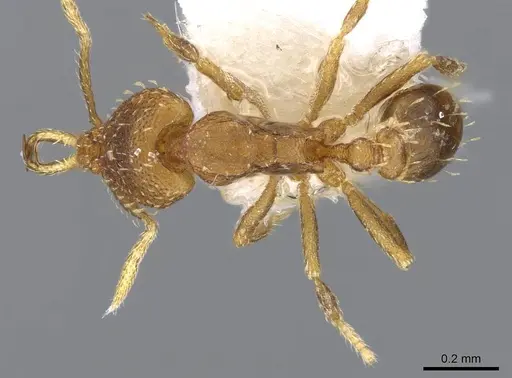
Literature
Loading distribution map...Loading products...