
Roger's Pygmy Snapping Ant
Strumigenys rogeri
- Sci. Name
- Strumigenys rogeri
- Tribe
- Attini
- Subfamily
- Myrmicinae
- Author
- Emery, 1890
- Common Name
- Roger's Pygmy Snapping Ant
- Distribution
- Found in 22 countries
Introduction
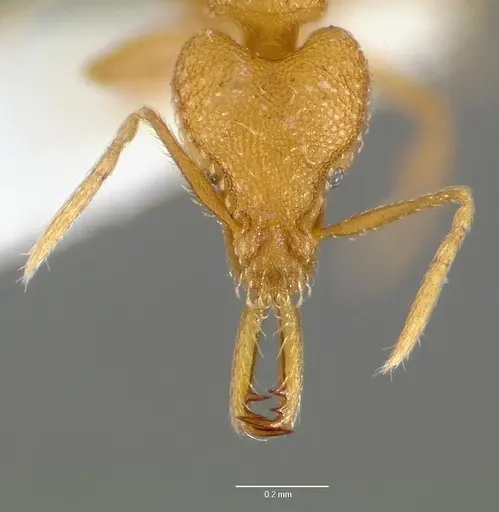
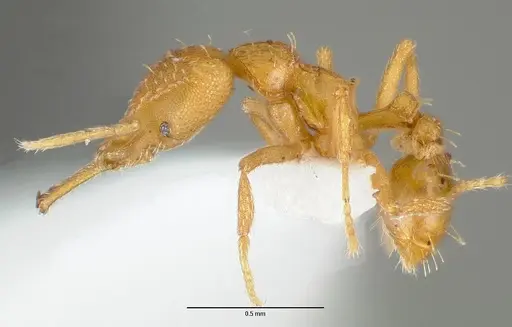
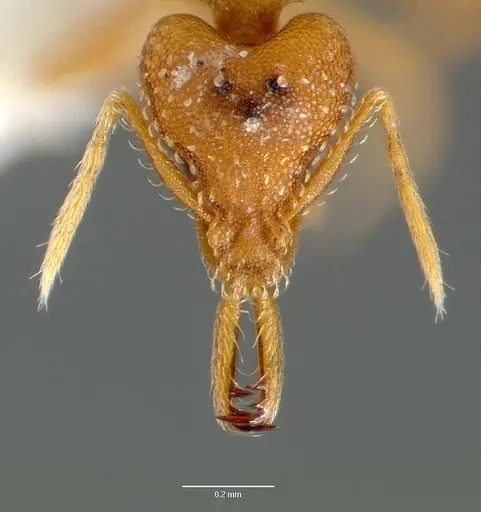
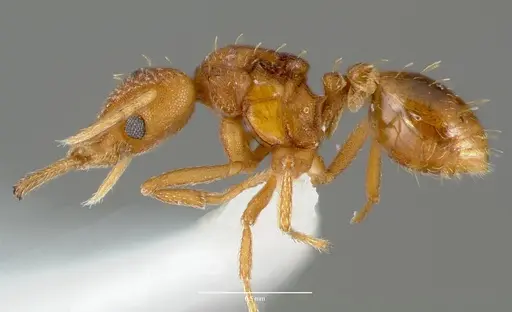
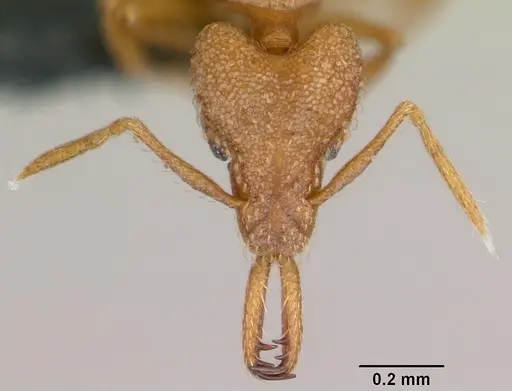
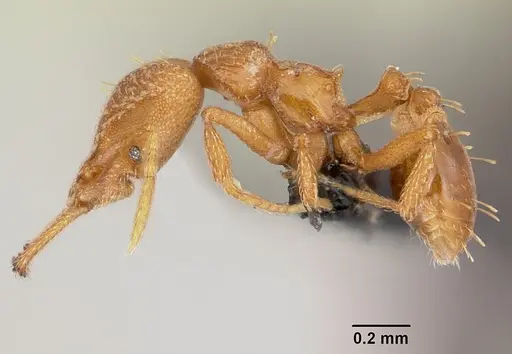
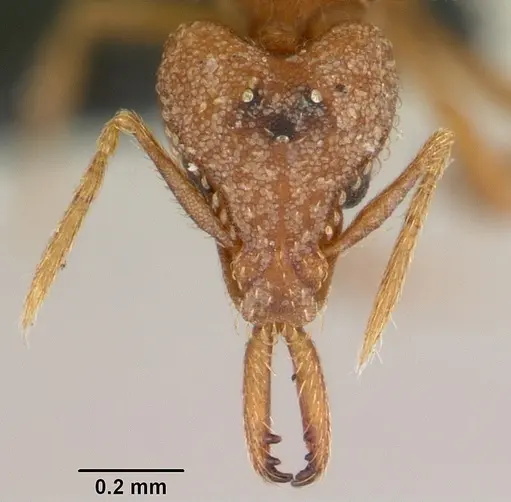
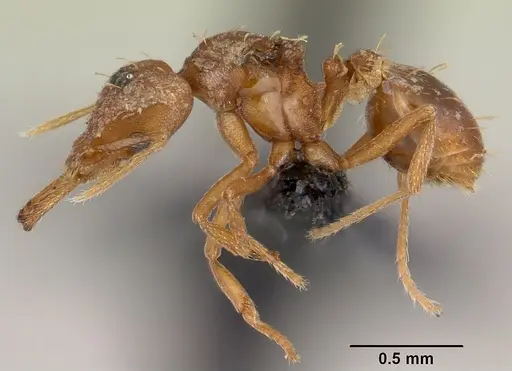
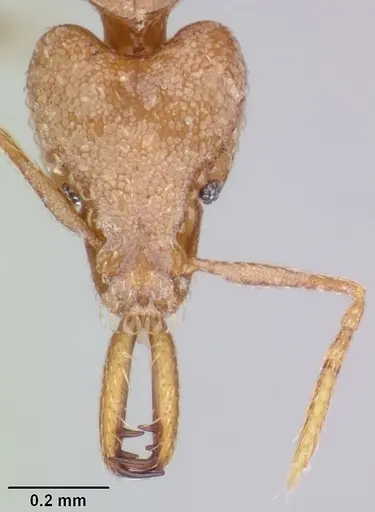
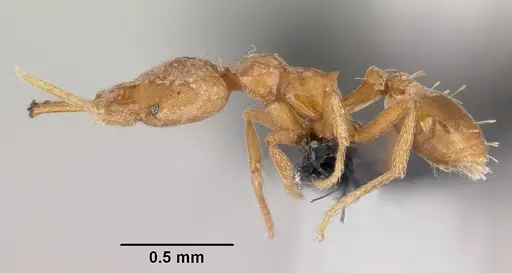
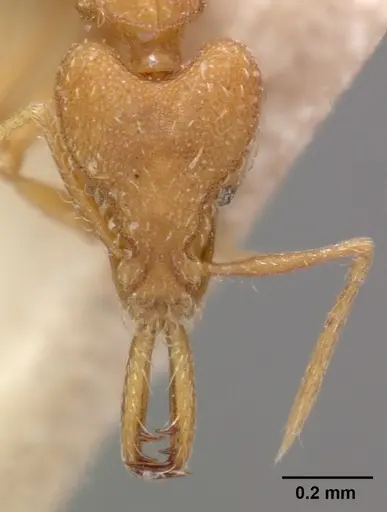
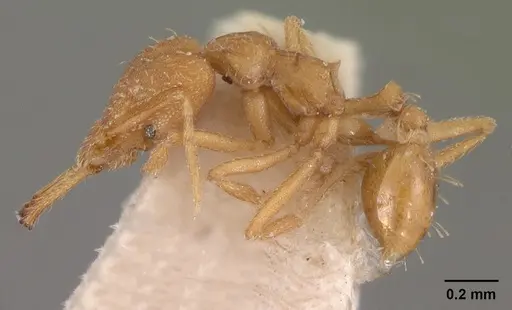
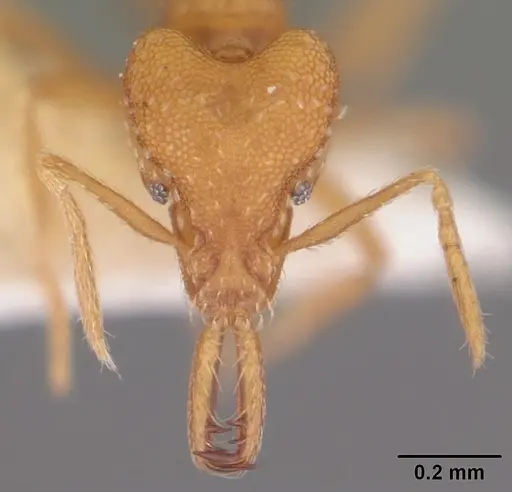
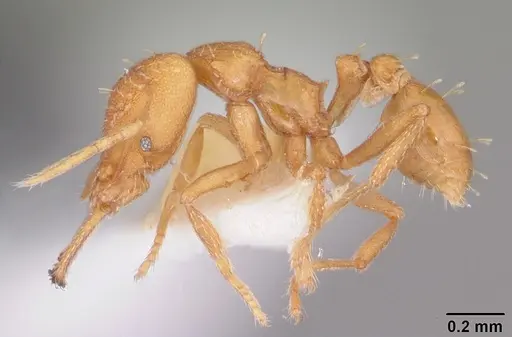
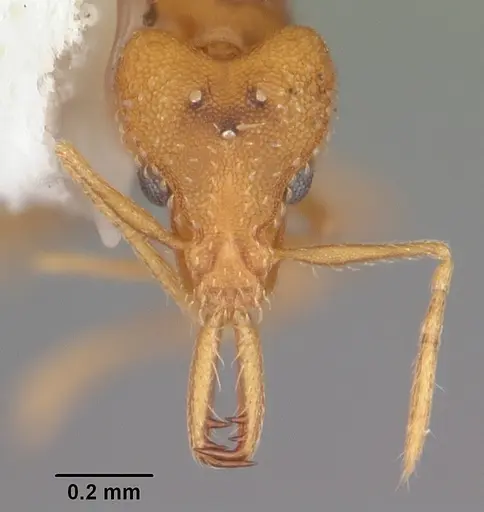
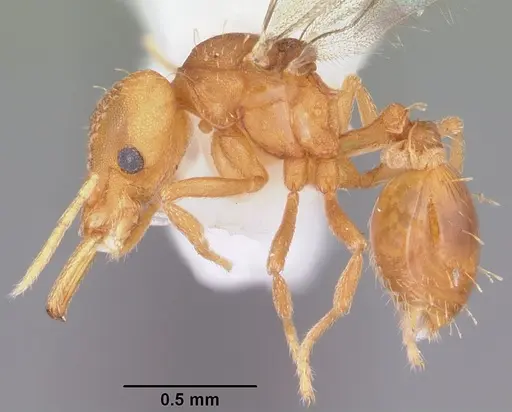
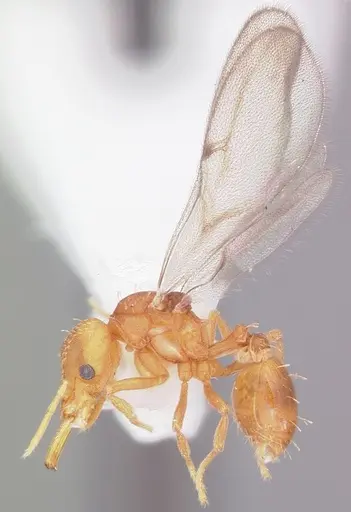
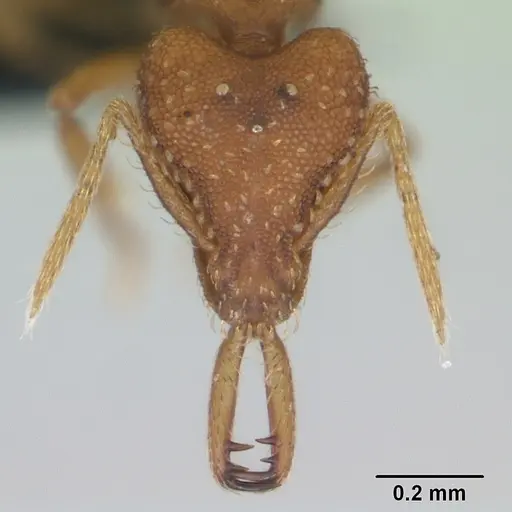
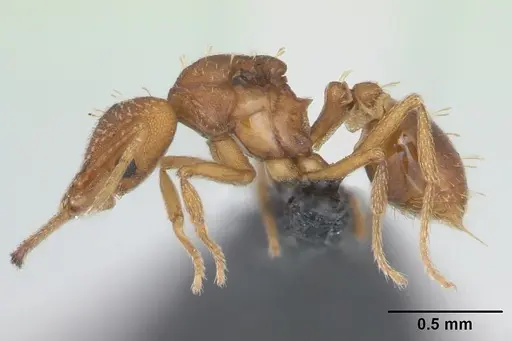
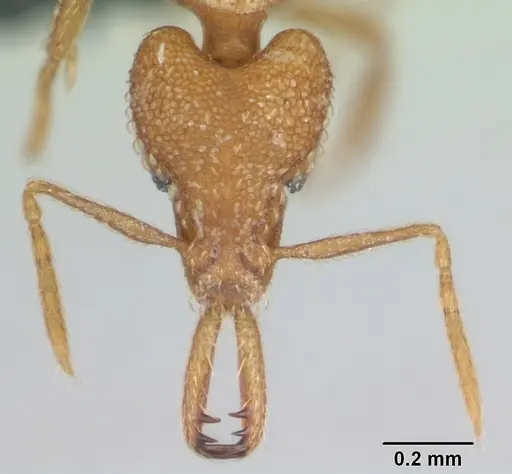
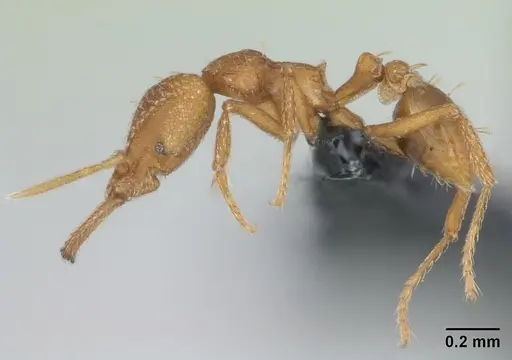
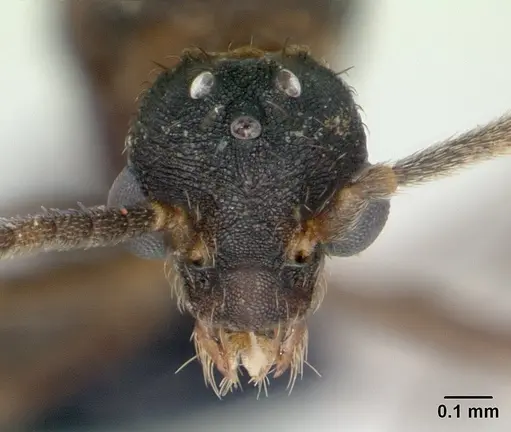
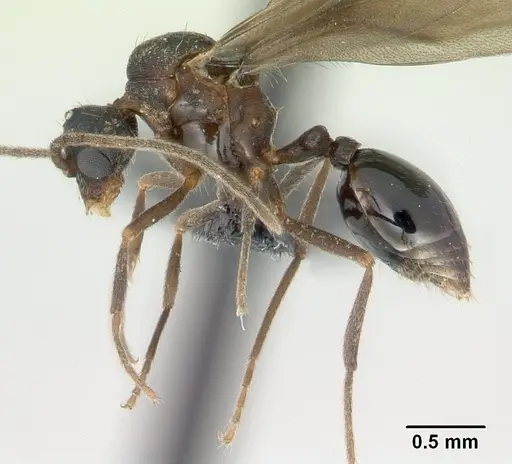
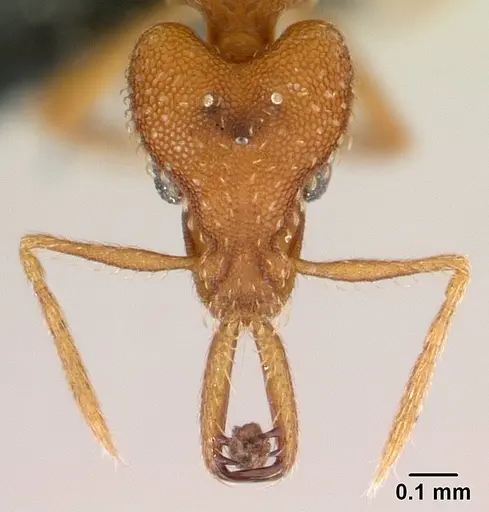
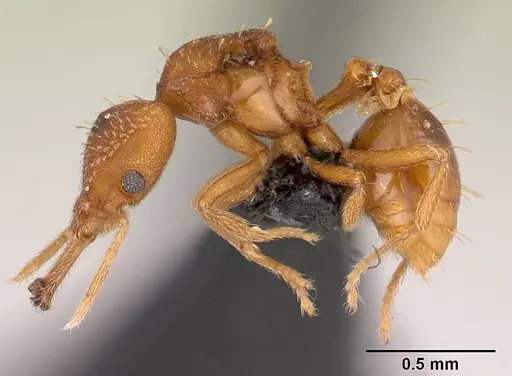
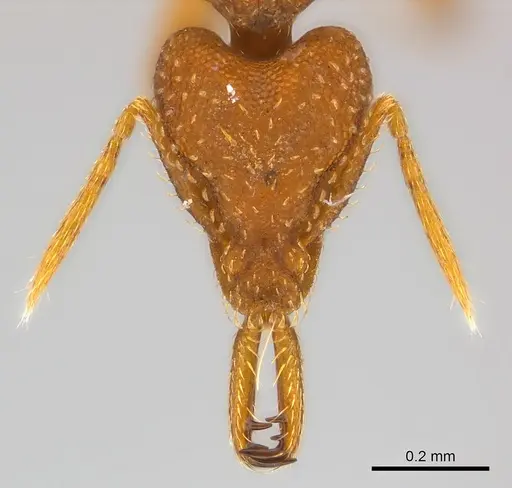
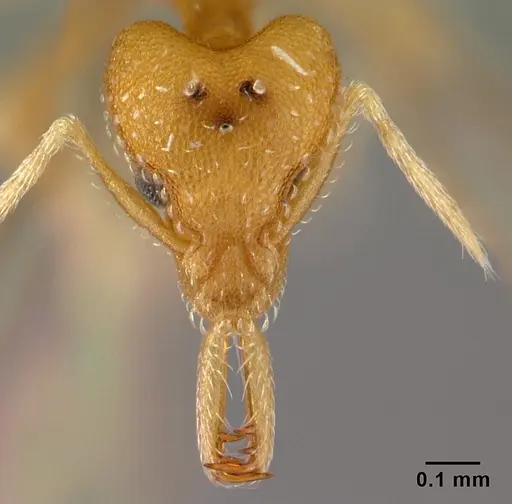
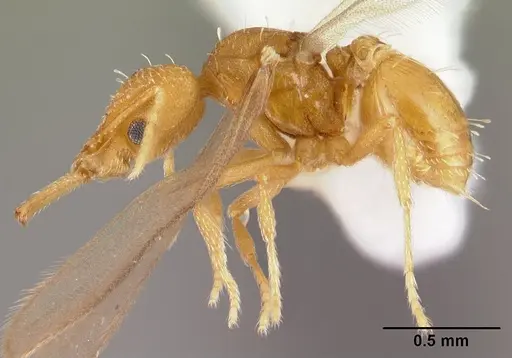
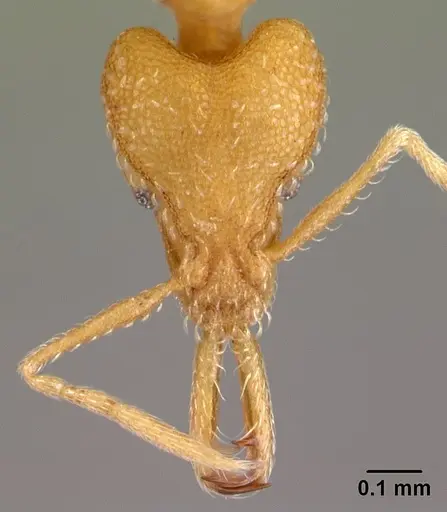
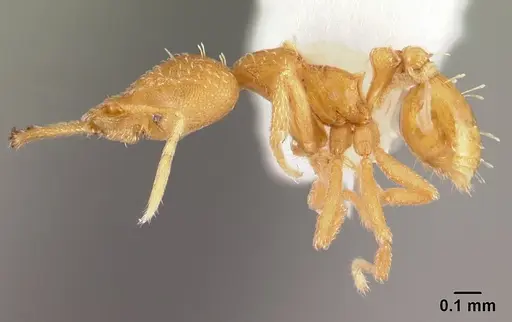
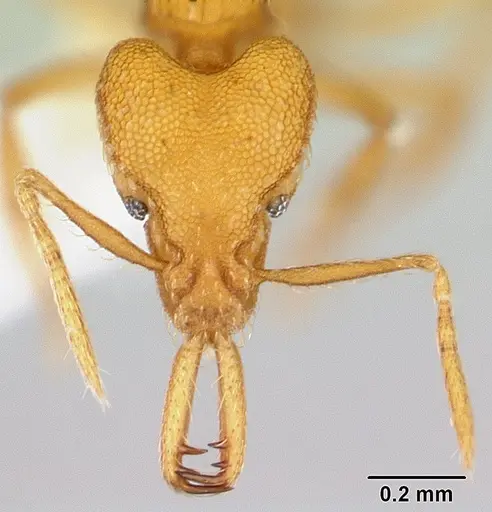
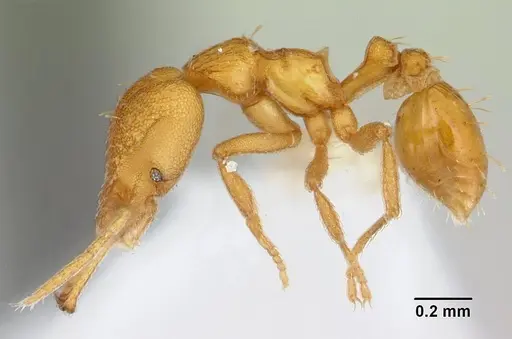
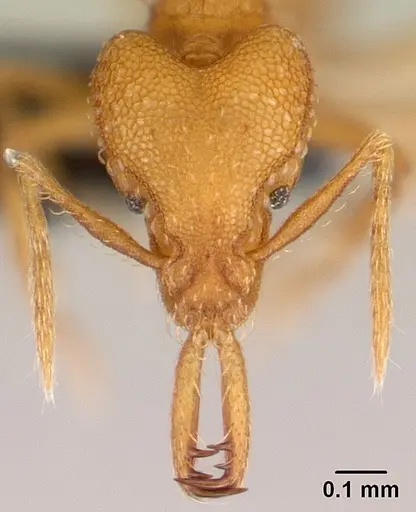
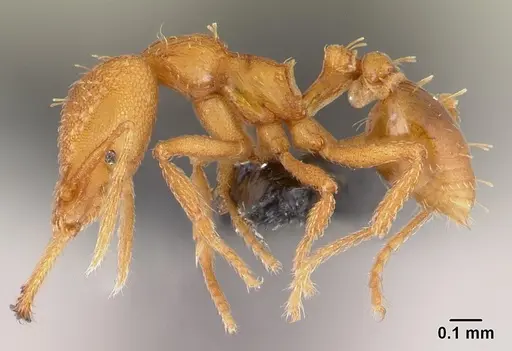
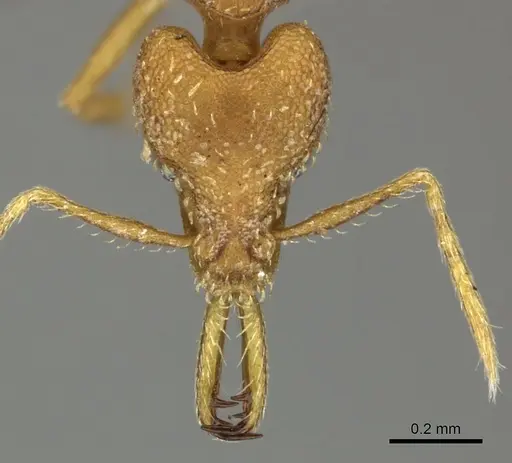
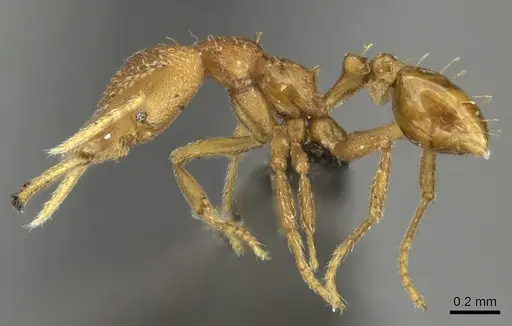
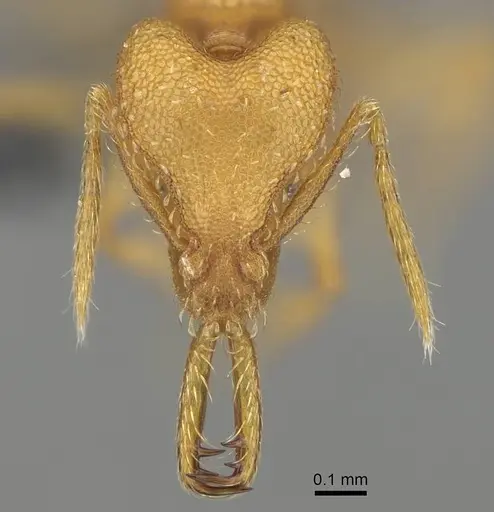
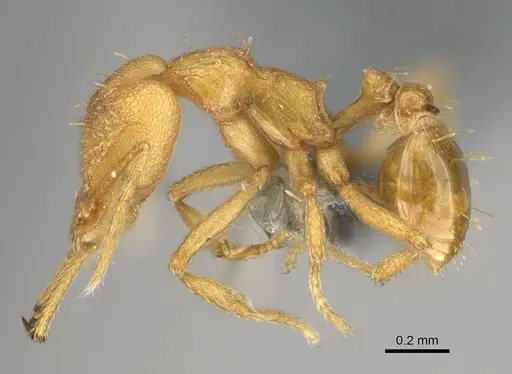
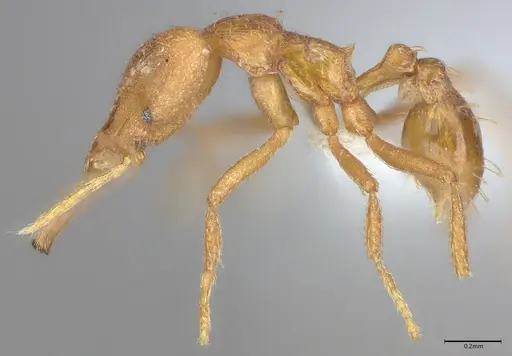
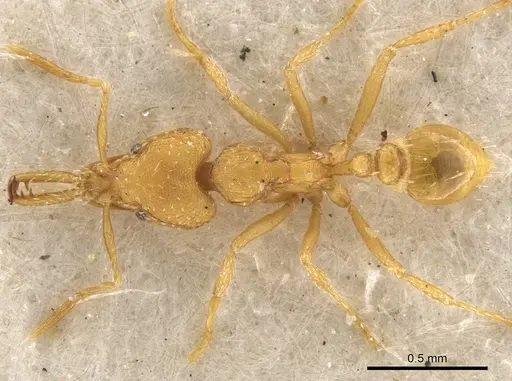
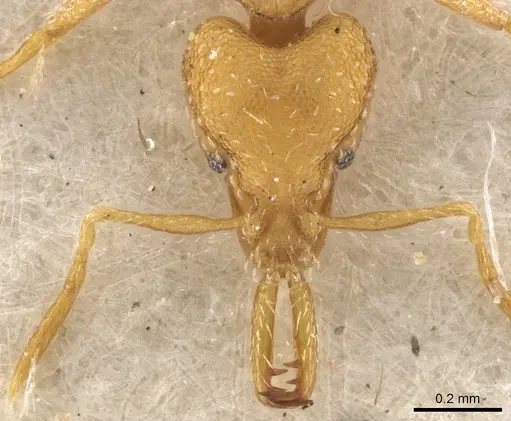
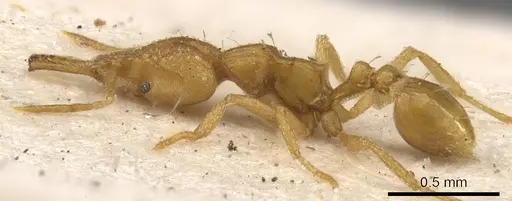
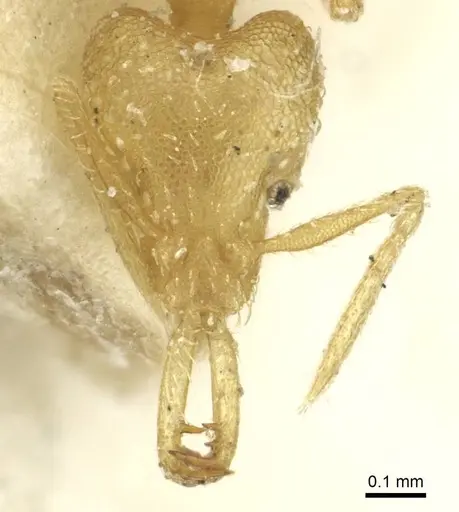
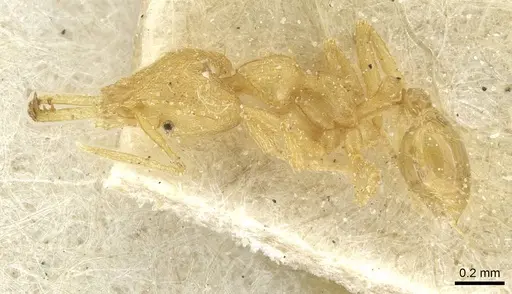
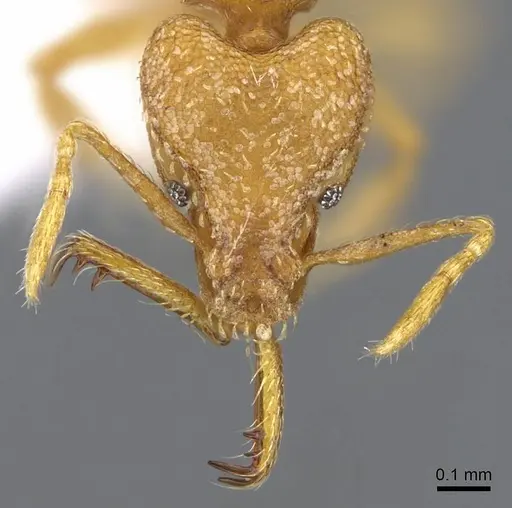
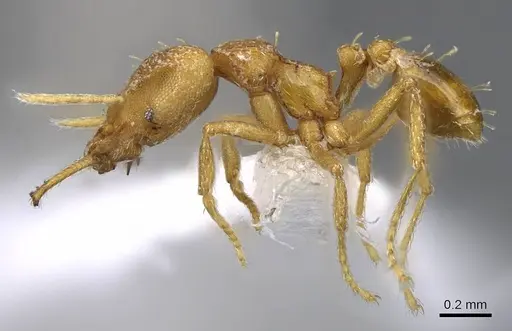
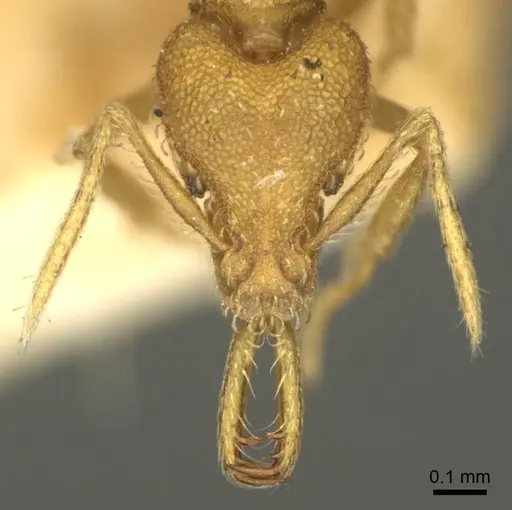
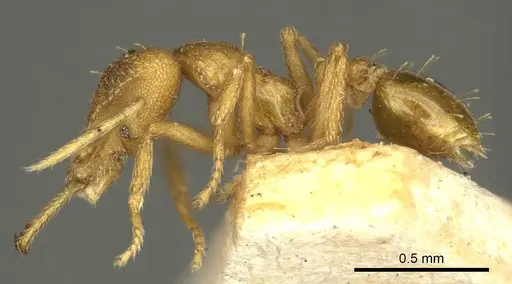
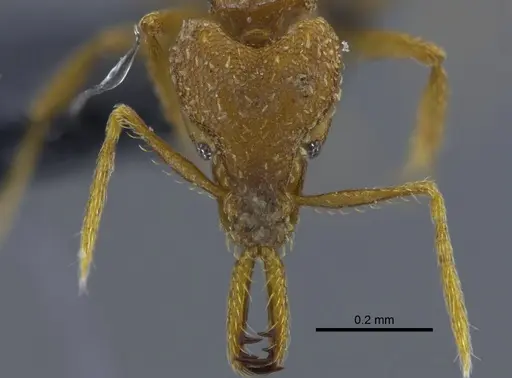
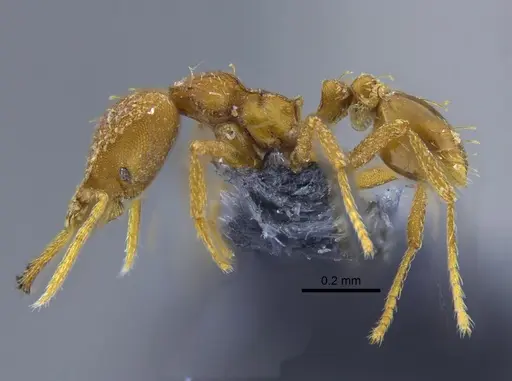
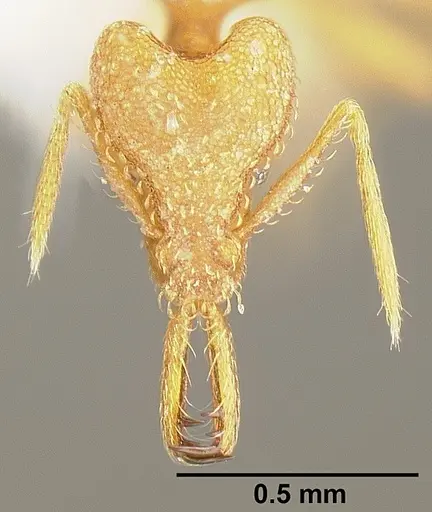
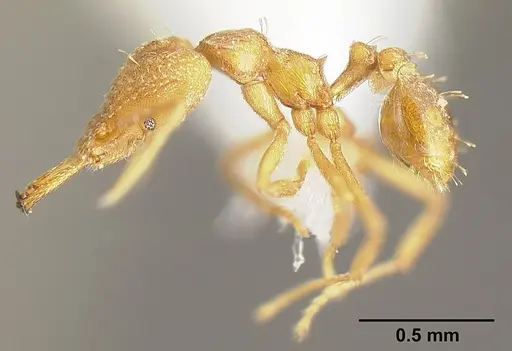
Strumigenys rogeri is a tiny ant measuring 2.3-2.8 mm in total length, with a light yellow‑brown body, exceptionally long linear mandibles, and a deep preocular notch that separates the eye from the side of the head . It is a trap‑jaw ant: workers open their mandibles to more than 180° and snap them shut in under 2.5 ms to impale prey . Native to tropical West Africa, it has spread worldwide through human commerce and is now established across the Caribbean, Pacific islands, and peninsular Florida . Workers are slow‑moving and freeze when disturbed, making them easy to overlook in the field . This species is notable for its reproductive system: queens reproduce by thelytokous parthenogenesis, producing workers and new queens from unfertilized eggs without mating . In Taiwan, all field‑collected queens were found to be virgin yet actively raising brood . Males are rarely produced . This unusual biology allows a single introduced queen to found a thriving population, contributing to its success as a tramp species .
Quick Summary
- Difficulty: Expert
- Origin & Habitat: Native to tropical West Africa (Ivory Coast to Tanzania and south to Angola). Now a widespread tramp species found across the Caribbean, Pacific islands, and peninsular Florida [2]. In its native range it nests in rotten wood on the ground, under bark, or in crumbled wood [2]. In Florida it is most common in moist bayheads, baygalls, and swamp forests [4][2].
- Colony Type: Thelytokous parthenogenesis, queens produce workers and new queens from unfertilized eggs without mating [3]. Colonies are functionally single‑queen (monogyne) and males are very rarely produced [3].
- Size & Growth:
- Queen: ~2.5 mm (alate TL) [5].
- Worker: 2.3-2.8 mm total length [1][2].
- Colony: Unknown maximum, can reach high densities in suitable habitat (e.g., Florida bayheads) [4].
- Growth: Slow, specialized diet of tiny live prey limits colony growth.
- Development: Unknown, based on related Strumigenys species, likely 6-10 weeks at 24-28 °C. (Development time is unconfirmed for this species. Keep stable warm temperatures and provide constant live springtails.)
- Antkeeping:
- Temperature: 24-28 °C, this tropical species requires steady warmth. Heated greenhouses in temperate regions support it [2]. Avoid prolonged temperatures below 20 °C.
- Humidity: Keep substrate consistently moist but not waterlogged, reflecting their humid leaf‑litter habitat. Aim for 75-85 % relative humidity. Use a moisture gradient in the nest with one damp area.
- Diapause: No, tropical origin means no hibernation needed. Keep warm year‑round.
- Nesting: Naturalistic setup with moist soil or earth mixed with small pieces of rotting wood or cork. Y‑tong (AAC) or plaster nests with added moisture can work, but they prefer complex substrate that mimics forest floor debris. Keep dark and undisturbed.
- Behavior: Workers are docile, slow‑moving, and freeze when disturbed, this is their main defense [2]. They are not aggressive toward keepers and cannot sting effectively (mild, harmless sting [6]). Despite their gentle nature, they are efficient trap‑jaw predators. Their tiny size (2.3-2.8 mm) makes escape prevention critical, use very fine mesh and seal all gaps.
- Common Issues: tiny size requires excellent escape prevention, they can slip through pinhole gaps, specialized diet of live collembola means colonies often fail if springtail cultures are not maintained, high humidity needs can lead to mold if ventilation is insufficient, slow growth and small colony size can be discouraging for keepers expecting rapid expansion, sexually reproducing males are extremely rare, so colony growth depends entirely on queen parthenogenesis
Housing and Nest Setup
Provide a naturalistic setup that mimics their leaf‑litter habitat. They nest in and under dead wood, so use a substrate of moist earth mixed with small pieces of rotting wood or cork [2]. Y‑tong (AAC) or plaster nests with a moisture chamber can work, but many keepers find that a deep soil layer with leaf litter allows the ants to create their own cavities. The nest must stay dark and undisturbed. Because workers are only 2.3-2.8 mm, use the finest possible stainless‑steel mesh (≈0.2 mm openings) on the outworld and seal any gaps with silicone. An outworld with a plaster or sand floor helps maintain humidity while providing access for feeding.
Feeding and Diet
This is the most critical part of keeping Strumigenys rogeri. They are obligate predators of tiny soil arthropods, primarily entomobryoid Collembola (springtails) [2][4]. You must maintain a thriving springtail culture, offer them 2-3 times per week, adjusting for colony size. They also accept campodeids (small diplurans) and occasionally small psocopterans or symphylans [2]. Do not offer sugar water, honey, or larger insects, they will ignore or reject them [2]. In the wild, they have been observed capturing and feeding collembolans, campodeids, and even a small ichneumonid wasp to larvae [2]. Always provide live prey, dead insects are not accepted.
Temperature and Humidity
As a tropical tramp species, Strumigenys rogeri requires stable warmth: 24-28 °C [2]. In Florida they thrive in moist bayheads and swamp forests, proving their need for both heat and humidity [4][2]. Maintain the nest substrate consistently damp but not waterlogged, think moist forest floor. Use a gradient: keep one side of the nest slightly wetter, the other drier. Humidity around 75-85 % is ideal. They can survive in heated greenhouses in temperate zones, confirming they need warmth all year [2]. Avoid temperatures below 20 °C for extended periods.
Reproduction and Colony Growth
Strumigenys rogeri reproduces by thelytokous parthenogenesis, queens produce female offspring (workers and new queens) from unfertilized eggs [3]. Males are extremely rare (only 5 recorded in 10 years of observation) [3]. Field‑collected dealate queens in Taiwan were all virgin yet still produced brood, confirming this mode of reproduction [3]. An experimental colony produced 301 workers and 12 queens over 10 months [3]. Thelytoky means your colony does not need males to grow. Colony growth is slow due to the specialized diet and small worker size. Be patient, provide consistent live food and stable conditions.
Behavior and Defense
Workers are remarkably docile and slow‑moving. When disturbed, they become completely motionless, a passive defense that makes them nearly invisible in leaf litter [2]. Despite this, they are efficient predators with trap‑jaw mandibles that strike in under 2.5 ms [2]. They possess a mild sting (functional but not medically significant) [6]. In captivity, they appear inactive much of the time, don’t mistake stillness for illness. They are not aggressive and will not defend the nest aggressively. Their cryptic lifestyle means they prefer dark, humid microhabitats and will avoid bright light.
Invasive Species Warning
Strumigenys rogeri is a highly successful tramp species that has spread worldwide through human commerce [2]. In Florida it is considered a possible ecological villain, potentially displacing native Strumigenys species [4][2]. If you live in Florida, the Caribbean, Pacific islands, or any region where this ant has been introduced, do NOT release colonies outdoors. Even a single queen can found a new population through parthenogenesis. If you need to dispose of a colony, humanely freeze it for at least 48 hours. Always check local regulations before acquiring this species.
Frequently Asked Questions
Can I keep Strumigenys rogeri in a test tube?
Test tubes can work for starting colonies, but established colonies prefer a naturalistic setup with soil and rotting wood fragments. Because workers are only 2.3-2.8 mm, any opening must be sealed with fine mesh. Use small‑diameter tubes and provide a damp cotton ball for humidity.
How long until first workers in Strumigenys rogeri?
The exact egg‑to‑worker time is unconfirmed. Based on related Strumigenys and tropical Myrmicinae, expect 6-10 weeks at 26-28 °C. Colony growth is slow due to the specialized diet.
What do Strumigenys rogeri ants eat?
They are specialized predators on tiny soil arthropods, primarily Collembola (springtails) [2][4]. You must culture live springtails as their main food. They also accept campodeids and occasionally other minute arthropods, but they consistently reject larger prey like beetles, mites, termites, and isopods. Do not offer sugar water or honey, they are obligate predators.
Are Strumigenys rogeri good for beginners?
No, this is an expert‑level species because of their specialized dietary needs (live springtail cultures), high humidity requirements, tiny size that makes escape likely, and slow growth. They are not recommended for beginners.
Do Strumigenys rogeri need hibernation?
No, as a tropical species, they require no hibernation and should be kept at 24-28 °C year‑round. They have been recorded surviving in heated greenhouses at high latitudes (Scotland, Germany) [2].
Why are my Strumigenys rogeri dying?
The most common causes are: 1) starvation, lack of live springtails, 2) low temperature, below 20 °C, 3) incorrect humidity, substrate too dry or waterlogged, 4) escape, their tiny size allows them to slip through small gaps. Check these four factors first.
How big do Strumigenys rogeri colonies get?
Maximum colony size is not well documented, but they can achieve high densities in suitable habitat (e.g., Florida bayheads). Growth is slow, expect small colonies initially (under 100 workers), gradually increasing over years.
Can I keep multiple queens together?
Not recommended. This species is functionally monogyne through thelytokous parthenogenesis, each colony has a single reproductive queen. Combining queens has not been studied and may lead to aggression.
Report an Issue
The current care sheet is based fully on literature. See inconsistencies, or something that's incorrect? Please , it will be resolved after review from an admin. Contributing to the blogs tab also helps providing information, to make us be able to further improve the caresheets. Thank you for your support!
References

This caresheet is licensed under CC BY-SA 4.0 .
Community Blogs
CASENT0005897
View on AntWeb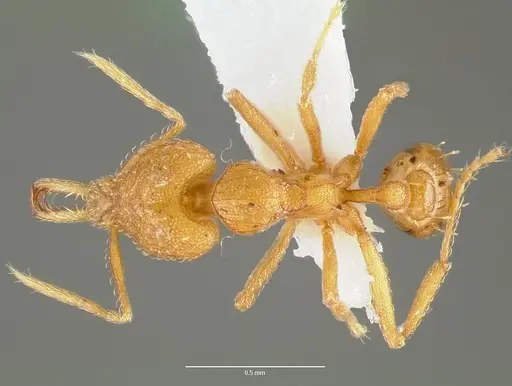
CASENT0006035
View on AntWeb
CASENT0060341
View on AntWeb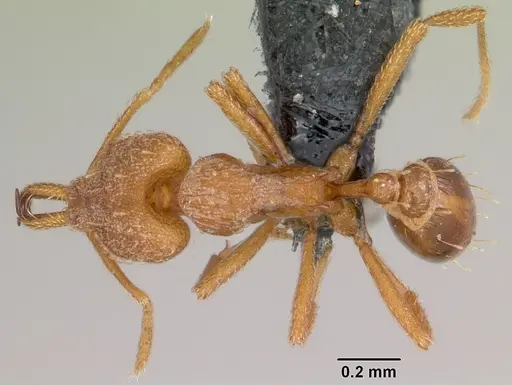
CASENT0060425
View on AntWeb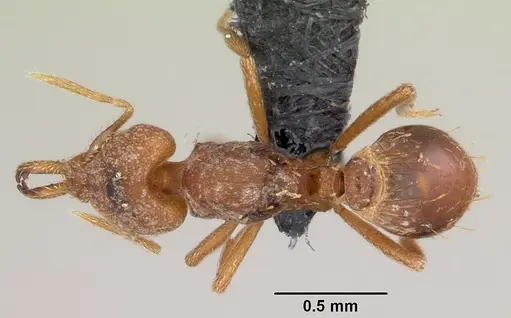
CASENT0064817
View on AntWeb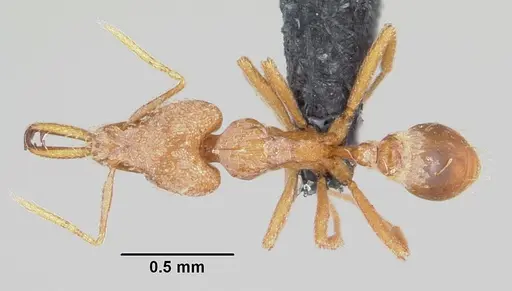
CASENT0102080
View on AntWeb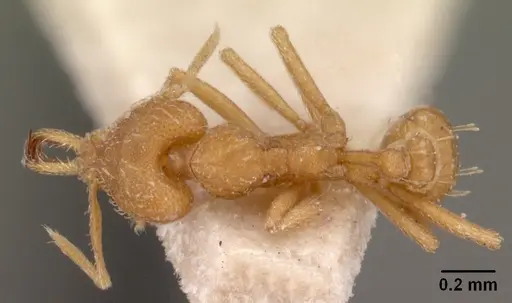
CASENT0104529
View on AntWeb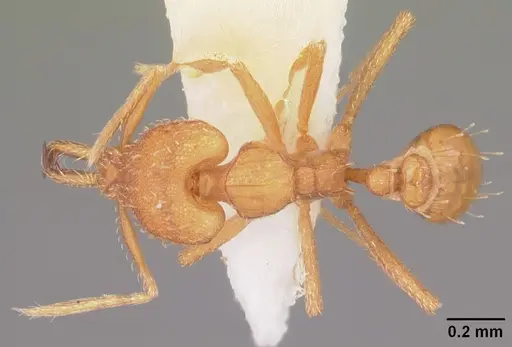
CASENT0104530
View on AntWeb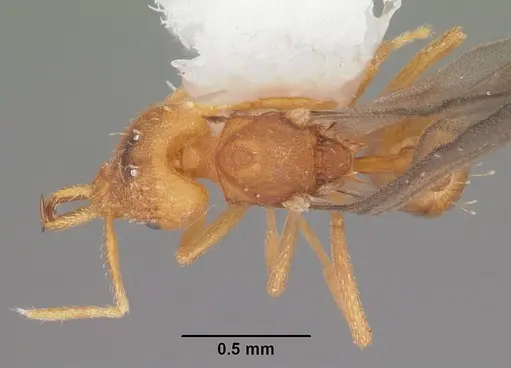
CASENT0125113
View on AntWeb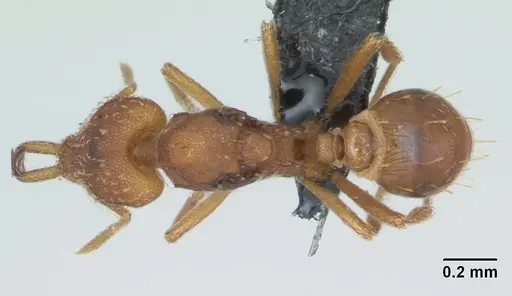
CASENT0135259
View on AntWeb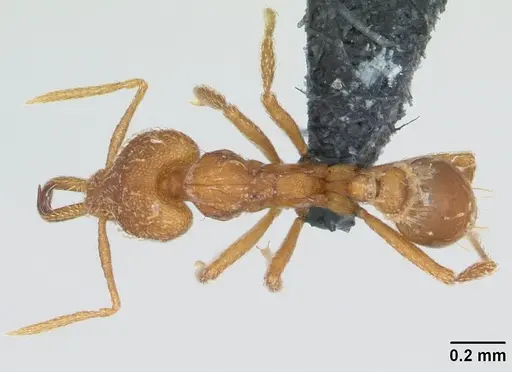
CASENT0137483
View on AntWeb
CASENT0145858
View on AntWeb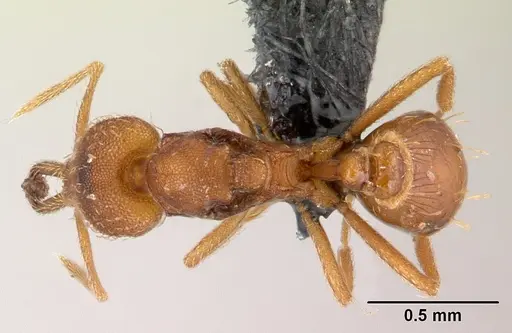
CASENT0158880
View on AntWeb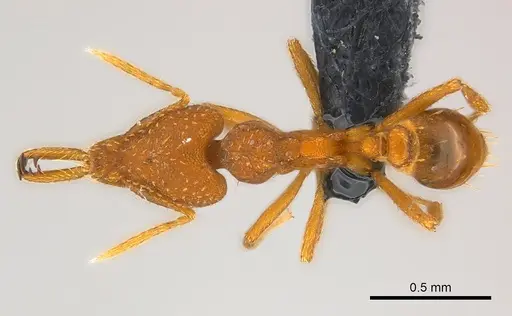
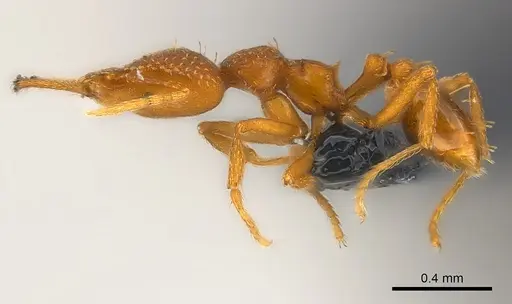
CASENT0171133
View on AntWeb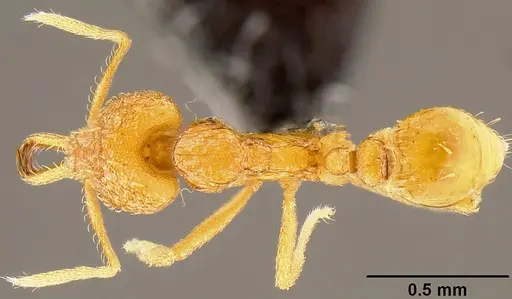
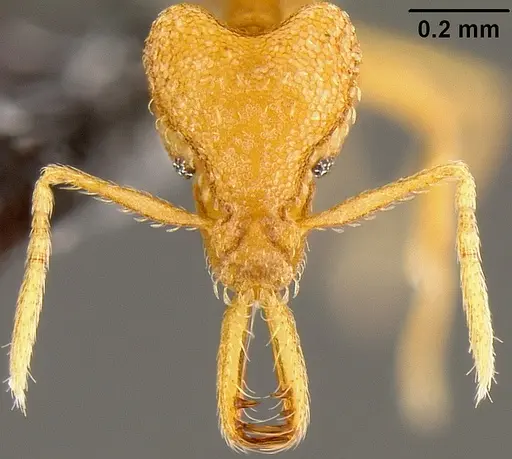
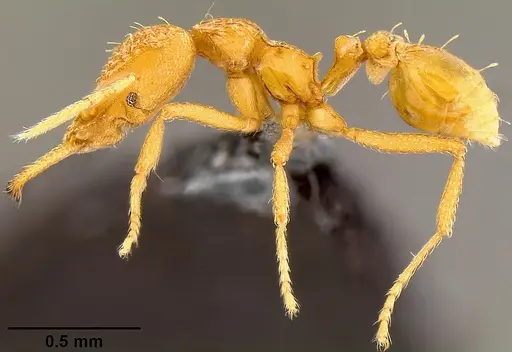
CASENT0178416
View on AntWeb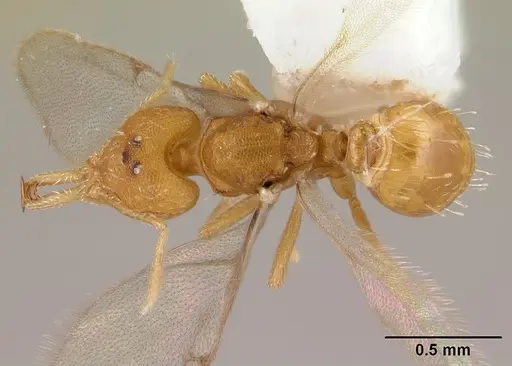
CASENT0178417
View on AntWeb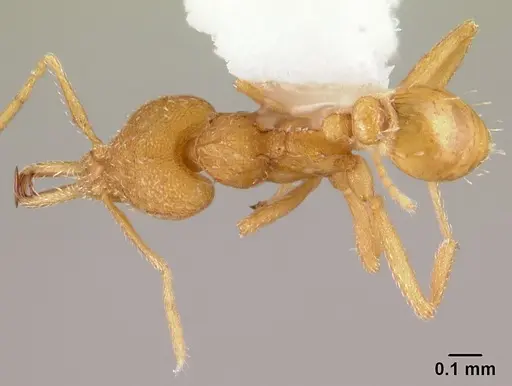
CASENT0178460
View on AntWeb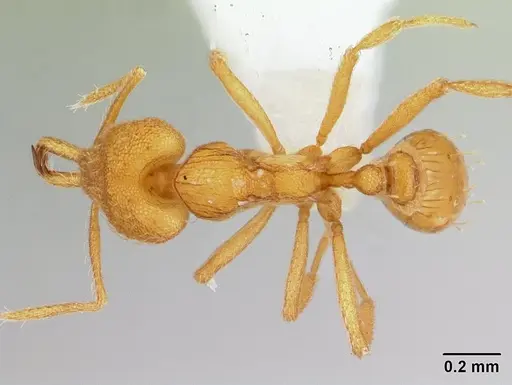
CASENT0179508
View on AntWeb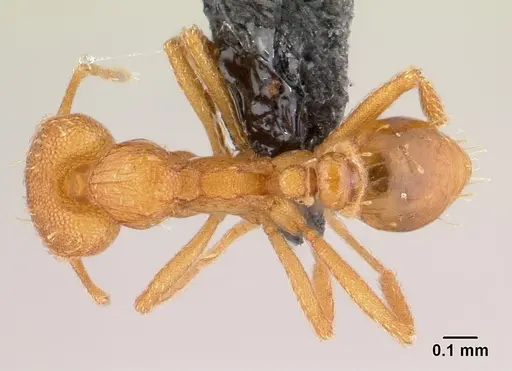
CASENT0235720
View on AntWeb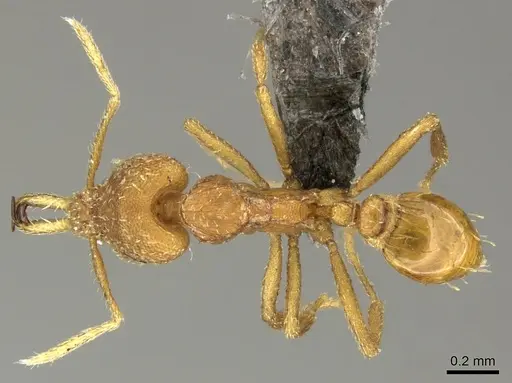
CASENT0767610
View on AntWeb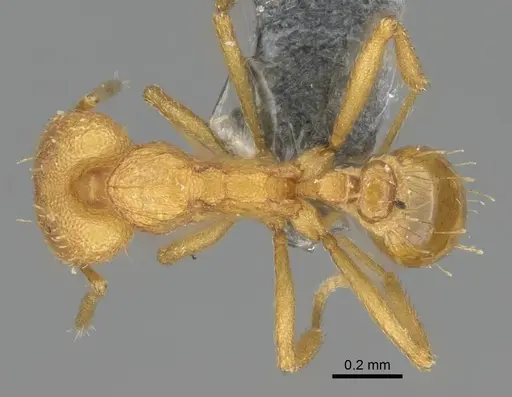
CASENT0845004
View on AntWeb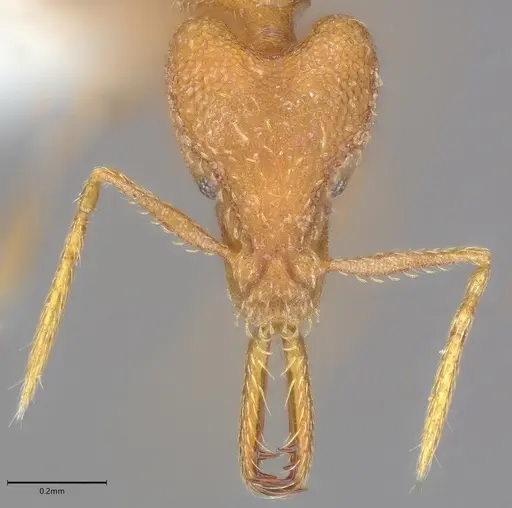
CASENT0900597
View on AntWeb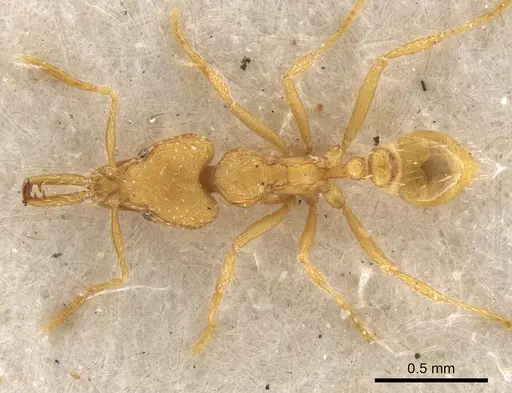
CASENT0912862
View on AntWeb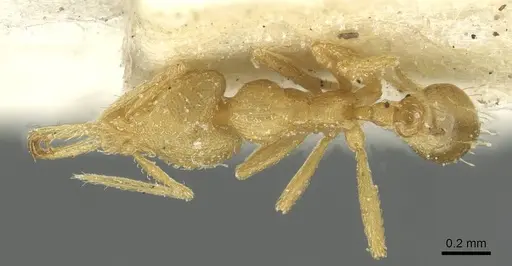
CASENT0914774
View on AntWeb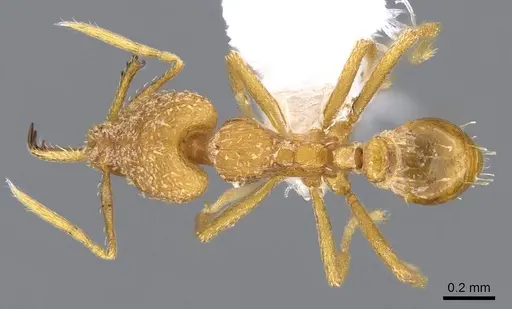
CASENT0915699
View on AntWeb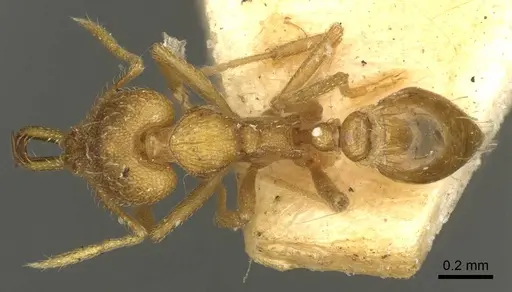
CBUMAGENT41987
View on AntWeb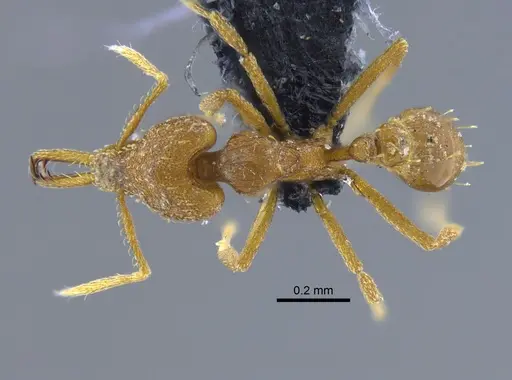
JTLC000005597
View on AntWeb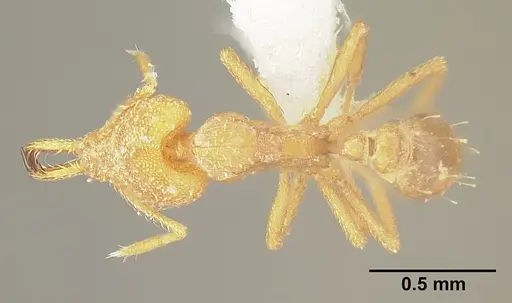
Literature
Loading distribution map...Loading products...