
Stenamma callipygium
- Sci. Name
- Stenamma callipygium
- Tribe
- Stenammini
- Subfamily
- Myrmicinae
- Author
- Branstetter, 2013
- Distribution
- Found in 1 countries
Introduction
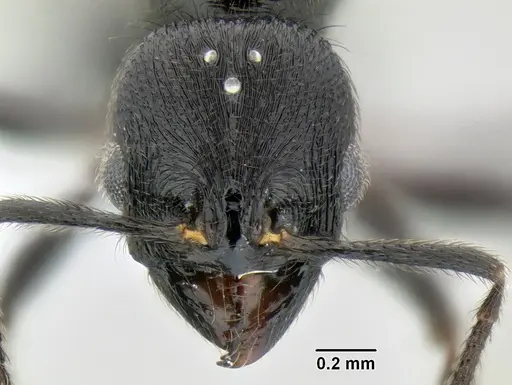
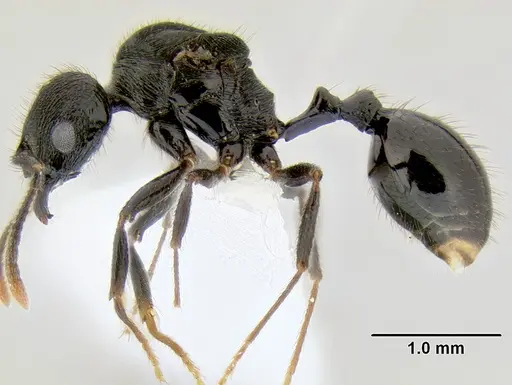
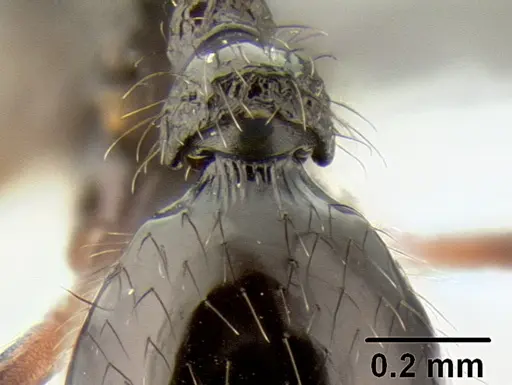
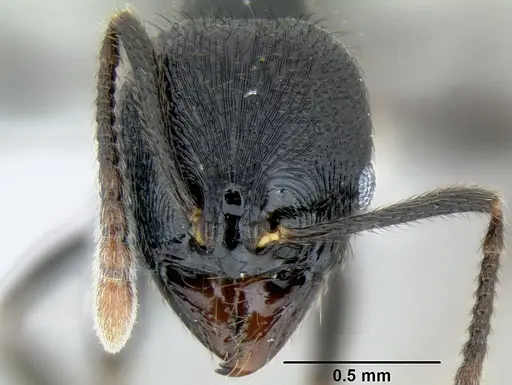
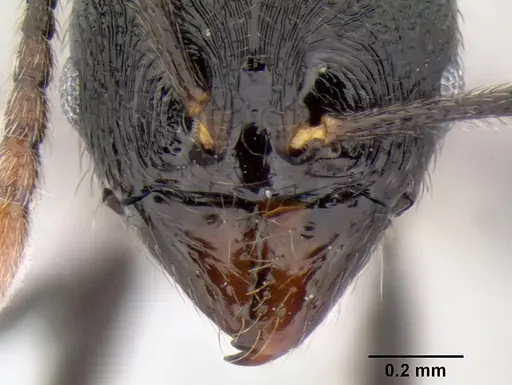
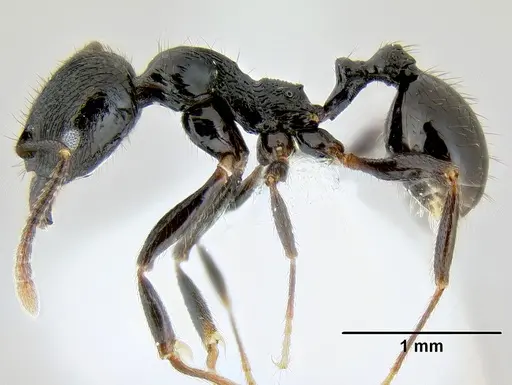
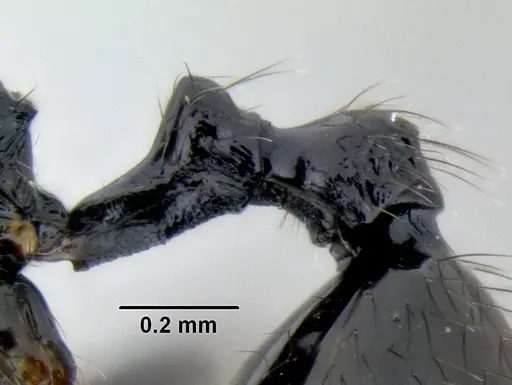
Stenamma callipygium is a medium-sized ant species found only in the cloud forests of Guatemala at elevations between 1630 and 1750 meters . Workers are mostly black with a distinctive elongated constriction at the front of the gaster (abdomen), giving them a shouldered look when viewed from above . The most unusual feature is the median lobe of the clypeus, which projects outward over the mandibles to form a blunt, tooth-like point . This trait is unique within the genus and likely plays a role in capturing or processing a specific prey type . The species was described in 2013 and remains one of the rarest Stenamma, with only a handful of specimens ever collected .
Quick Summary
- Difficulty: Expert
- Origin & Habitat: Guatemala cloud forests at 1630-1750m elevation, specifically the Biotopo Quetzal in Baja Verapaz [1][2]. This is a true cloud forest specialist requiring high humidity and cool temperatures typical of montane tropical forests.
- Colony Type: Colony structure is unconfirmed. Males have never been collected, and no data exists on queen number or colony size in the wild [2].
- Size & Growth:
- Queen: Size data unavailable, only one queen specimen known, no total length recorded in the literature [2].
- Worker: Size data unavailable, only head and mesosomal measurements are available, not total body length. Based on the genus, workers are roughly 3-4mm [1].
- Colony: Unknown. Only a handful of workers have ever been collected [2].
- Growth: Unknown, no captive breeding data exists.
- Development: Unconfirmed, no captive data exists for this species (No direct information on development time.)
- Antkeeping:
- Temperature: Cool temperatures ~18-22°C, inferred from high-elevation cloud forest habitat [1][2]. Avoid warm conditions, this is not a lowland tropical species.
- Humidity: High humidity essential, cloud forests are constantly misty. Keep the nest substrate consistently damp but not waterlogged.
- Diapause: Unknown, as a tropical montane species from a region with little seasonal variation, true diapause is unlikely, but no data exists.
- Nesting: Unknown, may nest in leaf litter or arboreally based on collection methods [1]. Suggested setup: cool, humid, with abundant leaf litter and branches for climbing.
- Behavior: Active forager collected by multiple methods (leaf litter, beating vegetation, baiting), suggesting it searches across ground and vegetation [1][2]. Large eyes indicate good vision, possibly nocturnal or crepuscular. Temperament is undocumented but Stenamma are generally non-aggressive. Small size means escape risk if not properly contained.
- Common Issues: no established care protocol, this species has never been kept in captivity, cloud forest conditions (cool, high humidity) are difficult to maintain long-term, extremely rare in the wild and virtually unavailable in the hobby, high humidity increases mold risk, requires good ventilation, overheating is a real hazard, temperatures above 24°C may be fatal
Discovery and Taxonomy
Stenamma callipygium was described in 2013 by Michael Branstetter in a revision of Middle American Stenamma [1][2]. The species name callipygium means well-shaped buttocks, a reference to the elongated constriction at the front of the gaster [2]. It belongs to the atribellum species group with its relative Stenamma atribellum, both sharing the unique gastral shape [1]. The type locality is Biotopo Quetzal in Baja Verapaz, Guatemala, a protected cloud forest reserve [2]. As of 2013,only six workers and one queen had been documented, making it one of the rarest Stenamma species [2].
Unique Physical Features
This ant has several distinctive traits. The median lobe of the clypeus projects outward over the mandibles, forming a blunt, tooth-like point [1][2]. The basal third of the mandible is distinctly thinned, and the gaster has an elongated anterior constriction with hard shoulder-like angles visible from above [1]. The eyes are large for a Stenamma (0.14-0.19mm) with 9-10 ommatidia, suggesting good vision [1][2]. The function of the tooth-like clypeus is unknown but likely related to capturing a specific prey type [1].
Habitat and Distribution
Stenamma callipygium is known only from cloud forests in Guatemala at 1630-1750m elevation, primarily Biotopo Quetzal in Baja Verapaz [1][2]. This is a montane species, not a lowland tropical ant. The cloud forest environment features constant humidity, frequent mist, and moderate temperatures year-round. The species was collected by sifting leaf litter, beating vegetation, cookie baiting, and flight intercept traps, indicating active foraging across ground and vegetation [1][2]. Its rarity is striking: out of over 100 leaf litter samples from the type locality, only one contained S. callipygium [1].
Conservation and Availability
This species presents significant challenges for antkeeping. It was only described in 2013,has a very limited distribution (one protected area in Guatemala), and requires specialized cloud forest conditions. No successful captive care has been documented, and it is virtually unavailable in the hobby. Its rarity suggests small colony sizes or highly localized populations [1][2]. This is an expert-level species that remains primarily of scientific interest rather than practical husbandry.
Foraging and Diet
Based on collecting methods, Stenamma callipygium is an active forager that hunts in leaf litter and vegetation [1][2]. It was attracted to cookie bait, indicating an interest in carbohydrates. The unique head morphology suggests specialized prey capture, likely for small soft-bodied invertebrates. In captivity, you would need to offer small live prey (fruit flies, springtails) and sugar water, but no captive feeding records exist to confirm preferences [1][2].
Frequently Asked Questions
Can I keep Stenamma callipygium as a pet ant?
This species is not recommended for captivity. It was only described in 2013,has never been documented in captive husbandry, and requires specialized cloud forest conditions that are extremely difficult to replicate. Finding a colony to purchase is nearly impossible given its extreme rarity. This is an expert-level species that remains primarily of scientific interest.
What does Stenamma callipygium look like?
Workers are mostly black with a distinctive elongated constriction at the front of the gaster that creates shoulder-like angles when viewed from above [1]. The most unusual feature is the median clypeal lobe that projects outward over the mandibles like a small tooth [2]. They have large eyes for a Stenamma species. Exact body size is unknown but inferred around 3-4mm.
Where does Stenamma callipygium live?
This species is known only from the cloud forests of Guatemala, specifically the Biotopo Quetzal protected area in Baja Verapaz at elevations between 1630-1750 meters [1][2]. It is a true cloud forest specialist found nowhere else on Earth.
How big do Stenamma callipygium colonies get?
Unknown. Only a handful of workers have ever been collected, and no data exists on maximum colony size. Given its extreme rarity and the single specimen per sample pattern, colonies are likely small [2].
Do Stenamma callipygium ants sting?
Stenamma belong to the subfamily Myrmicinae, which includes many species with stingers. However, Stenamma are generally not aggressive and their sting is not considered medically significant. The unusual mouthparts suggest they rely on mandibles rather than a stinger for prey capture [3].
What temperature do Stenamma callipygium ants need?
Keep them cool compared to typical tropical ants, around 18-22°C, based on their high-elevation cloud forest origin [1][2]. Avoid warm conditions that would stress this montane species.
How long does it take for Stenamma callipygium to develop from egg to worker?
Unconfirmed, no captive breeding data exists for this species [1]. The development time is unknown.
Is Stenamma callipygium a good species for beginners?
No. This species is not suitable for beginners or even most experienced antkeepers. It was only described in 2013,has never been kept in captivity, requires specialized cloud forest conditions, and is virtually unavailable in the antkeeping hobby [1][2].
What do Stenamma callipygium ants eat?
Based on collecting methods, they are active foragers attracted to both protein and carbohydrates [1][2]. The unusual head structure suggests specialized prey capture. In captivity, you would likely need to offer small live prey and sugar sources, though no captive feeding records exist.
Do Stenamma callipygium ants need hibernation?
Unknown. As a tropical species from high elevation, they may not require a true diapause, but no data exists on their seasonal biology [1].
Can I find Stenamma callipygium for sale in the antkeeping hobby?
Extremely unlikely. This species was only described in 2013,is known from only a handful of specimens in one protected area in Guatemala, and has no documented presence in the antkeeping hobby [1][2].
Why is Stenamma callipygium so rare?
This species appears to have a very restricted distribution limited to a single cloud forest locality in Guatemala. Out of over 100 leaf litter samples collected at the type locality, only one contained this species, suggesting either very small colony sizes, highly localized populations, or both [1][2].
Report an Issue
The current care sheet is based fully on literature. See inconsistencies, or something that's incorrect? Please , it will be resolved after review from an admin. Contributing to the blogs tab also helps providing information, to make us be able to further improve the caresheets. Thank you for your support!
References

This caresheet is licensed under CC BY-SA 4.0 .
Community Blogs
CASENT0603928
View on AntWeb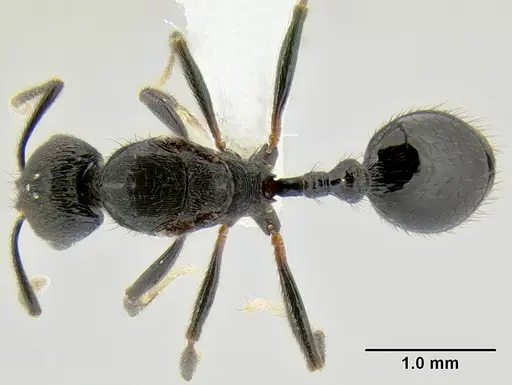
CASENT0606207
View on AntWeb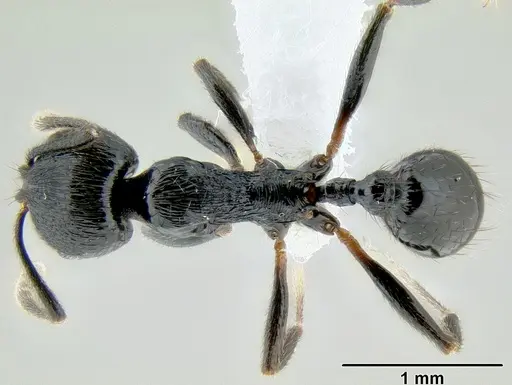
Literature
Loading distribution map...Loading products...