
Solenopsis virulens
- Sci. Name
- Solenopsis virulens
- Tribe
- Solenopsidini
- Subfamily
- Myrmicinae
- Author
- Smith, 1858
- Distribution
- Found in 5 countries
Introduction
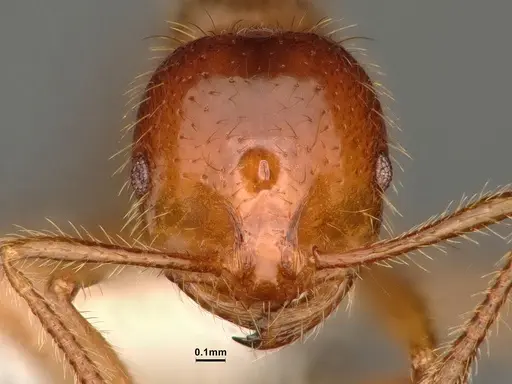
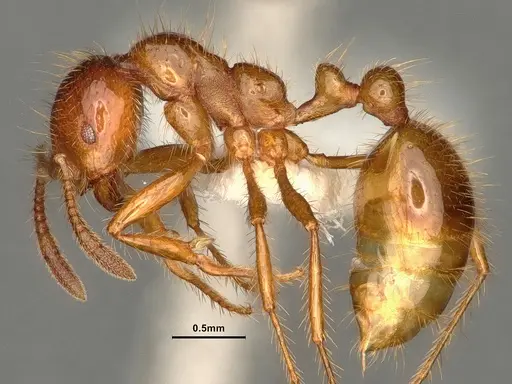
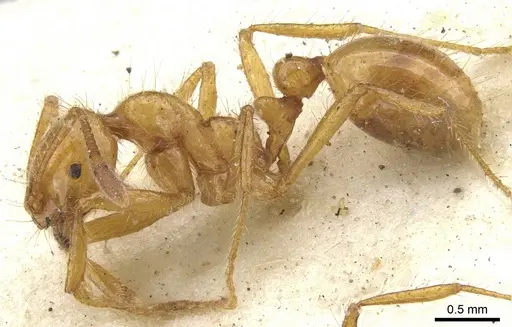
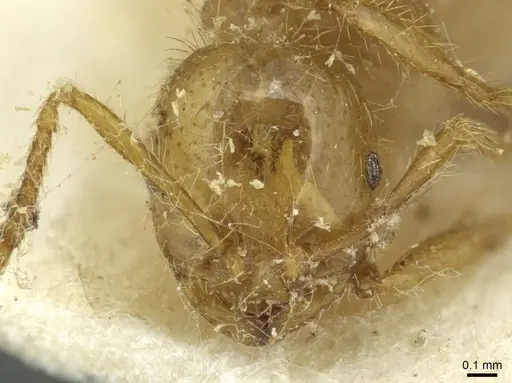
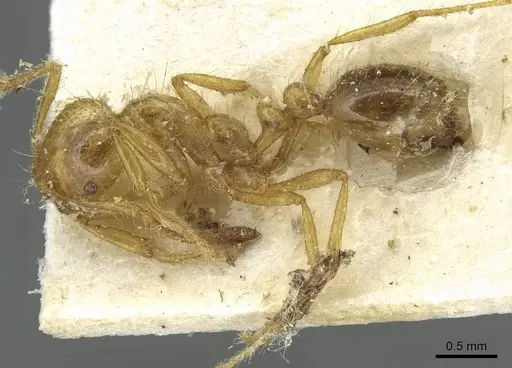
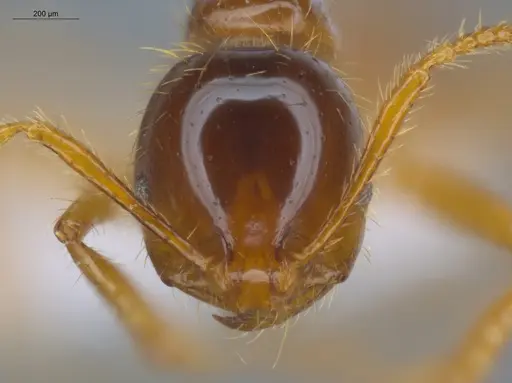
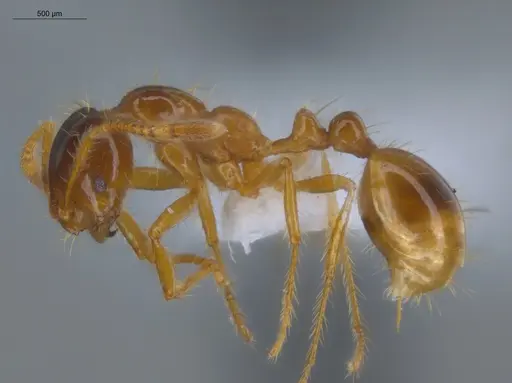
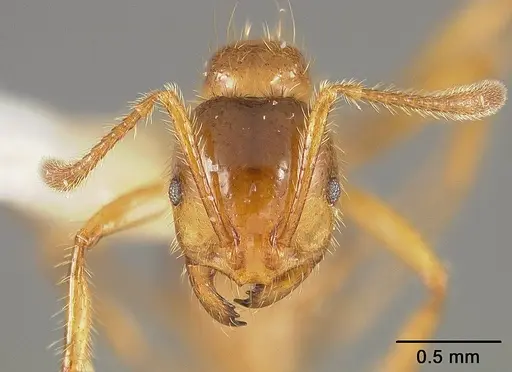
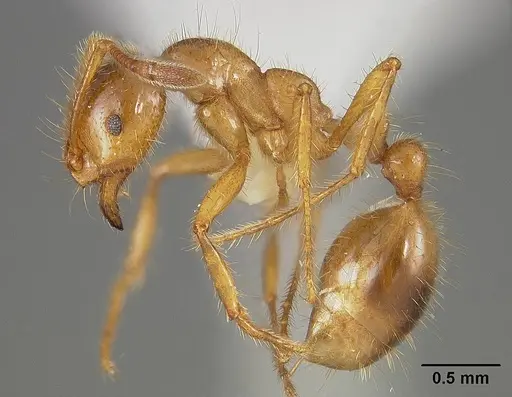
Solenopsis virulens is a tropical fire ant native to South American forests, found in Brazil, Colombia, Ecuador, French Guiana, Peru, and Bolivia . Workers are monomorphic (all the same size), measuring about 4-5 mm, with the reddish-brown color typical of fire ants . It is the only member of the *Solenopsis virulens* species-group. The ant builds conspicuous earthen mounds 10-20 cm high, usually at the base of tree trunks . Unlike many other fire ants that prefer open areas, this species lives in forests and seems to be rare - it is described as a cryptic ant . Queens, males, and larvae have never been described scientifically .
Quick Summary
- Difficulty: Medium
- Origin & Habitat: Tropical forests across northern South America: Brazil, Colombia, Ecuador, French Guiana, Peru, Bolivia [1][2][3]. Found in Amazon, Atlantic Forest, and Caatinga biomes [2]. Recorded at 800 m altitude in xeric habitat [6]. Nests in soil under leaf litter or at tree bases, building earthen mounds [4][2]. Classified as a cryptic species [5].
- Colony Type: Colony structure is not well documented. Queens and males remain undescribed [2]. Based on related fire ants, colonies are likely monogyne (single queen), but this needs confirmation.
- Size & Growth:
- Queen: Undescribed, estimated 8-10 mm based on related Solenopsis species
- Worker: 4-5 mm [4]
- Colony: Unconfirmed, likely several thousand workers based on genus patterns
- Growth: Moderate, inferred from related fire ant species
- Development: Estimated 5-7 weeks at 25-28 °C (Direct data unavailable, estimate based on typical Solenopsis development.)
- Antkeeping:
- Temperature: 24-28 °C year-round. This tropical species lives in warm forests and cannot tolerate cool conditions [2]. Room temperature (22-25 °C) may work, but use a heating mat if needed.
- Humidity: Keep the nest substrate moderately moist. They nest in forest soil and build mounds, so the soil should be damp but not waterlogged [2].
- Diapause: No, as a tropical species, they do not need hibernation. Keep temperatures stable year-round.
- Nesting: Soil-nesting species that builds earthen mounds and collects organic matter into the nest [2]. In captivity, provide deep moist soil substrate (at least 5-10 cm) for digging, plus some leaf litter.
- Behavior: This ant has a potent sting, described as more painful than that of Solenopsis saevissima [4]. Workers defend the nest aggressively. They are ground-dwelling foragers, likely scavenging and hunting small invertebrates. Despite being a fire ant, colonies are rarely encountered in the wild, which suggests a cryptic lifestyle [2][5]. Escape prevention is important because workers are small (4-5 mm).
- Common Issues: potent sting, handle with extreme caution, the sting is more painful than many other fire ants [4], tropical species needs warm temperatures year-round, cannot tolerate cool conditions, escape prevention essential, small workers can fit through tiny gaps, wild colonies are rare, finding a queen or colony may be difficult, poorly studied, few captive breeding records and unknowns about founding and development [2]
Temperature and Care
Solenopsis virulens is a tropical ant that needs warmth year-round. Aim for 24-28 °C, mimicking the climate of its native South American forests [2]. They have been recorded in both rainforest and city habitats, so they can handle some variation [7], but avoid letting the temperature drop below 22 °C for long. Use a heating mat on one side of the nest to create a gradient. Unlike temperate ants, this species does not require or benefit from hibernation, keep conditions stable all year.
Housing and Nesting
In the wild, this ant builds earthen mounds 10-20 cm high, often at the base of trees, and nests in soil under leaf litter [2]. They collect organic material from around the nest and incorporate it into their tunnels [2]. In captivity, provide a deep, moist substrate of soil or a soil‑sand mix (at least 5-10 cm) so they can dig and build their own chambers. Adding dead leaves or organic debris encourages natural building behavior. A formicarium with a soil area and a separate foraging zone works well. Keep the substrate damp but not flooded, a water reservoir or regular misting helps maintain humidity.
Feeding and Diet
Like other fire ants, Solenopsis virulens is omnivorous. Offer sugary liquids (honey water, sugar water) for energy, and provide small insects such as fruit flies, small crickets, or mealworms for protein. Feed protein 2-3 times per week and keep sugar water available constantly. Remove uneaten food after 24 hours to prevent mold. There are no specific dietary studies on this species, but a varied diet similar to other Solenopsis should work.
Defense and Temperament
Warning: This ant has a notably painful sting. The original description states that its sting is more painful than that of Myrmica (now Solenopsis) saevissima [4]. Workers will sting readily when the nest is disturbed. Wear gloves and use tools when maintaining the setup. Because they are small (4-5 mm), they can also sneak through tiny gaps, make sure the outworld is escape‑proof. They are not suitable for keepers who want to handle their ants often.
Colony Growth and Development
The life cycle of Solenopsis virulens is poorly known, queens, males, and larvae have never been formally described [2]. Founding mode is unconfirmed, but given its fire ant relatives, it probably starts claustrally (the queen seals herself in and raises the first workers on her body reserves). At 25-28 °C, expect the first brood to emerge in roughly 5-7 weeks. Growth appears to be moderate, and colonies are rarely found in nature compared to other fire ants [2], suggesting they may grow more slowly or stay smaller. Patience is needed, don’t expect a huge colony quickly.
Unique Ecological Associations
Solenopsis virulens nests host a surprising variety of other insects. A study of 12 nests found 70 individual insects from 39 morphospecies, mostly flies, including sciarid fungus gnats, cecidomyiid gall midges, and psychodid moth flies [2]. Some of these are myrmecophiles that live inside ant nests. The ant is also preyed on by the army ant Eciton rapax [8]. Because it is a cryptic species, its role in the forest food web may be underappreciated [5].
Frequently Asked Questions
Is Solenopsis virulens dangerous?
Yes, they have a sting that is described as more painful than that of other fire ants like Solenopsis saevissima [4]. Handle with gloves and caution. The venom can cause pain, swelling, and, in sensitive people, allergic reactions.
How long does it take for Solenopsis virulens to produce first workers?
Direct data is lacking, but based on related fire ants, expect the first workers to eclose after about 5-7 weeks at 25-28 °C [2].
Do Solenopsis virulens need hibernation?
No, they are tropical and do not require hibernation. Keep temperatures stable at 24-28 °C all year [2].
What do Solenopsis virulens eat?
They are omnivores. Offer sugar water or honey for energy, and provide small insects (crickets, fruit flies, mealworms) for protein. A varied diet similar to other Solenopsis works well.
Are Solenopsis virulens good for beginners?
No, they have a very painful sting, need tropical temperatures year‑round, and are poorly studied [4][2]. Only try them if you have experience with stinging ants and can provide consistent warmth.
How big do Solenopsis virulens colonies get?
Exact sizes are unknown, but based on other fire ants, colonies may reach several thousand workers. Wild colonies are rarely found [2].
What temperature do Solenopsis virulens need?
Keep them at 24-28 °C year‑round. Room temperature (20-22 °C) may be too cool, use a heating mat if the room is cold [2].
Can I keep Solenopsis virulens in a test tube?
A test tube works for a founding queen, but an established colony will need a proper nest with deep, moist soil for digging and mound building [2].
Where is Solenopsis virulens found?
It occurs in northern South America: Brazil, Colombia, Ecuador, French Guiana, Peru, and Bolivia [1][2][3].
Why are my Solenopsis virulens dying?
Common causes: temperatures below 24 °C, dry substrate, or excessive disturbance. Check that the nest is warm and moist. Also watch for the many insects that associate with their nests [2], some may be pests or parasites.
Report an Issue
The current care sheet is based fully on literature. See inconsistencies, or something that's incorrect? Please , it will be resolved after review from an admin. Contributing to the blogs tab also helps providing information, to make us be able to further improve the caresheets. Thank you for your support!
References

This caresheet is licensed under CC BY-SA 4.0 .
Community Blogs
CASENT0884327
View on AntWeb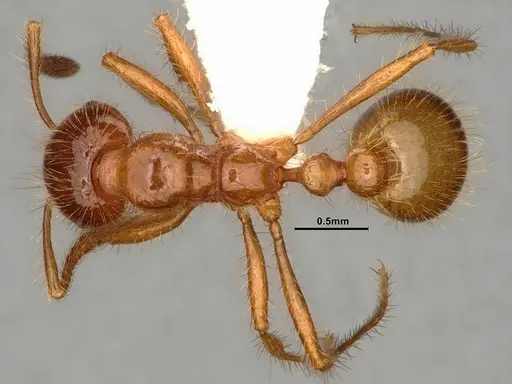
CASENT0902349
View on AntWeb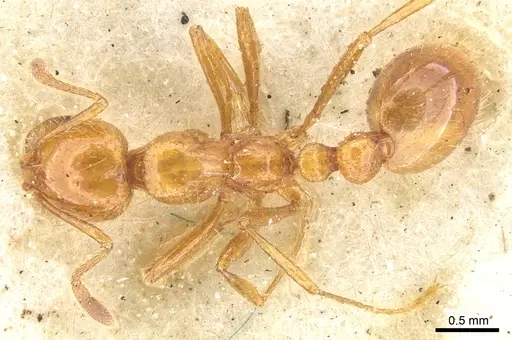
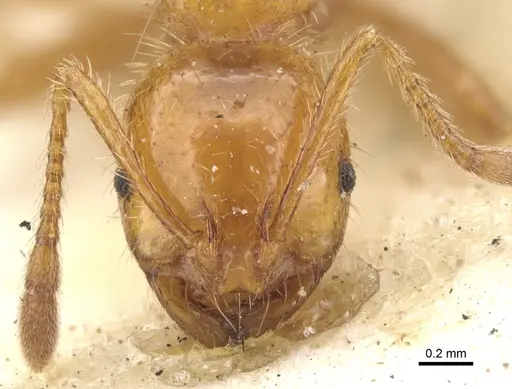
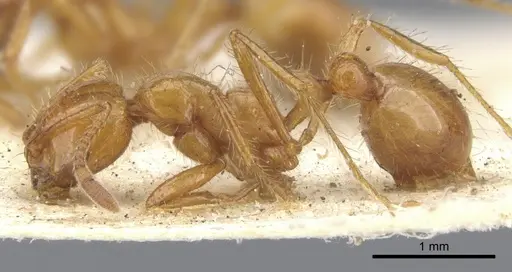
CASENT0902458
View on AntWeb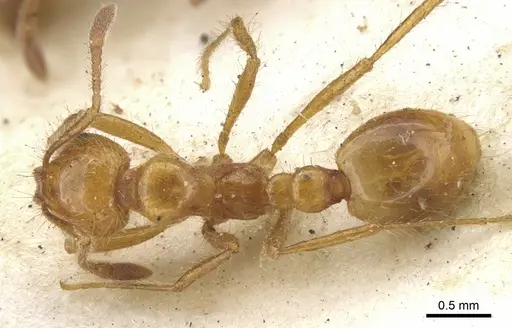
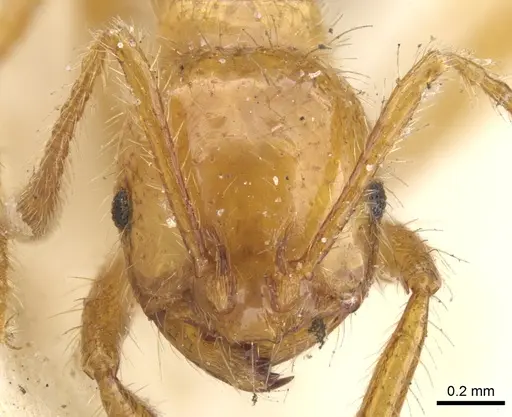
CASENT0913947
View on AntWeb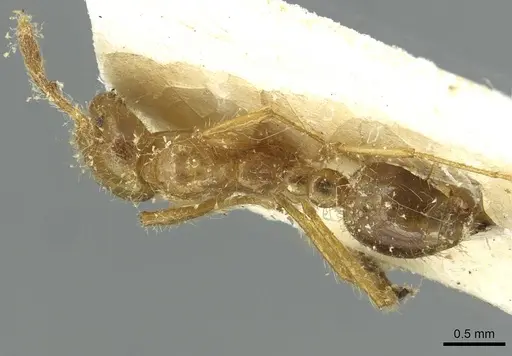
ECOFOG-IT14-0307-81
View on AntWeb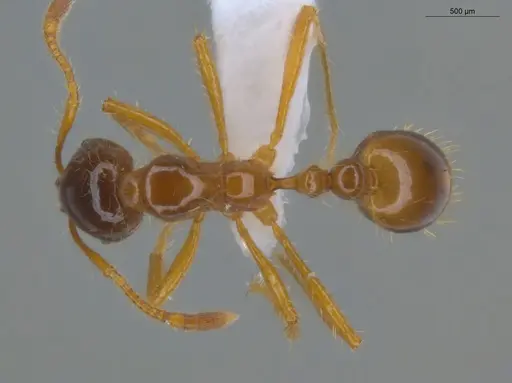
USNMENT00413777
View on AntWeb
Literature
Loading distribution map...Loading products...