
Eciton rapax
- Sci. Name
- Eciton rapax
- Subfamily
- Dorylinae
- Author
- Smith, 1855
- Distribution
- Found in 6 countries
Introduction
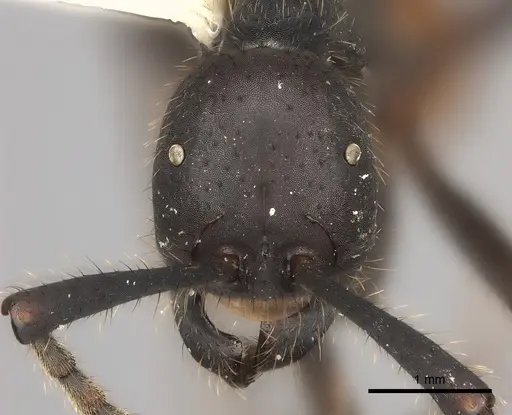
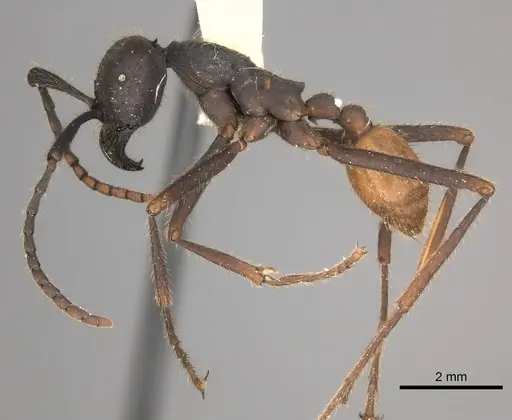
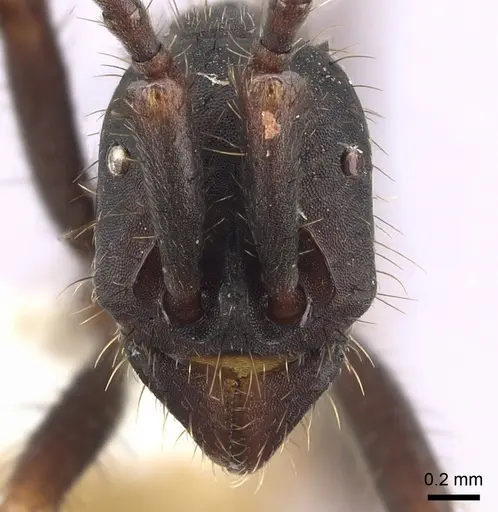
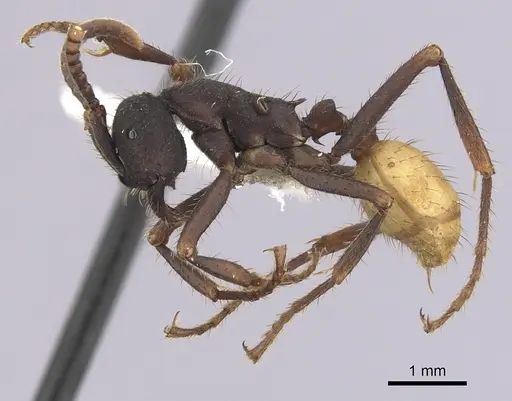
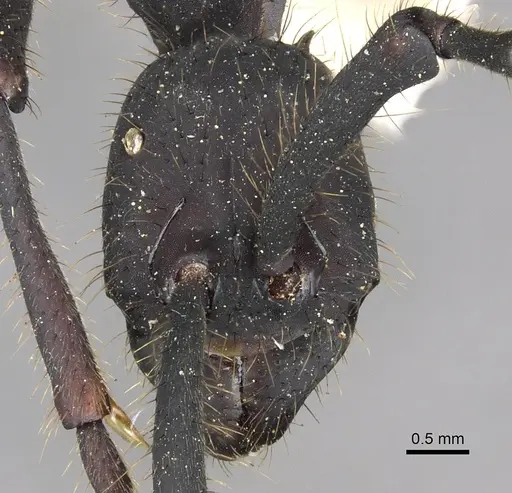
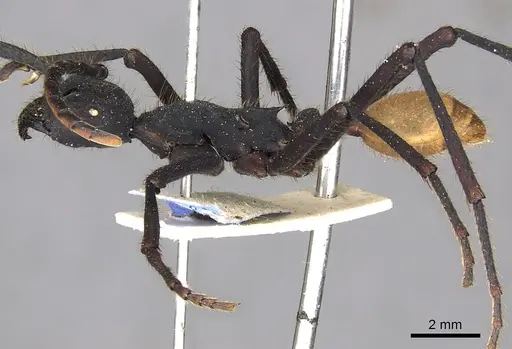
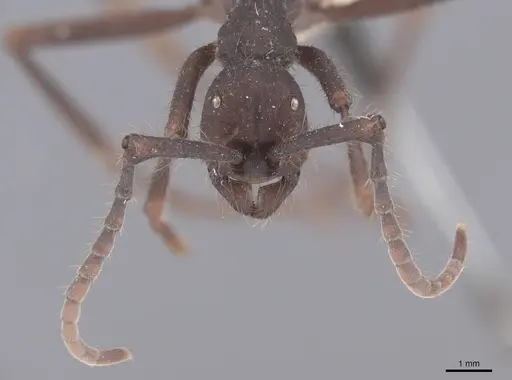
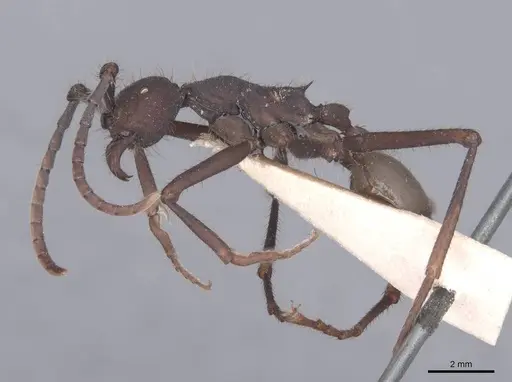
Eciton rapax is a large, predatory army ant native to the Amazon basin and surrounding Neotropical regions. Major workers have a striking appearance: the head and mesosoma are glossy black, while the gaster (abdomen) is a vivid yellow to orange that contrasts sharply—this coloration is one of the easiest ways to identify this species in the field . Workers have distinctive triangular mandibles shorter than the head, never hook-shaped . This is a nomadic army ant that conducts organized raids to capture prey, primarily other ant colonies, particularly targeting Poneroid ants . Colonies are large and highly mobile, constantly on the move through the forest floor. This species hosts several specialized guests including mites and beetles that mimic the ant's appearance and coloration .
Quick Summary
- Difficulty: Expert
- Origin & Habitat: Amazon basin and surrounding Neotropical forests in Bolivia, Brazil, Colombia, Ecuador, French Guiana, Peru, and Venezuela [7]. Found in primary forest, terra-firme forests, and floodplain forests across the Amazon region [8][9]. Ground-nesting army ant that raids through the forest floor [10].
- Colony Type: Large colonies with a single queen (monogyne), typical of Eciton species. Like all Eciton species, they are nomadic and constantly relocate [11].
- Size & Growth:
- Queen: Size data unavailable, Eciton queens are typically large but specific measurements for E. rapax are not documented in available literature
- Worker: Major workers range approximately 8-12mm, inferred from Eciton genus patterns
- Colony: Likely hundreds of thousands in mature colonies, typical for Eciton species
- Growth: Fast, army ant colonies grow rapidly when well-fed
- Development: Approximately 3-4 weeks at tropical temperatures, Eciton development is very fast (Army ant brood development is among the fastest in ants, but specific data for E. rapax is unavailable)
- Antkeeping:
- Temperature: Keep at 24-28°C, matching their tropical Amazon habitat
- Humidity: High humidity (70-85%) is essential, they thrive in the humid Amazon understory. Keep nest substrate consistently moist but not waterlogged
- Diapause: No, Eciton rapax does not hibernate. They are active year-round in the tropical climate. Maintain consistent temperatures year-round
- Nesting: This is NOT a species for typical antkeeping setups. Army ants require very large, specialized enclosures or should not be kept in captivity at all. If attempted, use a large naturalistic setup with multiple connected chambers, but this species is not recommended for hobbyists
- Behavior: Highly aggressive predators that conduct organized raids on other ant colonies. They are group foragers using raiding columns [12]. Workers are very active and constantly on the move. They have well-developed eyes and ocelli [13]. The sting is potent, Eciton ants can deliver painful stings. Escape prevention is critical given their speed and activity level. They are not suitable for beginners and present significant challenges even for experienced keepers.
- Common Issues: This species should NOT be kept in captivity, army ants require constant nomadic movement that is impossible to provide in any realistic captive setup, Even if attempted, colonies would outgrow any reasonable enclosure within months due to their massive size, Feeding is extremely challenging, they require live prey (primarily other ant colonies) in large quantities, The nomadic lifestyle means they cannot settle in a formicarium, they must keep moving, Specialized diet makes them unsuitable for typical antkeeping
Why This Species Is Not Recommended for Captive Keeping
Eciton rapax is one of the most challenging ant species to keep in captivity and is generally not recommended for hobbyists. Army ants (Eciton species) have a unique lifestyle that makes them fundamentally incompatible with standard antkeeping. They are nomadic predators that constantly raid and move, they cannot settle in a fixed nest like typical ants. A single colony can contain hundreds of thousands of workers that must continuously forage across large areas. Providing adequate space and food for such a colony is practically impossible in captivity. Additionally, their primary diet consists of other ant colonies, particularly Poneroid ants [3], which would need to be continuously supplied. This species is best appreciated in the wild or studied through observation rather than kept as a pet. If you are interested in army ant behavior, consider visiting their natural habitat or supporting conservation efforts in the Amazon.
Natural History and Foraging Behavior
Eciton rapax is a specialized predator that conducts organized raids on other ant colonies. Research suggests they may specifically target Poneroid ants [4], making them specialists rather than generalist predators. They use a raiding strategy where columns of workers fan out from the colony to locate and overwhelm prey nests. Unlike some army ant species that raid in columns, E. rapax can form raids approximately 3 meters wide and 8 meters long [14]. They are cyclic nomads, the entire colony moves periodically rather than staying in one location [11]. This species has been documented attacking bumblebee nests (Bombus transversalis) in Peru, though in this case the attack was successfully repelled by the bees [14]. They have also been observed raiding nests of Pheidole ants in Pakitza, Peru. Their well-developed ocelli (simple eyes) suggest they may use visual cues during foraging [13]. The striking yellow gaster coloration is aposematic (warning coloration) and is lost in preserved specimens [1].
Distribution and Habitat
This species ranges across the entire Amazon basin and into surrounding regions. Confirmed countries include Bolivia, Brazil, Colombia, Ecuador, French Guiana, Peru, and Venezuela [7]. In Brazil, they are found in Pará (including Belém), Santarem, and Ega [15]. In Colombia, they occur in Amazonas, Guaviare, Meta, and Putumayo departments [9]. They have been recorded at all 26 sampling sites across a 2000km transect of Amazonian floodplain forest, indicating continuous distribution throughout the region [8]. They occur in various forest types including primary terra-firme forest, dense ombrophylous forest, and open ombrophylous forest [16]. They are ground-nesting ants that thrive in the humid understory of Amazonian forests [10].
Associated Species and Mimics
Eciton rapax hosts several specialized guest organisms. The mite Forcellinia bipunctata has been recorded as an associate, collected from this species in Ecuador [6]. More remarkably, they host the beetle Ecitophya rapaxae, which is a behavioral and visual mimic of the ants, the beetle not only looks like the ant but also mimics its movements [5][17]. This mimicry extends to color matching, where the guest beetles coordinate their coloration with their host [17]. These specialized associations are common in army ant colonies and represent millions of years of coevolution. The guest organisms have evolved to integrate themselves into the colony's chemical signature and behavioral patterns. Such associations make Eciton rapax ecologically significant beyond just being a predator, they are ecosystem engineers that support entire communities of specialized organisms.
Frequently Asked Questions
Can I keep Eciton rapax as a pet?
No. This species is not suitable for captive keeping. Army ants require constant movement across large territories and massive amounts of live prey (other ant colonies) that cannot be provided in any realistic captive setup. Even experienced antkeepers should not attempt to keep Eciton species.
What do Eciton rapax ants eat?
They are specialized predators that raid other ant colonies, particularly Poneroid ants. They have been documented raiding Pheidole nests and attacking bumblebee colonies. In captivity, they would require live ant colonies as prey, which is impractical to supply. They do not typically scavenge or accept sugar sources like many ants.
Do Eciton rapax ants sting?
Yes. Eciton species have potent stings and can deliver painful defensive stings. The sting is more painful than many other ants due to their large size and active defense of the colony.
How big do Eciton rapax colonies get?
Mature colonies likely contain hundreds of thousands of workers, possibly exceeding a million. This is typical for Eciton army ant species. The colonies are constantly growing and moving.
Where is Eciton rapax found?
They range across the Amazon basin in Bolivia, Brazil, Colombia, Ecuador, French Guiana, Peru, and Venezuela. They live in primary and secondary rainforests throughout the Amazon region.
Do Eciton rapax need hibernation?
No. Being tropical ants from the Amazon basin, they do not hibernate. They remain active year-round and require consistent tropical temperatures (24-28°C).
What makes Eciton rapax different from other ants?
They are nomadic army ants that constantly move and raid rather than maintaining a fixed nest. They have striking black-and-yellow coloration and are specialized predators on other ant colonies. They also host specialized guest organisms including mites and mimicking beetles.
Can I catch a queen and start a colony?
This is not recommended. Army ant colony founding is complex and the resulting colony would quickly outgrow any captive setup. Additionally, capturing wild colonies contributes to population decline in their native habitat. Enjoy observing them in the wild instead.
Report an Issue
The current care sheet is based fully on literature. See inconsistencies, or something that's incorrect? Please , it will be resolved after review from an admin. Contributing to the blogs tab also helps providing information, to make us be able to further improve the caresheets. Thank you for your support!
References

This caresheet is licensed under CC BY-SA 4.0 .
Community Blogs
CASENT0217473
View on AntWeb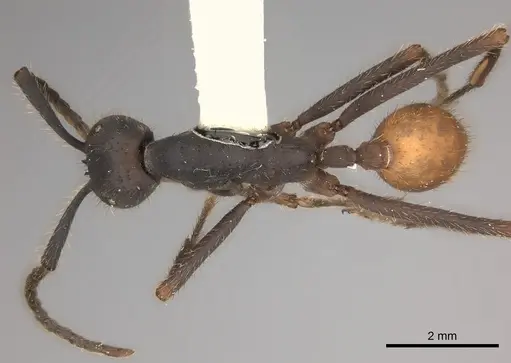
CASENT0249462
View on AntWeb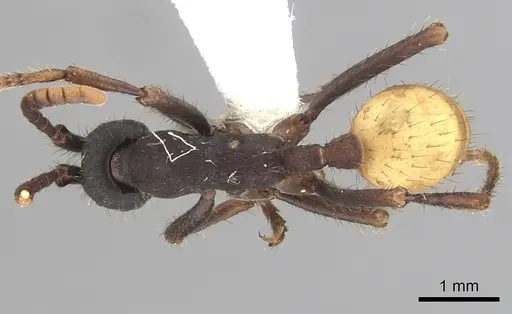
CASENT0902635
View on AntWeb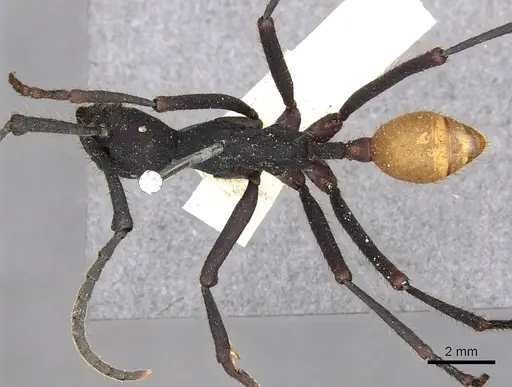
FMNHINS0000045338
View on AntWeb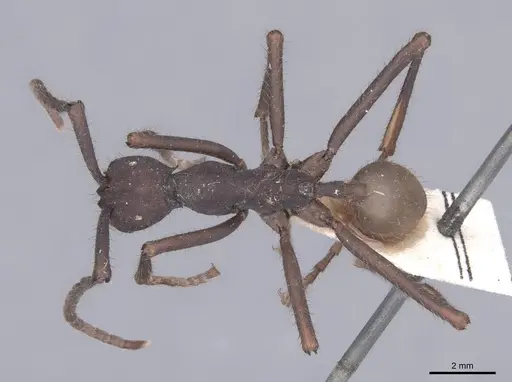
Literature
Loading distribution map...Loading products...