
Pristomyrmex browni
- Sci. Name
- Pristomyrmex browni
- Tribe
- Crematogastrini
- Subfamily
- Myrmicinae
- Author
- Wang, 2003
- Distribution
- Found in 2 countries
Introduction
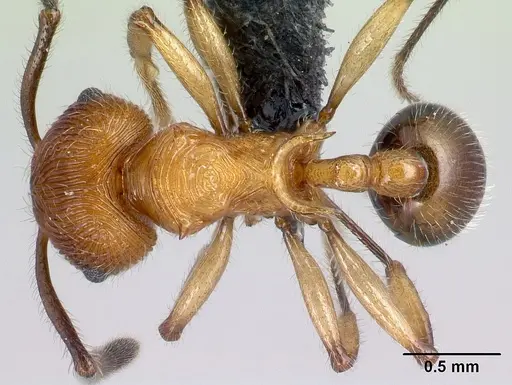
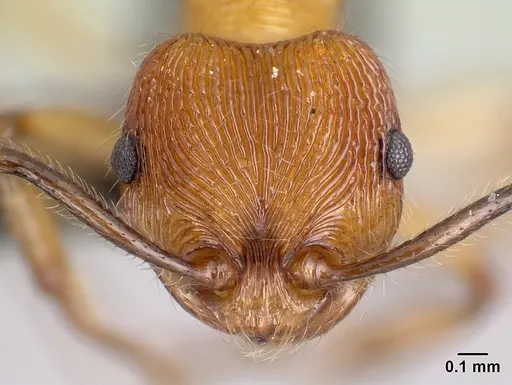
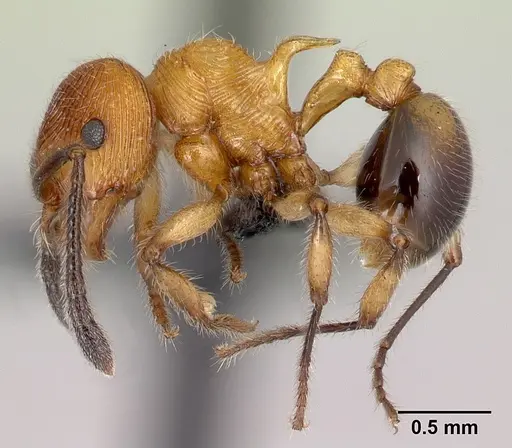
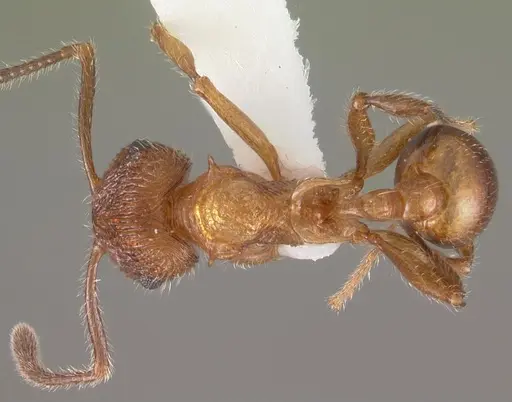
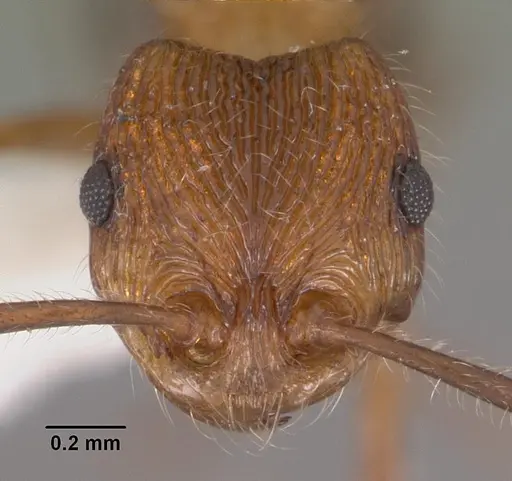
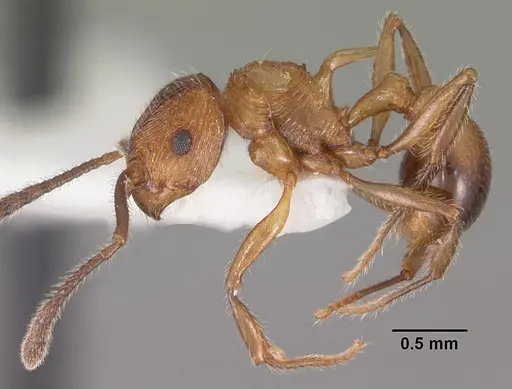
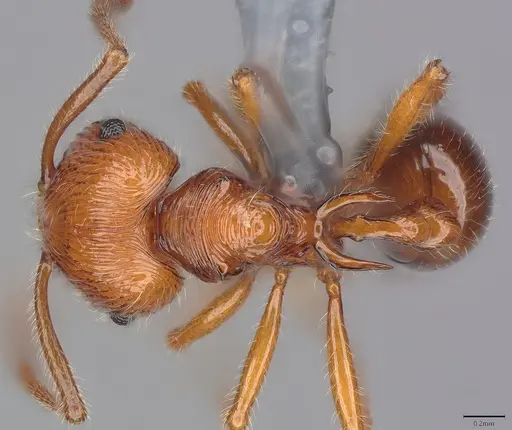
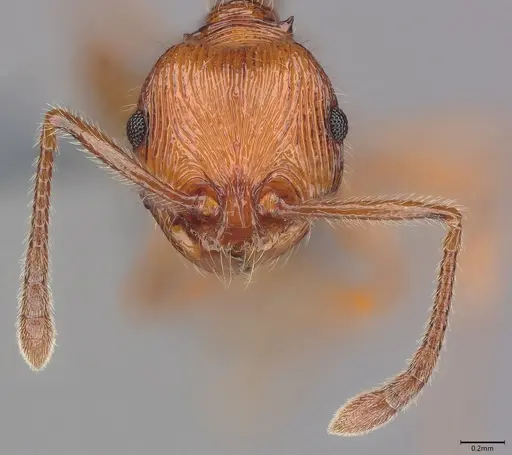
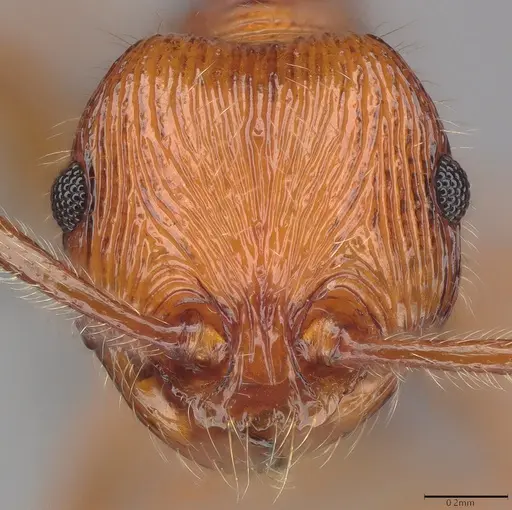
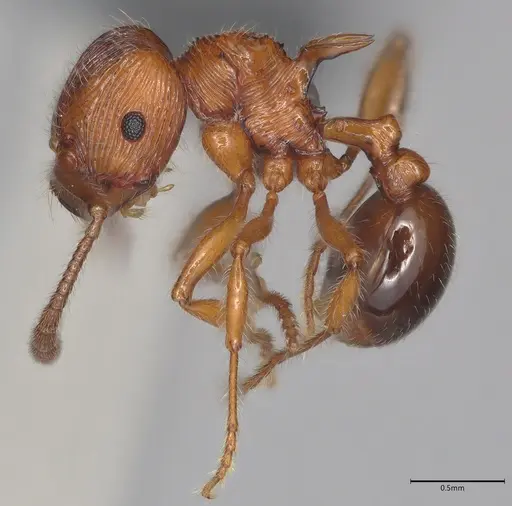
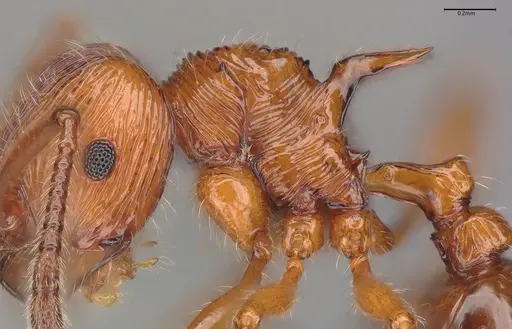
Pristomyrmex browni is a small Myrmicinae ant native to Mauritius and Réunion in the Indian Ocean. Workers have a total length of 3.4-3.8 mm and feature dense regular striations on the head and alitrunk, with propodeal spines joined at the base . The species is found in native forest habitats at elevations of 700-800 m . Genetic analysis shows deep divisions within populations from Le Pouce mountain, suggesting multiple cryptic species . All specimens tested positive for Wolbachia bacteria, with different strains infecting each genetic lineage.
Quick Summary
- Difficulty: Medium
- Origin & Habitat: Mauritius and Réunion islands in the Malagasy Region, found in native forest at 700-800 m elevation [1].
- Colony Type: Colony structure is not well documented. Based on typical Pristomyrmex patterns, likely single-queen colonies [1].
- Size & Growth:
- Queen: Size data unavailable, inferred from Pristomyrmex genus patterns
- Worker: 3.4-3.8 mm [1]
- Colony: Unknown, no colony size data available
- Growth: Unknown
- Development: Unconfirmed, no direct observations. Based on similar small Myrmicinae, likely 6-10 weeks at optimal temperature [1]. (Development timeline has not been scientifically documented for this species.)
- Antkeeping:
- Temperature: Keep at 22-26°C as a starting point. No specific studies, but related species prefer warm, stable conditions [1].
- Humidity: Maintain moderate to high humidity. Native forest suggests damp conditions, keep substrate moist but not waterlogged [1].
- Diapause: Unknown, tropical climate, so likely no diapause required [1].
- Nesting: Provide nests with small chambers scaled to worker size. Y-tong or plaster nests work well. Prefer enclosed spaces like under stones or in rotting wood [1].
- Behavior: Workers are active foragers with well-developed mandibles. Defense mechanism includes smearing venom from a modified stinger, a trait common in Myrmicinae. Escape prevention should be adequate for their size, they can fit through small gaps.
- Common Issues: cryptic species identification, wild-caught colonies may be one of multiple species with different care needs [2][3], Wolbachia infection, all wild specimens carry this bacteria, which may affect colony health in captivity [2][3], limited availability, this species is rarely available due to its restricted range, no development data, keepers must experiment with conditions to find optimal care, unknown colony structure, breeding behavior has not been documented
Natural History and Distribution
Pristomyrmex browni is endemic to Mauritius and Réunion in the western Indian Ocean. Type specimens were collected from Le Pouce mountain at 700-800 m in native forest [1]. Genetic studies show deep CO1 mitochondrial DNA divergence (15%) in populations from Le Pouce, indicating multiple cryptic species [2][3]. These have been reclassified as provisional species Pristomyrmex sp. Mau-01 and Mau-02.
Identification and Morphology
Workers measure 3.4-3.8 mm in total length. Key features include dense regular striations on the head and alitrunk, and propodeal spines joined at the base but subparallel along their length [1]. The head has a deeply concave occipital margin, and the color is reddish-brown. This species is closely related to Pristomyrmex bispinosus and Pristomyrmex trispinosus, but can be distinguished by its striation patterns and mesonotum tubercles.
Housing and Nesting
Provide a nest with small chambers scaled to worker size. Use Y-tong or plaster nests with moisture reservoirs. Keep the nest substrate consistently moist but not waterlogged, matching their native forest habitat. A shallow water dish in the outworld helps maintain humidity. Ensure escape prevention is adequate, as workers can fit through small gaps. [1]
Feeding and Diet
Offer a varied diet: protein sources like small live or frozen prey (e.g., fruit flies, pinhead crickets), and sugar sources like honey water or commercial nectar. Feed every 2-3 days, adjusting for colony size, and remove uneaten food promptly to prevent mold. [1]
Temperature and Seasonal Care
Maintain temperatures between 22-26°C. No specific thermal requirements are documented, but related species prefer warm, stable conditions. Mauritius has a tropical climate with minimal seasonal variation, so diapause is likely unnecessary. Avoid temperature extremes and sudden changes. [1]
Health Considerations
All wild specimens tested positive for Wolbachia bacteria [2][3]. This endosymbiont may affect reproduction or health, but it is common in ants and rarely causes issues in captivity. Monitor colonies for unusual behavior and adjust care as needed. Due to cryptic species, wild-caught colonies may have slightly different requirements.
Frequently Asked Questions
Is Pristomyrmex browni a difficult ant to keep?
This species is rated as Medium difficulty. Limited care information is available, and keepers may need to experiment with conditions. The main challenges are cryptic species complexity and rarity in the hobby.
What do Pristomyrmex browni ants eat?
They are omnivorous. Offer small protein sources like fruit flies or pinhead crickets, along with sugar water or honey. Feed every 2-3 days and remove uneaten food promptly.
What temperature should I keep Pristomyrmex browni at?
Maintain 22-26°C as a starting point. No specific studies exist, but related species prefer warm conditions. Adjust based on colony activity.
Do Pristomyrmex browni ants need hibernation?
Diapause requirements are unknown. Given the tropical climate of Mauritius, they likely do not require hibernation. A slight temperature reduction in winter may be appropriate but is not necessary.
How big do Pristomyrmex browni colonies get?
Maximum colony size is not documented. Based on worker size, colonies are likely moderate in size compared to other Myrmicinae.
Can I keep multiple Pristomyrmex browni queens together?
Colony structure is unconfirmed. It is not recommended to combine unrelated queens without evidence of coexistence, as fighting may occur.
How long does it take for Pristomyrmex browni to develop from egg to worker?
Development timeline is unconfirmed. Based on similar small Myrmicinae, estimate 6-10 weeks at optimal temperature.
Are Pristomyrmex browni ants aggressive or do they sting?
They have propodeal spines for defense and use a smearing venom mechanism common in Myrmicinae. No specific sting reports exist, but they are not dangerous to humans.
What type of nest should I use for Pristomyrmex browni?
Use a nest with small chambers, such as Y-tong or plaster nests with moisture reservoirs. Keep the substrate moist to match their native forest habitat.
Is Pristomyrmex browni available in the antkeeping hobby?
This species is rarely available due to its restricted range in Mauritius and Réunion. Acquiring a colony may be difficult.
Report an Issue
The current care sheet is based fully on literature. See inconsistencies, or something that's incorrect? Please , it will be resolved after review from an admin. Contributing to the blogs tab also helps providing information, to make us be able to further improve the caresheets. Thank you for your support!
References

This caresheet is licensed under CC BY-SA 4.0 .
Community Blogs
Literature
Loading distribution map...Loading products...