
Pheidole socrates
- Sci. Name
- Pheidole socrates
- Tribe
- Attini
- Subfamily
- Myrmicinae
- Author
- Forel, 1912
- Distribution
- Found in 4 countries
Introduction
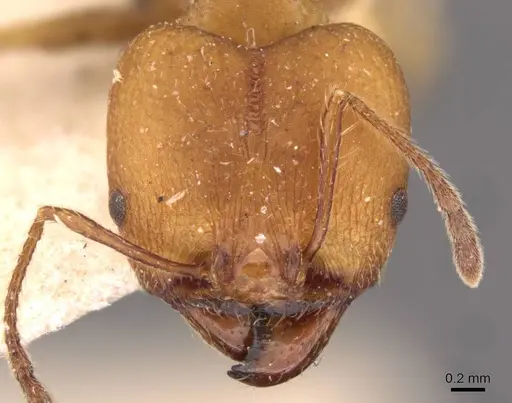
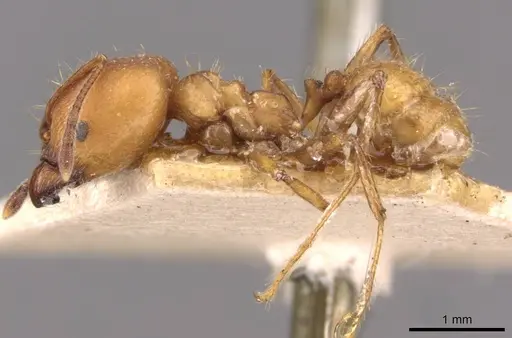
Pheidole socrates is a large, light reddish yellow ant belonging to the biconstricta group within the genus Pheidole. The species exhibits pronounced size polymorphism with major workers having large heads and minor workers having broad occiputs, but full body size measurements are unavailable . It was originally described as a subspecies of Pheidole biconstricta by Forel in 1912 and elevated to species status by Wilson in 2003 . The species is found across the Amazonian region, including Brazil, Colombia, French Guiana, Guyana, and Suriname, in forest and cultivated habitats . This species is notable for its recent taxonomic elevation and its distribution across multiple South American countries, but little is known about its specific biology .
Quick Summary
- Difficulty: Hard
- Origin & Habitat: Amazonian region of Brazil, Colombia, French Guiana, Guyana, and Suriname. Found in forest habitats and cultivated areas [2][3].
- Colony Type: Based on Pheidole genus patterns, likely polygynous (multiple queens), but unconfirmed for this species.
- Size & Growth:
- Queen: Size data unavailable, no measurements found in literature. Inferred from Pheidole genus to be approximately 8-12 mm.
- Worker: Size data unavailable, full body measurements not provided. Inferred from Pheidole genus that minor workers are ~3-4 mm and major workers are ~4-6 mm.
- Colony: Unknown, no colony size data available.
- Growth: Unknown, no development data available.
- Development: Unknown, estimated 6-10 weeks based on typical Pheidole patterns, but no species-specific data. (Estimates based on genus-level patterns for tropical Pheidole species.)
- Antkeeping:
- Temperature: Estimated 22-28°C based on Amazonian distribution. Provide a warm area with a gradient.
- Humidity: Keep substrate consistently moist but not waterlogged, as Amazonian species prefer high humidity.
- Diapause: Unknown, tropical species likely do not require diapause.
- Nesting: No specific data, use typical Pheidole setups like test tubes for founding and Y-tong or plaster nests with moist substrate.
- Behavior: Behavior is unstudied. Based on Pheidole genus patterns, they are generally non-aggressive but will defend nests vigorously. Escape risk is moderate due to worker size, use standard barriers.
- Common Issues: high humidity can lead to mold if ventilation is poor, wild-caught colonies may have undocumented parasites, diet preferences are unknown, so offer varied food experimentally, colony growth is slow and unpredictable due to lack of data
Appearance and Identification
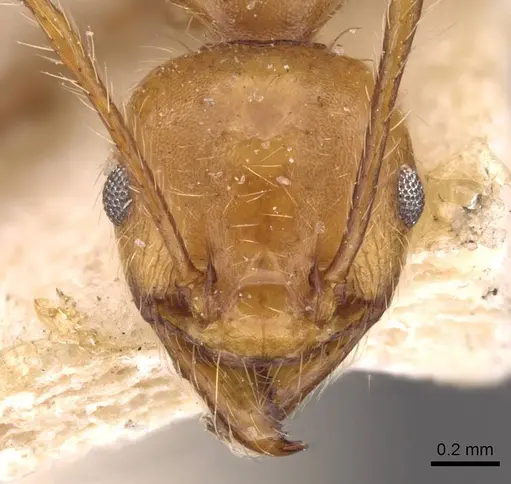
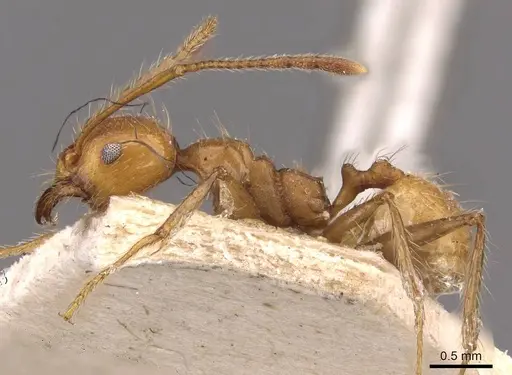
Pheidole socrates is a striking species due to its pronounced polymorphism. Major workers have notably large heads with distinctive longitudinal carinae that extend from the frontal lobes posteriorly nearly to the occipital border. Minor workers have an exceptionally broad occiput compared to many related species. Both castes are a uniform light reddish yellow color throughout [1]. The species belongs to the biconstricta group, characterized by specific morphological features including spines in both majors and minors. It is close to Pheidole biconstricta and Pheidole plato, but distinguished by the carinae pattern in majors and the broad head of minors [1].
Distribution and Habitat
Pheidole socrates is distributed across the Amazonian region of northern South America. The confirmed range includes Brazil, French Guiana, Guyana, Suriname, and Colombia. The Colombian record from Barbacoas represents the northernmost extension, located approximately 201 km north of the closest Ecuadorian record [2]. Specimens have been collected from both primary forest habitats and cultivated areas, indicating adaptability to human-modified landscapes [3]. The type locality is Belém, Brazil [1].
Nest Preferences and Housing
Since no specific nesting data exists for this species, care recommendations are based on typical Pheidole behavior. In the wild, Pheidole species typically nest in soil, under stones, or in rotting wood. For captive care, a test tube setup works well for founding colonies. Once the colony reaches a reasonable size, transition to a Y-tong nest or a plaster formicarium with chambers deep enough for brood chambers. Provide a moisture gradient by keeping one end of the nest moist and allowing the other to be slightly drier. This allows ants to self-regulate humidity preferences.
Feeding and Diet
The specific diet of Pheidole socrates is unstudied, but Pheidole species are generalist omnivores typical of the Attini tribe. In nature, they likely forage for seeds, insect prey, and honeydew. For captive colonies, offer varied diet including protein sources like small insects and carbohydrate sources like sugar water or honey. Feed protein 2-3 times per week and keep a constant sugar source available. Remove uneaten prey after 24-48 hours to prevent mold.
Temperature and Humidity Requirements
Based on the Amazonian distribution, warm and humid conditions are essential. Maintain temperatures between 22-28°C, with an optimal range of 24-26°C. A slight temperature gradient allows the colony to regulate conditions. Humidity should be high, keep the substrate consistently moist but not waterlogged. Signs of improper conditions include workers clustering unusually (too cold) or mold growth (too wet).
Colony Development and Growth
No specific development data exists for Pheidole socrates. Based on typical Pheidole patterns in tropical conditions, eggs may take 6-10 weeks to develop into first workers at optimal temperature. Initial colony growth is typically slow, with the queen raising the first brood alone. After the first workers emerge, growth accelerates. Colony size at maturity is unknown, but related Pheidole species can reach several hundred to a few thousand workers. Be patient and minimize disturbances during founding.
Frequently Asked Questions
How long does it take for Pheidole socrates to produce first workers?
The egg-to-worker timeline is unconfirmed. Based on typical Pheidole development in tropical conditions, expect 6-10 weeks from egg to first nanitic workers at 24-26°C. This is an estimate since no specific studies exist on this species.
What do Pheidole socrates ants eat?
Their specific diet is unstudied, but like most Pheidole species, they are generalist omnivores. Offer small insects for protein and sugar water or honey for carbohydrates. Feed protein 2-3 times per week with constant sugar access.
What temperature and humidity do Pheidole socrates need?
Keep them warm at 24-26°C with high humidity. These Amazonian ants need consistently moist substrate and warm conditions to thrive. A temperature gradient allows self-regulation.
Are Pheidole socrates good for beginners?
This species is not recommended for beginners due to the complete lack of specific biological data. All care is estimated from genus patterns. Choose a better-studied species if you are new to antkeeping.
How big do Pheidole socrates colonies get?
Colony size is unknown, no studies have documented maximum colony size for this species. Based on related Pheidole species, colonies likely reach several hundred to a few thousand workers.
Can I keep multiple queens together?
Colony structure is unconfirmed for this species. Pheidole genus is typically polygynous, but combining unrelated foundress queens is not recommended as aggression may occur. Wait until you have an established colony before considering any multi-queen arrangements.
When should I move Pheidole socrates from a test tube to a formicarium?
Move to a larger nest when the test tube becomes crowded or when the water reservoir is nearly depleted. Ensure the new setup has pre-drilled chambers and moist substrate ready. Pheidole colonies prefer to move into new nests rather than being forced.
Does Pheidole socrates need hibernation?
Diapause requirements are unknown. As a tropical species from the Amazon region, they likely do not require true hibernation. In captivity, maintain stable warm conditions year-round.
Why is no information available about Pheidole socrates biology?
This species has not been the subject of detailed scientific study. Many ant species remain poorly researched, especially in biodiversity-rich regions like the Amazon. The limited data comes from taxonomic descriptions and distribution surveys rather than behavioral studies.
Report an Issue
The current care sheet is based fully on literature. See inconsistencies, or something that's incorrect? Please , it will be resolved after review from an admin. Contributing to the blogs tab also helps providing information, to make us be able to further improve the caresheets. Thank you for your support!
References

This caresheet is licensed under CC BY-SA 4.0 .
Community Blogs
CASENT0908091
View on AntWeb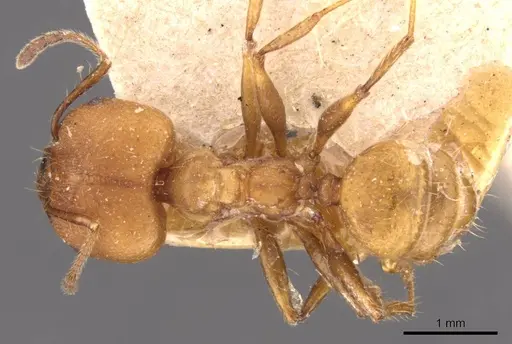
CASENT0908092
View on AntWeb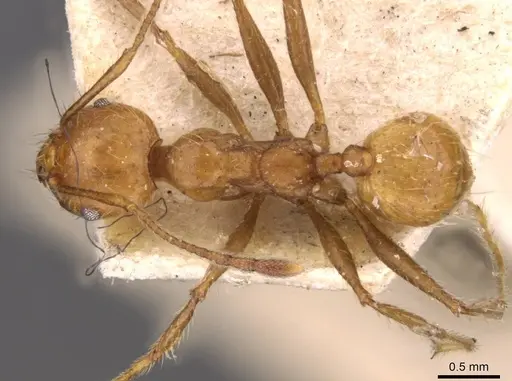
Literature
Loading distribution map...Loading products...