
Pheidole germaini
- Sci. Name
- Pheidole germaini
- Tribe
- Attini
- Subfamily
- Myrmicinae
- Author
- Emery, 1896
- Distribution
- Found in 1 countries
Introduction
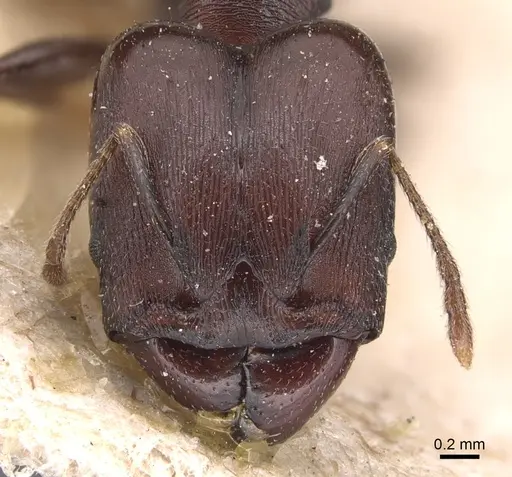
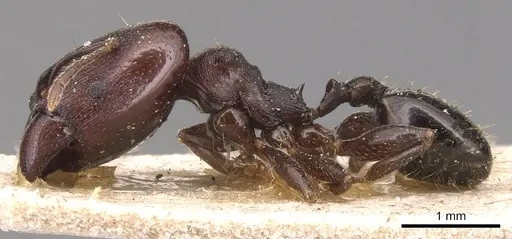
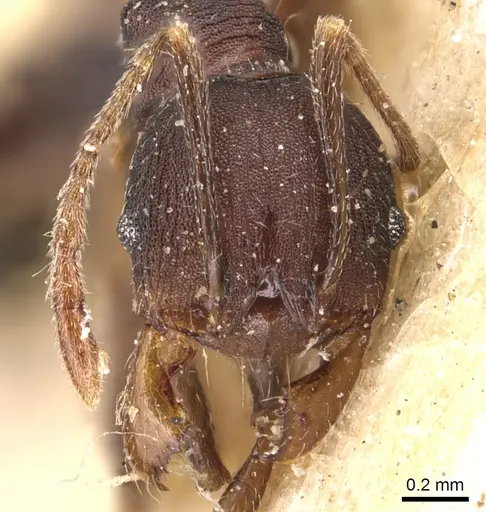
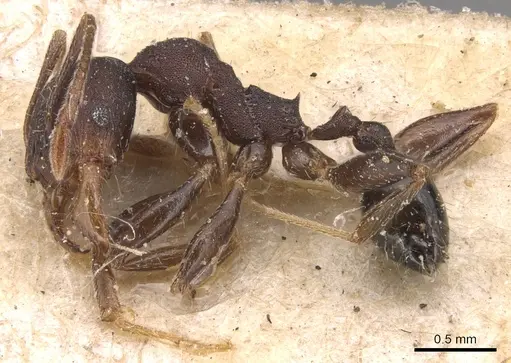
Pheidole germaini is a medium-sized ant native to Brazil, specifically the Mato Grosso region. You will find it in the Neotropical area, often collected in forested and fragmented landscapes. The species belongs to the Pheidole tristis group. Major workers are reddish brown with a large postpetiolar node, prominent shoulder bumps, and thick hind legs. Minor workers are darker with lighter legs and antennae. The species was originally described as a subspecies of Pheidole crassipes before Wilson elevated it to full species status in 2003 . Despite its distinct appearance, almost nothing is known about the actual biology of this ant. You will not find published data on its nesting habits, founding method, or colony structure. Any care advice relies entirely on general Pheidole patterns and its tropical Brazilian origin. You should treat keeping this species as an open-ended experiment.
Quick Summary
- Difficulty: Medium
- Origin & Habitat: Mato Grosso, Brazil. The species inhabits Amazonian fragmented landscapes and forested areas [2].
- Colony Type: Based on Pheidole genus patterns, likely monogyne (single-queen colonies). No direct data exists for this species.
- Size & Growth:
- Queen: size unknown, inferred from Pheidole genus (~7-9 mm)
- Worker: size unknown, inferred from Pheidole genus (~2-4 mm for minors, ~4-8 mm for majors)
- Colony: Unknown for this species. Typical Pheidole colonies can reach up to several thousand workers.
- Growth: Unknown
- Development: Unconfirmed. Based on tropical Pheidole patterns, expect roughly 4-8 weeks at warm temperatures. (Development speed depends heavily on temperature and food availability.)
- Antkeeping:
- Temperature: Unconfirmed. As a tropical Brazilian species, keep the nest warm and stable, roughly 24-28°C.
- Humidity: Unconfirmed. Maintain the nest substrate consistently moist but not waterlogged, matching typical tropical forest floor conditions.
- Diapause: Unlikely. Tropical species from Brazil typically do not require winter diapause.
- Nesting: Unconfirmed. Based on Pheidole patterns, provide a soil or plaster nest with a humidity gradient.
- Behavior: Pheidole species are generally docile but will defend their nest if disturbed. The species carries a functional stinger typical of Myrmicinae, though the sting is rarely medically significant to humans. Majors use their large mandibles for defense, while minors handle brood care and foraging. Escape risk is moderate. You should apply standard escape prevention measures.
- Common Issues: lack of species-specific care data requires trial-and-error adjustments, unknown founding behavior may lead to queen failure, no published development timeline makes brood management difficult, limited availability in the antkeeping trade
Identification and Morphology
Pheidole germaini features two distinct worker castes. Major workers are medium-sized with a reddish brown head and appendages, while the rest of the body is darker. They show a large postpetiolar node, prominent shoulder bumps, and swollen hind legs. Minor workers are smaller and darker overall, with contrasting lighter legs and antennae. Their bodies carry sparse short hairs, some of which are club-shaped or spatulate. The species belongs to the Pheidole tristis group and was originally classified as a subspecies of Pheidole tristis before Wilson reclassified it in 2003 [1]. Direct body length measurements are not published, but you can expect majors to fall around 4-8 mm and minors around 2-4 mm based on typical Pheidole patterns.
Distribution and Ecology
This ant is native to Brazil, specifically the Mato Grosso region. You will find it in the Neotropical area, often recorded in forested and fragmented landscapes near Cuiabá and Juara [2]. Researchers collected specimens using bait, which shows the workers actively forage on the ground and readily take food sources. Despite these collection records, published biology for this species remains completely unknown. No one has documented its nesting habits, queen number, or nuptial flight timing. You will need to rely on general genus knowledge and careful observation.
Care Recommendations
Since no direct care data exists, you must base your setup on tropical Pheidole patterns. Keep the nest warm and stable, roughly 24-28°C. Maintain a humidity gradient with a consistently moist substrate that stays damp but never waterlogged. Feed standard ant diets including sugar water or honey and small insects. Use soil, plaster, or 3D-printed nests. Avoid acrylic nests entirely. Pheidole workers are generally docile but will defend their nest if threatened. The species carries a functional stinger, though it rarely bothers humans. Majors handle defense and large food items, while minors manage brood and foraging. You should monitor the colony closely since founding behavior and development timelines remain unconfirmed.
Frequently Asked Questions
Is Pheidole germaini available in the antkeeping hobby?
No. This species is not commonly traded. You will likely need to source it directly from researchers or specialized collectors.
What does Pheidole germaini look like?
Majors are medium-sized with reddish brown heads and legs, and darker bodies. They feature a large postpetiolar node and thick hind legs. Minors are smaller and darker with lighter appendages. The species belongs to the Pheidole tristis group [1].
Where is Pheidole germaini found?
Brazil, specifically the Mato Grosso region. Records come from forested and fragmented landscapes near Cuiabá and Juara [2].
How do I care for Pheidole germaini?
No established protocol exists. You should provide warm temperatures around 24-28°C, keep the nest substrate damp but not soaked, and feed standard sugar and protein sources. Monitor the colony closely since biology remains unconfirmed.
How long does it take for Pheidole germaini to develop from egg to worker?
Unconfirmed. Based on tropical Pheidole patterns, expect roughly 4-8 weeks at warm temperatures. Development speed depends on your exact setup.
What temperature should I keep Pheidole germaini at?
Unconfirmed. As a tropical Brazilian species, keep the nest warm and stable, roughly 24-28°C. Adjust based on colony activity.
Is Pheidole germaini a good species for beginners?
No. The lack of published biology and care data makes this species unsuitable for beginners. You should only attempt this if you have experience with tropical Pheidole species.
How big do Pheidole germaini colonies get?
Unknown for this specific species. Typical Pheidole colonies can reach up to several thousand workers.
Does Pheidole germaini need hibernation?
Unlikely. Tropical species from Brazil typically do not require winter diapause. You can keep them active year-round.
Report an Issue
The current care sheet is based fully on literature. See inconsistencies, or something that's incorrect? Please , it will be resolved after review from an admin. Contributing to the blogs tab also helps providing information, to make us be able to further improve the caresheets. Thank you for your support!
References

This caresheet is licensed under CC BY-SA 4.0 .
Community Blogs
CASENT0904339
View on AntWeb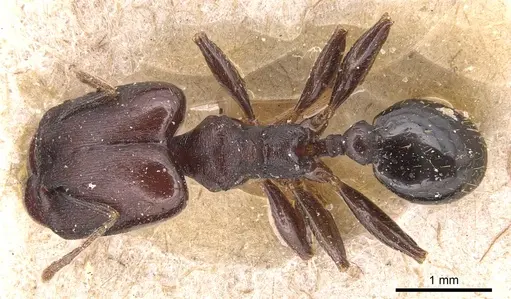
CASENT0904340
View on AntWeb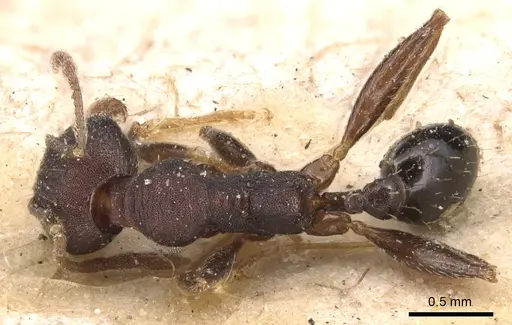
Literature
Loading distribution map...Loading products...