
Odontomachus silvestrii
- Sci. Name
- Odontomachus silvestrii
- Tribe
- Ponerini
- Subfamily
- Ponerinae
- Author
- Wheeler, 1927
- Distribution
- Found in 2 countries
Introduction
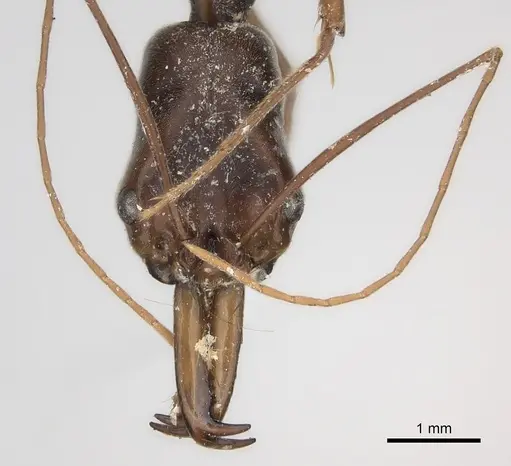
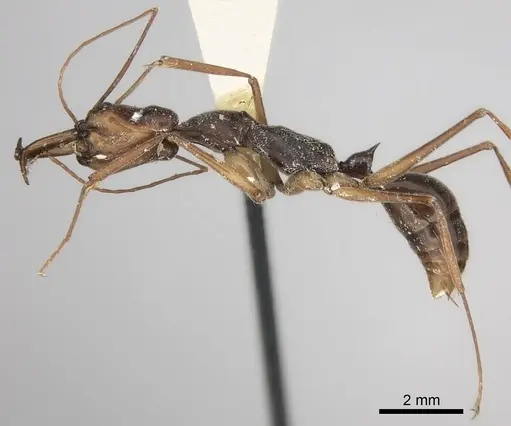
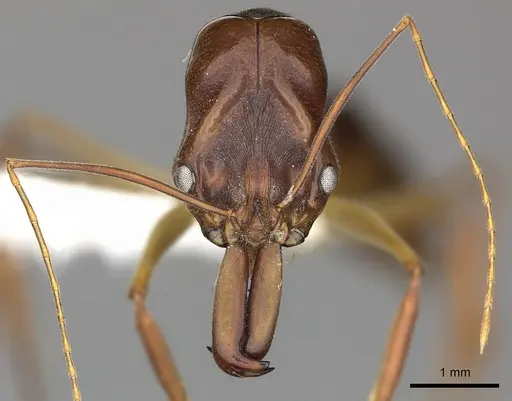
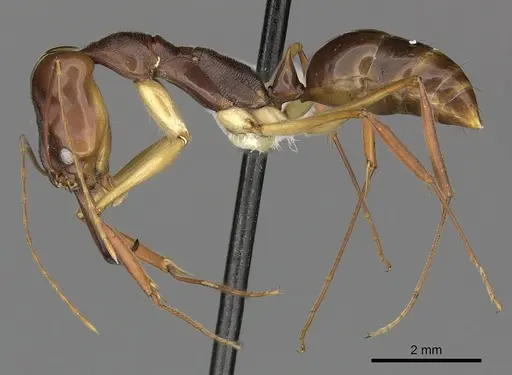
Odontomachus silvestrii is a medium-sized trap-jaw ant from the Odontomachus infandus group. Workers are estimated to be around 9-11 mm based on typical genus sizes, no precise measurements have been recorded in the literature. They are dark reddish-brown to black. The head has fine transverse striations on the vertex when viewed from the front . According to Wang et al. (2020) , the first gastral tergite is entirely micropunctate with dense, short appressed hairs, and the dorsum of the head and mesosoma has dense, very short erect hairs of similar length, while the pronotal dorsum lacks long erect hairs. These ants are found in Vietnam and southeastern China .
Quick Summary
- Difficulty: Medium
- Origin & Habitat: Southeastern China and Vietnam. Likely inhabits forested areas, nesting in soil or rotting wood based on genus preferences [4][5].
- Colony Type: Unconfirmed, based on typical Odontomachus patterns, likely monogyne (single queen).
- Size & Growth:
- Queen: Unknown, estimated around 11-13 mm based on typical Odontomachus queen sizes (not measured in literature).
- Worker: Around 9-11 mm (estimated from genus patterns, no direct measurements available).
- Colony: Unknown, typical Odontomachus colonies reach up to several hundred workers, but no data specific to this species.
- Growth: Slow to moderate (based on Ponerinae patterns).
- Development: Estimated 8-12 weeks based on related Odontomachus species, no specific data for O. silvestrii. (Development time is temperature-dependent.)
- Antkeeping:
- Temperature: Specific requirements unknown. Based on tropical distribution, keep at 24-28°C. A heating cable on one side creates a gradient.
- Humidity: Specific requirements unknown. Based on forest habitat, keep substrate consistently moist but not waterlogged. Provide good ventilation.
- Diapause: Not required based on tropical origin, though specific data unavailable. Some activity reduction during cool months may occur.
- Nesting: Y-tong (AAC) or naturalistic setups with moist soil and rotting wood work well. Provide dark nest chambers.
- Behavior: Active predatory ants that hunt using a powerful trap‑jaw mechanism. They can deliver a painful sting if threatened (typical of Ponerinae). Moderate aggression. Excellent escape artists, tight security needed. Primarily nocturnal but adjust to captivity. They require live prey and will establish foraging routes.
- Common Issues: escape prevention is critical, they are active and will find any gap in the setup., colonies can struggle if kept too dry, humidity is important., slow development can test keeper patience., they require regular live prey, sugar alone is not enough., wild‑caught colonies may have parasites that can devastate the colony.
Identification and Morphology
Odontomachus silvestrii belongs to the Odontomachus infandus group. The vertex (top of the head) is finely transversely striate [1][2]. The first gastral tergite is entirely micropunctate, covered with dense, short appressed hairs, and lacks a flattened area or pit. The dorsum of the head and almost the entire mesosoma have dense, very short erect or suberect hairs of nearly the same length, while the pronotal dorsum has no long erect hairs [3]. These features help distinguish it from similar species.
Housing and Nest Setup
Y‑tong (AAC) nests or naturalistic setups work well for Odontomachus silvestrii. For Y‑tong nests, use medium‑sized chambers for these moderately large ants. Keep the nest damp via a water reservoir or moist substrate. Connect an outworld for foraging. In naturalistic setups, provide a layer of moist soil or sand mix with pieces of rotting wood or bark. These ants prefer dark nest chambers, so cover with a dark cloth or use opaque sides. The outworld must be escape‑proof, these active ants will find any gap. Provide a shallow water dish in the outworld.
Feeding and Diet
As predatory Ponerinae, these ants need a protein‑rich diet. Offer live prey such as fruit flies, small crickets, mealworms, and other small insects. Feed prey every 2-3 days, adjusting for colony size. Also provide a sugar source (honey water or sugar water), though protein is primary. Remove uneaten prey after 24-48 hours to prevent mold. Founding queens can manage small prey, once workers appear, they will tackle larger items. Unlike scavengers, Odontomachus actively hunt and ambush prey.
Temperature and Heating
Maintain temperatures between 24-28°C for optimal colony health. As tropical ants from Vietnam and southern China, they need consistent warmth. Place a heating cable on one side of the nest to create a gradient, allowing ants to thermoregulate. Heating from above (not below) helps keep substrate moist. Room temperature may suffice if naturally warm (24°C+), but a slight boost is often helpful. Avoid extended periods below 20°C. Higher temperatures up to 30°C are tolerated but watch for drying.
Humidity and Water
Keep the nest substrate consistently moist but not waterlogged. The humidity should be moderate to high, think damp forest floor. In Y‑tong nests, maintain a moist cotton water reservoir, check and refill every few days. In naturalistic setups, mist the substrate occasionally, allowing it to partially dry between mistings. Good ventilation prevents mold while maintaining humidity. A shallow water dish in the outworld provides drinking water and ambient humidity. If ants cluster near the dampest part of the nest, humidity is likely appropriate.
Behavior and Handling
Odontomachus silvestrii workers are active foragers with strong predatory instincts. They use their trap‑jaw mandibles to snap shut on prey. Like other Ponerinae, they possess a sting that can be painful if they feel threatened, handle gently. They are not typically aggressive toward keepers but will defend their nest vigorously. Primarily nocturnal in the wild, they adjust activity in captivity. Establish clear foraging routes. Avoid sudden movements near the nest, never grab ants with fingers. Their sting is painful but not medically significant for most healthy individuals, those with insect venom allergies should exercise extra caution.
Frequently Asked Questions
How long does it take for Odontomachus silvestrii to produce first workers?
Specific development data is unavailable. Based on related Odontomachus species, first workers (nanitics) likely appear in about 8-12 weeks after the queen lays eggs, assuming optimal temperature (24-28°C). Ponerinae generally develop more slowly than many common ants, so patience is required.
Can I keep multiple Odontomachus silvestrii queens together?
Not recommended. Based on typical Odontomachus patterns, this species is likely monogyne (single queen). Combining unrelated queens has not been documented and would probably result in fighting. Assume any acquired colony has one reproductive queen.
What do I feed my Odontomachus silvestrii colony?
Feed them live prey such as fruit flies, small crickets, and mealworms, they are obligate predators. Also offer a sugar source like honey water. Remove uneaten prey after 24-48 hours. Feed every 2-3 days depending on colony size.
Are Odontomachus silvestrii good for beginners?
This species is rated as medium difficulty. They require more specific care than beginner species like Lasius or Tetramorium, regular live prey, good humidity, and warm temperatures. Best suited for keepers with at least some previous ant‑keeping experience.
Do Odontomachus silvestrii need hibernation?
No, they do not require hibernation. As tropical ants from Vietnam and southern China, they do not experience cold winters. Maintain warm, humid conditions year‑round. You might notice reduced activity during cooler months, but no special overwintering preparations are needed.
How big do Odontomachus silvestrii colonies get?
Specific colony size data is unavailable. Based on typical Odontomachus patterns, colonies likely reach up to several hundred workers over several years. Growth is slow to moderate, expect a few workers in the first year and potentially 100+ workers by year two with good care (estimated from related species).
When should I move my Odontomachus silvestrii to a formicarium?
Keep them in a founding setup (test tube or small container) until the colony outgrows it, look for signs of crowding. Ponerinae prefer relatively full nest chambers, so do not offer an oversized setup too early. No specific worker count is known, judge by space use.
Why are my Odontomachus silvestrii dying?
Common causes include: too dry conditions (humidity is critical), insufficient protein (they need live prey), temperatures too cold (below 20°C), or stress from excessive disturbance. Check your setup and ensure warmth, humidity, and regular live protein. Wild‑caught colonies may carry parasites.
Report an Issue
The current care sheet is based fully on literature. See inconsistencies, or something that's incorrect? Please , it will be resolved after review from an admin. Contributing to the blogs tab also helps providing information, to make us be able to further improve the caresheets. Thank you for your support!
References

This caresheet is licensed under CC BY-SA 4.0 .
Community Blogs
CASENT0217546
View on AntWeb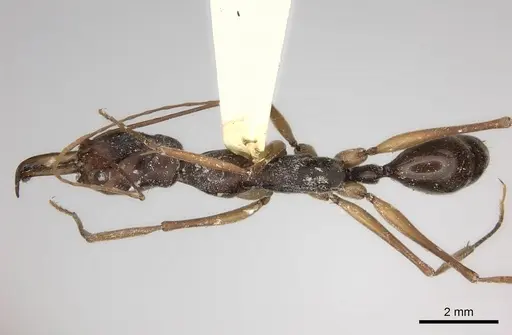
CASENT0270627
View on AntWeb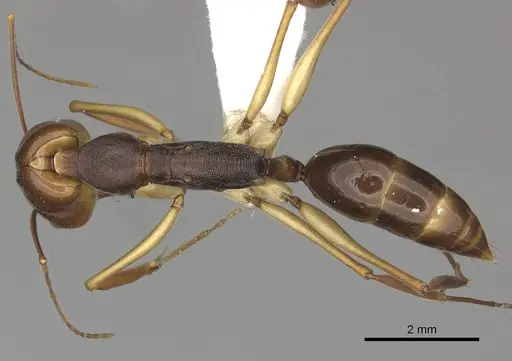
Literature
Loading distribution map...Loading products...