Odontomachus chelifer shows a January to November flight window. Peak activity occurs in March and April, with nuptial flights distributed across 8 months. This extended season suggests multiple flight events or varying conditions across its range.
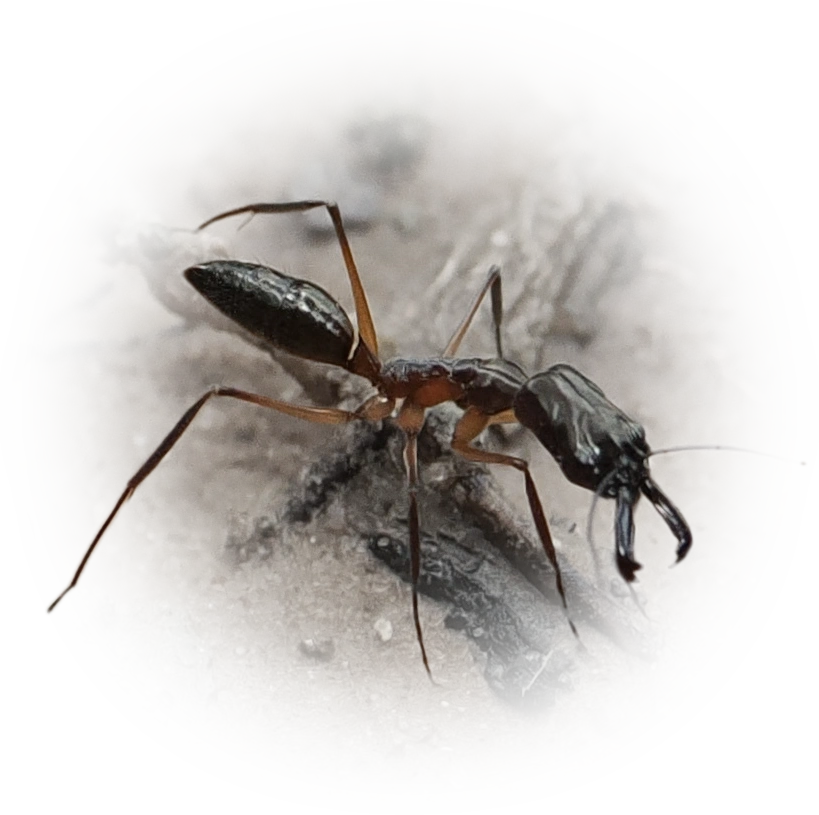
Odontomachus chelifer
- Sci. Name
- Odontomachus chelifer
- Tribe
- Ponerini
- Subfamily
- Ponerinae
- Author
- Latreille, 1802
- Distribution
- Found in 11 countries
- Nuptial Flight
- From January to November
- Peak flight Time
- 17:00
AI Identifiable
try →
Introduction
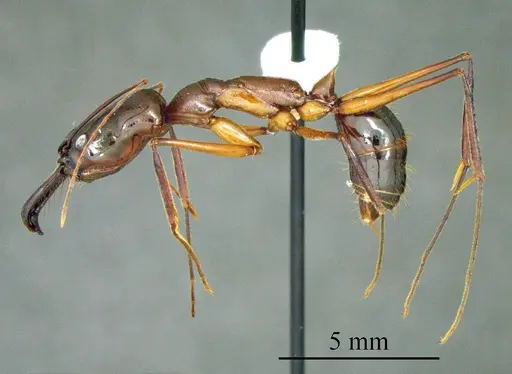
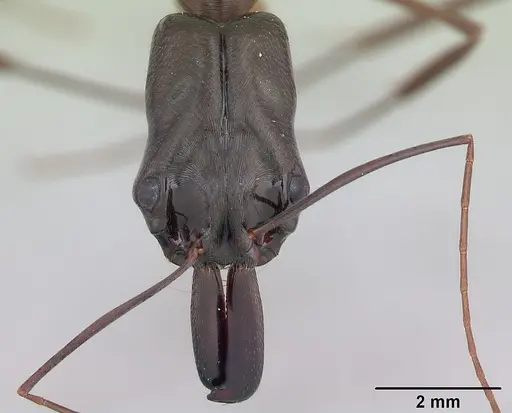
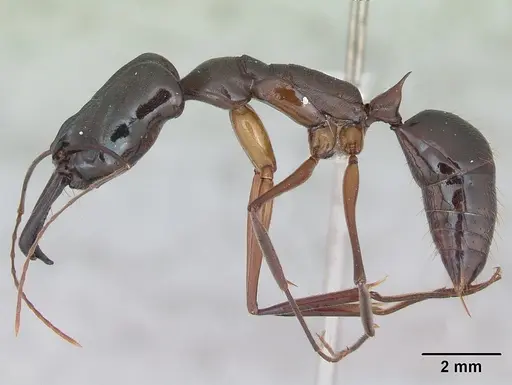
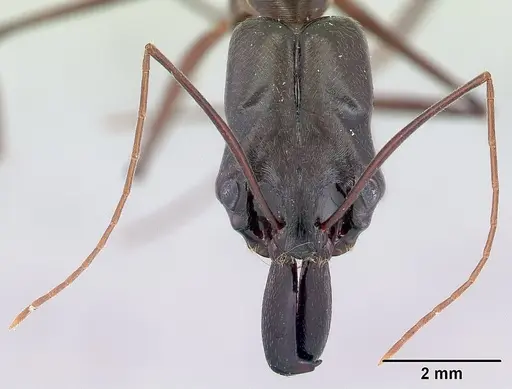
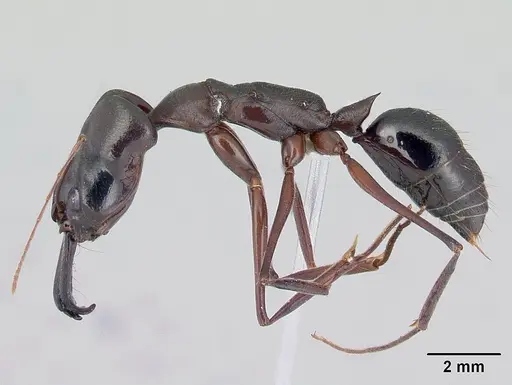
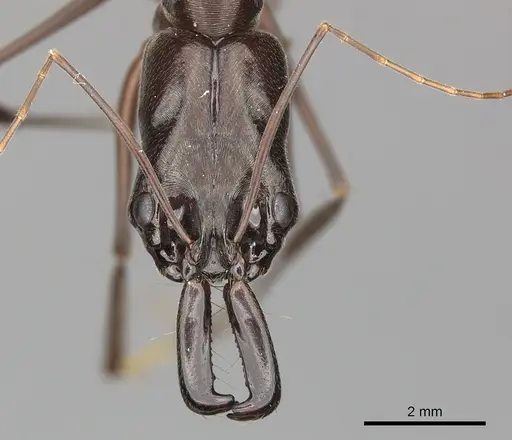
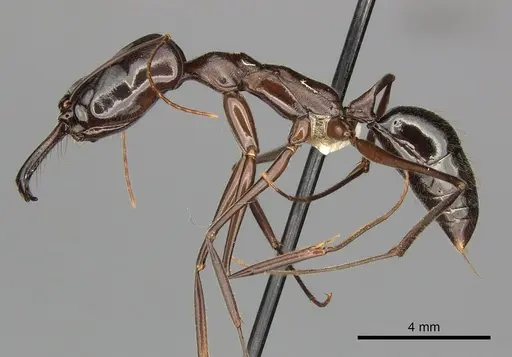
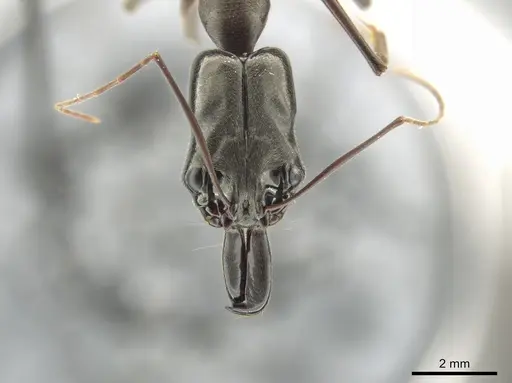
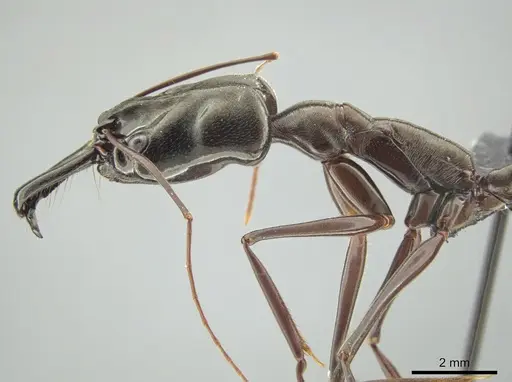
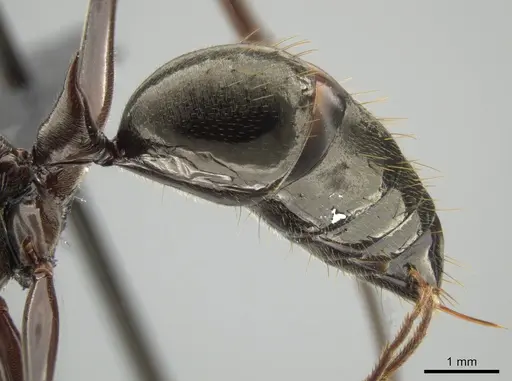
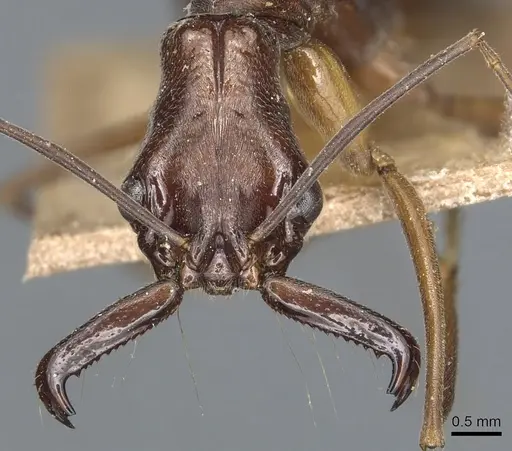
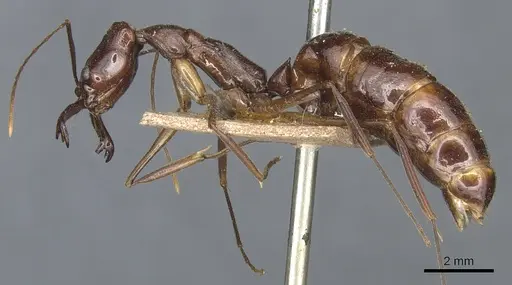
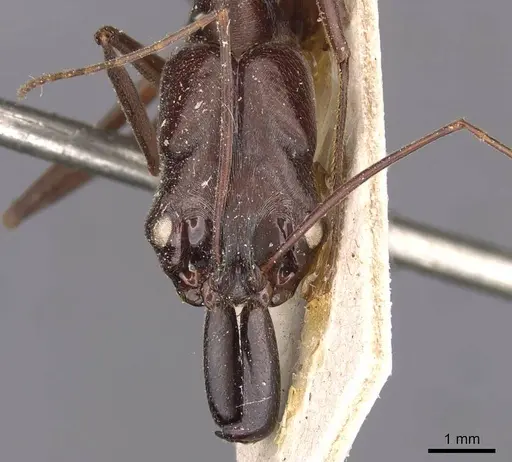
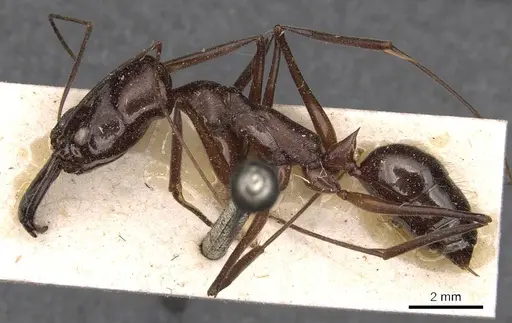
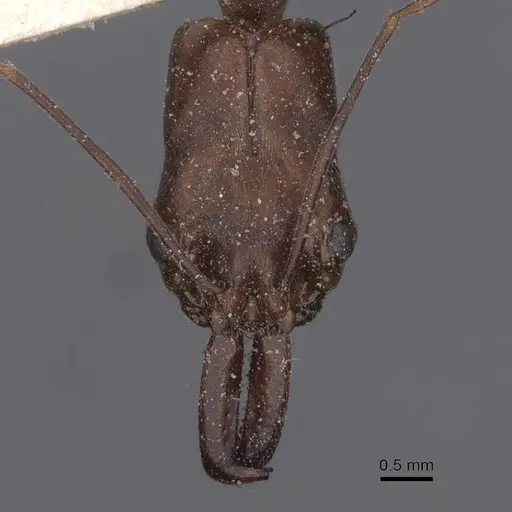
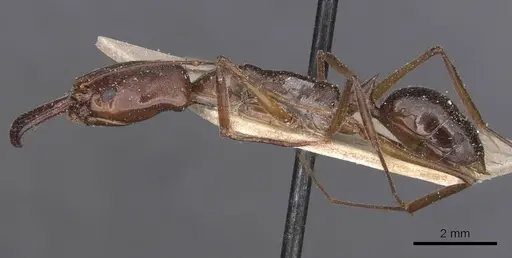
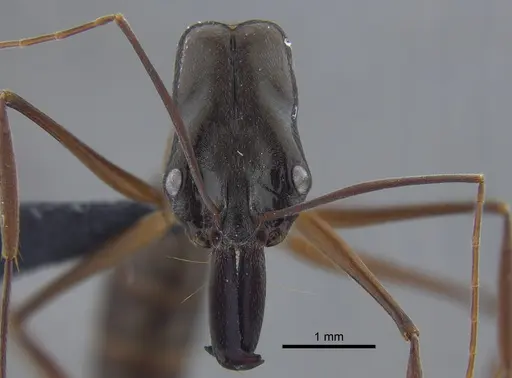
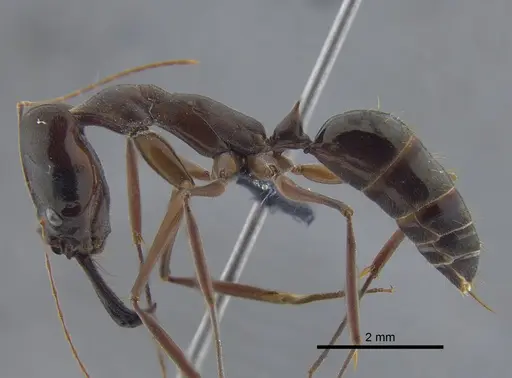
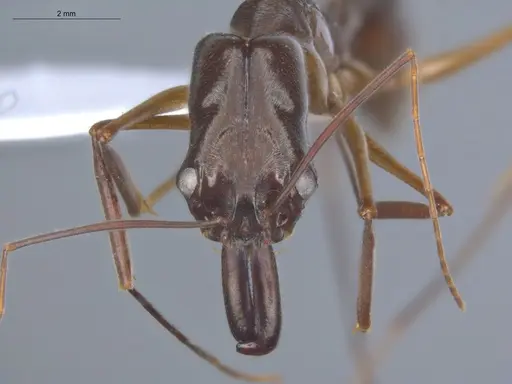
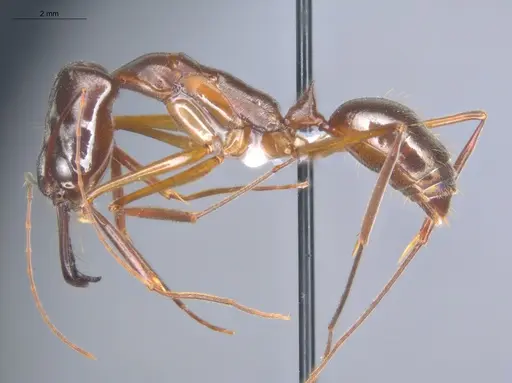
Odontomachus chelifer is one of the largest trap-jaw ant species in the Americas. Workers have a total length of 10.1-18.0 mm with a distinctive elongated head and massive trap-jaw mandibles that close at speeds over 35 m/s . The body is dark brown to black with yellowish or light brown appendages . This species is found across the Neotropical region from Mexico to Argentina, inhabiting humid forests in countries including Brazil, Colombia, and Costa Rica . Colonies are polygynous, meaning they contain multiple queens that establish dominance hierarchies through ritualized aggression . Beyond predation, these ants play a key ecological role as secondary seed dispersers in Atlantic forests, transporting fleshy fruits to their nests where larvae consume the arils and seeds are discarded intact .
Quick Summary
- Difficulty: Medium
- Origin & Habitat: Neotropical region from Mexico to Argentina, found in humid Atlantic forests, semi-deciduous forests, and coffee agroforestry landscapes [3][4]. They prefer shaded, humid environments with leaf litter and nest in the ground near tree roots [8][9].
- Colony Type: Polygynous colonies with multiple queens that establish a dominance hierarchy through ritualized aggressive interactions [5]. Colonies contain up to 864 workers in mature nests [9].
- Size & Growth:
- Queen: ~15.90-19.10 mm [1]
- Worker: ~10.1-18.0 mm [1]
- Colony: Up to 864 workers [9]
- Growth: Moderate
- Development: Approximately 6-10 weeks, inferred from typical Ponerinae patterns (Development time is not directly studied for this species, based on related ponerine ants. Larval development improves with lipid-rich seed arils [10].)
- Antkeeping:
- Temperature: Keep warm, roughly 24-28°C, based on their tropical habitat [11]. Temperature needs are unclear, start around this range and observe activity.
- Humidity: Keep nest substrate consistently moist but not waterlogged, as they inhabit humid forest floors [11].
- Diapause: No true diapause, activity decreases during cooler seasons [11].
- Nesting: Provide spacious nests with deep chambers or soil, mimicking natural nests that reach 80-134 cm deep with 24-77 chambers [9]. Use Y-tong, plaster, or soil-based formicaria.
- Behavior: Solitary nocturnal foragers that hunt individually at night [11]. They are aggressive predators with powerful trap-jaw mandibles that can disable prey without using their sting [2]. They avoid diurnal ants like Pachycondyla striata [11]. Not aggressive toward humans but can sting if handled roughly.
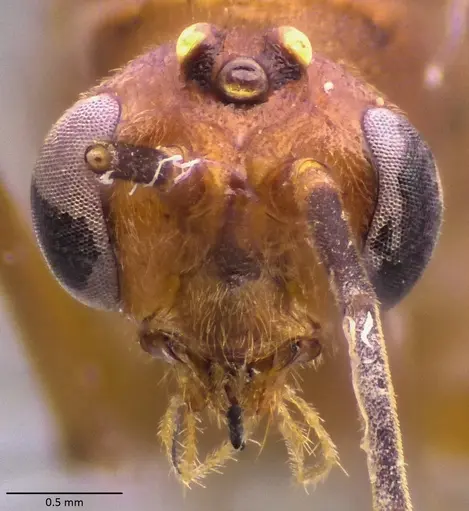
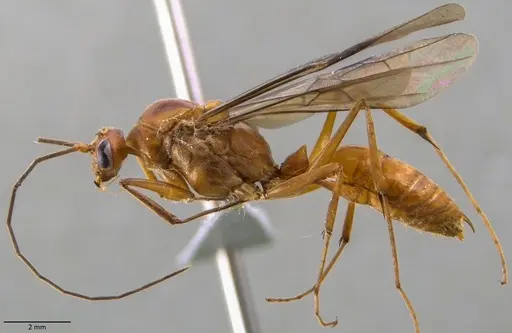
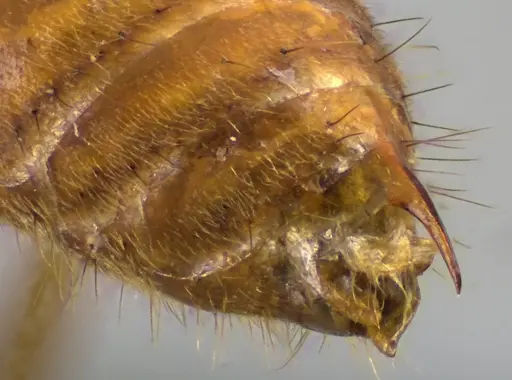
- Common Issues: colonies may fail if kept too dry, maintain consistent humidity [11], queen hierarchies can lead to aggression during establishment [5], slow founding phase due to unconfirmed founding behavior, wild-caught colonies may have parasites like eucharitid wasps [4], require live prey to thrive, cannot survive on sugar alone [11]
Nuptial Flight Activity Analysis 89 observations
Flight Activity by Hour 89 observations
Odontomachus chelifer nuptial flight activity peaks around 17:00 during the afternoon. Activity is spread across a 21-hour window (01:00–21:00). Times may be influenced by human observation patterns.
Housing and Nest Setup
Odontomachus chelifer requires spacious housing due to their large colony size and deep nesting habits. In nature, nests extend 80-134 cm deep with 24-77 chambers [9]. For captivity, provide a large formicarium with deep soil or multiple connected chambers. Keep the nest dark as they are nocturnal. Use a large outworld for foraging. Escape prevention is straightforward with standard barriers due to their size. Maintain humidity by misting the outworld regularly [11]. Note that founding behavior is unconfirmed, so observe new colonies for claustral or semi-claustral tendencies.
Feeding and Diet
These ants are primarily carnivorous predators that prefer termites and other soft-bodied arthropods [12][11]. In captivity, feed live insects like crickets, mealworms, or roaches, and especially termites when available. They are opportunistic scavengers [11]. Lipid-rich seed arils can supplement their diet and improve larval development [10]. Offer protein prey 2-3 times per week and sugar water or honey occasionally. They rarely forage on extra-floral nectaries [11].
Temperature and Seasonal Care
Maintain temperatures around 24-28°C, as they are tropical ants sensitive to cold [11]. Use a heating cable to create a gradient if needed. Activity decreases during cooler seasons, so reduce feeding in winter if temperatures drop. They do not require hibernation.
Colony Dynamics and Queen Behavior
Colonies are polygynous with multiple queens that establish dominance hierarchies through ritualized aggression [5]. Top-ranking queens lay the most eggs and have better-developed ovaries. Worker reproduction occurs occasionally, with eggs consumed as trophic eggs [5]. This structure can lead to faster colony growth once established.
Defense and Sting
Their trap-jaw mandibles deliver powerful strikes at speeds up to 53 m/s, capable of disabling prey without using their sting [2]. The venom has an LD50 of 37 mg/kg [13]. They are not aggressive toward humans but will defend if threatened. Use forceps when handling to avoid bites.
Ecological Role - Seed Dispersal
These ants disperse seeds by transporting fleshy diaspores to their nests, where larvae consume the arils and seeds are discarded intact [6][7]. They account for 27-35% of ant-fruit interactions in Atlantic forests and can displace seeds up to 13 m [14]. Nest soil is richer in nutrients, promoting seedling growth nearby [7]. In captivity, offer small fruits to observe this behavior.
Frequently Asked Questions
How long does it take for Odontomachus chelifer to produce first workers?
Based on typical Ponerinae patterns, approximately 6-10 weeks at optimal temperatures (24-28°C). Direct measurements for this species are not available. The claustral queen seals herself in and lives on stored fat reserves until workers emerge.
Can I keep multiple Odontomachus chelifer queens together?
Yes, this species is naturally polygynous, colonies commonly have multiple queens that coexist with a dominance hierarchy [5]. Introduce dealated queens together when starting a colony.
What do Odontomachus chelifer ants eat?
They are primarily carnivorous, preferring termites and other arthropods [11][12]. Feed live insects, dead insects, and occasional fruit arils to improve larval development [10].
Are Odontomachus chelifer good for beginners?
They are rated medium difficulty due to specific requirements: high humidity, warm temperatures, live prey, and spacious nesting. Not as forgiving as beginner species but manageable with experience.
How big do Odontomachus chelifer colonies get?
Mature colonies contain up to 864 workers [9]. Nest architecture in the wild includes 24-77 chambers reaching over a meter deep.
Do Odontomachus chelifer need hibernation?
No, they do not require true hibernation. Activity naturally decreases during cooler seasons [11]. Reduce feeding if room temperatures drop in winter.
Why are my Odontomachus chelifer dying?
Common causes include low humidity, temperatures below 24°C, insufficient live prey, or stress from disturbance. Wild-caught colonies may have parasites [4]. Ensure proper care conditions.
What temperature should I keep Odontomachus chelifer at?
Keep around 24-28°C, with a gradient if possible [11]. Avoid temperatures below 22°C to maintain activity.
When should I move Odontomachus chelifer to a formicarium?
Move them when the colony outgrows the founding setup, typically around 50+ workers. Use a spacious formicarium that allows for deep chamber creation.
When is the nuptial flight of Odontomachus chelifer?
The nuptial flight of Odontomachus chelifer typically occurs From January to November.
What time of day does Odontomachus chelifer fly?
The nuptial flight of Odontomachus chelifer peaks around 17:00 during the afternoon, with most activity between 01:00 and 21:00. Times may be influenced by human observation patterns.
Report an Issue
The current care sheet is based fully on literature. See inconsistencies, or something that's incorrect? Please , it will be resolved after review from an admin. Contributing to the blogs tab also helps providing information, to make us be able to further improve the caresheets. Thank you for your support!
References

This caresheet is licensed under CC BY-SA 4.0 .
Community Blogs
ANTWEB1041409
View on AntWeb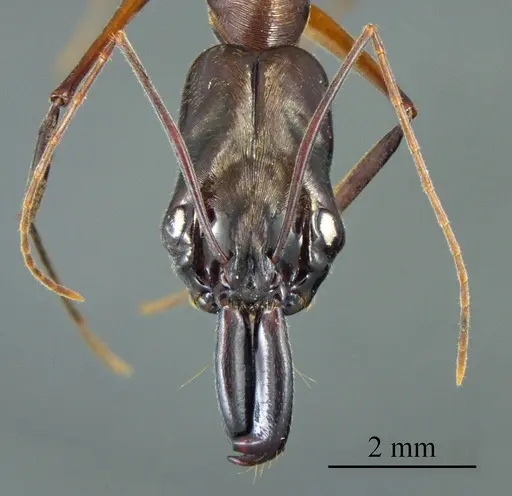
ANTWEB1060016
View on AntWeb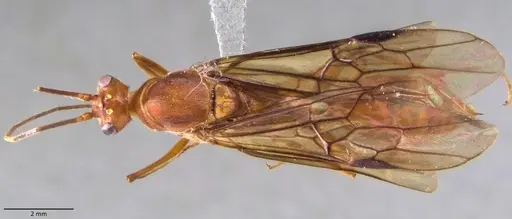
CASENT0173536
View on AntWeb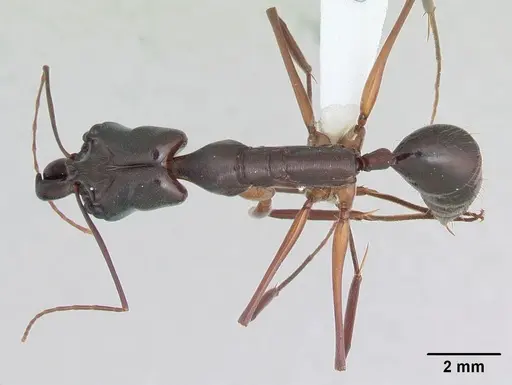
CASENT0178692
View on AntWeb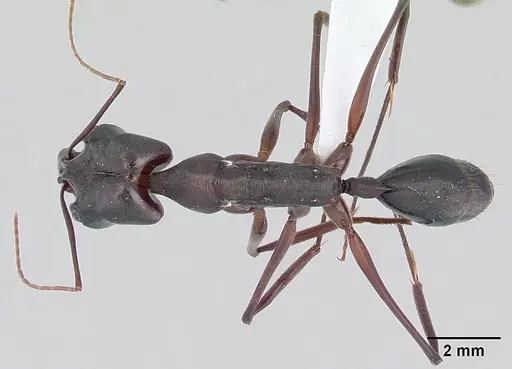
CASENT0270602
View on AntWeb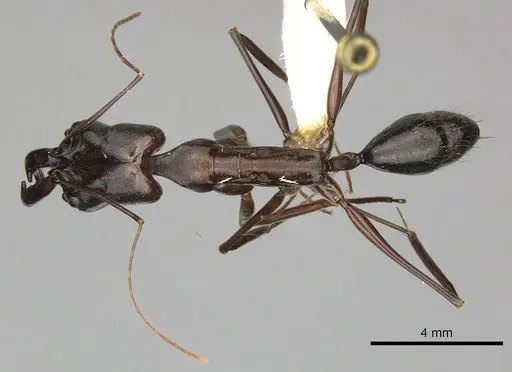
CASENT0649084
View on AntWeb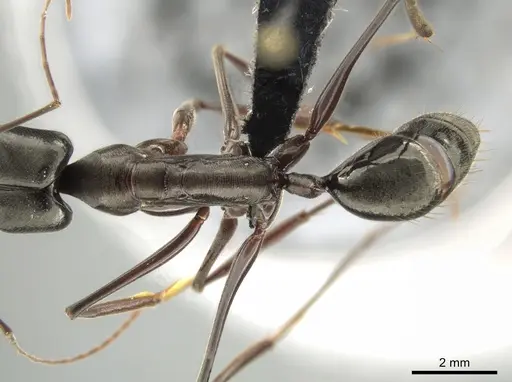
CASENT0904002
View on AntWeb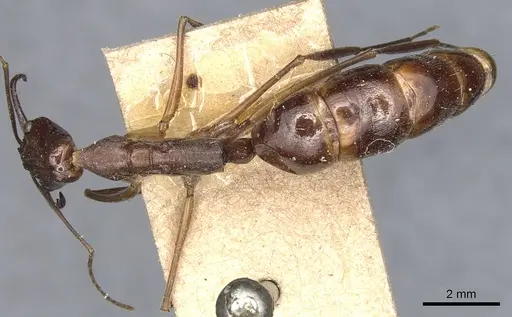
CASENT0907426
View on AntWeb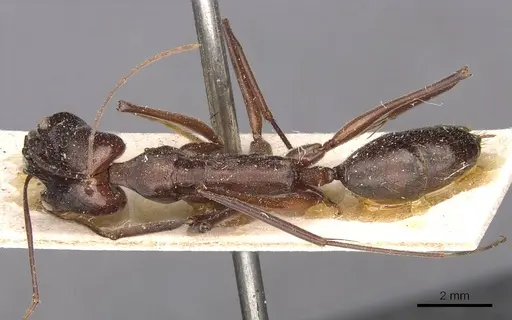
CASENT0915242
View on AntWeb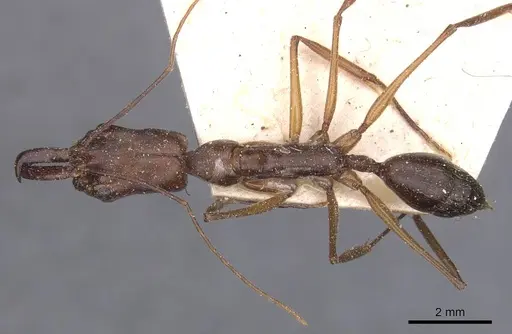
CBUMAGENT41706
View on AntWeb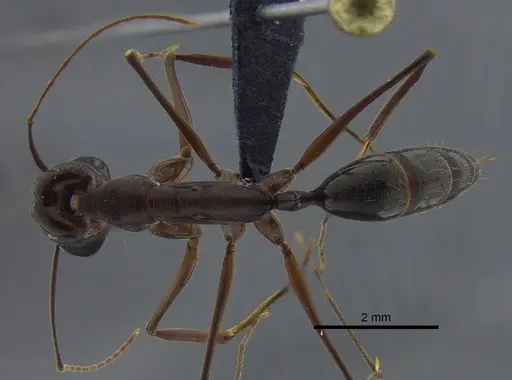
ECOFOG-IT14-0455-06
View on AntWeb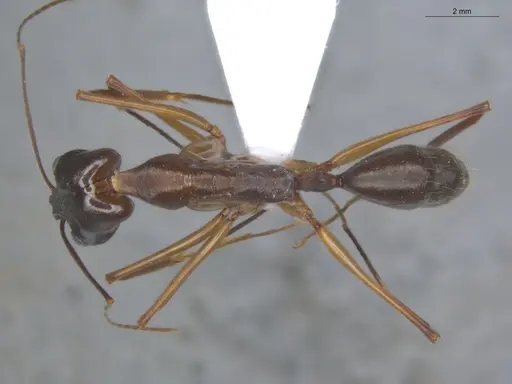
Literature
Loading distribution map...Loading products...