
Neoponera oberthueri
- Sci. Name
- Neoponera oberthueri
- Tribe
- Ponerini
- Subfamily
- Ponerinae
- Author
- Emery, 1890
- Distribution
- Found in 4 countries
Introduction
Neoponera oberthueri is a small predatory ant found across the northern Neotropical region, including Ecuador, Peru, Guyana, Brazil, Bolivia, and French Guiana. Workers measure approximately 5mm in total length and have a distinctive reddish-brown body with yellowish-brown mandibles, antennae, and legs. The species is recognized by its glossy mandibles and the unique shape of the petiole, which has its highest point near the apex. Queens are considerably larger at 11mm, while males are smaller at 7mm. This species belongs to the crenata species complex and was originally described as Pachycondyla oberthueri before being reclassified to Neoponera. Nothing is known about the biology of this species in the wild, making captive care largely speculative based on genus-level patterns .
Quick Summary
- Difficulty: Unknown, likely Medium to Hard due to limited species-specific data
- Origin & Habitat: Northern Neotropical region including Ecuador, Peru, Guyana, Brazil, Bolivia, and French Guiana. Collected at 550 meters elevation in lowland tropical forest areas [1][2][3].
- Colony Type: Unknown, colony structure has not been documented. Based on typical Neoponera genus patterns, likely single-queen colonies with claustral founding, but this is unconfirmed.
- Size & Growth:
- Queen: 11mm total length [1]
- Worker: 5mm total length [1]
- Colony: Unknown, no colony size data exists
- Growth: Unknown, no development data available
- Development: Unknown, no species-specific development data exists (No direct development data exists for this species. Estimates based on genus-level patterns for similar Neotropical Ponerinae would be speculative.)
- Antkeeping:
- Temperature: Keep around 24-28°C, aim for warm, stable tropical conditions. A gentle gradient allows workers to self-regulate.
- Humidity: High humidity preferred (70-85%). Keep substrate consistently moist but not waterlogged. Ponerine ants typically require damp conditions.
- Diapause: Unlikely, being a tropical species, they probably do not require true diapause. May show reduced activity during cooler periods.
- Nesting: Use a naturalistic setup or Y-tong/plaster nest with chambers scaled to their size. Provide damp substrate and minimal disturbance during founding.
- Behavior: Predatory ant with active hunting behavior. Uses sting for prey subdual and defense, exercise caution as Neoponera stings can be painful. Workers are moderately sized and active foragers. Their size (5mm workers) makes them moderate escape risks. Colonies are likely defensive when disturbed. Based on being prey of army ants (Eciton rapax and Eciton hamatum), they likely nest in soil on the forest floor and forage in leaf litter [2].
- Common Issues: no biological data exists, all care recommendations are speculative based on genus patterns, founding colonies are extremely difficult since nothing is known about queen behavior, prey acceptance is unknown, may require live prey similar to other ponerines, humidity requirements may be critical, avoid dry conditions, limited availability makes this species challenging to acquire and maintain
Appearance and Identification
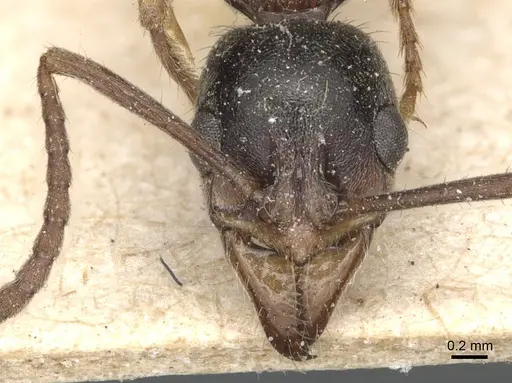
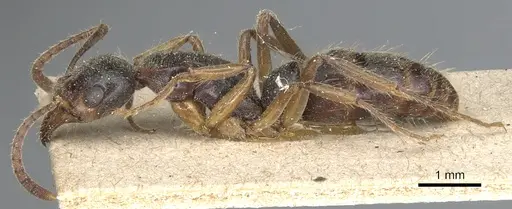
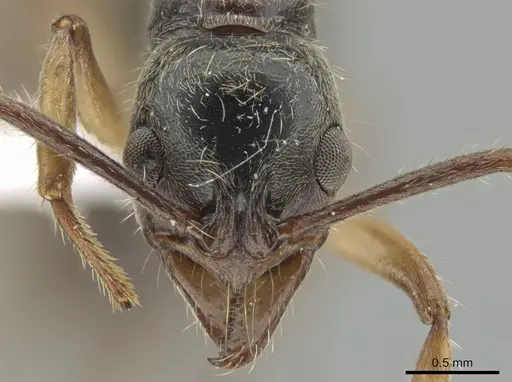
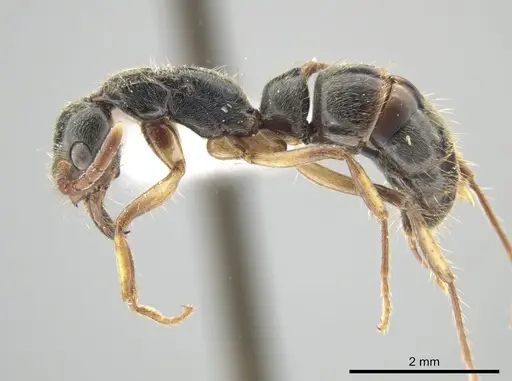
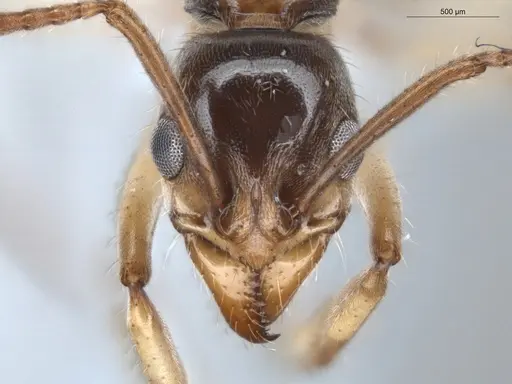
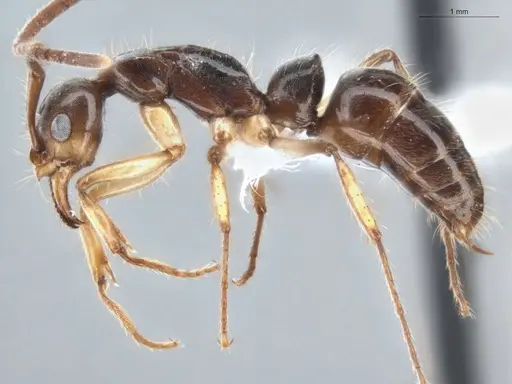
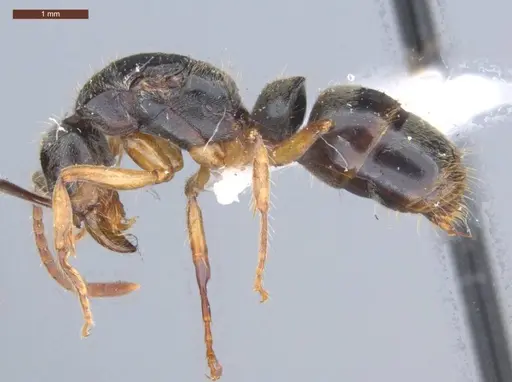
Neoponera oberthueri workers are small ants measuring about 5mm in total length. They have a distinctive reddish-brown body with lighter yellowish-brown mandibles, antennae, and legs. The mandibles are glossy with fine striations and approximately 12 teeth. The eyes are large and located less than one diameter from the anterior edge of the head. The petiole has a unique shape that distinguishes this species from relatives, the highest point is near the apex, and the posterior face is mostly convex. Queens are considerably larger at 11mm and similar in coloration to workers. Males are smaller at 7mm and yellowish-brown. The species can be distinguished from close relatives like Neoponera carinulata and Neoponera goeldii by the glossy (not striate) mandibles and the specific shape of the petiole [1].
Distribution and Habitat
This species has been recorded across the northern Neotropical region including Ecuador, Peru, Guyana, Brazil, Bolivia, and French Guiana. The known elevation is around 550 meters. In Ecuador, specimens have been collected in Orellana Province. In Peru, they were recorded 43 miles east of Tingo Maria. The specific habitat type is unknown, but being prey of army ants (Eciton rapax and Eciton hamatum) suggests they nest in soil on the forest floor and forage in leaf litter or on soil surfaces. The Neotropical distribution indicates they prefer warm, humid tropical conditions [2][3][1].
Feeding and Diet
As a member of the Ponerinae subfamily, Neoponera oberthueri is likely a predatory ant that hunts small invertebrates. The genus typically includes active predators that subdue prey with their sting. In captivity, offer small live prey such as fruit flies, small crickets, mealworms, and other appropriately-sized insects. Since nothing is specifically known about this species' diet, start with standard ponerine prey items and observe acceptance. Sugar sources are unlikely to be a significant part of their diet, though you can occasionally offer honey or sugar water to test acceptance. Given their small worker size (5mm), prey should be appropriately small, think fruit flies, springtails, and tiny crickets rather than large insects [1].
Temperature and Humidity Requirements
Being a Neotropical species from lowland tropical areas, Neoponera oberthueri requires warm and humid conditions. Aim for temperatures in the range of 24-28°C, which matches their natural tropical habitat. A heating cable on one side of the nest can create a temperature gradient, allowing workers to self-regulate. Humidity should be kept high, target 70-85% relative humidity. Keep the nest substrate consistently moist but not waterlogged. Ponerine ants typically thrive with damp conditions that mimic the tropical forest floor. Avoid temperature drops below 20°C and dry conditions, as these could stress or kill the colony. Room temperature in most homes may be too cool, consider supplemental heating [1].
Nesting and Colony Founding
Nothing is known about the natural nesting behavior of Neoponera oberthueri. Based on genus patterns and the fact that they are preyed upon by army ants, they likely nest in soil or under objects on the forest floor. For captive care, use a naturalistic setup with damp substrate or a Y-tong/plaster nest with appropriately-sized chambers. The queen founding type is unconfirmed, but most Neoponera species are claustral, the queen seals herself in a chamber and lives off stored fat until first workers emerge. Provide a founding queen with a small test tube setup with cotton-moistened water reservoir, placed in a dark, humid, and undisturbed location. Development time is unknown due to lack of species-specific data [1][2].
Behavior and Temperament
Neoponera ants are typically active predators with defensive tendencies. Workers are likely to be aggressive when the nest is disturbed and may use their sting for defense. Based on their being recorded as prey of army ants (Eciton rapax and Eciton hamatum), they are ground-dwelling ants that forage on the forest floor. Their moderate size (5mm workers) makes them less likely to escape than tiny ants, but standard escape prevention (fluon barriers, tight-fitting lids) should still be used. Exercise caution when working with this species, Neoponera stings can be painful. Queens are significantly larger than workers (11mm vs 5mm), which is important to account for when housing established colonies [2][1].
Frequently Asked Questions
How long does it take for Neoponera oberthueri to produce first workers?
Unknown, no development data exists for this species. Without species-specific research, any time estimate would be pure speculation.
What do Neoponera oberthueri ants eat?
Likely predatory like other Ponerinae, they probably hunt small invertebrates. In captivity, offer small live prey such as fruit flies, small crickets, and mealworms. Acceptance of sugar sources is unknown but likely minimal. Start with live prey and observe what they accept.
Can I keep multiple Neoponera oberthueri queens together?
Unknown, colony structure has not been documented for this species. Most Neoponera are single-queen, but polygyny cannot be ruled out. Do not combine unrelated foundress queens without documented evidence that this species tolerates pleometrosis.
Do Neoponera oberthueri ants sting?
Yes, Neoponera ants have a functional sting and can use it for prey subdual and defense. Exercise caution when handling and avoid disturbing the nest. Stings from Neoponera species can be painful.
What temperature do Neoponera oberthueri need?
Keep them warm at 24-28°C. This tropical species requires consistent warmth. A heating cable on part of the nest can create a gradient. Avoid temperatures below 20°C.
Are Neoponera oberthueri good for beginners?
No, this species is not recommended for beginners. Nothing is known about its biology, making care highly speculative. The complete lack of documented captive husbandry means significant trial and error is required. Only experienced antkeepers should attempt this species.
How big do Neoponera oberthueri colonies get?
Unknown, no colony size data exists for this species. Based on worker size and genus patterns, colonies likely reach several hundred workers at most, but this is purely estimated.
Do Neoponera oberthueri need hibernation?
Unlikely, being a tropical species from the Neotropics, they probably do not require a true diapause. However, they may show reduced activity during cooler periods. Maintain warm conditions year-round.
What humidity level do Neoponera oberthueri require?
High humidity (70-85%) is likely required. Keep the nest substrate consistently moist but not waterlogged. This mimics the damp conditions of their tropical forest floor habitat.
Where is Neoponera oberthueri found?
Northern South America, Ecuador, Peru, Guyana, Brazil, Bolivia, and French Guiana. They live in lowland tropical areas around 550 meters elevation. Specimens have been found in the Amazon basin region.
Report an Issue
The current care sheet is based fully on literature. See inconsistencies, or something that's incorrect? Please , it will be resolved after review from an admin. Contributing to the blogs tab also helps providing information, to make us be able to further improve the caresheets. Thank you for your support!
References

This caresheet is licensed under CC BY-SA 4.0 .
Community Blogs
CASENT0903886
View on AntWeb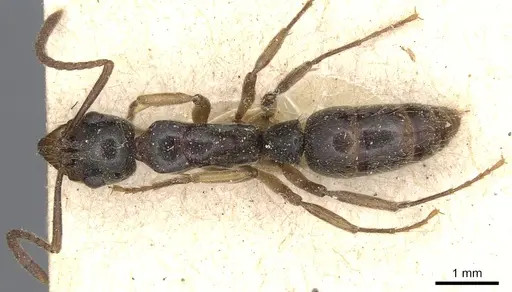
DZUP549437
View on AntWeb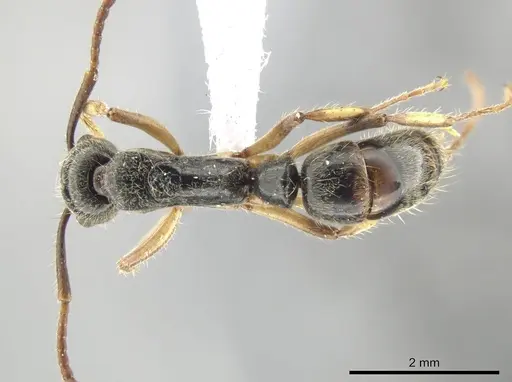
ECOFOG-MAI19-0030-10
View on AntWeb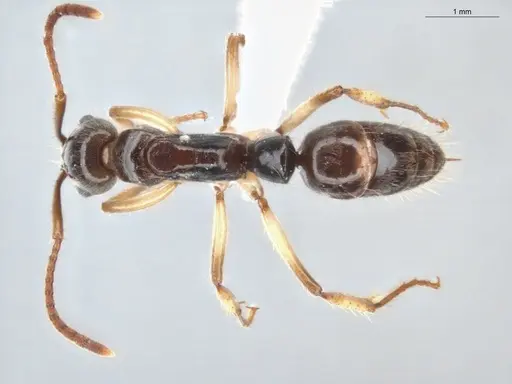
ECOFOG-SL13-1064-21
View on AntWeb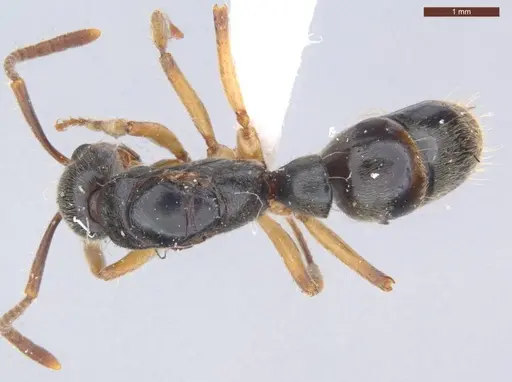

Literature
Loading distribution map...Loading products...