
Lasius nipponensis
- Sci. Name
- Lasius nipponensis
- Tribe
- Lasiini
- Subfamily
- Formicinae
- Author
- Forel, 1912
- Distribution
- Found in 1 countries
Introduction
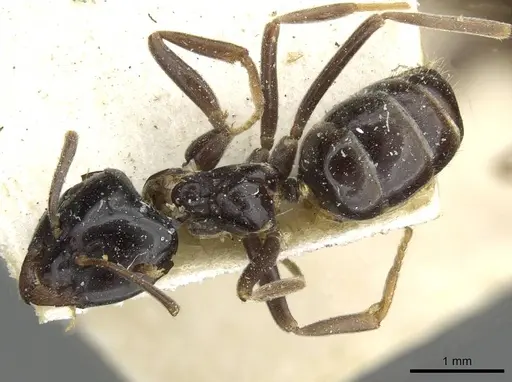
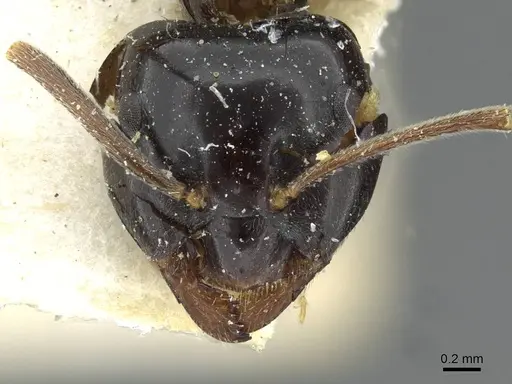
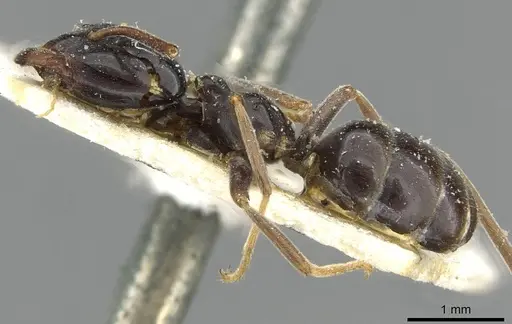
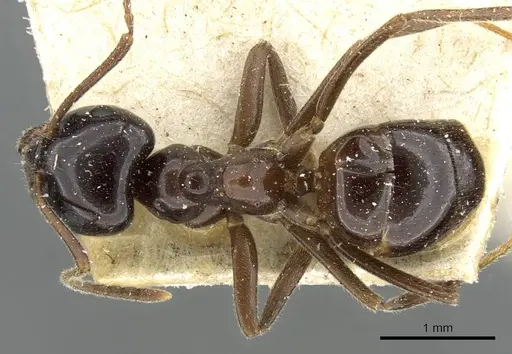
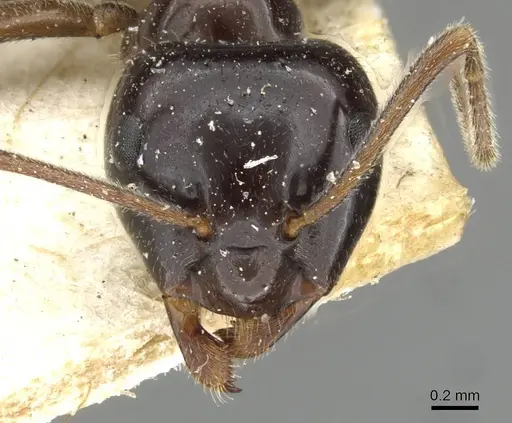
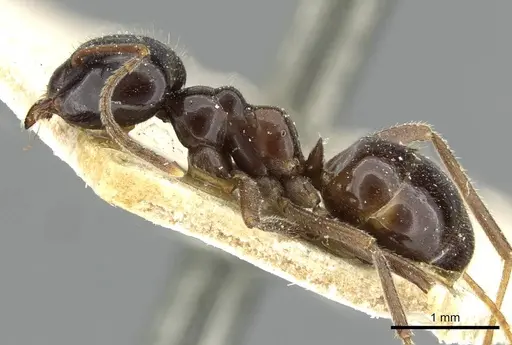
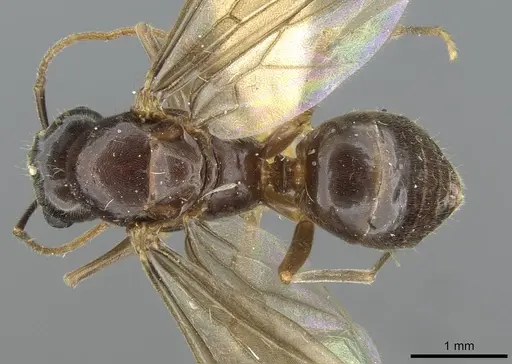
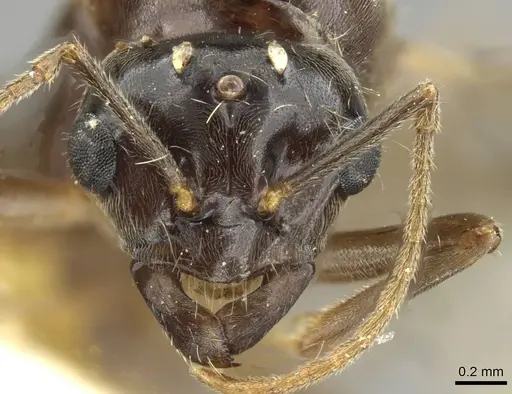
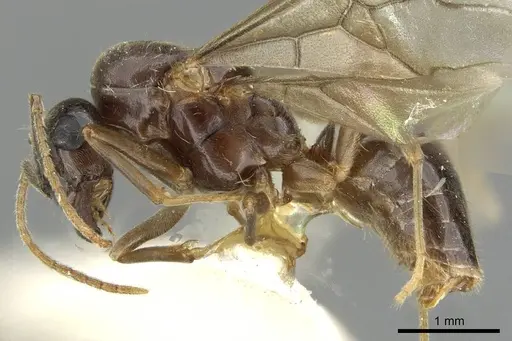
Lasius nipponensis is a jet-black ant from East Asia, measuring 4-5 mm as workers . Its most distinctive feature is the petiole, which looks like an inverted U when seen from the side, with a small notch at the top from the front . It belongs to the subgenus *Dendrolasius* and is found across Japan (Hokkaido, Honshu, Shikoku), the Korean Peninsula, the Russian Far East, Taiwan, and southern China . Historically, it was mistaken for the European *Lasius fuliginosus*, but it is now recognized as a separate species . The really unusual thing about this ant is how it starts colonies. Instead of founding alone, the queen is a temporary social parasite. She must invade a colony of a different *Lasius* species (from the subgenus *Chthonolasius*), kill the host queen, and trick the host workers into raising her own brood . This makes keeping them in captivity very different from most ants.
Quick Summary
- Difficulty: Expert
- Origin & Habitat: Native to East Asia: Japan, Korean Peninsula, Russian Far East (Primorsky Region), Taiwan, and southern China. Occupies forests and urban areas where host *Lasius* (subgenus *Chthonolasius*) are present [2][3][1].
- Colony Type: Temporary social parasite. A mated queen invades a host colony, kills the host queen, and uses the host workers to raise her first brood. Over time, her own workers replace the host ones.
- Size & Growth:
- Queen: Not directly measured, inferred from related *Lasius* species to be roughly 6-8 mm
- Worker: 4-5 mm [1]
- Colony: Not well documented, based on related Lasius fuliginosus, likely up to several thousand workers at maturity
- Growth: Moderate (depends on successful host takeover)
- Development: Unknown for this species, estimated 6-10 weeks based on related *Lasius* species at 20-24 °C (Development happens inside the host colony after the parasite queen has taken over. Host workers care for the brood.)
- Antkeeping:
- Temperature: Keep at 20-24 °C during the active season. Avoid sudden temperature swings.
- Humidity: Moderate moisture – standard test tube or soil nesting setups work. Keep the nest substrate slightly damp but not wet.
- Diapause: Yes. As a temperate species, it needs a winter cooling period. Reduce to 5-10 °C for 2-3 months (typically November to February).
- Nesting: You cannot use a standard founding setup. You need a healthy host colony of a *Lasius* species from the subgenus *Chthonolasius* (e.g., Lasius japonicus). The parasite queen must be introduced to it. Once established, the colony can be kept in a standard formicarium with moderate humidity.
- Behavior: Workers are active and known to tend aphids on trees in the Kanto district of Japan [1]. They are not particularly aggressive. There is a record of a myrmecophilous cricket (*Myrmecophilus* sp.) moving between this species and Formica japonica [4]. The parasitic lifestyle means colony dynamics are complex. Escape risk is moderate – standard barriers (baby powder/oil mix) work for 4-5 mm ants.
- Common Issues: you must obtain a suitable host colony – only *Lasius* species from the subgenus *Chthonolasius* will accept the parasite queen., queen introduction often fails, the host workers may reject or kill her. A large, healthy host colony (50+ workers) improves chances., the colony cannot survive without a host for the initial takeover – you cannot start from a lone queen., the transition period from host workers to parasite workers can take many months, and the colony may collapse during this time., this species is rarely available and hard to acquire, even experienced keepers find it challenging.
Understanding Temporary Social Parasitism
Most ant queens start colonies alone – they seal themselves in a chamber and raise their first workers without eating (claustral founding). Lasius nipponensis cannot do this. Instead, a newly mated queen must find an established colony of a host ant from the Chthonolasius subgenus. She enters the nest, locates the resident queen, and kills her. The host workers, now orphaned, accept the invader as their new queen and raise her brood [1]. Over the following months, the parasite's own workers gradually replace the host workers, and the colony switches to a pure L. nipponensis colony.
For antkeepers, this means you absolutely need a host colony to start. You can't just buy a single queen and put her in a test tube. The host colony should be strong (at least 50-100 workers) and from the right subgenus (Chthonolasius). In Japan, species like Lasius japonicus are common hosts. The introduction is delicate and often fails – even experienced keepers find this step challenging.
Housing and Colony Establishment
Setting up this species requires two things: a healthy host colony and a mated parasite queen. The host colony should already be established with a queen and at least 50 workers. The parasite queen must be introduced gradually – you can place her near the nest entrance or use a small container that connects to the host nest, allowing workers to get used to her smell. Some keepers use a 'soft introduction' by chilling the host colony slightly to reduce aggression, but this is risky.
Once accepted, the colony can eventually be housed in a standard Lasius setup – a test tube for the early phase, then moving to a plaster or soil formicarium as the colony grows. The nest should be kept humid (damp but not flooded) and at 20-24 °C. Remember that the first few months the nest will be full of host workers, not the parasite species. Be patient – the replacement takes time.
Feeding and Nutrition
In the wild, Lasius nipponensis workers are often seen tending aphids on trees, especially in the Kanto district of Japan [1]. They collect honeydew, the sugary liquid aphids produce. In captivity, offer sugar water or honey a few times a week. For protein, give them small insects like fruit flies, crickets, or mealworm pieces. They need protein to grow the brood.
Since the colony starts with host workers, feed whatever the host species was already eating. Once the parasite's own workers appear, they will accept the same foods. Remove leftovers after a day to avoid mold.
Seasonal Care and Overwintering
This ant comes from temperate East Asia, so it needs a winter dormancy (diapause). In autumn, gradually lower the temperature over a few weeks to around 5-10 °C. Keep the colony cool for about 2-3 months – typically from November through February. Make sure the nest doesn't dry out completely during this period, provide a little moisture. After winter, warm them up slowly.
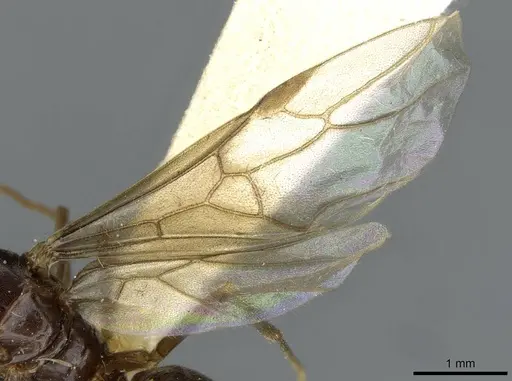
Nuptial flights happen in June and July [1]. If your colony is healthy and large enough, you might see alates (winged queens and males) during these months. They will need a space to fly, or you can clip their wings for artificial insemination, but that's advanced.
Frequently Asked Questions
Can I start a Lasius nipponensis colony from a single queen?
No. Lasius nipponensis is a temporary social parasite – it cannot found a colony alone. The queen must invade a host colony (a Lasius from the Chthonolasius subgenus) and take it over. You need both a mated queen and a suitable host colony.
What host species do I need for Lasius nipponensis?
You need a colony of a Lasius species from the subgenus Chthonolasius. In Japan, common hosts include Lasius japonicus and related species. The parasite queen only targets these ants – she will be rejected by other Lasius subgenera or different genera [1].
How do I introduce the parasite queen to the host colony?
Introduction is delicate. Place the queen near the host colony's entrance and let the workers find her gradually. Some keepers use a small container with a mesh or a tube connecting to the host nest so workers can interact slowly. A larger host colony (50+ workers) increases the chance of acceptance. Expect failures – it's normal.
Are Lasius nipponensis good for beginners?
No. This is an expert-level species because of its parasitic lifestyle. You must maintain a host colony and manage a risky introduction. Most beginners should start with easier Lasius species like Lasius niger or Lasius flavus.
How long does it take for the colony to become fully established?
After the queen is accepted, the host workers raise the first parasite brood. Those workers emerge over several weeks. Over the next months to a year, the host workers gradually die off and are replaced by L. nipponensis workers. Full replacement can take a year or more.
What do Lasius nipponensis eat?
They love sugary liquids – honeydew from aphids in the wild, or sugar water/honey in captivity. They also need protein from small insects like fruit flies or crickets. Feed a balanced diet similar to other Lasius species.
Where is Lasius nipponensis found in the wild?
It lives in East Asia: Japan (Hokkaido, Honshu, Shikoku, Kyushu), the Korean Peninsula, the Russian Far East (Primorsky Region), Taiwan, and southern China [2][3][1]. It was once confused with the European Lasius fuliginosus but is now recognized as a separate species.
Do Lasius nipponensis need hibernation?
Yes. As a temperate species, they need a winter cooling period. Reduce the temperature to 5-10 °C for 2-3 months (typically November to February) to mimic natural conditions. This helps maintain colony health and future reproduction.
How big do Lasius nipponensis colonies get?
The exact colony size is not recorded, but related Lasius fuliginosus colonies can reach several thousand workers. With good care, expect a moderately large colony over several years.
Report an Issue
The current care sheet is based fully on literature. See inconsistencies, or something that's incorrect? Please , it will be resolved after review from an admin. Contributing to the blogs tab also helps providing information, to make us be able to further improve the caresheets. Thank you for your support!
References

This caresheet is licensed under CC BY-SA 4.0 .
Community Blogs
Literature
Loading distribution map...Loading products...