
Iridomyrmex galbanus
- Sci. Name
- Iridomyrmex galbanus
- Tribe
- Leptomyrmecini
- Subfamily
- Dolichoderinae
- Author
- Shattuck, 1993
- Distribution
- Found in 1 countries
Introduction
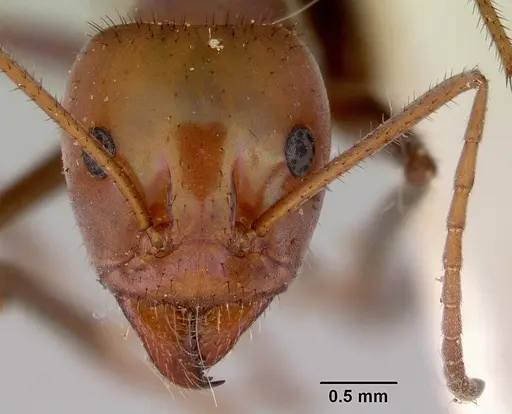
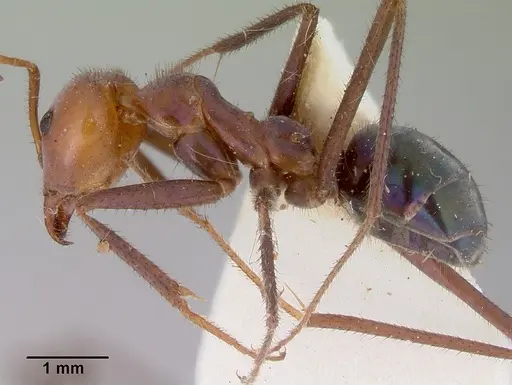
Iridomyrmex galbanus is an Australian dolichoderine ant known for its striking appearance. Workers are medium-sized, approximately 4-8mm in total length based on Iridomyrmex genus patterns . The species displays a distinctive color pattern: the head is orange while the mesosoma is brownish-orange, and both body regions feature pink, green, and yellow-green iridescence. The gaster is black with bright bluish-green and purple iridescence, creating a visually striking contrast . This species is mainly confined to the Eyre Peninsula of South Australia, with scattered populations in south-eastern South Australia and western Victoria . It appears to favor certain soil types, which likely influences where it establishes nests in the wild . The iridescence is shared with its close relative Iridomyrmex viridiaeneus, but I. galbanus can be distinguished by its distinctly lighter head capsule compared to the mesosoma .
Quick Summary
- Difficulty: Unknown, limited captive care data available
- Origin & Habitat: Endemic to South Australia (Eyre Peninsula and south-eastern regions) and western Victoria. Found in areas with specific soil types [1].
- Colony Type: Colony structure is unconfirmed, no research found on queen number or colony organization for this species.
- Size & Growth:
- Queen: Unconfirmed, no queen measurements available in literature
- Worker: ~4-8mm, inferred from Iridomyrmex genus patterns [1]
- Colony: Unconfirmed, no colony size data available
- Growth: Unknown, no development data for this species
- Development: Unknown, no direct measurements available. (No specific development data exists for this species.)
- Antkeeping:
- Temperature: Unconfirmed for this species. Based on its Australian distribution (southern temperate regions), aim for moderate temperatures around 20-25°C with a gradient. Adjust based on colony activity.
- Humidity: Unconfirmed, no specific humidity data. Based on typical Iridomyrmex preferences and Australian habitat, provide moderate humidity with a moist but not waterlogged nest substrate. Allow for some drier areas.
- Diapause: Likely, southern Australian species probably experience winter dormancy. Provide a cool period (10-15°C) during austral winter (roughly June-August in the Southern Hemisphere).
- Nesting: No specific nesting data. Most Iridomyrmex species nest in soil, often under stones or in disturbed areas. A standard formicarium with soil or plaster nesting medium would be appropriate. Provide chambers scaled to their medium size.
- Behavior: No specific behavior studies for this species. Most Iridomyrmex are aggressive defenders of their territory and forage actively for honeydew, nectar, and small insects. This species lacks a functional sting, like other Dolichoderinae, it defends by secreting defensive chemical compounds from a slit-like opening at the tip of the abdomen. Escape prevention should be moderate, their size is manageable but they are active and may attempt to escape. Monitor colony temperament as they establish.
- Common Issues: limited data means care requirements are estimated rather than confirmed, no documented founding behavior, unknown if claustral or semi-claustral, no confirmed diet preferences, must infer from genus patterns, hibernation requirements are estimated based on geographic origin, no information on queen reproduction or colony founding in captivity
Appearance and Identification
Iridomyrmex galbanus is a medium-sized ant, approximately 4-8mm in total length based on Iridomyrmex genus patterns [1]. The species gets its name from its distinctive coloration, 'galbanus' means greenish-yellow in Latin, referring to the iridescent quality of the cuticle. The head capsule is distinctly lighter (orange) than the mesosoma (brownish-orange), which helps distinguish it from the similar Iridomyrmex viridiaeneus where the head and mesosoma are similar in color [1]. Both the head and mesosoma display pink, green, and yellow-green iridescence, while the gaster is black with bright bluish-green and purple iridescence. The legs are brown, and the erect setae are dark brown [1]. This iridescence is characteristic of many Iridomyrmex species and can be quite striking under good lighting.
Natural Distribution and Habitat
This species has a relatively restricted distribution in southern Australia. It is mainly found on the Eyre Peninsula of South Australia, which is a semi-arid region with Mediterranean-style climate. Scattered populations also occur in south-eastern South Australia and western Victoria [1]. The species appears to favor certain soil types, though the specific preferences have not been detailed in available literature [1]. This soil preference likely influences nest site selection in the wild. The distribution pattern suggests the species has adapted to specific environmental conditions in these regions, which should be considered when attempting captive husbandry.
Housing and Nesting
Since specific nesting data is unavailable for Iridomyrmex galbanus, care recommendations must be based on typical Iridomyrmex husbandry. These ants generally nest in soil in the wild, often in disturbed areas or under stones. For captivity, a standard formicarium with a soil or plaster nesting chamber works well. The nesting area should be dark with chambers sized appropriately for medium-sized workers. The outworld should allow for foraging space. Provide a water tube for humidity and ensure the nest material stays slightly moist but not saturated. As this is a medium-sized species, escape prevention should be moderate, they are not tiny enough to require fine mesh but are active enough to find gaps in poorly sealed setups.
Feeding and Diet
No specific dietary studies exist for Iridomyrmex galbanus. However, Iridomyrmex species are typically omnivorous, feeding on honeydew from aphids and scale insects, nectar from flowers, and small insects for protein. In captivity, offer a varied diet including sugar water or honey as an energy source, and protein sources such as small insects (fruit flies, small crickets, mealworms). Most Iridomyrmex readily accept sugar water and will hunt small prey. Feed protein 2-3 times per week and provide constant access to sugar sources. Remove uneaten prey after 24 hours to prevent mold.
Temperature and Seasonal Care
The exact temperature requirements for I. galbanus have not been studied. Based on its distribution in southern Australia (temperate to semi-arid regions), the species likely tolerates a range of conditions. Aim for a temperature gradient of 20-25°C in the nest area, with the warmer end around 25°C to support brood development. Room temperature in the low 20s°C is likely suitable. A heating cable on one side of the nest can create a gradient if needed. Regarding seasonal care, southern Australian species experience winter. Provide a cool period during the austral winter (roughly June-August) at around 10-15°C. This simulates natural seasonal cycles and may support healthier colony development.
Defense Mechanism
Iridomyrmex galbanus belongs to the subfamily Dolichoderinae, which lacks a functional sting. Instead, this species defends itself by secreting defensive chemical compounds from a slit-like opening at the tip of the abdomen. This is a common defense mechanism among Dolichoderine ants, often described as a smear defense as the ant rubs its abdomen against surfaces or predators to distribute the chemicals.
Colony Development and Growth
No specific development data exists for Iridomyrmex galbanus. The founding behavior (whether claustral or semi-claustral) is unconfirmed. Colony size in the wild is unknown. For captive colonies, expect slow initial growth during the founding phase (first few months), followed by steady growth once the first workers (nanitics) emerge.
Frequently Asked Questions
How long does it take for Iridomyrmex galbanus to produce first workers?
The egg-to-worker timeline is unconfirmed for this species. No specific development data exists.
What do Iridomyrmex galbanus ants eat?
No species-specific dietary data exists. Based on genus patterns, they likely feed on honeydew, nectar, and small insects. In captivity, offer sugar water or honey for energy and small insects (fruit flies, pinhead crickets, mealworms) for protein.
What temperature should I keep Iridomyrmex galbanus at?
Temperature requirements are unconfirmed. Based on its southern Australian distribution, aim for 20-25°C with a gradient. Room temperature in the low 20s°C is likely appropriate. Adjust based on colony activity.
Do Iridomyrmex galbanus need hibernation?
Likely yes, southern Australian species experience winter. Provide a cool period around 10-15°C during the austral winter (roughly June-August in the Southern Hemisphere).
How big do Iridomyrmex galbanus colonies get?
Colony size is unconfirmed. No data exists on maximum colony size for this species.
Is Iridomyrmex galbanus good for beginners?
Difficulty level is unknown due to limited data. This species is not commonly kept in captivity, and care requirements are largely inferred from genus patterns rather than confirmed. Experienced antkeepers familiar with Iridomyrmex species would be better suited to attempt this species.
Can I keep multiple Iridomyrmex galbanus queens together?
Colony structure is unconfirmed. No data exists on whether this species is monogyne (single queen) or polygyne (multiple queens). Combining unrelated queens is not recommended without specific data.
What type of nest should I use for Iridomyrmex galbanus?
No specific nesting data exists. Based on typical Iridomyrmex preferences, a formicarium with soil or plaster nesting material works well. Provide dark chambers scaled to their medium size with moderate humidity.
Where is Iridomyrmex galbanus found in the wild?
This species is endemic to southern Australia, primarily the Eyre Peninsula of South Australia, with scattered populations in south-eastern South Australia and western Victoria [1].
Report an Issue
The current care sheet is based fully on literature. See inconsistencies, or something that's incorrect? Please , it will be resolved after review from an admin. Contributing to the blogs tab also helps providing information, to make us be able to further improve the caresheets. Thank you for your support!
References

This caresheet is licensed under CC BY-SA 4.0 .
Community Blogs
CASENT0172038
View on AntWeb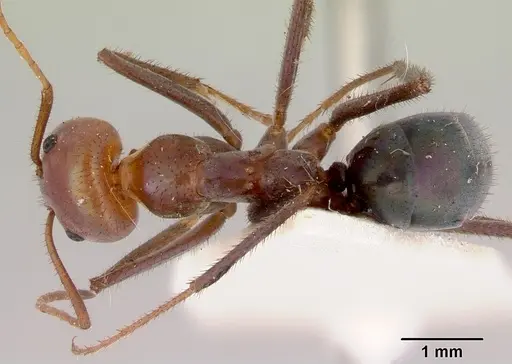
Literature
Loading distribution map...Loading products...