
Aphaenogaster relicta
- Sci. Name
- Aphaenogaster relicta
- Tribe
- Stenammini
- Subfamily
- Myrmicinae
- Author
- Wheeler & Mann, 1914
- Distribution
- Found in 1 countries
Introduction
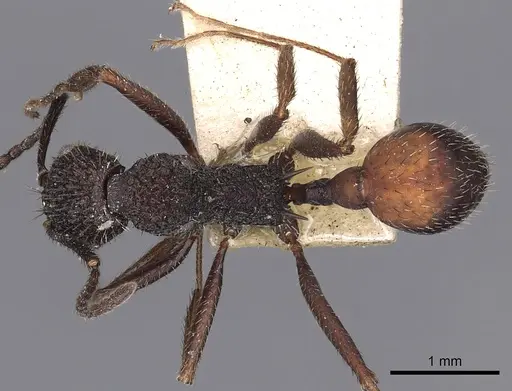
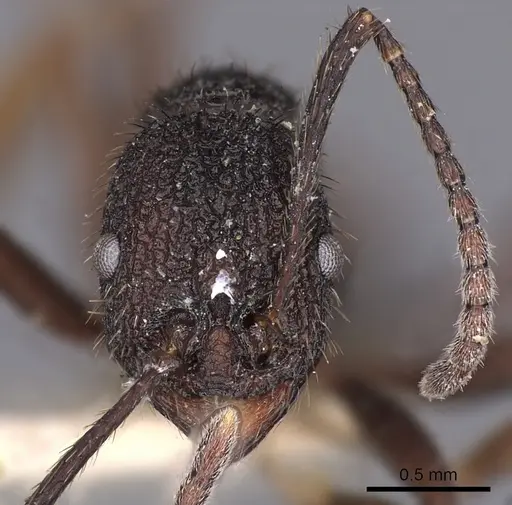
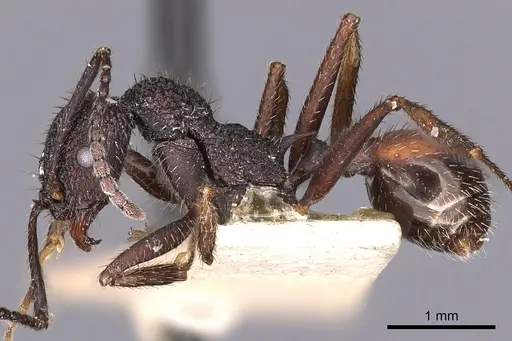
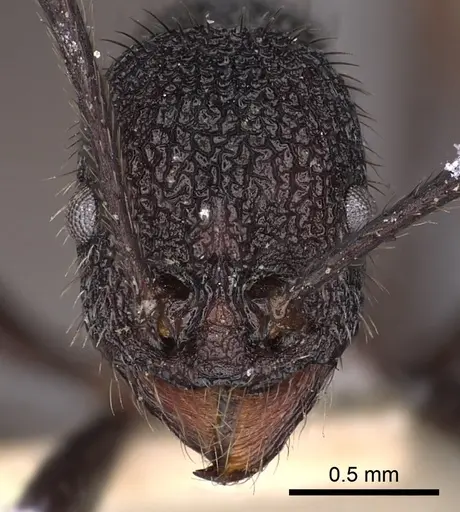
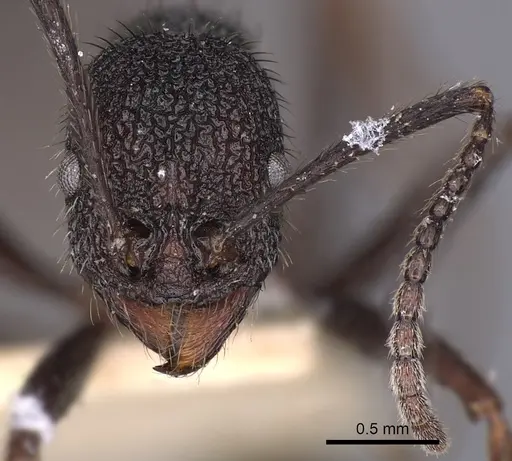
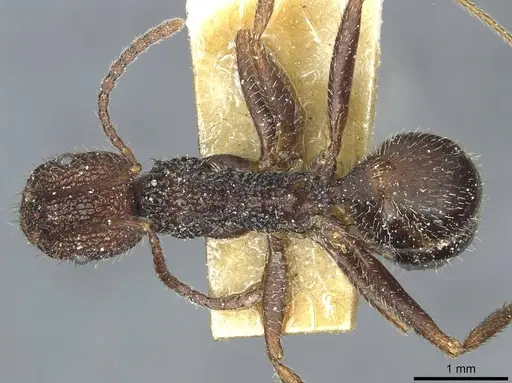
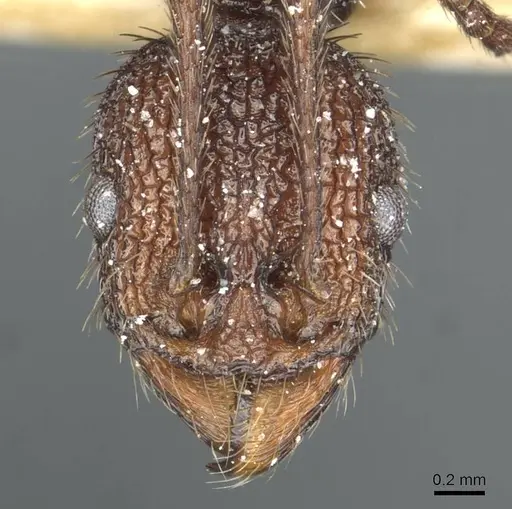
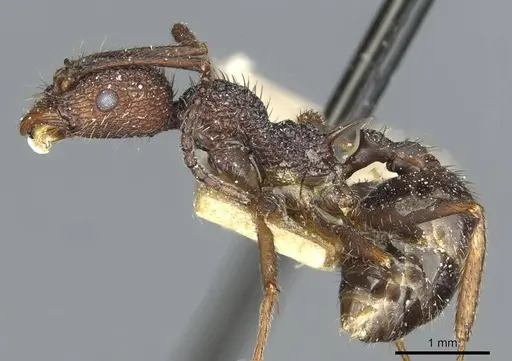
Aphaenogaster relicta is a rare, medium-small ant found only in Haiti. Workers measure 4-5 mm and are deep black with dull red spots on the gaster and postpetiole, while queens reach nearly 6 mm . First collected in 1912-1913,this species has not been found in recent surveys despite targeted efforts, making it one of the most obscure ants in the Caribbean . In nature, they nest in holes beneath stones in moist localities on hill-sides, and workers are described as timid and very rapid in their movements . They represent an ancient insular relict confined to Haiti and are the only known member of the Stenammini tribe in the entire Caribbean region .
Quick Summary
- Difficulty: Expert
- Origin & Habitat: Endemic to Haiti, specifically the mountainous regions around Port-au-Prince and Jacmel. Found in moist localities on hill-sides, nesting under stones [3][1].
- Colony Type: Unknown, no studies have documented colony structure or queen number.
- Size & Growth:
- Antkeeping:
- Temperature: Keep warm year-round, roughly 24-28°C, based on tropical Haitian climate [4]. Provide a gentle gradient with a heating cable on one side.
- Humidity: Keep nest substrate consistently moist. In nature they inhabit moist localities under stones, so aim for damp soil that holds together when squeezed but does not drip [3].
- Diapause: No, this is a tropical species from Haiti and likely does not require winter rest [4].
- Nesting: Provide a naturalistic setup with flat stones or slate over moist substrate, or use a Y-tong/plaster nest with dark, tight chambers that mimic the spaces under stones [3].
- Behavior: Timid and very rapid in their movements [3]. They are not aggressive and will likely flee rather than fight when disturbed. At 4-5 mm, they require good escape prevention including tight-fitting lids and fine mesh.
- Common Issues: this species has not been collected in over 100 years and is effectively unavailable in the pet trade., collection from the wild would be ecologically damaging due to their endemic status in Haiti., complete lack of captive care data means all husbandry recommendations are speculative based on habitat and genus patterns., moisture requirements increase mold risk without excellent ventilation.
Rarity and Conservation Status
Aphaenogaster relicta is effectively a ghost in the ant world. Despite several recent collecting trips to Hispaniola specifically targeting ants, researchers have failed to acquire fresh material of this species [2]. All known specimens come from W.M. Mann's collections between 1912-1913 from localities around Port-au-Prince and the mountains north of Jacmel [3][5].
This extreme rarity means the species is not available in the pet trade and should not be sought for collection. As an endemic species confined to Haiti, removing specimens could harm the wild population. For keepers interested in Aphaenogaster, consider more common species like Aphaenogaster lamellidens or Aphaenogaster rudis instead.
Natural Habitat and Nest Preferences
Mann reported finding these ants in holes beneath stones in moist localities, usually on hill-sides [3][1]. This suggests they prefer humid, shaded environments with access to rocky cover.
In captivity, recreate this with a naturalistic setup featuring flat stones or slate tiles over a moist substrate mix of coco fiber and sand. Alternatively, a Y-tong or plaster nest with narrow, dark chambers and a stone-like covering provides the security they seek. Avoid bright, open spaces, these ants evolved to live in tight, dark crevices under rocks.
Temperature and Environmental Needs
As a tropical species from Haiti at approximately 18°N latitude, Aphaenogaster relicta requires warm conditions year-round [4]. Keep the nest area between 24-28°C with a slight gradient so the ants can self-regulate.
They likely do not require diapause given their tropical origins, but a slight temperature reduction to 20-22°C for a few weeks during the winter months might mimic natural seasonal fluctuations without triggering full hibernation [4]. Always provide a moisture gradient alongside the heat gradient.
Feeding and Diet
While specific dietary preferences are unstudied, Aphaenogaster species are generally omnivorous scavengers. They likely accept small insects, seeds, and sugar sources like honeydew or sugar water.
Offer small live prey such as fruit flies, springtails, or tiny cricket nymphs cut into pieces. Provide a sugar source constantly, either sugar water in a test tube or honey diluted with water. Seeds may be accepted given their placement in the Attini tribe, though this is speculative. [1]
Taxonomic History
This species has bounced between several genera over the last century. Originally described in Aphaenogaster, it was moved to Novomessor, then Veromessor, before being returned to Aphaenogaster by Bolton in 1982 [1]. Recent phylogenomic studies note it as the only stenammine species in the Caribbean with uncertain taxonomic affinity [2]. This taxonomic confusion reflects how poorly known the species remains.
Frequently Asked Questions
Can I buy Aphaenogaster relicta for my ant farm?
No. This species has not been collected in over 100 years despite recent expeditions and is not available in the pet trade. It is endemic to Haiti and should not be collected from the wild.
Is Aphaenogaster relicta legal to collect in Haiti?
Collection is strongly discouraged. As an endemic species known only from Haiti with no recent confirmed sightings, removing specimens could harm the population. Additionally, international collection and transport would likely violate CITES and local conservation laws.
How big do Aphaenogaster relicta colonies get?
Unknown. No studies have documented colony size, and the only known specimens are from the original 1912-1913 collections.
What do Aphaenogaster relicta eat?
Their diet is unstudied, but based on the genus, they likely eat small insects, seeds, and sugar sources like honeydew or sugar water.
Do Aphaenogaster relicta need heating?
Yes. As a tropical species from Haiti, they require warm temperatures around 24-28°C year-round.
Do Aphaenogaster relicta hibernate?
No. This is a tropical species and likely does not require diapause or hibernation.
How long until Aphaenogaster relicta get their first workers?
Unknown. Development time has never been documented for this species.
Can I keep multiple Aphaenogaster relicta queens together?
Unknown. Whether this species accepts multiple queens has never been studied. Start with one queen unless future research indicates otherwise.
Are Aphaenogaster relicta good for beginners?
No. This is an expert-level species due to extreme rarity, lack of captive care data, and specific habitat requirements. Beginners should choose common species like Lasius niger or Tetramorium immigrans.
Why are Aphaenogaster relicta so rare?
They are endemic to Haiti and may have very specific habitat requirements. Recent collecting trips have failed to find them, suggesting they may be naturally rare, restricted to specific microhabitats, or potentially declining due to habitat loss.
Report an Issue
The current care sheet is based fully on literature. See inconsistencies, or something that's incorrect? Please , it will be resolved after review from an admin. Contributing to the blogs tab also helps providing information, to make us be able to further improve the caresheets. Thank you for your support!
References

This caresheet is licensed under CC BY-SA 4.0 .
Community Blogs
Literature
Loading distribution map...Loading products...