
Vollenhovia escherichi
- 学名
- Vollenhovia escherichi
- 族
- Crematogastrini
- 亚科
- Myrmicinae
- 命名者
- Forel, 1911
- 地理分布
- 分布于 0 个国家/地区
物种引言
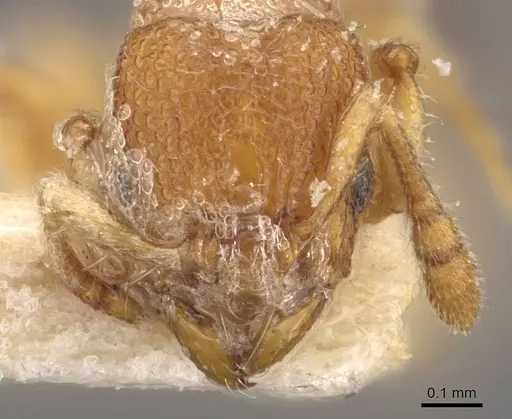
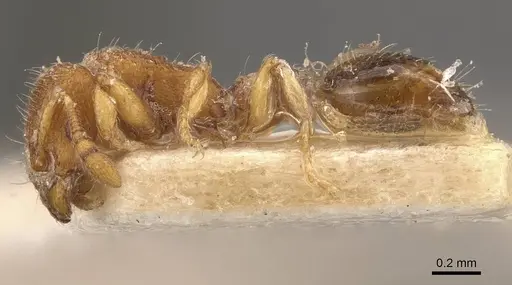
Vollenhovia escherichi is a tiny ant species native to Sri Lanka and recently recorded from Pulau Ubin, Singapore . Workers measure ≤2.1 mm total length, making them one of the smaller ants you'll encounter . They have a distinctive light yellowish‑brown coloration that sets them apart from most other Vollenhovia species . These ants belong to the Myrmicinae subfamily (tribe Crematogastrini). Originally known only from Sri Lanka, their recent discovery in Singapore raises interesting questions about their distribution .
Quick Summary
- Difficulty: Hard
- Origin & Habitat: Sri Lanka and Singapore (Pulau Ubin) – tropical forests (inferred from distribution, no specific habitat data published) [1][2].
- Colony Type: Unconfirmed – no published data on colony structure.
- Size & Growth:
- Queen: Size data unavailable (estimated slightly larger than workers based on typical Myrmicinae patterns, but not confirmed).
- Worker: ≤2.1 mm total length [2].
- Colony: Unknown – no colony size data available.
- Growth: Unknown – estimated moderate to fast based on small worker size and tropical distribution (inferred).
- Development: Estimated 4–6 weeks based on typical Myrmicinae development in tropical conditions (unconfirmed). (No direct development data exists for this species – this is an estimate.)
- Antkeeping:
- Temperature: Based on tropical origin, likely needs warm conditions. Aim for 24–28 °C as a starting point (inferred, no published data).
- Humidity: High humidity likely required – keep nest substrate moist but not waterlogged (inferred from tropical forest habitat, no specific data).
- Diapause: No diapause required – tropical species, active year‑round at room temperature.
- Nesting: In nature likely nests in rotting wood or leaf litter (inferred from typical Vollenhovia habits). In captivity, a Y‑tong (AAC) or plaster nest with small chambers works well, but no specific nesting data exists.
- Behavior: These are tiny, generally non‑aggressive ants. Their modified stinger is used to smear venom rather than pierce, but given their size it poses no threat to humans. They likely forage for small prey. Escape prevention is critical – they can squeeze through minute gaps.
- Common Issues: escape prevention critical due to tiny size – use fine mesh and tight‑fitting lids., no published care information means you are pioneering husbandry for this species., humidity control important – colonies may fail if too dry., colony growth rate unknown – may be slow initially., wild‑caught colonies may carry parasites or diseases.
Getting Started with Vollenhovia escherichi
This species is rarely kept and represents an interesting challenge for antkeepers who want to work with an understudied ant. Originally endemic to Sri Lanka and recently found in Singapore, these ants come from tropical forests [1]. Workers are tiny at ≤2.1 mm [2], and their pale yellowish‑brown coloration makes them easy to identify [1]. Since almost no care information is published, you'll be pioneering their husbandry. Start with a small colony or queen if available, and experiment with conditions while documenting your observations.
Housing and Nest Setup
Due to their tiny size, you need appropriately scaled housing. A Y‑tong (AAC) or plaster nest with narrow chambers is a good start. Make chambers small – these ants feel exposed in large open spaces. Keep the nest humid but not wet, attach a water tube for moisture. For the outworld, use a small container with smooth walls. Escape prevention is critical – apply fluon or use fine mesh on ventilation holes. Some keepers use naturalistic setups with moist substrate, mimicking their likely forest floor habitat.
Temperature and Heating
As a tropical species from Sri Lanka and Singapore, Vollenhovia escherichi likely prefers warm conditions. Aim for 24–28 °C as a starting point. Room temperature may work if your home stays in that range, but a small heating cable can help during cooler periods. Place heating on one side to create a gradient. Avoid sustained temperatures above 30 °C or below 20 °C. No cooling period or hibernation is needed – they remain active year‑round.
Feeding and Diet
Their natural diet is undocumented, but like most Myrmicinae they are probably omnivorous with a protein preference. Offer small live prey: fruit flies, pinhead crickets, or tiny mealworms. Sugar sources like honey water may also be accepted. Feed small amounts every few days and remove leftovers to prevent mold. Be prepared to experiment – some Vollenhovia species are known predators of small invertebrates.
Colony Development
Founding behavior is unconfirmed. If the queen is claustral, she will seal herself in and rear the first brood without feeding. Once nanitics (first workers) emerge, growth will likely be slow at first. Maximum colony size is unknown but probably under 500 workers based on the small worker size. Be patient – small species often develop slowly. Document your colony's trajectory to help future keepers.
Frequently Asked Questions
How long does it take for Vollenhovia escherichi to get their first workers?
No specific data exists – the 4–6 week estimate is based on typical Myrmicinae development at 24–28 °C. The queen may take longer if she seals herself in.
What do Vollenhovia escherichi ants eat?
Their exact diet is unknown. Offer small live prey (fruit flies, pinhead crickets) and sugar water, then observe what they accept. They are probably omnivorous.
Do Vollenhovia escherichi ants sting?
Myrmicinae have functional stingers, but given their ≤2.1 mm size, any sting is negligible. They are not dangerous to humans [2].
Are Vollenhovia escherichi good for beginners?
No – this is a challenging species. There is virtually no published care information, and their tiny size demands careful escape prevention and humidity control. Suitable for advanced keepers interested in pioneering husbandry.
What temperature do Vollenhovia escherichi need?
Based on their tropical origin, aim for 24–28 °C. A small heating cable can help maintain warmth if needed. No specific published data.
Do Vollenhovia escherichi need hibernation?
No – as a tropical species, they are active year‑round. Keep them warm (24–28 °C) without seasonal cooling.
How big do Vollenhovia escherichi colonies get?
Colony size is not documented. Based on their tiny ≤2.1 mm workers and typical patterns, colonies likely reach a few hundred workers at most [2].
Why are my Vollenhovia escherichi dying?
Common causes: too dry (needs high humidity), temperatures outside 24–28 °C, escape through tiny gaps, or stress from inadequate food. Wild‑caught colonies may also carry parasites. Adjust humidity and temperature before giving up.
Can I keep multiple Vollenhovia escherichi queens together?
No data exists on colony founding. Combining unrelated queens is not recommended – start with a single queen if possible.
Where is Vollenhovia escherichi found?
Originally described from Sri Lanka, and recently recorded from Pulau Ubin island in Singapore [1]. The relationship between these populations is still being studied.
Report an Issue
The current care sheet is based fully on literature. See inconsistencies, or something that's incorrect? Please , it will be resolved after review from an admin. Contributing to the blogs tab also helps providing information, to make us be able to further improve the caresheets. Thank you for your support!
References

此饲养指南授权协议为 CC BY-SA 4.0 .
社区博客
CASENT0908656
在 AntWeb 上查看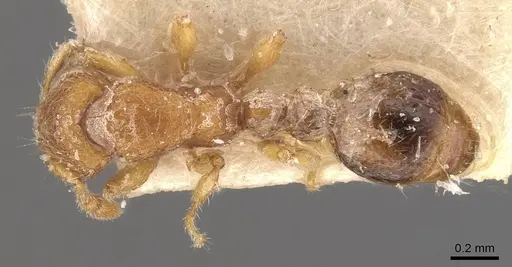
科学文献
正在加载分布地图...正在加载商品...