
Tetramorium ubangense
- 学名
- Tetramorium ubangense
- 族
- Crematogastrini
- 亚科
- Myrmicinae
- 命名者
- Santschi, 1937
- 地理分布
- 分布于 0 个国家/地区
物种引言
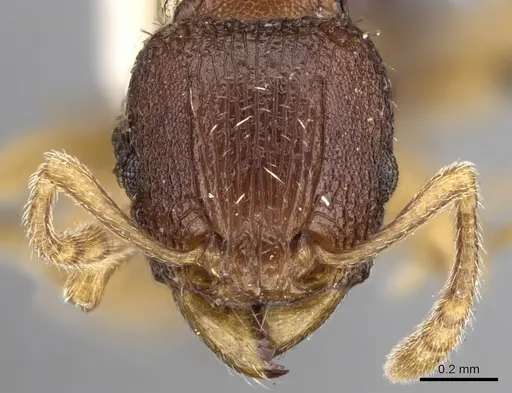
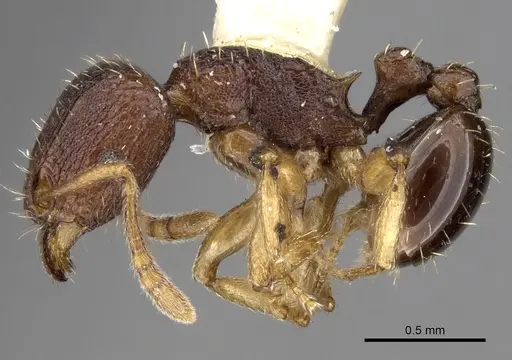
Tetramorium ubangense is a small ant species endemic to the Nord-Ubangi region in the Democratic Republic of Congo . The genus Tetramorium belongs to the subfamily Myrmicinae and includes many ground-nesting species with 12-segmented antennae and a spiny petiole. This species was originally described by Santschi in 1937 and documented by Bolton in 1980 . Beyond its geographic origin, almost nothing is known about its behavior, colony structure, or captive care. It uses a modified flat stinger to smear venom onto attackers rather than piercing them, typical of many myrmicine ants.
Quick Summary
- Difficulty: Unknown
- Origin & Habitat: Endemic to Nord-Ubangi in the Democratic Republic of Congo, Central Africa [1]. Specific habitat preferences are unconfirmed.
- Colony Type: Unconfirmed, no documented research on colony structure for this species.
- Size & Growth:
- Queen: Unknown, no species-specific measurements available
- Worker: Unknown, no species-specific measurements available
- Colony: Unknown, no colony size data available
- Growth: Unknown
- Development: Unknown (No development data exists for this species. Related Tetramorium species typically take 6-10 weeks from egg to first worker at warm temperatures, but this is unconfirmed for T. ubangense.)
- Antkeeping:
- Temperature: Unknown, no species-specific data available. Generic Tetramorium care suggests room temperature (20-24°C) as a starting point, but this is unconfirmed for this species.
- Humidity: Unknown, no species-specific data available.
- Diapause: Unknown, no research on seasonal requirements for this species.
- Nesting: Unknown, no documented nesting preferences for this species.
- Behavior: Unconfirmed, no behavioral studies exist for this species. Generic Tetramorium traits include ground-nesting and generalist foraging, but these are not documented for T. ubangense specifically. Escape risk cannot be assessed without size data. Like other myrmicines, they likely use a smear defense mechanism with their stinger.
Distribution and Known Range
Tetramorium ubangense is endemic to the Nord-Ubangi (NU) region in the Democratic Republic of Congo [1]. This region lies in the northern part of the DRC, near the Ubangi River forming part of the border with the Central African Republic. The species was first described by Santschi in 1937 and documented in Bolton's 1980 taxonomic review [1]. Beyond these records, no published data exists on its full distribution or specific microhabitat preferences within this region.
Current State of Knowledge
This species remains very poorly studied. No research exists on its colony structure, founding behavior, development timeline, temperature preferences, humidity needs, or any aspect of captive care. The available information is limited to taxonomic descriptions and geographic records. Any care recommendations would be speculative. Keepers interested in this species should approach with caution and consider starting with conditions typical of other Tetramorium species while carefully observing colony response. [1]
Defense Mechanism
Belonging to the tribe Crematogastrini in Myrmicinae, Tetramorium ubangense likely uses a smear defense. It has a modified, flattened spatulate stinger used to wipe or smear venom onto enemies rather than piercing them. This is typical of many myrmicine ants and has not been specifically confirmed for this species through direct observation.
Frequently Asked Questions
How do I keep Tetramorium ubangense ants?
No species-specific care guide exists for Tetramorium ubangense. This is one of the least documented ant species in captivity. Any care advice would be speculative. If you obtain this species, start with standard Tetramorium husbandry (room temperature around 20-24°C, moist but not waterlogged substrate, small prey items) and document your observations carefully.
What do Tetramorium ubangense ants eat?
Unknown for this specific species. Generic Tetramorium diet includes small insects and honeydew, but T. ubangense feeding preferences have not been documented.
How big do Tetramorium ubangense colonies get?
Unknown, no colony size data exists for this species.
Do Tetramorium ubangense ants sting?
Tetramorium belongs to the subfamily Myrmicinae, which includes species with functional stingers. However, specific stinging behavior for T. ubangense has not been documented.
How long does it take for Tetramorium ubangense to develop from egg to worker?
Unknown, no development data exists for this species. Related Tetramorium species typically require 6-10 weeks at warm temperatures, but this is not confirmed for T. ubangense.
Is Tetramorium ubangense good for beginners?
Unknown, this species has not been kept in captivity to any documented degree. The complete lack of care literature makes it unsuitable as a beginner species. Consider starting with better-documented Tetramorium species like Tetramorium caespitum or Tetramorium bicarinatum.
Do Tetramorium ubangense ants need hibernation?
Unknown, no research exists on the seasonal requirements of this species. The DRC has a tropical climate with minimal temperature variation, so diapause may not be required, but this is unconfirmed.
Can I keep multiple Tetramorium ubangense queens together?
Unknown, colony structure (monogyne vs polygyne) has not been documented for this species. Combining unrelated queens is not recommended without species-specific evidence.
Report an Issue
The current care sheet is based fully on literature. See inconsistencies, or something that's incorrect? Please , it will be resolved after review from an admin. Contributing to the blogs tab also helps providing information, to make us be able to further improve the caresheets. Thank you for your support!
References

此饲养指南授权协议为 CC BY-SA 4.0 .
社区博客
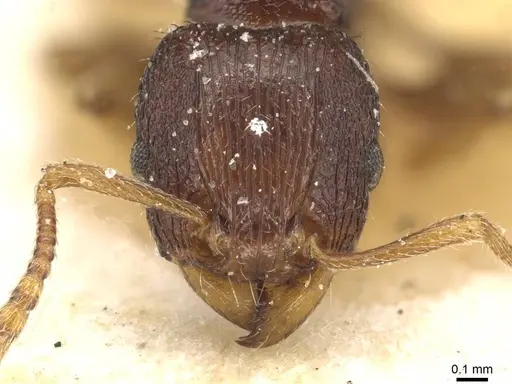
CASENT0280915
在 AntWeb 上查看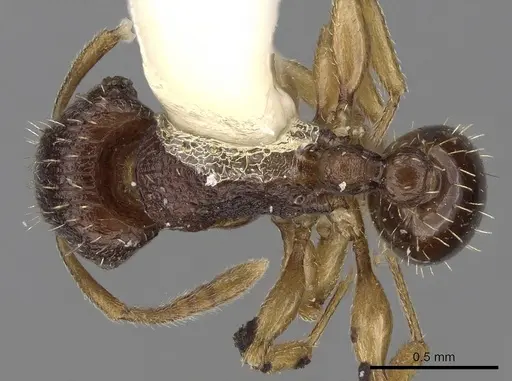
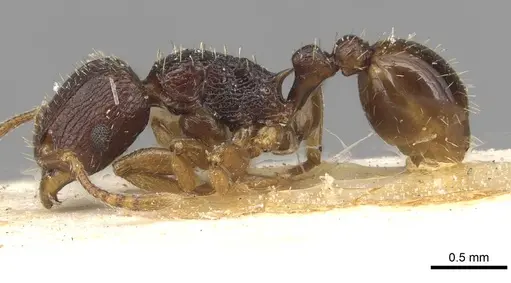
CASENT0915092
在 AntWeb 上查看
科学文献
正在加载分布地图...正在加载商品...