
Tetramorium sigillum
- 学名
- Tetramorium sigillum
- 族
- Crematogastrini
- 亚科
- Myrmicinae
- 命名者
- Bolton, 1980
- 地理分布
- 分布于 0 个国家/地区
物种引言
Tetramorium sigillum is an exceptionally rare ant species known only from the Taï National Park in Ivory Coast, West Africa . Workers are tiny at 2.8-3.0 mm total length, making this the smallest species in the flabellum-complex of Tetramorium . They are dark brown with a slightly lighter gaster, and can be identified by the unsculptured median longitudinal strip on their postpetiole - a unique feature among related species that have evenly sculptured postpetioles . This species remains one of the most poorly documented ants in existence, known only from approximately 22 museum specimens collected in 1975-1976 . Recent surveys in the Abidjan district recorded additional specimens, suggesting the species may be more widespread than originally thought . Virtually nothing is known about their biology, colony structure, or captive care requirements.
Quick Summary
- Difficulty: Unknown, too little data to assess
- Origin & Habitat: Taï National Park, Ivory Coast (Afrotropical region). Found in tropical forest habitat [1][2].
- Colony Type: Unknown, colony structure has never been documented
- Size & Growth:
- Queen: Unknown, no queen specimens documented. Based on related Tetramorium, queens are likely 5-7 mm, but this is a rough estimate.
- Worker: 2.8-3.0 mm [1]
- Colony: Unknown, no colony size data. Inferred from similar tiny Tetramorium, likely under 500 workers.
- Growth: Unknown, no development data exists
- Development: Unknown, no direct data. Based on typical Tetramorium patterns, estimate 6-8 weeks at optimal temperature. (This is a rough estimate based on genus patterns, not species-specific data)
- Antkeeping:
- Temperature: Likely 24-28°C based on tropical forest origin. Start in the mid-20s and observe colony activity.
- Humidity: Moderate to high, think damp tropical forest floor. Keep substrate consistently moist but not waterlogged.
- Diapause: Unknown, Ivory Coast has minimal seasonal temperature variation, so diapause may not be required.
- Nesting: Presumed to nest in soil or under stones like other Tetramorium. A small test tube setup or Y-tong nest with fine chambers would suit their tiny size.
- Behavior: Unknown temperament, no behavioral observations documented. Their tiny size (under 3 mm) means escape prevention is critical, they can squeeze through remarkably small gaps. Based on genus patterns, they are likely generalist foragers but relatively non-aggressive.
- Common Issues: no documented care information exists, all advice is speculative, tiny size makes escape prevention challenging, colony may fail if conditions don't match their unknown natural requirements, no known established colonies in captivity, availability is extremely rare, health issues from wild-caught specimens are unknown
Species Overview and Identification
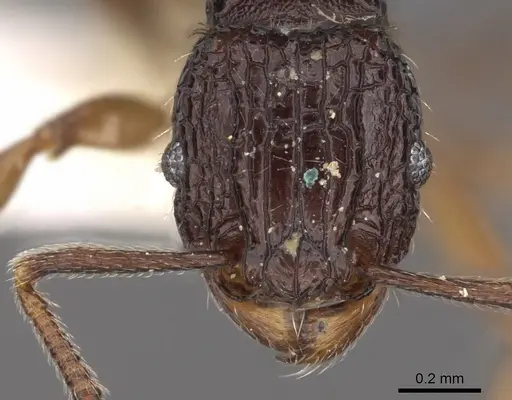
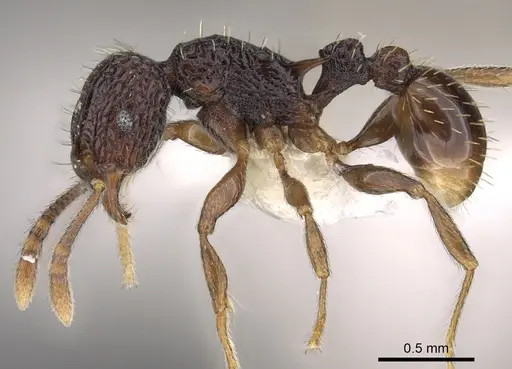
Tetramorium sigillum is an extremely rare ant formally described by Bolton in 1980 from specimens collected in the Taï National Park of Ivory Coast [1]. It is the smallest member of the flabellum-complex of Tetramorium, with workers measuring just 2.8-3.0 mm in total length [1]. The most reliable identification feature is the unsculptured median longitudinal strip on the postpetiole dorsum, this smooth strip runs along the center of their back end and is visible under magnification [1]. Related species like Tetramorium ataxium, Tetramorium flabellum, Tetramorium geminatum, and Tetramorium kestrum all have evenly sculptured postpetioles without this distinctive strip [1]. Workers are dark brown with a slightly lighter-colored gaster, and their mandibles show longitudinal striations [1]. Recent biodiversity surveys in the Abidjan district have recorded additional occurrences, with 11 specimens collected at PNB (likely Parc National du Banco), suggesting this species may be more widespread than the original Taï Forest records indicate [2].
Distribution and Habitat
Tetramorium sigillum is currently known only from Ivory Coast in the Afrotropical region [1]. The original type series was collected from Taï National Park, one of West Africa's last remaining tropical rainforests [1]. More recent survey data from the Abidjan district shows the species persists in at least one protected urban area [2]. The Ivory Coast spans a tropical climate zone with consistently warm temperatures year-round. Taï National Park receives high annual rainfall and maintains humid, shaded conditions typical of lowland tropical rainforest. Based on this habitat association, the species likely prefers stable, warm, and humid conditions rather than dry or fluctuating environments. Nothing is known about their specific microhabitat preferences, no data exists on whether they nest in soil, rotting wood, under stones, or in other locations.
Known Biology and Behavior
The biology of Tetramorium sigillum remains almost completely undocumented. This species is known only from museum specimens, the original type series of 22 workers collected in 1975-1976,plus the 11 more recently collected specimens [1][2]. No observations of living colonies, queen behavior, brood development, or any aspect of their natural history have ever been published. Given this data gap, we can only make educated guesses based on what is known about related Tetramorium species. The genus Tetramorium generally consists of generalist foragers that nest in soil or under stones, with claustral founding where the queen seals herself in a chamber and raises the first workers on stored fat reserves [1]. Most species are relatively small-bodied and non-aggressive, though they will defend their nest if threatened. The workers show typical Tetramorium morphology including strong propodeal spines and a petiole node that is roughly rectangular in profile [1]. Their small size (under 3 mm) suggests they likely forage on the forest floor, possibly tending aphids or collecting small prey items.
Tentative Care Recommendations
Because no captive breeding records exist for this species, all care recommendations must be considered highly speculative. Start with conditions that match their likely tropical forest origin: temperatures in the 24-28°C range with humidity on the higher side (60-80%). A small test tube setup works well for founding colonies of similarly tiny Tetramorium species, the narrow chambers prevent the queen from becoming disoriented and help maintain humidity. For feeding, offer small live prey items like fruit flies, pinhead crickets, or similar-sized insects. Sugar water or honey can be offered occasionally, though many Tetramorium species prefer protein sources. Given their tiny worker size, prey items should be appropriately small, anything larger than their head will likely be ignored. Escape prevention is critical. At just 3 mm, these ants can squeeze through gaps that seem impossible. Use tight-fitting lids, fine mesh on any ventilation, and consider applying fluon or another barrier to all tube openings. Even a tiny crack will become an escape route. The most important recommendation for anyone obtaining this species is careful documentation. Because so little is known about them in captivity, every observation, from founding behavior to worker numbers to brood development times, would be scientifically valuable.
Conservation and Ethical Considerations
Tetramorium sigillum has a very limited known distribution in Ivory Coast, with records from both Taï National Park and the Abidjan district [1][2]. While the species is not formally listed as endangered, its known range is small and potentially fragmented. Taï National Park is a protected area and significant biodiversity hotspot, but urban expansion in the Abidjan district may pose threats to remaining populations. For antkeepers, this species presents an ethical consideration: wild populations are extremely small and poorly understood. Capturing founding queens from the wild could potentially impact already-minimal populations. If available, established captive colonies would be preferable to wild-caught specimens. Regarding release: never release captive ant colonies into non-native areas. Even for species with limited ranges, released colonies could establish in suitable habitats and potentially outcompete native ant species.
Frequently Asked Questions
How do I care for Tetramorium sigillum ants?
Care is unknown, this is one of the most poorly documented ant species. All recommendations are speculative based on general Tetramorium genus patterns. Start with 24-28°C temperatures, moderate-to-high humidity, small live prey, and excellent escape prevention due to their tiny 3 mm size. Document any observations carefully.
What do Tetramorium sigillum ants eat?
Unknown for this species. Based on typical Tetramorium behavior, they likely accept small live prey (fruit flies, small crickets) and may occasionally drink sugar water or honey. Their tiny 3 mm workers require appropriately small food items.
How big do Tetramorium sigillum colonies get?
Unknown, no colony size data exists. Based on their very small worker size (2.8-3.0 mm), colonies are likely small, probably under 500 workers.
Do Tetramorium sigillum ants sting?
Tetramorium belongs to the subfamily Myrmicinae, which includes species with functional stingers. However, no specific observations exist for this species. Given their tiny size, any sting would be negligible to humans. Most small Tetramorium are non-aggressive and will flee rather than defend.
Where is Tetramorium sigillum found?
Only known from Ivory Coast, West Africa. Original specimens came from Taï National Park, with additional records from the Abidjan district [1][2]. This is a very restricted distribution.
How long do Tetramorium sigillum workers live?
Unknown, no lifespan data exists for this species. Typical Tetramorium workers live several months to a year, but this is a rough estimate.
Is Tetramorium sigillum good for beginners?
No, this species cannot be recommended for beginners or even experienced keepers due to complete lack of captive care information. The difficulty level is effectively unknown. Additionally, the species appears to be extremely rare in the antkeeping hobby, if available at all.
Do Tetramorium sigillum queens need to hibernate?
Unknown, no seasonal data exists. Ivory Coast has minimal temperature variation year-round, suggesting hibernation may not be required. However, this has never been studied in this species.
What is the queen size of Tetramorium sigillum?
Unknown, no queen specimens have been documented. Based on related Tetramorium species, queens are likely 5-7 mm, significantly larger than the 3 mm workers, but this is an estimate.
Can I keep multiple Tetramorium sigillum queens together?
Unknown, colony structure has never been documented for this species. Most Tetramorium are monogyne (single queen), but some are polygynous. Do not attempt combining unrelated queens without established evidence that this species tolerates it.
Report an Issue
The current care sheet is based fully on literature. See inconsistencies, or something that's incorrect? Please , it will be resolved after review from an admin. Contributing to the blogs tab also helps providing information, to make us be able to further improve the caresheets. Thank you for your support!
References

此饲养指南授权协议为 CC BY-SA 4.0 .
社区博客
CASENT0901198
在 AntWeb 上查看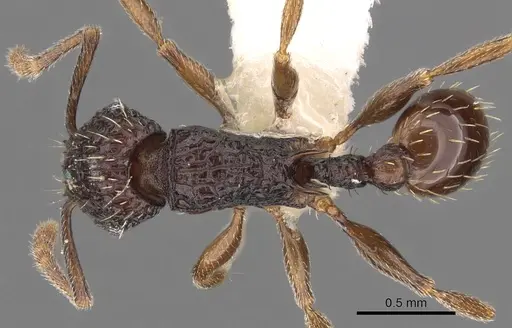
科学文献
正在加载分布地图...正在加载商品...