
Tetramorium exile
- 学名
- Tetramorium exile
- 族
- Crematogastrini
- 亚科
- Myrmicinae
- 命名者
- Csősz & Radchenko, 2007
- 地理分布
- 分布于 0 个国家/地区
物种引言
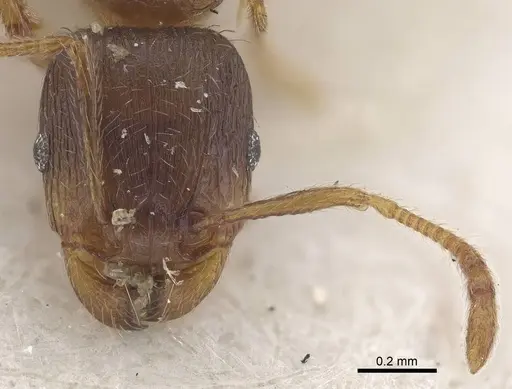
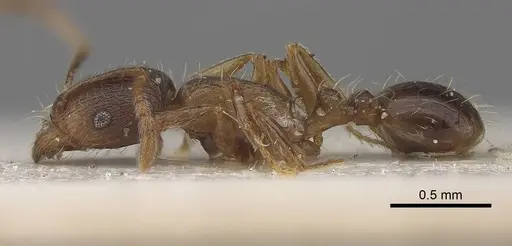
Tetramorium exile is an extremely rare ant species described in 2007 from a single location in Afghanistan . Workers are very small, with a head length of about 0.7mm (exact total body length is not recorded). They have an elongated body, narrow head, very long antennae scapes, and a trapezoidal petiolar node. Their body color ranges from brown to dark brown. This species is known only from the worker caste - queens and males have never been observed . The name 'exile' comes from the Latin word for slender, referring to their elongate body form . Nothing is known about the biology of this species in the wild. It was collected at 2520m elevation in the Hindu Kush mountains, suggesting it lives in a cold, high-altitude environment . With almost no biological data available, any care recommendations are pure speculation. This species is a research-level curiosity, not a viable pet ant.
Quick Summary
- Difficulty: Expert
- Origin & Habitat: Known only from Afghanistan, Walang in the Salangtal region of the Hindu Kush mountains at 2520m elevation [1]. This is a high-altitude, cold mountainous habitat in the Palaearctic region.
- Colony Type: Unknown, only worker caste has been described. Queens and males are unknown, so colony structure cannot be determined.
- Size & Growth:
- Queen: Unknown, queens have never been described [1]
- Worker: Total body length data unavailable, workers are described as small-sized [1]
- Colony: Unknown, only known from a single nest sample [1]
- Growth: Unknown
- Development: Unknown, no data available for this species (Based on typical Tetramorium patterns, expect 4-8 weeks at optimal temperature, but this is entirely estimated)
- Antkeeping:
- Temperature: There is no species‑specific data. Inferred from high‑altitude origin (2520m): likely prefer cool conditions around 15-20°C, but this is pure speculation [1].
- Humidity: No data available. Typical Tetramorium species do well with moderate humidity, keep nest substrate slightly moist but not waterlogged, but this is speculative.
- Diapause: Likely yes, inferred from high‑altitude mountain origin, but never directly studied [1].
- Nesting: No specific data, based on genus behaviour, they likely nest in soil or under stones. A test tube setup or Y‑tong nest with very small chambers may work.
- Behavior: Completely unknown for this species. Based on genus‑level knowledge, Tetramorium ants are typically non‑aggressive, ground‑nesting species that forage for small prey and tend aphids for honeydew. As a member of the Crematogastrini tribe, T. exile likely uses a unique defence mechanism: a modified, flattened stinger used to smear venom onto enemies rather than piercing. Their tiny worker size (head length ~0.7mm) makes escape prevention critical, they can squeeze through extremely small gaps, so use very fine mesh (≤0.2mm).
- Common Issues: no formal care protocol exists, this species has never been kept in captivity, queen and male castes are unknown, so captive breeding from wild‑caught specimens is currently impossible, extremely small size requires fine mesh barriers for escape prevention (≤0.2mm gaps), no information on diet, must be determined through experimentation, high‑altitude origin suggests specific temperature needs that differ from common pet ants, but these are unknown
Species Overview and Identification
Tetramorium exile is one of the rarest and least‑known ant species. It was formally described in 2007 by Csösz, Radchenko, and Schulz as part of a taxonomic revision of the Tetramorium chefketi complex [1]. The species is known only from the type locality in Afghanistan, and no biological observations have ever been published.
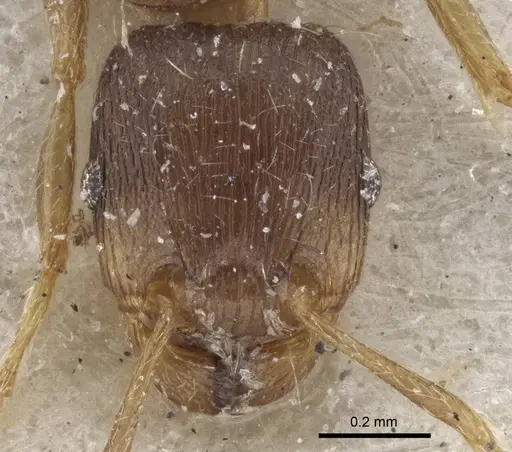
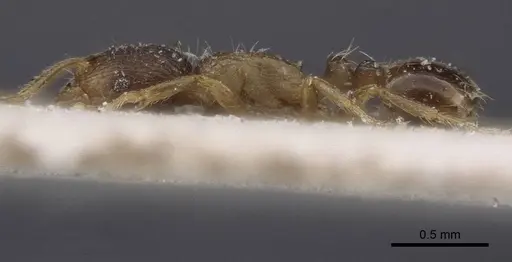
Workers are tiny (head length ~0.7mm, total body length unknown), making them far smaller than common pet species like Tetramorium caespitum or Tetramorium bicarinatum. They can be identified by their elongated body, very narrow head (frons), extremely long scapes (antenna segments), and trapezoidal petiolar node. They lack a psammophore (a basket of hairs for carrying sand grains), which distinguishes them from some related species [1]. The body color is brown to dark brown.
Perhaps the most distinctive feature is their very long scape relative to head size (SL/CS 0.84-0.85), giving them an elegant appearance despite their minute size. The combination of small eyes, narrow frons, and elongated body makes them look quite different from the more robust Tetramorium species commonly kept by hobbyists.
Distribution and Habitat
Tetramorium exile is known only from a single collection event in Afghanistan. The type locality is Walang in the Salangtal region of the Hindu Kush mountains, at an elevation of 2520m [1]. This is a high‑altitude, mountainous area with cold winters and relatively mild summers.
The Hindu Kush mountain range experiences significant seasonal temperature variation. At 2520m, summers would be mild with cool nights, while winters are cold with potential snow. This suggests T. exile is adapted to cooler conditions than most commonly kept ant species.
No ecological observations exist for this species. We don't know what microhabitat they prefer, what they eat, or when their nuptial flights occur. The type specimens were collected on September 29,1952,which might suggest late‑season activity, but collection dates rarely indicate flight timing accurately.
Why This Species Is Not Recommended for Beginners
This species is not recommended for antkeepers, including experienced ones, because it has never been kept in captivity and almost nothing is known about its biology. There are no established care protocols, no documented successful colonies, and no information on what they eat, how they reproduce, or what conditions they need to thrive.
The worker caste was described in 2007,but queens and males remain unknown [1]. This means even if you found a wild colony, you could not identify the queen to start a captive colony. The species may or may not even exist in captivity, it is possible no one has collected it since the original 1952 collection.
For these reasons, T. exile represents a research‑level curiosity rather than a viable pet species. If you are interested in keeping Tetramorium, species like Tetramorium bicarinatum, Tetramorium caespitum, or Tetramorium smithi are far better choices with established care protocols.
Comparison to Related Species
Tetramorium exile is part of the Tetramorium chefketi species complex, which includes several similar‑looking species distributed across the Palaearctic region [1]. It is most similar to Tetramorium anatolicum and Tetramorium chefketi, but can be distinguished by its trapezoidal petiolar node (versus the cubic node of T. chefketi) and its relatively high, short petiole [1].
Unlike T. exile, several related Tetramorium species are well‑studied and commonly available in the antkeeping hobby. Tetramorium bicarinatum (the bicarinate pavement ant) is widely kept and breeds readily in captivity. Tetramorium caespitum is common across Europe and North America. These species can serve as reference points for general Tetramorium care, though T. exile's high‑altitude origin suggests it may have different temperature requirements.
The genus Tetramorium contains over 500 species worldwide, mostly in the Old World tropics and subtropics. Many are small, ground‑nesting ants that forage for small invertebrates and tend aphids. The genus is in the subfamily Myrmicinae and tribe Crematogastrini.
What We Would Need to Know to Keep This Species
If anyone were to attempt keeping Tetramorium exile, several key pieces of information would be essential but are currently unknown. First, we need the queen caste, without describing the gyne, we cannot identify wild colonies or attempt captive founding. Second, we need basic biology: what do they eat? How do queens found colonies? What are their temperature and humidity preferences?
Third, we need colony structure information: are they single‑queen (monogyne) or multi‑queen (polygyne)? What is their typical colony size? Do they have ergatoid (worker‑like) replacement queens? Finally, we need nuptial flight timing to know when to expect mating flights and potentially collect founding queens.
This species would be classified as a 'data gap' species in myrmecology, one where basic natural history observations are completely absent. Such species are unfortunately common, especially from politically unstable regions like Afghanistan where entomological research is difficult to conduct. [1]
Frequently Asked Questions
Can I keep Tetramorium exile as a pet ant?
No. This species has never been kept in captivity and is essentially unknown to science. Queens have never been described, so starting a colony would be impossible. Even if you found a wild colony in Afghanistan, you could not identify the queen. This species exists only in museum collections [1].
Where does Tetramorium exile live?
Only known from a single location in Afghanistan, Walang in the Salangtal region of the Hindu Kush mountains at 2520m elevation. No other populations have ever been found [1].
How big are Tetramorium exile workers?
Workers are very small. Their head length is about 0.7mm, but total body length has not been recorded. They are among the smallest Tetramorium species known [1].
What do Tetramorium exile ants eat?
Completely unknown. No biological observations exist. Based on typical Tetramorium behaviour, they likely eat small insects and honeydew, but this is entirely speculative.
Do Tetramorium exile ants sting?
Unknown. As Myrmicinae ants, they have a stinger, and as members of the Crematogastrini tribe they likely use a smear‑defence mechanism rather than piercing. However, stinging behaviour has never been documented for this species. Given their tiny size, any sting would be negligible to humans.
What temperature do Tetramorium exile ants need?
Likely cool conditions given their high‑altitude origin (2520m in Afghanistan). Based on habitat inference, they probably prefer temperatures around 15-20°C, but this is entirely estimated since no biological data exists [1].
Do Tetramorium exile ants need hibernation?
Likely yes, given their high‑altitude mountain origin in Afghanistan. However, this is inferred from habitat and has never been directly studied for this species [1].
How long do Tetramorium exile ants live?
Unknown. No lifecycle or longevity data exists for this species.
Are Tetramorium exile queens known?
No. Only the worker caste has been described. Queens (gynes) and males remain unknown to science [1].
Is Tetramorium exile endangered?
We don't know. The IUCN status has not been assessed. The species is known from a single collection event in 1952,so its conservation status is completely unknown.
Why is nothing known about this ant's biology?
Because it was only described in 2007 from old museum specimens collected in 1952,and no one has ever studied it in the wild or in captivity. The type locality is in Afghanistan, a region where biological research has been extremely difficult due to decades of conflict [1].
What is the best alternative to Tetramorium exile for antkeepers?
Consider Tetramorium bicarinatum, Tetramorium caespitum, or Tetramorium smithi instead. These related species are well‑studied, commonly available, and have established care protocols in the antkeeping hobby.
Report an Issue
The current care sheet is based fully on literature. See inconsistencies, or something that's incorrect? Please , it will be resolved after review from an admin. Contributing to the blogs tab also helps providing information, to make us be able to further improve the caresheets. Thank you for your support!
References

此饲养指南授权协议为 CC BY-SA 4.0 .
社区博客
CASENT0916595
在 AntWeb 上查看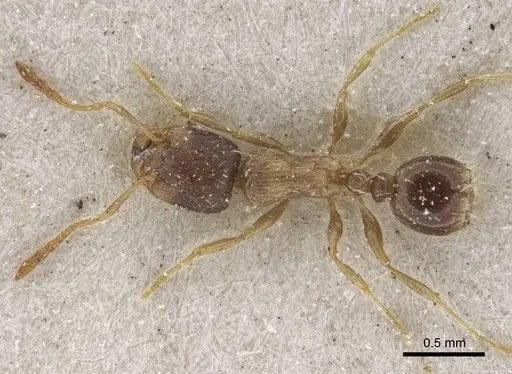
CASENT0919633
在 AntWeb 上查看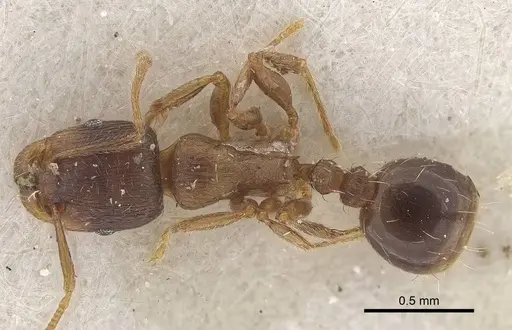
科学文献
正在加载分布地图...正在加载商品...