
Temnothorax simlensis
- 学名
- Temnothorax simlensis
- 族
- Crematogastrini
- 亚科
- Myrmicinae
- 命名者
- Forel, 1904
- 地理分布
- 分布于 0 个国家/地区
物种引言
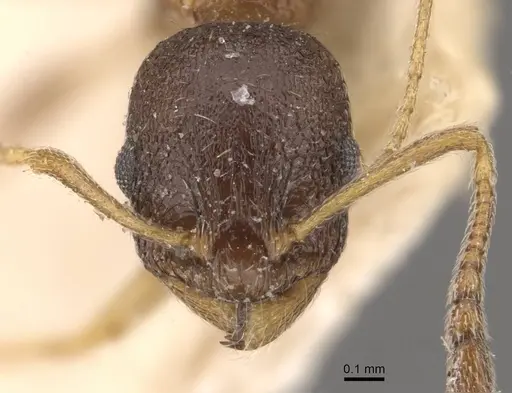
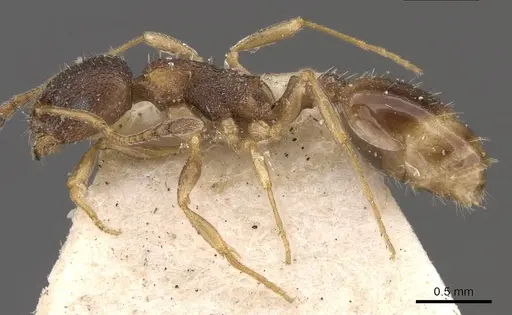
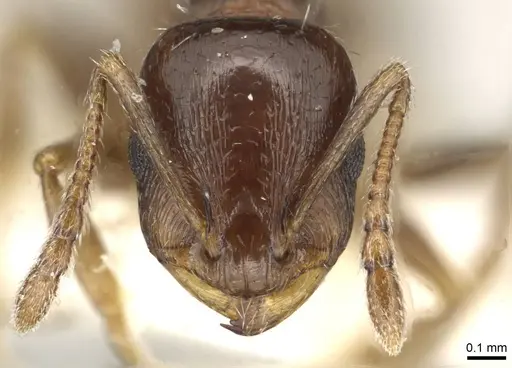
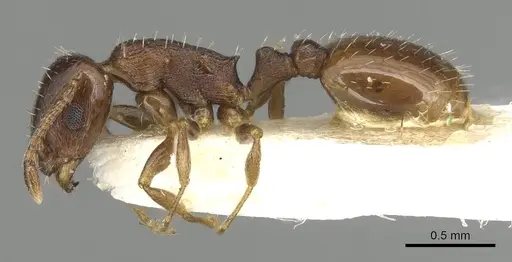
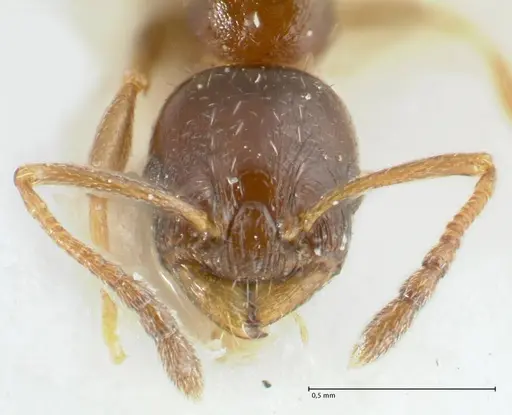
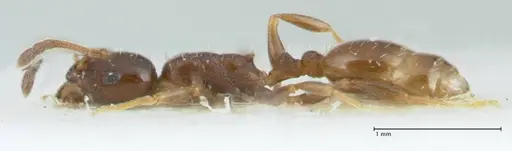
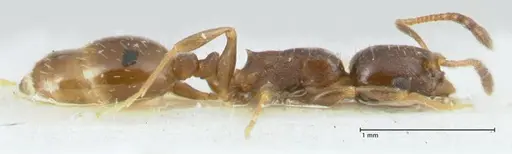
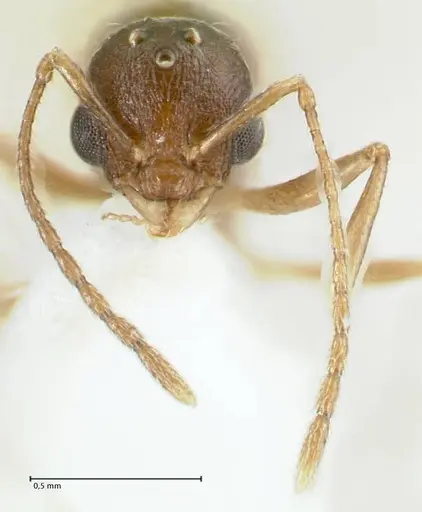
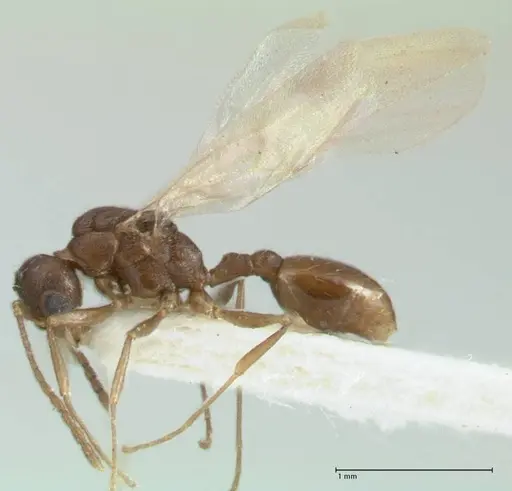
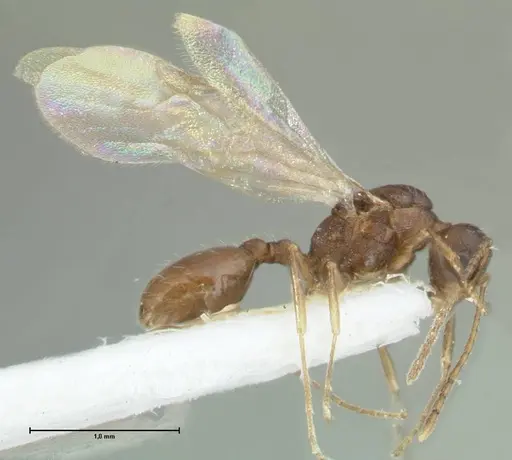
Temnothorax simlensis is a tiny ant native to the Himalayan region of India. Workers measure just 2.86-3.04mm, making them one of the smaller ants in the hobby . They have a distinctive two-tone coloration: the front of the mesosoma, mandibles, antennae, legs, and front of the gaster are yellowish brown, while the head and rest of the body are dark brown to black . Queens are larger at 4.4mm and appear bulkier with a robust mesosoma . This species was originally described as a variety of T. rothneyi but was raised to full species status in 2016 based on consistent morphological differences . These ants inhabit temperate forests of the Himalayan foothills at elevations around 2600m, typically nesting under stones on grassy hill slopes among Pinus and Cedrus trees . They form small colonies with relatively few workers and often share nesting sites with Myrmica species in a plesiobiotic relationship - different ant species nesting very close to each other under the same stones but not interacting unless their chambers are disturbed . Their small size and peaceful coexistence make them interesting for observing ecological interactions.
Quick Summary
- Difficulty: Easy
- Origin & Habitat: Himalayan region of India (Himachal Pradesh), found at elevations around 2600m in temperate forests dominated by Pinus and Cedrus trees. Nests are located under stones on grassy hill slopes [1].
- Colony Type: Small colonies with low worker abundance. Colony structure is unconfirmed, the species has not been studied for queen number. Based on typical Temnothorax patterns, likely single-queen colonies.
- Size & Growth:
- Queen: 4.4mm [1]
- Worker: 2.86-3.04mm [1]
- Colony: Small, under 100 workers based on field observations of low worker abundance [1]
- Growth: Moderate
- Development: 6-10 weeks at optimal temperature based on related Temnothorax species (Development time is estimated from genus-level data since species-specific timing has not been studied. Expect slower growth than tropical species due to cool native habitat.)
- Antkeeping:
- Temperature: Keep nest area at 18-24°C. This species naturally experiences 14-28°C in its Himalayan nest sites, so it tolerates cooler temperatures than most tropical ants [1]. Avoid overheating, they come from a cool temperate climate.
- Humidity: Tolerates wide humidity range from 42% to 91% in the wild [1]. Provide moderate humidity with a gradient, some dry areas and some damp areas in the nest. These forest-floor ants prefer conditions that aren't too wet or too dry.
- Diapause: Likely yes, this species lives at 2600m elevation in the Himalayas and experiences cold winters. Expect a winter rest period of 2-3 months at cool temperatures (5-10°C).
- Nesting: Natural nesting is under stones in soil, typically 4-5 inches deep (10-13cm) [1]. In captivity, a Y-tong (AAC) nest or small test tube setup works well. Provide a shallow depth since they naturally nest relatively close to the surface. The nest should have narrow chambers scaled to their tiny worker size.
- Behavior: Temnothorax simlensis uses a modified stinger to smear venom rather than pierce, a defensive behavior typical of the Crematogastrini tribe. They are generally peaceful and non-aggressive. Workers are tiny (under 3mm) and slow-moving, foraging individually rather than in groups. Their small size requires excellent escape prevention, they can squeeze through small gaps. They are skittish but not defensive. They likely forage for honeydew and small insects, following typical Temnothorax feeding patterns.
- Common Issues: tiny size means escapes are likely without fine mesh barriers and tight-fitting lids, small colony size means slow population growth, don't expect rapid expansion, cool temperature requirements (18-24°C) may conflict with setups needed for warmer species, overheating is a real risk, keep them away from heat sources and direct sunlight, mold from overfeeding due to small colony consumption, monitor food intake carefully, low worker numbers make colony fragile, any losses are significant
Housing and Nest Setup
Temnothorax simlensis is a tiny ant, so your setup needs to reflect their small size. A Y-tong (AAC) nest with narrow chambers works perfectly, the chambers should be appropriately scaled to workers that are only 3mm long. Alternatively, you can keep them in a small test tube setup, which mimics the shallow underground chambers they naturally create. In the wild, they nest about 4-5 inches (10-13cm) deep under stones, so you don't need deep substrate [1].
Since they come from the cool Himalayan mountains, avoid placing their nest in warm areas of your room. A room-temperature setup around 18-22°C is ideal. If you use a heating cable, apply it gently and monitor, these ants naturally experience temperatures as low as 14°C in their nests, so they don't need heat and can easily overheat. Provide a water tube for humidity, but don't saturate the setup, they tolerate a wide humidity range in the wild (42-91%) [1]. A small outworld for foraging completes the setup.
Feeding and Diet
No species-specific dietary data is available, so follow general Temnothorax feeding guidelines. Offer sugar water or honey water as a constant carbohydrate source, a small drop on a piece of cotton or in a test tube works well. For protein, provide small prey items like fruit flies, pinhead crickets, or tiny mealworms appropriate to their 3mm size. They likely collect honeydew from aphids in the wild, so a varied diet helps.
Feed every 2-3 days, removing any uneaten prey after 24 hours to prevent mold. Since colonies are small, don't overfeed, a small drop of sugar water and one or two tiny prey items per feeding is plenty. Adjust based on how quickly they consume food.
Temperature and Seasonal Care
This is one of the most temperature-tolerant species you can keep. Their native Himalayan nests range from 14°C to 28°C, meaning they handle cool conditions that would kill tropical species [1]. Keep them at room temperature (18-24°C) year-round, no heating required in most homes. In fact, be careful about placing them near radiators or in direct sunlight, as overheating is more likely than chilling.
For winter care, expect a natural slow-down period. Since they live at 2600m elevation, a 2-3 month hibernation at 5-10°C is appropriate. You can simply move them to an unheated room or cool basement during winter. They may reduce activity but won't die from the cool temperatures, this species is built for cold.
Behavior and Observation
These are peaceful, unobtrusive ants that won't give you exciting raids or dramatic battles. Workers forage individually rather than in groups, slowly exploring their outworld for food. Their small size and dark coloration with yellowish-brown accents make them visually distinctive under magnification. When threatened, they use a modified stinger to smear venom rather than pierce, a smear defense typical of the Crematogastrini tribe.
The most interesting aspect of this species is its natural plesiobiotic relationship with Myrmica species, in the wild, they nest very close to Myrmica ants under the same stones without interacting [1]. This peaceful coexistence is unusual. When colonies are disturbed or chambers are broken open, fighting and brood-capturing can occur between the species [1], so keep them separate from other ant species in captivity.
Growth and Development
Expect slow but steady growth from this species. Since they're from a cool high-altitude environment, development takes longer than tropical ants. Based on typical Temnothorax patterns, expect 6-10 weeks from egg to first worker at optimal temperature. The first workers (nanitics) will be small, as is normal for founding colonies.
Colony growth is inherently slow due to their small colony size, they naturally have low worker abundance in the wild [1]. Don't expect the rapid population explosion you might see with species like Lasius or Camponotus. A well-established colony might reach 50-100 workers over a year or two. Patience is key with this species.
Frequently Asked Questions
How long does it take for Temnothorax simlensis to have first workers?
Expect 6-10 weeks from egg to first worker at room temperature, based on typical Temnothorax development patterns. This is slower than many tropical ants due to their cool high-altitude origin. The first workers will be small nanitics, which is normal for founding colonies.
Can I keep Temnothorax simlensis in a test tube?
Yes, a test tube setup works well for this species. Their natural nests are only 4-5 inches deep [1], so they don't need deep housing. Use a small test tube with a water reservoir and provide a tiny outworld for foraging. The narrow chambers of a test tube are appropriately scaled to their 3mm workers.
Do Temnothorax simlensis ants sting?
They possess a functional stinger, but it is modified for smearing venom rather than piercing, a defensive behavior typical of the Crematogastrini tribe. They are not aggressive and pose no danger to keepers. The venom is applied topically.
What temperature do Temnothorax simlensis need?
Keep them at 18-24°C, room temperature in most homes is perfect. They naturally tolerate 14-28°C in the wild [1] and come from cool Himalayan forests, so they're more cold-tolerant than most ants. Avoid overheating them.
How big do Temnothorax simlensis colonies get?
Small, expect colonies of under 100 workers based on field observations noting low worker abundance [1]. They are naturally a small-colony species, so don't expect rapid population growth. A mature colony might reach 50-100 workers over a year or two.
Do Temnothorax simlensis need hibernation?
Likely yes, a 2-3 month winter rest at 5-10°C is appropriate, inferred from their high-altitude Himalayan origin (2600m) which experiences cold winters. You can move them to an unheated room or cool basement during winter months.
Are Temnothorax simlensis good for beginners?
Yes, they are beginner-friendly due to their easy temperature requirements (room temperature is fine), small colony size (easy to feed), and peaceful temperament. The main challenges are their slow growth and tiny size requiring good escape prevention.
What do Temnothorax simlensis eat?
Offer sugar water or honey water as a constant carbohydrate source. For protein, provide small prey like fruit flies, pinhead crickets, or tiny mealworms scaled to their 3mm worker size. Remove uneaten prey after 24 hours.
Why are my Temnothorax simlensis dying?
Common causes include: overheating (keep them cool), poor escape prevention (they're tiny and will escape through small gaps), overfeeding leading to mold, or parasites from wild-caught colonies. Check that your setup is at room temperature, has tight-fitting barriers, and remove uneaten food promptly.
Can I keep multiple queens together?
Combining unrelated queens of this species has not been documented. Based on typical Temnothorax behavior, it's best to start with a single queen. If you have multiple foundresses, house them separately to avoid fighting.
When should I move Temnothorax simlensis to a formicarium?
Wait until the colony has at least 20-30 workers before moving to a larger setup. Their small colony size means they'll stay comfortable in a test tube or small Y-tong nest for the first year or more. Moving too soon can stress the colony.
Where is Temnothorax simlensis found in the wild?
This species is native to the Himalayan region of India, specifically Himachal Pradesh at around 2600m elevation [1]. They live in temperate forests with Pinus and Cedrus trees, nesting under stones on grassy hill slopes.
Report an Issue
The current care sheet is based fully on literature. See inconsistencies, or something that's incorrect? Please , it will be resolved after review from an admin. Contributing to the blogs tab also helps providing information, to make us be able to further improve the caresheets. Thank you for your support!
References

此饲养指南授权协议为 CC BY-SA 4.0 .
社区博客
CASENT0909055
在 AntWeb 上查看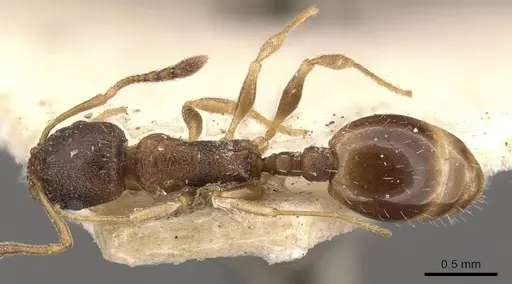
CASENT0915384
在 AntWeb 上查看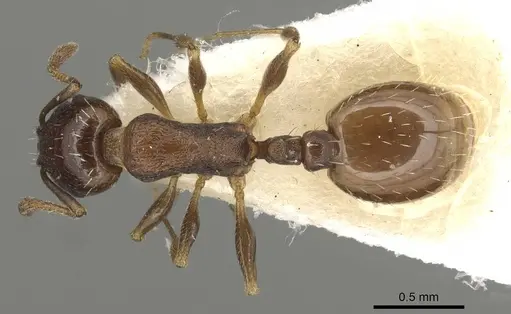
FOCOL1793-1
在 AntWeb 上查看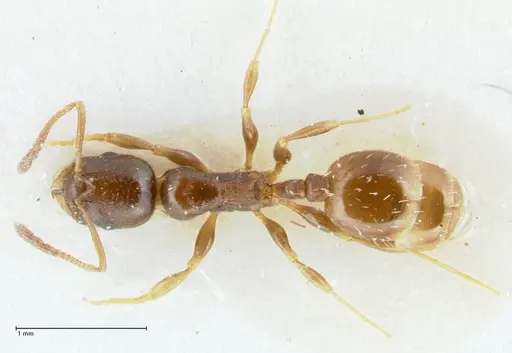
FOCOL1793-2
在 AntWeb 上查看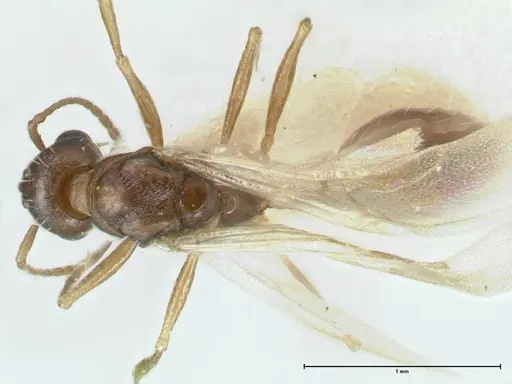
科学文献
正在加载分布地图...正在加载商品...