
Temnothorax nikoklesi
- 学名
- Temnothorax nikoklesi
- 族
- Crematogastrini
- 亚科
- Myrmicinae
- 命名者
- Salata <i>et al.</i>, 2024
- 地理分布
- 分布于 0 个国家/地区
物种引言
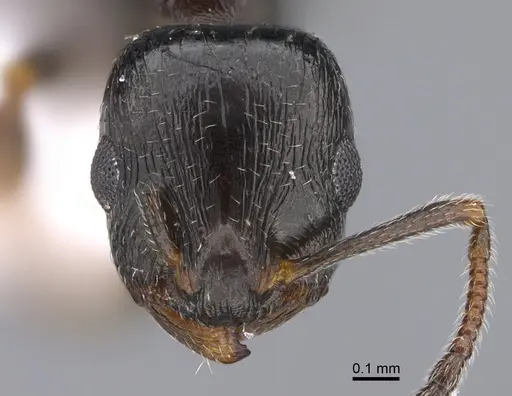
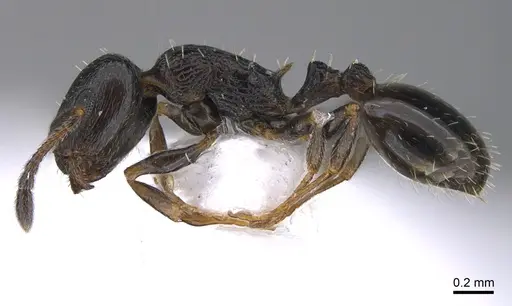
Temnothorax nikoklesi is a tiny ant species described in 2024,belonging to the Temnothorax exilis group. Workers are dark brown to black, with brown antennal scapes and femora, and are distinguished by very long, needle-shaped propodeal spines that point almost straight upward . Their total body length is not documented, but based on related species they likely measure around 2-3 mm. This species is known only from Cyprus, where it inhabits warm, rocky Mediterranean landscapes at low altitudes (6-387 m) . As a newly described species, captive care information is limited. Workers have been collected from limestone rocks in sunny open areas, stones near the beach, and juniper bushes, suggesting a thermophilous, dry-adapted lifestyle . Their extreme small size means escape prevention is critical, and they likely form small colonies in rock crevices.
Quick Summary
- Difficulty: Medium
- Origin & Habitat: Cyprus (Palaearctic Region). This species inhabits warm, rocky Mediterranean landscapes at low altitudes (6-387 m). Workers have been collected from limestone rocks in open sunny ruderal areas near citrus orchards, stones near the beach, and juniper bushes growing on limestone rocks. One specimen was taken from bushes inside a pine forest [1][2].
- Colony Type: Unconfirmed. Based on typical Temnothorax patterns, likely single-queen (monogyne) colonies. The T. exilis group species typically form small colonies in rock crevices.
- Size & Growth:
- Queen: Not documented in scientific literature, queen measurements unavailable [1][2]
- Worker: ~2-3 mm inferred from genus (total length not directly recorded, head length 0.62-0.70 mm, mesosoma length 0.66-0.79 mm) [1][2]
- Colony: Unknown, likely small, possibly up to a few hundred workers based on related species
- Growth: Unknown, likely moderate like other small Temnothorax species
- Development: Estimated 6-10 weeks based on typical Temnothorax development patterns at optimal temperature (Direct development data unavailable for this newly described species. Estimates are based on genus-level patterns for small Mediterranean Temnothorax.)
- Antkeeping:
- Temperature: Keep at 22-26°C. This is a thermophilous species from warm Mediterranean Cyprus, so they prefer warmer conditions than many temperate Temnothorax. Provide a gentle heat gradient in the nest area [1].
- Humidity: Low to moderate humidity. Their natural habitat in sunny rocky areas suggests they tolerate drier conditions. Allow the nest substrate to partially dry out between waterings. Avoid constant moisture, but provide a water tube in the outworld.
- Diapause: Likely required. Based on their Mediterranean origin and seasonal patterns of related species, a mild winter rest period (around 10-15°C for 2-3 months) is appropriate. This is inferred from genus patterns, not directly studied.
- Nesting: Tight chambers and narrow passages scaled to their tiny size. In nature, they nest inside rock crevices. For captivity, a Y-tong (AAC) nest with fine chambers or a small plaster nest works well. Avoid tall open spaces, they prefer confined spaces.
- Behavior: Active foragers with likely timid temperament. They belong to the subfamily Myrmicinae (tribe Crematogastrini) which possesses a modified spatulate stinger used for smearing venom, but they are too small to be a threat to humans. Escape risk is HIGH due to their very small size, they can squeeze through the tiniest gaps. Excellent escape prevention is essential, including fine mesh barriers and tight-fitting lids.
- Common Issues: escape prevention is critical, workers are extremely small and can squeeze through gaps that seem impossible., newly described species means captive care is not well-documented, be prepared to experiment and observe., colonies are likely small and slow-growing, avoid overfeeding to prevent mold and brood death., wild-caught colonies may harbor parasites or unknown health issues, quarantine new acquisitions., test tube setups must have very small water reservoirs to prevent flooding of tiny colonies.
Housing and Nest Setup
Temnothorax nikoklesi are tiny ants that need appropriately scaled housing. A Y-tong (AAC) nest with narrow chambers or a small plaster formicarium works well. The chambers should be tight, these ants feel secure in confined spaces and may abandon overly large, open nest areas. Test tube setups can work for founding colonies, but use very small diameter tubes and minimal water reservoirs to prevent flooding. Because of their minute size, even standard test tube setups may need modification: pack the cotton plug tightly (but not so dense that workers get stuck) and use a tiny water reservoir. Provide a small outworld connected to the nest for foraging. Use fine mesh (0.5 mm or smaller) on any ventilation holes, these ants can escape through standard ant mesh [1][2].
Temperature and Heating
As a thermophilous species from Cyprus, T. nikoklesi prefers warmer temperatures than many European Temnothorax. Keep the nest area at 22-26°C, with a gentle gradient so workers can choose their preferred temperature. A small heating cable or mat on one side of the nest can create this gradient, place it on top of the nest, not underneath, to avoid excessive drying. Avoid temperatures below 18°C for extended periods, as this species is adapted to warm Mediterranean conditions. During winter, a mild diapause at 10-15°C for 2-3 months is likely appropriate, though this is inferred from related species rather than directly documented [1][2].
Feeding and Diet
Like other small Temnothorax, these ants are likely omnivorous with a preference for small protein sources and sugar. Offer small live prey such as fruit flies, springtails, and other micro-arthropods. They will likely accept sugar water or honey diluted with water. Feed small amounts every 2-3 days, removing any uneaten prey to prevent mold. Because their colonies are probably small, overfeeding is a common mistake that leads to mold and colony loss. A tiny drop of sugar water should suffice, adjust based on how quickly they consume it [3].
Humidity and Water
Low to moderate humidity is appropriate. Their natural habitat in sunny rocky areas suggests they are adapted to drier conditions than many forest-dwelling ants. Allow the nest substrate to dry partially between waterings, it should feel slightly damp but not waterlogged. Provide a water tube in the outworld as a permanent water source. Because of their tiny size, condensation can be problematic, ensure adequate ventilation to prevent excessive moisture buildup while maintaining enough humidity to prevent desiccation [1][2].
Escape Prevention
This is the most critical aspect of keeping T. nikoklesi. Their extremely small size (workers are only about 2-3 mm total length) means they can escape through gaps that seem impossibly small. Use fluon (ant-proof barrier) on all rim edges. Use fine mesh (0.5 mm or smaller) on any ventilation holes. Check all connections between the nest and outworld for any tiny gaps. Even standard ant‑keeping equipment may have gaps that this species can exploit. Inspect your setup daily, especially in the first few weeks. When in doubt, add additional barriers, these tiny ants are escape artists despite their small colony size [1][2].
Colony Dynamics and Growth
Based on related species in the T. exilis group, colonies likely remain small, probably under a few hundred workers at maturity. Growth will likely be moderate rather than fast, as is typical for small Temnothorax. The first workers (nanitics) will be very small and may take 6-10 weeks to develop, be patient during the founding stage. Disturbing the queen or moving the nest during early colony development can be fatal. Once established, colonies are likely long‑lived and resilient, but their small size means individual colony loss is always a risk. Consider starting with multiple founding queens if possible to increase your chances of success [1][2].
Frequently Asked Questions
How long does it take for Temnothorax nikoklesi to produce first workers?
Direct data is unavailable for this newly described species, but based on typical Temnothorax development patterns, expect 6-10 weeks from egg to first worker at optimal temperature (around 24°C). The exact timing depends on temperature and colony health. The first workers (nanitics) will be very small, which is normal [3].
Can I keep Temnothorax nikoklesi in a test tube setup?
Yes, test tubes can work for founding colonies, but modify them for the ants' tiny size. Use a small‑diameter tube if available, pack the cotton plug tightly (but not so dense workers get stuck), and use a very small water reservoir to prevent flooding. Transfer to a proper nest once the colony reaches about 20 workers [3].
Do Temnothorax nikoklesi ants sting?
Temnothorax ants have stingers, but they are too small to deliver significant pain to humans. Their subfamily uses a smearing venom mechanism via a modified stinger, but they are not dangerous to keepers [3].
What temperature do Temnothorax nikoklesi need?
Keep them at 22-26°C. This is a warm Mediterranean species, so they prefer temperatures on the warmer end compared to many temperate ants. Provide a gentle heat gradient in the nest area. Avoid prolonged temperatures below 18°C except during winter diapause [1][2].
Are Temnothorax nikoklesi good for beginners?
This species is rated as Medium difficulty. While not the most challenging ant to keep, their newly described status means captive care is not well‑documented. Their tiny size also makes escape prevention critical. Beginners should have some ant‑keeping experience before attempting this species [3].
Do Temnothorax nikoklesi need hibernation?
Based on their Mediterranean origin, a mild winter rest period is likely appropriate. Provide 2-3 months at 10-15°C during winter. This is inferred from related species rather than directly documented for T. nikoklesi. Some activity may continue at room temperature, but a diapause helps maintain natural seasonal rhythms [3].
How big do Temnothorax nikoklesi colonies get?
Colony size is not directly documented, but based on related species in the T. exilis group, colonies likely reach a few hundred workers at most. They are naturally small‑colony ants, so don't expect massive swarms like you see with Formica or Camponotus [1][2].
What do Temnothorax nikoklesi eat?
Like other small Temnothorax, they likely eat small live prey (fruit flies, springtails, micro‑arthropods) and sugar sources (honey water, sugar water). Feed small amounts every few days, removing uneaten food to prevent mold. Their tiny size means prey should be appropriately scaled, fruit flies and similar small insects are ideal [3].
Why are my Temnothorax nikoklesi escaping?
Their tiny size allows them to squeeze through impossibly small gaps. Review all connections, use fluon on rim edges, and ensure all mesh is fine enough (0.5 mm or smaller). Check daily for the first few weeks and seal any gaps you find. Escape prevention must be excellent with this species [1][2].
Report an Issue
The current care sheet is based fully on literature. See inconsistencies, or something that's incorrect? Please , it will be resolved after review from an admin. Contributing to the blogs tab also helps providing information, to make us be able to further improve the caresheets. Thank you for your support!
References

此饲养指南授权协议为 CC BY-SA 4.0 .
社区博客
CASENT0923706
在 AntWeb 上查看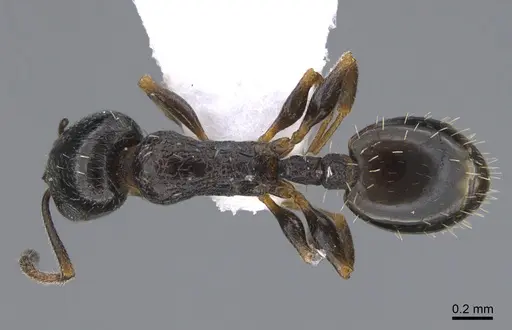
科学文献
正在加载分布地图...正在加载商品...