
Temnothorax cypridis
- 学名
- Temnothorax cypridis
- 族
- Crematogastrini
- 亚科
- Myrmicinae
- 命名者
- Santschi, 1930
- 地理分布
- 分布于 0 个国家/地区
物种引言
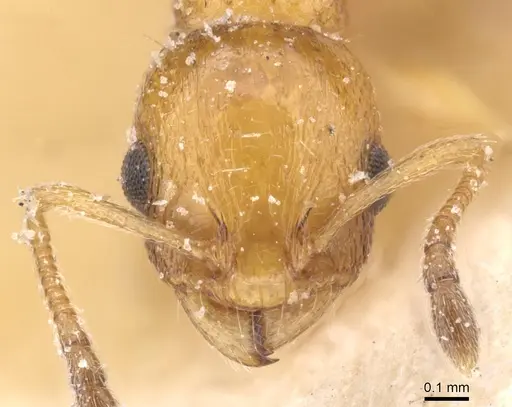
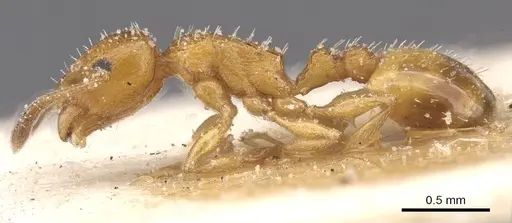
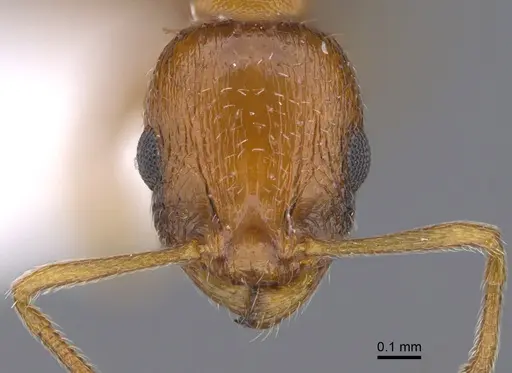
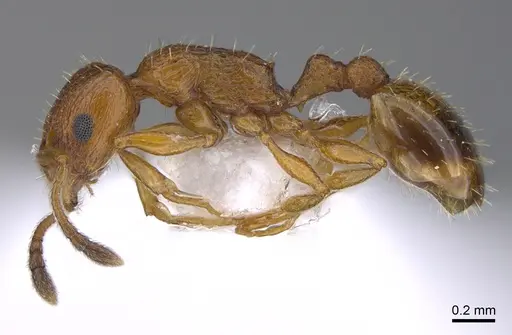
Temnothorax cypridis is a tiny, recently recognized ant species native only to Cyprus . Workers are around 3-4mm (estimated from genus, as total length has not been directly measured) and have a mostly yellow body with a dark brown to black antennal club . The first segment of the abdomen (gaster) is yellow at the base with a brown band over the rest . This species has very short propodeal spines - reduced to small triangular bumps - and short body hairs that are clearly shorter than the eye diameter (mean ratio 0.71) . Originally described in 1930 as a subspecies of Temnothorax bulgaricus, it was raised to full species rank in 2024 based on differences in body hair length . These ants prefer shady, cooler spots: they are found in pine forests and near streams, on bushes like Pistacia and Rubus, rather than in hot, open areas . Because the species is so new to science, many details of its biology and captive care rely on inferences from related Temnothorax species.
Quick Summary
- Difficulty: Easy
- Origin & Habitat: Cyprus (Palaearctic Region). Found at altitudes from sea level to 432 m in Mediterranean bushland, especially on Pistacia and Rubus inside pine forests or near streams, also around dams and shaded roadsides [1][2].
- Colony Type: Based on typical Temnothorax patterns, likely single‑queen colonies. Colony structure has not been directly documented for this species.
- Size & Growth:
- Queen: Not directly measured, inferred from genus: ~5-7 mm
- Worker: Total length not directly measured, based on genus estimates: ~3-4 mm
- Colony: A few hundred workers, typical for small Temnothorax species
- Growth: Moderate
- Development: Estimated 6-10 weeks at optimal temperature (based on related species) (Development timeline has not been directly studied for Temnothorax cypridis.)
- Antkeeping:
- Temperature: Likely 18-22°C. The species is described as ‘less thermophilous’ (less heat‑loving) [1][2], so avoid temperatures above 25°C for extended periods. Room temperature works well.
- Humidity: Moderate. Since they live near streams and in shaded pine forests, keep the nest substrate slightly moist but not waterlogged.
- Diapause: A mild winter rest period (2-3 months at 10-15°C) is likely beneficial given the Mediterranean climate of Cyprus. Observe colony activity to fine‑tune.
- Nesting: Natural nests have not been found [1]. Based on related Temnothorax, they probably nest in small cavities under stones, in rotting wood, or in rock crevices. A Y‑tong (AAC) nest or a test tube setup works well. Keep the nest dark and quiet.
- Behavior: Generally peaceful and non‑aggressive. Like other members of tribe Crematogastrini, they use a ‘smear’ defense: a modified, flattened stinger that wipes venom onto attackers rather than piercing. This is not effective against humans. Workers are tiny (3-4 mm), so escape prevention must be excellent, they can squeeze through very small gaps.
- Common Issues: tiny size means escapes are likely without fine mesh barriers (, newly described species, most care information is inferred from related Temnothorax and may need adjustment, colonies may be slow to establish during the founding stage, overheating risk, avoid temperatures above 25°C as they prefer cooler conditions, limited availability in the hobby since the species was only recently recognized
Housing and Nest Setup
Because Temnothorax cypridis is a newly described species with no recorded nests [1], standard small‑ant housing works best. A test tube with a water reservoir (cotton plug) is ideal for a founding colony. For an established colony, a Y‑tong (AAC) nest with small chambers suits their tiny size. Keep the nest dark, these ants naturally occupy shaded microhabitats [1][2]. The outworld should be simple: a small foraging area with a source of sugar and water. Escape prevention is critical due to their very small size, use fluon on container edges and seal all openings with fine mesh (
Temperature and Heating
Temnothorax cypridis prefers cooler conditions than many Mediterranean ants. The species is described as ‘less thermophilous’ [1][2], meaning it does not like intense heat. Keep the nest at 18-22°C, room temperature usually works. Avoid direct sunlight or heat sources that push the temperature above 25°C. If you need to provide gentle heat, use a very low‑output heating cable on one side of the nest, but monitor closely to prevent overheating.
Feeding and Diet
Like other Temnothorax, these ants are omnivores. Offer small protein sources (fruit flies, pinhead crickets, or bits of mealworm) and sugar sources (sugar water, honey water). Feed small amounts 2-3 times per week. Because workers are so small (3-4 mm), prey items must be very small, or you can crush larger insects into manageable pieces. Remove uneaten food after 24 hours to prevent mold.
Seasonal Care and Winter Rest
Cyprus has mild, wet winters and hot, dry summers. Based on this climate and the species’ preference for cooler, shaded spots [1][2], a mild winter rest period (2-3 months at 10-15°C) is likely beneficial. Reduce feeding during this time but keep a small water source available. The rest period helps synchronise colony activity and may improve long‑term health. If you keep them at stable room temperature year‑round, they may not need a true diapause, but a cooler period is recommended when possible.
Colony Development
Specific development data for Temnothorax cypridis is unavailable because the species was only raised to full species status in 2024 and no nests have been studied [1]. Based on typical small Temnothorax, expect the following: eggs hatch in 1-2 weeks, larvae develop over 3-4 weeks, and pupae emerge 2-3 weeks later. First workers (nanitics) appear roughly 6-10 weeks after the queen lays eggs, depending on temperature. Colony growth is moderate, the first dozen workers come slowly, then growth accelerates once the colony reaches about 20-30 workers. The queen likely rears the first brood alone on stored fat reserves (claustral founding, typical of the genus).
Frequently Asked Questions
How long does it take for Temnothorax cypridis to get their first workers?
Expect first workers (nanitics) to emerge 6-10 weeks after founding, depending on temperature. This timeline is inferred from related Temnothorax species, it has not been directly studied for T. cypridis. The queen likely raises the first brood alone using stored fat reserves (claustral founding).
What temperature is best for Temnothorax cypridis?
Keep them at 18-22°C. This species is less heat‑tolerant than many Mediterranean ants, avoid temperatures above 25°C. They naturally inhabit cooler, shaded microhabitats in Cyprus [1][2].
Do Temnothorax cypridis ants sting?
They belong to tribe Crematogastrini, which uses a ‘smear’ defense: a modified stinger that wipes venom onto enemies instead of piercing. This is not effective against humans. These ants are docile and pose no danger to keepers.
How big do Temnothorax cypridis colonies get?
Based on typical small Temnothorax species, colonies likely reach a few hundred workers over 1-2 years. They remain relatively small compared to many common ant species.
Can I keep multiple Temnothorax cypridis queens together?
This has not been documented for this species. Most Temnothorax are single‑queen. Combining unrelated queens is not recommended, it often leads to fighting. If you try it, use a small nest and monitor closely.
What do Temnothorax cypridis eat?
They accept small protein sources (fruit flies, tiny crickets, small mealworms) and sugar sources (honey water, sugar water). Prey must be sized for their tiny 3-4 mm workers, offer very small insects or crushed pieces of larger ones.
Do Temnothorax cypridis need hibernation?
A mild winter rest period (2-3 months at 10-15°C) is likely beneficial given the Mediterranean climate of Cyprus. This helps mimic their natural seasonal cycle. If you keep them at stable room temperature year‑round, they may not need a true diapause, but a cooler period is recommended.
Are Temnothorax cypridis good for beginners?
Yes, they are considered easy to keep due to their small size, moderate temperature needs, and peaceful nature. The main challenges are their tiny size (requires excellent escape prevention) and limited availability as a newly described species.
When should I move my Temnothorax cypridis to a formicarium?
Keep them in a test tube setup during the founding stage. Once the colony reaches about 20-30 workers and the test tube becomes crowded, you can move them to a small formicarium like a Y‑tong (AAC) nest.
Why are my Temnothorax cypridis escaping?
Their tiny 3-4 mm size means they can squeeze through very small gaps. Use fluon on all container edges, ensure lids fit tightly, and cover any ventilation holes with fine mesh (at least 0.5 mm).
Report an Issue
The current care sheet is based fully on literature. See inconsistencies, or something that's incorrect? Please , it will be resolved after review from an admin. Contributing to the blogs tab also helps providing information, to make us be able to further improve the caresheets. Thank you for your support!
References

此饲养指南授权协议为 CC BY-SA 4.0 .
社区博客
CASENT0912914
在 AntWeb 上查看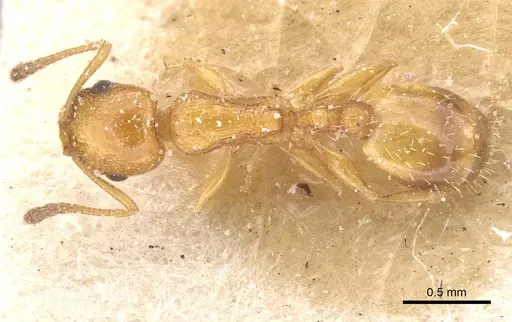
CASENT0923704
在 AntWeb 上查看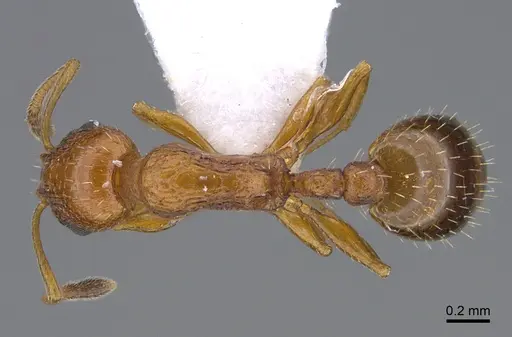
科学文献
正在加载分布地图...正在加载商品...