
Temnothorax atomus
- 学名
- Temnothorax atomus
- 族
- Crematogastrini
- 亚科
- Myrmicinae
- 命名者
- Cagniant & Espadaler, 1997
- 地理分布
- 分布于 0 个国家/地区
物种引言
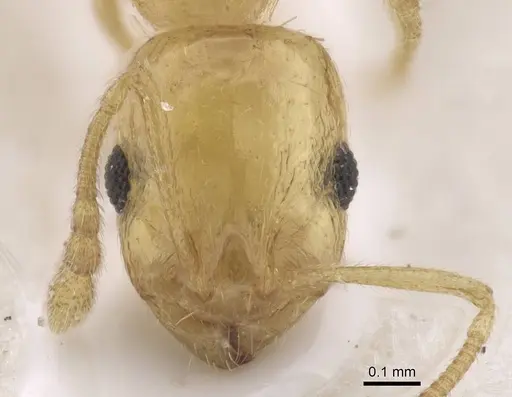
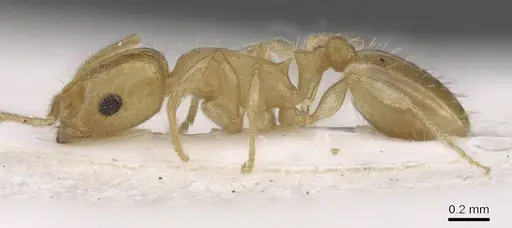
Temnothorax atomus is a tiny ant species native to Morocco in North Africa. It was first described in 1997 as Leptothorax atomus and later moved to Temnothorax. It belongs to the tebessae superspecies group, which includes several closely related North African species . Workers are small (2-4 mm) and have the typical Myrmicinae body shape with a two-segmented petiole. Queens are slightly larger (4-5 mm) and winged; males are also winged. The species is known only from two locations in the Atlas Mountains of Morocco: Tizi-n-Test and Ain Leuh . Based on typical Temnothorax habits, these ants likely nest in small cavities under stones, in rock crevices, or in rotting wood. They are part of the diverse ant fauna of the Mediterranean and North African region, but very little specific biological data is available for this species. As a member of the Crematogastrini tribe, they use a smear defense - a modified, flattened spatulate stinger to wipe venom onto enemies rather than piercing.
Quick Summary
- Difficulty: Medium
- Origin & Habitat: Native to Morocco (Palaearctic Region). Recorded from Tizi-n-Test and Ain Leuh in the mountainous Atlas region [3].
- Colony Type: Likely monogyne (single‑queen) based on typical Temnothorax patterns, but this is unconfirmed. Ergatoid (wingless) replacement queens may develop in some Temnothorax species.
- Size & Growth:
- Queen: ~4-5 mm, inferred from Temnothorax genus (no specific data for this species).
- Worker: ~2-4 mm, inferred from Temnothorax genus (no specific data for this species).
- Colony: Likely up to a few hundred workers, typical for small Temnothorax species.
- Growth: Moderate
- Development: 6-10 weeks (estimated from related Temnothorax species, no formal data for T. atomus). (Development speed depends on temperature, warmer conditions (within safe range) accelerate it.)
- Antkeeping:
- Temperature: Keep at 18-24°C. This range suits most Temnothorax and matches their mountainous Mediterranean origin. Avoid sudden swings.
- Humidity: Moderate, keep the nest substrate slightly moist but not waterlogged. Allow some drying between waterings to avoid mould.
- Diapause: Yes, likely requires a winter rest period of 2-3 months at 10-15°C, similar to other temperate/mountain Temnothorax species.
- Nesting: Prefers small, tight cavities. Use test tubes for founding, for established colonies, Y-tong (AAC) nests with narrow chambers or small plaster nests work well. Avoid large open spaces.
- Behavior: Peaceful and non‑aggressive. Workers are timid and rely on smearing venom rather than stinging. Their tiny size makes them a high escape risk, use very fine mesh on all openings. They are not dangerous to keepers.
- Common Issues: escape through tiny gaps, use fine mesh or close‑fitted lids., slow colony growth, patience required, colonies may take years to reach a few dozen workers., desiccation, keep nest substrate slightly moist but not wet., overheating, avoid direct sun or heat cables too close., wild‑caught colonies may carry parasites, quarantine new colonies before introducing to main setup.
Housing and Nest Setup
Because these ants are tiny, your housing must match their small size. For founding colonies, use a test tube about 10-12 mm in diameter with a cotton plug separating the water reservoir from the ants. The tube should be small enough that the queen can touch both sides when curled up, this prevents her from wandering. For established colonies, Y-tong (AAC) nests with narrow chambers or small plaster nests are ideal. These mimic the natural cavities under stones or in rotting wood. Avoid large open areas that can stress a small colony. Connect a small outworld for feeding. Use fine mesh on any openings, these ants can slip through surprisingly small gaps.
Feeding and Diet
Like most Temnothorax species, T. atomus likely has a mixed diet of honeydew and small prey. In captivity, offer a constant sugar source, a drop of sugar water or honey diluted 50/50 with water. For protein, provide small live prey: fruit flies, pinhead crickets, or tiny mealworms. Springtails are also excellent. Feed protein 2-3 times per week, removing any leftovers after 24 hours. Always have fresh water available. Some colonies accept commercial ant jelly, but live prey is better for health.
Temperature and Seasonal Care
Keep the colony at room temperature, ideally 18-24°C. They can tolerate slightly cooler conditions but grow best in moderate warmth. A heating cable on one side of the nest creates a temperature gradient, letting the ants move between warmer and cooler zones. During winter, give them a 2-3 month diapause at 10-15°C. Gradually reduce the temperature in autumn and increase it in spring, never make sudden changes. Reduce feeding during diapause but keep water available, do not feed during deep hibernation.
Behavior and Colony Dynamics
Colonies are small and peaceful. Workers actively forage for honeydew and tiny prey. They rarely sting, relying instead on smearing venom as a deterrent. The queen starts the colony alone (if founding is claustral) and raises the first workers on her stored reserves. Once workers emerge, they take over foraging and brood care. Growth is slow but steady. This species is best observed rather than handled, watch them navigate, tend brood, and communicate via pheromones and tandem running.
Handling and Observation
These tiny ants are fragile, always observe them in the nest rather than handling. If you need to move them (for cleaning or transfers), use gentle techniques: coax them into a secondary container with a soft brush, or connect tubes and let them relocate themselves. Never grab them with fingers. Their small size makes them interesting to watch with a magnifying glass or macro lens. The small colony size means you can peek without disturbing them much.
Frequently Asked Questions
How long does it take for Temnothorax atomus to raise first workers?
No data for this species, but based on related Temnothorax species, expect roughly 6-10 weeks from egg to worker at room temperature. The queen likely raises the first brood alone using stored reserves, then workers take over.
Can I keep Temnothorax atomus in a test tube?
Yes, test tubes work perfectly for founding colonies. Use a narrow tube (10-12 mm diameter) with a cotton water plug. The queen will lay eggs in the dry end. Keep the tube horizontal, cover it with a dark cloth, and avoid disturbing her.
Do Temnothorax atomus ants sting?
They have a modified stinger used for smearing venom, but they are not aggressive and rarely attempt to sting. Their tiny size means any sting is negligible. They pose no danger to keepers.
What do I feed my Temnothorax atomus colony?
Provide a constant sugar source (sugar water or diluted honey) and protein 2-3 times per week. Small live prey like fruit flies, springtails, or pinhead crickets are ideal. Remove uneaten prey after 24 hours. Always have fresh water available.
Do Temnothorax atomus need hibernation?
Yes, they likely require a winter rest period of 2-3 months at 10-15°C, similar to other temperate/mountain Temnothorax species. Reduce feeding during this time but keep water available. Do not feed during deep hibernation.
How big do Temnothorax atomus colonies get?
Based on typical Temnothorax patterns, colonies likely reach up to a few hundred workers. They grow slowly, so large colonies take years. Their small size is part of their charm.
Are Temnothorax atomus good for beginners?
They are moderate difficulty, suitable for keepers with some experience. Their tiny size and slow growth require extra care with escape prevention and housing. They are not as forgiving as larger, more common species, but their peaceful nature makes them rewarding for patient keepers.
When should I move my colony to a formicarium?
Wait until the colony has at least 20-30 workers. Test tubes work well up to that size. When moving, connect the test tube to the new nest and let the ants relocate themselves, never force them. Use Y-tong or plaster nests with small chambers.
Why are my Temnothorax atomus dying?
Common causes: drying out (keep substrate slightly moist), overheating (avoid direct sun or too‑close heat cables), escape (check all mesh gaps), parasites (from wild‑caught colonies), and stress from too much disturbance. Review temperature, humidity, and feeding. If the queen stops laying, the colony may collapse.
Can I keep multiple queens together?
No information is available on pleometrosis for this species. It is safest to house queens separately. Combining unrelated queens usually leads to fighting.
Report an Issue
The current care sheet is based fully on literature. See inconsistencies, or something that's incorrect? Please , it will be resolved after review from an admin. Contributing to the blogs tab also helps providing information, to make us be able to further improve the caresheets. Thank you for your support!
References

此饲养指南授权协议为 CC BY-SA 4.0 .
社区博客
CASENT0915391
在 AntWeb 上查看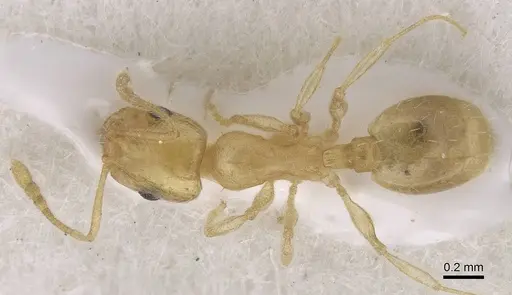
科学文献
正在加载分布地图...正在加载商品...