
Temnothorax androsanus
- 学名
- Temnothorax androsanus
- 族
- Crematogastrini
- 亚科
- Myrmicinae
- 命名者
- Wheeler, 1905
- 地理分布
- 分布于 0 个国家/地区
物种引言
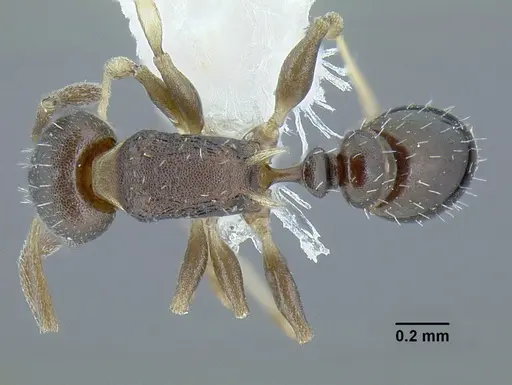
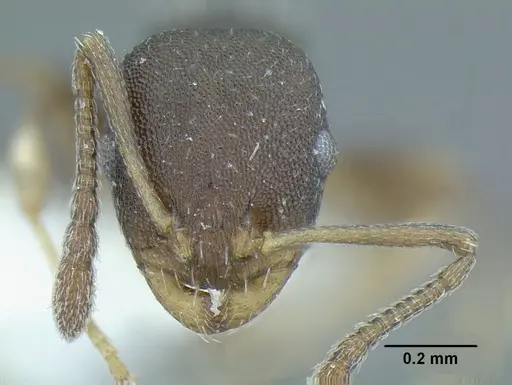
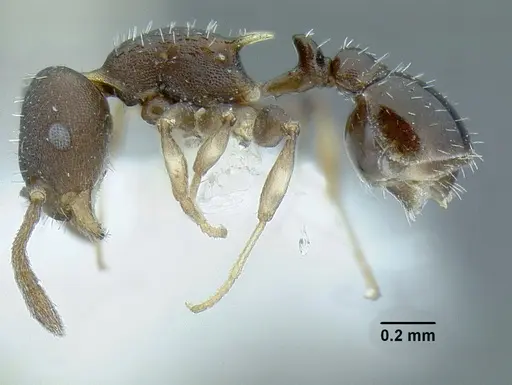
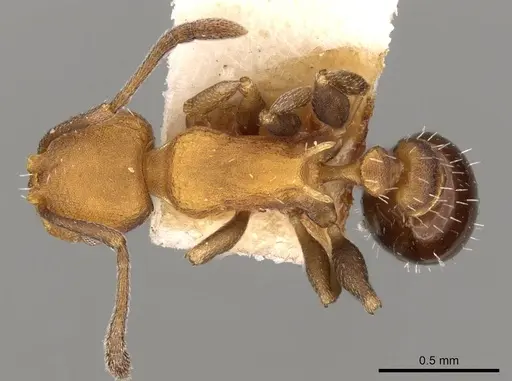
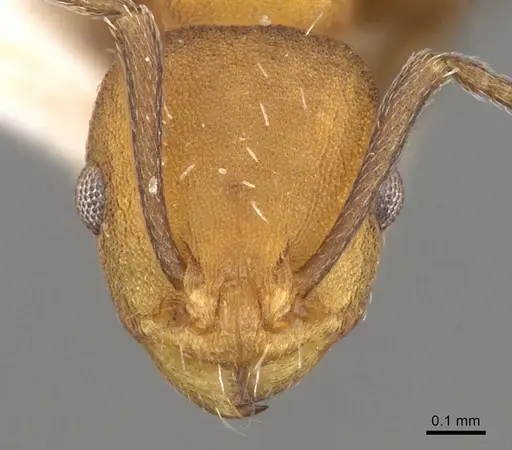
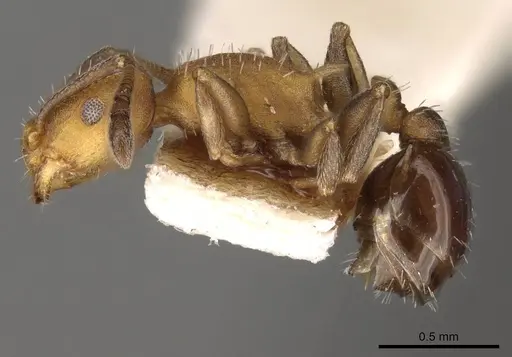
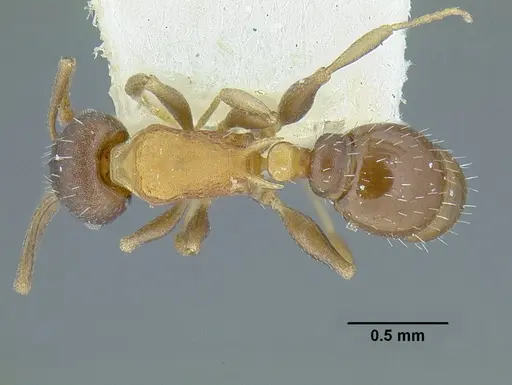
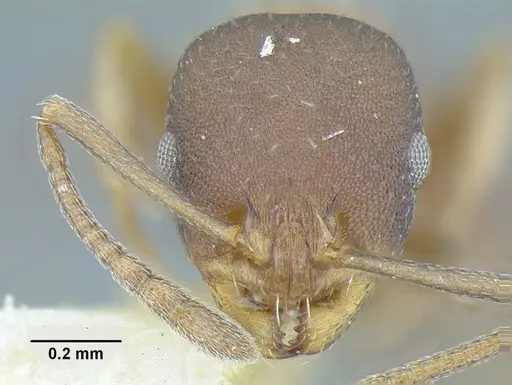
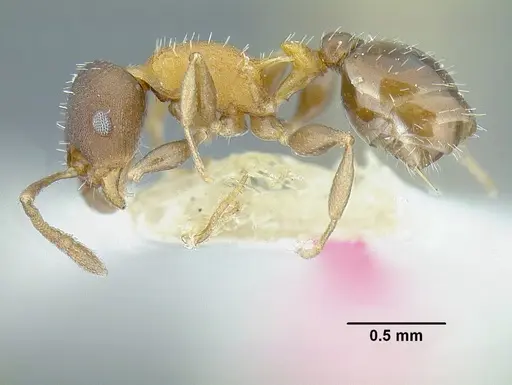
Temnothorax androsanus is a small ant species from Mexico, documented in ant surveys . Workers are tiny, typically 2-4 mm based on genus patterns , with a dark coloration common to the genus . They have a single petiole node and some sculpturing on the mesosoma . These ants nest in small cavities, such as under stones, in rotting wood, or inside hollow plant stems . Like other Temnothorax, T. androsanus is not aggressive and forms small colonies with a single queen . Their primary defense is smearing venom with a modified, spatulate stinger rather than piercing flesh, though they pose no threat to humans. Their small size, calm temperament, and relatively simple care make them a rewarding species for keepers who appreciate subtle behavior.
Quick Summary
- Difficulty: Medium
- Origin & Habitat: Native to Mexico, specific locality not recorded [1]. Typical Temnothorax habitats include small cavities in rotting wood, under stones, or in plant stems [2].
- Colony Type: Unconfirmed, probably monogyne (single queen) based on typical genus patterns [2]. Some species have ergatoid (wingless) replacement queens that can take over if the primary queen dies [2].
- Size & Growth:
- Antkeeping:
- Temperature: 20-24 °C, typical for the genus [2]. Avoid extremes and direct sunlight.
- Humidity: Keep the nest substrate moderately moist (not waterlogged). Provide a moisture gradient [2].
- Diapause: Recommended, provide a winter rest at 10-15 °C for 2-3 months to mimic natural seasonal changes, though not confirmed for this species [2].
- Nesting: Small cavities work best: test tubes for founding, then Y-tong, plaster, or naturalistic setups with tight chambers [2].
- Behavior: Workers are small, peaceful, and rarely sting humans, they use a modified stinger to smear venom, not pierce. High escape risk due to tiny size. Forage for small prey and honeydew [2].
- Common Issues: escape prevention is critical due to very small size, use fine mesh and tight-fitting lids., colonies grow slowly, which may test patience., test tube setups can dry out, monitor moisture regularly., wild-caught colonies may contain parasites., overheating from direct sunlight or heat sources.
Housing and Nest Setup
For founding colonies, a test tube setup works perfectly. Fill the tube about one-third with water and plug the end with cotton to provide humidity through capillary action. Place the tube in a dark area to encourage the queen to settle. Once the first workers (nanitics) emerge, you can continue using the test tube or move to a small formicarium.
For established colonies, Y-tong (AAC) nests with small chambers are ideal. Naturalistic setups with tight cavities (e.g., inside cork or small wooden formicaria) also suit them. Avoid large, open spaces, these ants feel secure in tight quarters. Provide a moisture gradient so workers can choose their preferred humidity [2].
Feeding and Diet
Temnothorax androsanus is omnivorous like most of its genus. Offer small protein sources such as fruit flies, pinhead crickets, or tiny mealworms about twice a week. Remove uneaten prey after 24 hours to prevent mold. For sugars, provide honey water, sugar water, or commercial ant nectar, place a small drop in the foraging area and refresh every few days. In the wild they also collect honeydew, so occasional sugar sources mimic their natural diet [2].
Temperature and Seasonal Care
Maintain temperatures around 20-24 °C for optimal colony growth. They tolerate 18-26 °C, but growth slows outside this range. Avoid placing the setup near direct sunlight, heating vents, or air conditioning units that cause temperature swings. Since this species comes from Mexico, it likely experiences seasonal temperature changes. Provide a winter rest at 10-15 °C for 2-3 months to mimic natural conditions and support colony health [2]. During hibernation, reduce feeding to once or twice a month and minimize disturbances.
Behavior and Observation
Workers are active and constantly explore their environment. They are not defensive and can be observed up close. Their modified stinger is used to smear venom, but they rarely use it against keepers. Workers communicate via chemical signals and may recruit nestmates to food using tandem running (one worker leads another) [2]. Colonies stay small (typically under 500 workers), so you can watch individual interactions, a rare opportunity with larger species.
Frequently Asked Questions
How long does it take for Temnothorax androsanus to produce first workers?
Expect first workers (nanitics) around 6-10 weeks after the queen lays eggs, assuming temperatures of 22-24 °C. This is based on typical Temnothorax development patterns [2]. The first workers are smaller than mature ones but fully functional.
Can I keep Temnothorax androsanus in a test tube setup?
Yes, test tubes are ideal for founding colonies. Their small size suits the narrow space, and the cotton‑water system provides proper humidity. You can keep them in a test tube through founding and even as a small colony. Move to a larger nest only when the colony reaches several dozen workers [2].
Do Temnothorax androsanus sting?
They have a modified stinger used to smear venom, not to pierce. Workers are too small to cause any harm to humans, and the venom is not medically significant. They are completely safe to keep [2].
How big do Temnothorax androsanus colonies get?
Colonies typically reach a few hundred workers at maturity, smaller than many common species. This makes them easier to house but means you won't see huge worker swarms [2].
Do Temnothorax androsanus need hibernation?
A winter rest period is recommended, though not confirmed for this specific species. Reduce temperatures to 10-15 °C for 2-3 months during winter to mimic natural seasonal changes. Reduce feeding and avoid disturbances during this time [2].
What do I feed Temnothorax androsanus?
Offer small protein sources like fruit flies, tiny crickets, or small mealworms twice weekly. Also provide sugar water, honey water, or commercial ant nectar. Remove uneaten prey after 24 hours to prevent mold [2].
Are Temnothorax androsanus good for beginners?
They are moderate difficulty, easier than some exotic species but requiring more attention than hardy beginner ants like Lasius. Their tiny size demands excellent escape prevention, and slower growth can test patience. However, their calm behavior and manageable colony size make them rewarding for committed beginners [2].
Why are my Temnothorax androsanus escaping?
Their minimal size lets them slip through gaps as small as 1 mm. Check all openings, lid seams, tube connections, any cracks. Use fluon or similar barriers on tube rims, and cover ventilation holes with fine mesh. Even tiny gaps can be a highway [2].
When should I move my colony to a formicarium?
Move when the test tube becomes crowded or the water reservoir runs out, typically at 30-50 workers. A small Y‑tong or plaster nest works well. Ensure the new setup has appropriately sized chambers, too large and they may feel insecure [2].
Can I keep multiple queens together?
Not recommended. While some Temnothorax found colonies pleometrotically (multiple queens together), combining unrelated established queens usually leads to fighting. Keep one queen per colony for best results [2].
Report an Issue
The current care sheet is based fully on literature. See inconsistencies, or something that's incorrect? Please , it will be resolved after review from an admin. Contributing to the blogs tab also helps providing information, to make us be able to further improve the caresheets. Thank you for your support!
References

此饲养指南授权协议为 CC BY-SA 4.0 .
社区博客
科学文献
正在加载分布地图...正在加载商品...