
Tapinoma glaucum
- 学名
- Tapinoma glaucum
- 族
- Tapinomini
- 亚科
- Dolichoderinae
- 命名者
- Viehmeyer, 1916
- 地理分布
- 分布于 0 个国家/地区
物种引言
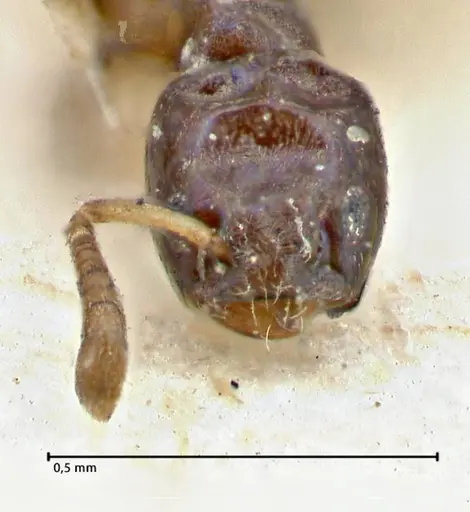
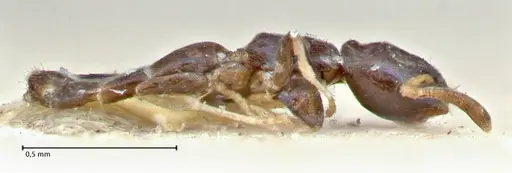
Tapinoma glaucum is a small, dark ant belonging to the Dolichoderinae subfamily, originally described from Singapore in 1916 . It has also been collected in Brunei, confirmed as a new record for Borneo . This species was collected from the canopy of lowland dipterocarp forest, indicating an arboreal, canopy-dwelling lifestyle in tropical rainforests of Southeast Asia . Worker size is unknown but inferred from the Tapinoma genus to be around 2-3 mm . Like other members of its subfamily, T. glaucum lacks a functional stinger and instead exudes sticky, foul-smelling monoterpenes from an anal gland to deter predators.
Quick Summary
- Difficulty: Medium
- Origin & Habitat: Indomalaya region: Singapore and Brunei Darussalam. Collected in the canopy of lowland dipterocarp rainforest [3].
- Colony Type: Colony structure is unconfirmed for this species. Based on typical Tapinoma patterns, likely monogyne (single queen).
- Size & Growth:
- Queen: Size data unavailable. Inferred from Tapinoma genus: likely slightly larger than workers, around 3-4 mm.
- Worker: Size data unavailable. Inferred from Tapinoma genus: around 2-3 mm.
- Colony: Unknown for this specific species. Inferred from related Tapinoma: up to several hundred workers.
- Growth: Moderate (inferred from tropical Tapinoma patterns).
- Development: Unknown. No specific data available for this species. (As a tropical species, development likely occurs year-round without diapause. Estimate cannot be provided without research.)
- Antkeeping:
- Temperature: Keep warm and stable, roughly low-to-mid 20s°C. As a tropical species from lowland rainforest, they require warm conditions year-round. Specific optimal range not documented, avoid prolonged temperatures below 20°C.
- Humidity: Provide consistently moist nest substrate. They come from a rainforest environment, so humidity should be high, but specific levels are not documented.
- Diapause: Unknown. Based on tropical distribution, likely no diapause needed. Maintain warm conditions year-round.
- Nesting: Based on canopy-dwelling nature, likely prefer elevated or arboreal setups. Y-tong (AAC), plaster, or naturalistic soil nests with good ventilation are suitable. Tight chambers scaled to their small size are recommended.
- Behavior: Tapinoma glaucum is an active, fast-moving ant. Like all Dolichoderinae, it lacks a functional stinger and defends itself by exuding sticky, foul-smelling chemicals from the anal gland. Workers are skittish and flee rather than attack. Their small size (around 2-3 mm) makes escape prevention critical, fine mesh and barriers are essential. They are likely omnivorous, but specific dietary data is unavailable.
- Common Issues: tropical species may decline if temperatures drop below 20°C for extended periods, small worker size requires excellent escape prevention (fine mesh, fluon barriers), high humidity needs can lead to mold if ventilation is poor, limited availability and lack of research data make colony care uncertain, canopy-dwelling nature may require different setup approaches than ground-nesting ants
Temperature and Care
Tapinoma glaucum requires warm conditions year-round, given its tropical lowland rainforest origin. Maintain the nest area at temperatures roughly in the mid-20s°C, similar to a warm room or slightly warmer. A small heating cable on one side can provide a temperature gradient. Avoid prolonged exposure below 20°C, which may stress the colony. Since specific requirements are undocumented, observe your colony and adjust gradually if needed.
Humidity and Water Requirements
As a canopy-dweller from humid rainforests, T. glaucum needs consistently moist conditions. The nest substrate should be kept damp but not waterlogged. Specific humidity levels are not documented, but a setup that maintains visible moisture in the substrate without condensation or mold is ideal. A water reservoir in the nest or regular misting can help. Balance moisture with good ventilation to prevent mold.
Housing and Nest Preferences
Based on collection from canopy knockdown, T. glaucum likely prefers elevated nesting sites in captivity. Y-tong (AAC) or plaster nests with small, tight chambers (scaled to their 2-3 mm size) are suitable. Good ventilation is important. Escape prevention is essential due to small size, use fine mesh on all openings and a fluon barrier.
Feeding and Diet
Specific dietary data is unavailable. Based on Dolichoderinae preferences, T. glaucum is likely omnivorous. Offer a variety of sugar sources (honey water, sugar water) and small protein items (fruit flies, pinhead crickets, mealworms). Provide protein 2-3 times weekly and constant access to sugar water. Remove uneaten food after 24-48 hours to avoid mold.
Behavior and Temperament
Tapinoma glaucum is active and fast-moving. Lacking a stinger, it uses chemical defense (exuding sticky, foul-smelling monoterpenes from the anal gland). Workers are skittish and tend to flee. Their small size makes containment challenging. In the wild, they forage in the canopy, so they may be more comfortable with elevated outworlds or vertical climbing surfaces.
Frequently Asked Questions
How long does it take for Tapinoma glaucum to produce first workers?
Unknown. Specific development data for this species is not available. Based on tropical ant patterns, it may take several weeks at warm temperatures, but no reliable estimate can be given.
Can I keep Tapinoma glaucum in a test tube setup?
Possibly, but there are no documented reports. Test tube setups can work for founding, but the small size and high humidity needs may require careful management. A small Y-tong or plaster nest may be easier once a few workers are present.
Do Tapinoma glaucum need hibernation or diapause?
Based on its tropical distribution, it is unlikely to require diapause. Keep temperatures warm year-round. No research has confirmed this, so it is an educated guess.
Are Tapinoma glaucum good for beginners?
This species is rated as medium difficulty. While not extremely challenging, the lack of published care data, high humidity needs, and tiny size make it more suitable for keepers with some experience.
How big do Tapinoma glaucum colonies get?
Colony size is unknown. Related Tapinoma species can reach several hundred workers, but this is speculative. Growth rate is likely moderate.
What should I feed Tapinoma glaucum?
Offer sugar water or honey water and small protein insects (fruit flies, pinhead crickets). Feed protein 2-3 times weekly. This is based on general Dolichoderinae diet, not species-specific data.
Why are my Tapinoma glaucum escaping?
Their small size (around 2-3 mm) allows them to slip through tiny gaps. Ensure all connections are tight, use fine mesh on ventilation holes, and apply fluon or PTFE barriers on potential escape routes.
Can I keep multiple queens together in a Tapinoma glaucum colony?
Colony structure is unconfirmed. Most Tapinoma species are monogyne, so keeping multiple queens together is not recommended unless you have specific evidence that this species tolerates polygyny. Pleometrosis is not supported by data.
What temperature range is best for Tapinoma glaucum?
Specific optimal temperature is not documented. Maintain warm conditions similar to a tropical lowland forest: roughly 24-28°C is a reasonable target. Avoid sustained temperatures below 20°C.
Report an Issue
The current care sheet is based fully on literature. See inconsistencies, or something that's incorrect? Please , it will be resolved after review from an admin. Contributing to the blogs tab also helps providing information, to make us be able to further improve the caresheets. Thank you for your support!
References

此饲养指南授权协议为 CC BY-SA 4.0 .
社区博客
FOCOL2860
在 AntWeb 上查看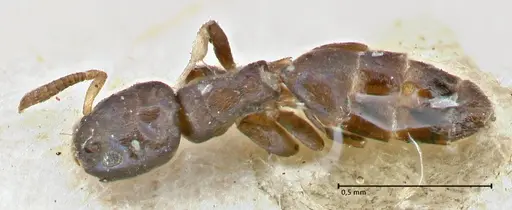
科学文献
正在加载分布地图...正在加载商品...