
Strumigenys longimala
- 学名
- Strumigenys longimala
- 族
- Attini
- 亚科
- Myrmicinae
- 命名者
- De Andrade, 2007
- 地理分布
- 分布于 0 个国家/地区
物种引言
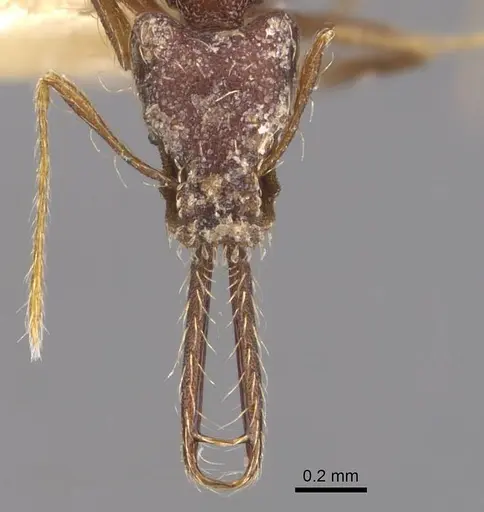
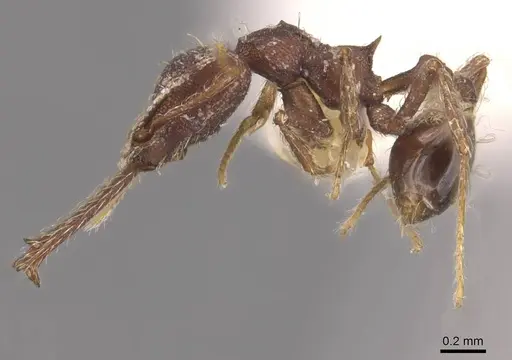
Strumigenys longimala is a tiny, specialized predatory ant from the Ecuadorian Amazon. Workers measure 2.78-2.94 mm and queens 3.26 mm in total length . They are dark brown with remarkably long mandibles, among the longest in the genus, and a distinctive pair of curved hairs on the antennae . This species belongs to the trudifera group and was described in 2007 from leaf litter samples collected at Yasuni Scientific Station . Like all Strumigenys, they use their trap-like jaws to capture micro-prey, though specific hunting behavior has not been studied in detail.
Quick Summary
- Difficulty: Expert
- Origin & Habitat: Ecuador: Orellana Province, Yasuni Scientific Station,230 m elevation. Collected from leaf litter in tropical rainforest [1].
- Colony Type: Colony structure is unconfirmed. Based on related Strumigenys species, likely single-queen (monogyne), but no published data exists.
- Size & Growth:
- Queen: 3.26 mm [1]
- Worker: 2.78-2.94 mm [1]
- Colony: Unknown, no colony data exists for this species
- Growth: Unknown, growth rate has not been documented
- Development: Unknown, estimated 6-10 weeks based on typical Strumigenys patterns at tropical temperatures (Development timeline is unconfirmed for this species. Related tropical Strumigenys species typically develop from egg to worker in 6-10 weeks at warm temperatures.)
- Antkeeping:
- Temperature: Keep at 24-28°C. This species comes from lowland Ecuadorian rainforest where temperatures are consistently warm year-round. A gentle heat gradient is recommended.
- Humidity: High humidity required, aim for 70-85%. These ants live in leaf litter on the rainforest floor where humidity remains consistently high. Keep the nest substrate moist but not waterlogged.
- Diapause: No diapause required. As a tropical species from Ecuador near the equator, they do not experience cold winters or seasonal temperature drops that would trigger hibernation.
- Nesting: Y-tong (AAC) nests or plaster nests work well. These tiny ants need small, tight chambers scaled to their minute size. Naturalistic setups with moist soil/leaf litter also work. Avoid dry conditions.
- Behavior: Very shy and non-aggressive. As specialized predators of tiny prey, they pose no threat to humans. Their sting is functional but medically insignificant. Escape prevention is critical due to their tiny size, they can easily slip through standard barrier setups. Use fine mesh and tight-fitting lids.
- Common Issues: tiny size makes escape likely without fine mesh barriers, high humidity requirements can lead to mold if ventilation is poor, specialized diet means they may refuse standard ant foods, no documented captive breeding success, wild colonies may not adapt to captivity, slow growth and small colony size make them difficult to maintain
Housing and Nest Setup
Strumigenys longimala requires careful housing due to their extremely small size. Y-tong (AAC) nests with narrow chambers or plaster nests work best, the chambers should be appropriately scaled to these tiny ants [1]. Naturalistic setups with moist soil and leaf litter can also work well, mimicking their natural leaf litter habitat [1]. Whatever nest type you choose, ensure it retains humidity well while allowing for some ventilation to prevent mold. Test tube setups are generally too small and difficult to maintain humidity in for this species. The nest should be placed in a dark area as these ants prefer dim conditions, typical of leaf-litter-dwelling species.
Feeding and Diet
Strumigenys longimala is a specialized predatory ant, likely hunting springtails, tiny mites, and other micro-arthropods in the wild [1]. In captivity, their diet is challenging, they will likely need live small prey such as springtails, booklice, or tiny fruit fly larvae. They are unlikely to accept sugar water or honey, as Strumigenys are not typically sugar-seeking ants. Some keepers report success with frozen fruit flies and small crickets, but acceptance varies. Do not overfeed, excess prey can stress the colony and attract mold. Feed small amounts every few days and remove uneaten prey promptly.
Temperature and Humidity
Maintain temperatures of 24-28°C year-round. This tropical species comes from Ecuador's Amazon basin where temperatures are consistently warm [1]. A heating cable on one side of the nest can create a gentle gradient, but avoid direct heat that could dry out the nest. Humidity should be kept high at 70-85%, use a water reservoir in the outworld and mist occasionally, but avoid standing water. The substrate should feel consistently damp but never waterlogged. Place the setup away from direct sunlight and air conditioning vents to maintain stable conditions.
Behavior and Temperament
These ants are extremely docile and pose no threat to keepers. Their remarkable long mandibles are specialized hunting tools, not defensive weapons. They are slow-moving and spend most of their time in the nest or foraging carefully through the substrate. Workers are rarely seen out in the open, they prefer to stay in dark, humid microhabitats. There is no documented aggression toward humans, and their sting is functional but not medically significant. However, their tiny size means they are excellent escape artists, use fluon barriers and fine mesh on any openings. They are not aggressive toward other ants and would be easily bullied by larger species. [1]
Colony Establishment
Establishing a captive colony of Strumigenys longimala is extremely challenging. No documented captive breeding success exists for this species [1]. Queens have not been observed in founding conditions, so their founding behavior (whether claustral or semi-claustral) remains unknown. If you obtain a queen, provide a small, humid chamber with minimal disturbance. Expect very slow growth even under ideal conditions, Strumigenys colonies typically remain small, often under 100 workers even in mature colonies [1]. The best approach is to obtain an established colony if possible, though these are rarely available in the antkeeping hobby.
Frequently Asked Questions
Can I keep Strumigenys longimala in a test tube?
Test tubes are not ideal for this species. Their tiny size and high humidity requirements make Y-tong nests or plaster nests much better options. Test tubes dry out too quickly and don't provide the tight chambers these minute ants need [1].
What do Strumigenys longimala ants eat?
They are specialized predators that likely hunt springtails and tiny micro-arthropods in the wild. In captivity, offer live springtails, frozen fruit flies, or other tiny live prey. They are unlikely to accept sugar sources. Acceptance of commercial ant foods is uncertain [1].
How long does it take for Strumigenys longimala to produce first workers?
The exact development timeline is unknown for this species. Based on related Strumigenys species, expect 6-10 weeks from egg to worker at optimal tropical temperatures (24-28°C). Growth is typically very slow [1].
Are Strumigenys longimala good for beginners?
No, this species is not suitable for beginners. They are expert-level due to their specialized diet, high humidity requirements, tiny size making escape likely, and lack of documented captive breeding success [1].
Do Strumigenys longimala need hibernation?
No, they do not require hibernation. As a tropical species from Ecuador near the equator, they experience no seasonal temperature changes. Keep them warm year-round at 24-28°C [1].
How big do Strumigenys longimala colonies get?
Colony size is unknown but likely remains small. Based on typical Strumigenys species, colonies probably reach under 100 workers even when mature. They are not large colony ants [1].
Why are my Strumigenys longimala dying?
Common causes include: too dry conditions (they need high humidity), wrong food type (they need live prey, not sugar), escape through tiny gaps, mold from poor ventilation, or stress from wild-caught specimens not adapting to captivity. This species has no documented captive success, so losses are expected [1].
Can I keep multiple queens together?
Combining unrelated queens has not been documented for this species and is not recommended. Based on related Strumigenys, they are likely single-queen (monogyne) species. Even if polygyny were possible, combining foundress queens often leads to conflict [1].
When should I move Strumigenys longimala to a formicarium?
Move them only when the colony is established and actively foraging. For this species, a naturalistic setup or Y-tong nest from the start is usually better than a test tube. Wait until you see consistent foraging activity before adding an outworld [1].
What is the best nest type for Strumigenys longimala?
Y-tong (AAC) nests with small chambers or plaster nests work best. The chambers must be appropriately scaled to their tiny 2.8 mm worker size. Naturalistic setups with moist soil and leaf litter also mimic their natural habitat well [1].
Are Strumigenys longimala aggressive?
No, they are extremely docile and non-aggressive. They are specialized predators of tiny prey and pose no threat to humans or larger animals. They would be easily overwhelmed by any larger ant species [1].
Report an Issue
The current care sheet is based fully on literature. See inconsistencies, or something that's incorrect? Please , it will be resolved after review from an admin. Contributing to the blogs tab also helps providing information, to make us be able to further improve the caresheets. Thank you for your support!
References

此饲养指南授权协议为 CC BY-SA 4.0 .
社区博客
CASENT0905783
在 AntWeb 上查看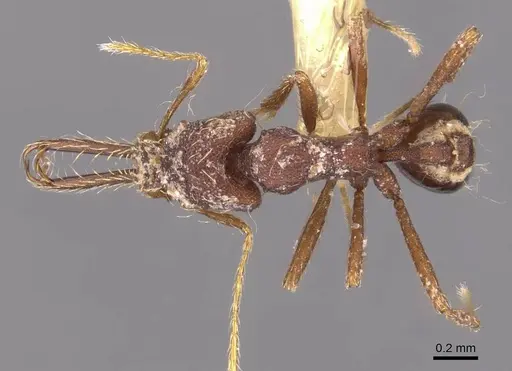
科学文献
正在加载分布地图...正在加载商品...