
Strumigenys hypoturba
- 学名
- Strumigenys hypoturba
- 族
- Attini
- 亚科
- Myrmicinae
- 命名者
- Bolton, 2000
- 地理分布
- 分布于 0 个国家/地区
物种引言
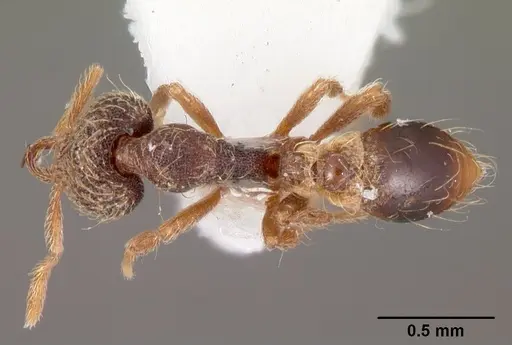
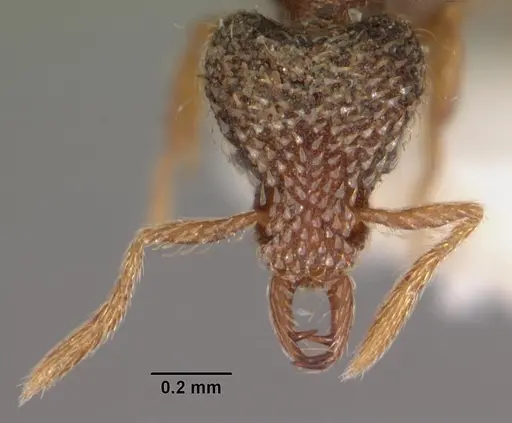
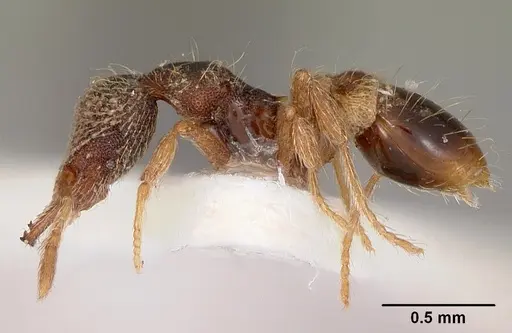
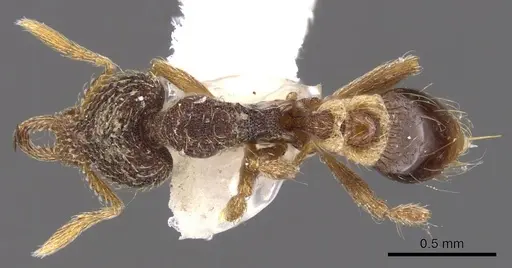
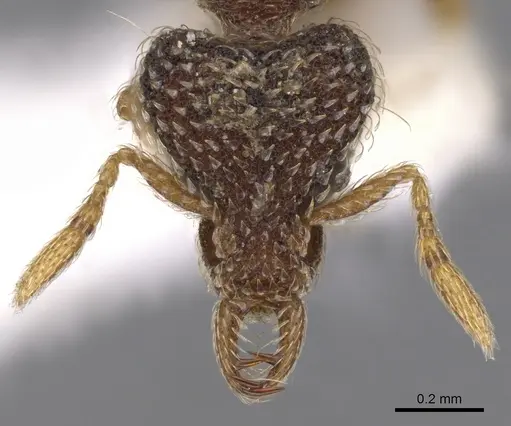
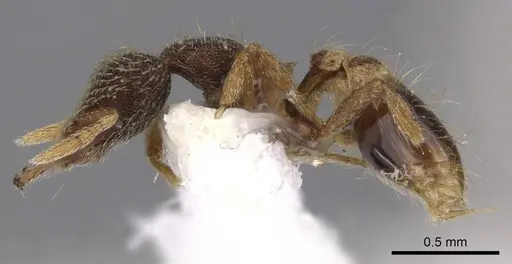
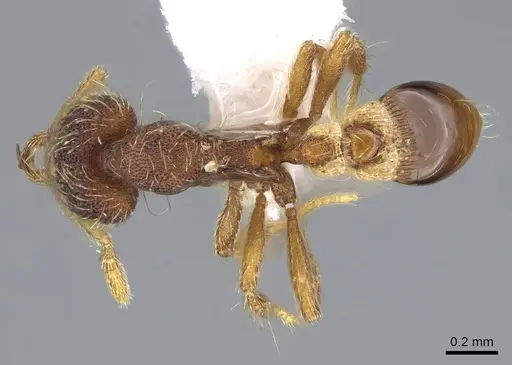
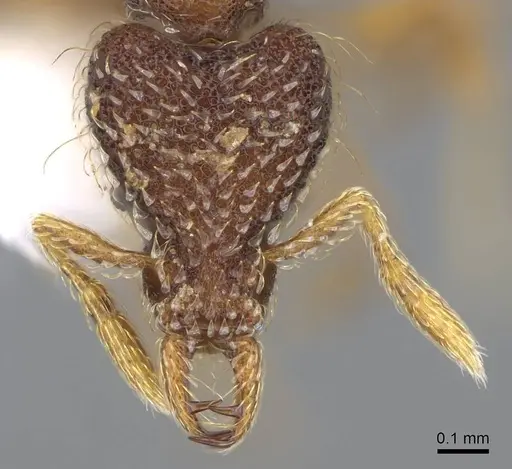
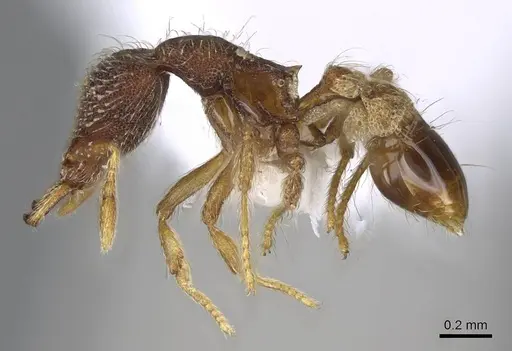
Strumigenys hypoturba is a tiny ant from southern India. Workers measure 2.5 mm in total length . This species is endemic to the Western Ghats, recorded from Kerala and Tamil Nadu at elevations of 1400-1600 m, where it lives in rainforest leaf litter . It belongs to the Strumigenys godeffroyi group and the smythiesii complex, and is identified by long flagellate hairs on its head and pronotum . Like other dacetine ants, this species is a specialized predator of small soil arthropods. Little is known about its colony biology and behaviour, and most care recommendations are based on related Strumigenys species.
Quick Summary
- Difficulty: Expert
- Origin & Habitat: Endemic to the rainforests of the Western Ghats in southern India (Kerala and Tamil Nadu), living in leaf litter at 1400-1600 m elevation [2][1].
- Colony Type: Unconfirmed. Based on typical Strumigenys patterns, likely monogyne (single queen).
- Size & Growth:
- Queen: Unknown, queens of related Strumigenys species are typically slightly larger than workers.
- Worker: 2.5 mm total length [1]
- Colony: Unknown, Strumigenys colonies are typically small (likely under 100 workers).
- Growth: Slow
- Development: Estimated 8-12 weeks based on related Strumigenys species (Temperature-dependent, warmer conditions may speed development.)
- Antkeeping:
- Temperature: Maintain 24-28 °C, inferred from tropical highland habitat. Provide a slight thermal gradient.
- Humidity: High humidity, keep substrate consistently moist. Mimic rainforest leaf litter conditions.
- Diapause: No true diapause required, this is a tropical species.
- Nesting: Naturalistic setup with deep leaf litter and moist soil substrate. Y‑tong (AAC) or plaster nests with high humidity chambers are alternatives.
- Behavior: Strumigenys hypoturba has a functional sting (typical of myrmicine ants) but is not aggressive toward humans, it prefers to flee. Workers are tiny (2.5 mm) and can escape through small gaps, so a secure enclosure is essential. They are slow‑moving and spend most of their time hunting for small prey in leaf litter. They are shy and non‑confrontational.
- Common Issues: requires a constant supply of live micro‑prey such as springtails, you must culture them in advance, high humidity requirements (80 %+) can lead to mold problems if ventilation is poor, slow colony growth, patience is required as colonies may take months to establish, tiny workers (2.5 mm) can escape through very small gaps, the enclosure must be well‑sealed, limited species‑specific information is available, care is based on inference from related species
Housing and Nest Setup
This species requires a setup that mimics rainforest leaf litter. A naturalistic terrarium with several centimetres of moist soil or a soil/leaf‑litter mixture provides hunting space and humidity. If using a formicarium, choose Y‑tong (AAC) or plaster nests with small chambers. The nest must retain high humidity, a water reservoir or regular misting is necessary. A layer of leaf litter on top of the substrate helps maintain moisture and provides hunting grounds [1].
Feeding and Diet
This is the most challenging aspect. Strumigenys hypoturba is a specialised predator that likely feeds on small live prey such as springtails (Collembola) found in its natural leaf‑litter habitat. In captivity, you must provide a constant supply of live micro‑prey, springtails are the primary option. Other small prey like booklice or tiny mites may be accepted. They will not accept dead insects, sugar water, or standard ant foods. Culturing your own springtails is essential. Offer small prey every 2-3 days and remove leftovers to prevent mould [1].
Temperature and Humidity
As a tropical species from the Western Ghats at moderate elevations, Strumigenys hypoturba needs stable warmth and high humidity. Maintain temperatures between 24-28 °C. A small heat mat on one side of the enclosure can create a gradient. Avoid temperatures above 32 °C. Humidity is critical, the substrate should feel consistently moist. Aim for 80 %+ relative humidity in the nest area. Use a hygrometer to monitor. Mist regularly but allow brief drying periods to prevent mould. Poor humidity is a common cause of colony failure [1].
Behavior and Temperament
Strumigenys hypoturba is a shy, non‑aggressive species. Workers are slow‑moving and spend most of their time searching for prey in leaf litter. They possess a functional sting (typical of myrmicine ants) but it is not a threat to humans, they prefer to flee or hide. These ants are not interactive and do not form large foraging trails. Their primary defense is escape. Due to their tiny size (2.5 mm), they can easily escape through small gaps, ensure your enclosure is escape‑proof. No specific literature data on behavior, this is based on genus patterns.
Colony Establishment
Founding behaviour has not been documented for Strumigenys hypoturba. Based on typical Strumigenys patterns, queens likely found colonies independently (claustral founding), sealing themselves in a small chamber and raising the first brood using stored reserves. The first workers (nanitics) will be tiny. Do not disturb the queen during founding. Colonies grow very slowly, a mature colony may contain a few dozen workers after several years. Queens are not replaced, the colony will decline when the queen dies.
Frequently Asked Questions
What do Strumigenys hypoturba eat?
They likely require live micro‑prey such as springtails. They will not accept dead insects or sugar water [1].
How long does it take for Strumigenys hypoturba to produce first workers?
Unknown, estimated 8-12 weeks based on related Strumigenys species at optimal temperatures.
Are Strumigenys hypoturba good for beginners?
No, this is an expert‑level species due to its specialised diet and high humidity requirements [1].
What humidity do Strumigenys hypoturba need?
High humidity, aim for 80 %+ relative humidity. Keep the substrate consistently moist [1].
What temperature should I keep Strumigenys hypoturba at?
Maintain 24-28 °C with a slight gradient. Avoid temperatures above 32 °C [1].
How big do Strumigenys hypoturba colonies get?
Unknown but likely small (under 100 workers), typical of the genus [1].
Can I keep Strumigenys hypoturba in a test tube?
Only for a founding queen temporarily. Established colonies need a naturalistic setup with moist substrate [1].
Do Strumigenys hypoturba need hibernation?
No, this is a tropical species, no true diapause is required.
Why are my Strumigenys hypoturba dying?
Most common causes: dry conditions (humidity too low), lack of live prey, mould from over‑watering, or disturbance. Check humidity first and ensure you have a springtail culture [1].
Can I keep multiple queens together?
Not recommended, this species is likely monogyne, and pleometrosis is unconfirmed [1].
When should I move my colony to a formicarium?
Move when the test tube becomes too crowded, but a naturalistic setup is preferred for this species [1].
Report an Issue
The current care sheet is based fully on literature. See inconsistencies, or something that's incorrect? Please , it will be resolved after review from an admin. Contributing to the blogs tab also helps providing information, to make us be able to further improve the caresheets. Thank you for your support!
References

此饲养指南授权协议为 CC BY-SA 4.0 .
社区博客
科学文献
正在加载分布地图...正在加载商品...